Physical therapy marketing: how PT and physio clinics get more patients

Muhammad Hassan, FounderLinkedIn
Published Updated
Physical therapy marketing is how a physical therapy or physiotherapy clinic gets people with pain or an injury to choose it and book a first assessment. It covers your Google profile, website, reviews, referrals from doctors, social media and ads, and it ends when a patient’s question is answered fast enough that they book. In the UK and Australia the same work is called physiotherapy marketing, or physio marketing.
We make HiQBot, a customer service platform with AI agents, live chat, guided flows and WhatsApp calling. This guide is for owners and practice managers of physical therapy and physio clinics, from a single room to a group of sites. The chats come from a sample clinic we set up in HiQBot, and every product screen is real.
What physical therapy marketing is
Physical therapy marketing, or physical therapy digital marketing when it happens online, is everything a clinic does to be found and booked by people in pain, after an injury or after surgery. Some patients come with a doctor’s referral and pick a clinic from a list. Others search for themselves, read reviews and choose the clinic that can see them soonest at a price they can pay. Good marketing reaches both: the doctors who refer and the patients who book direct.
How patients find a physical therapist
In the US, all 50 states and the District of Columbia allow some form of direct access, so patients can see a physical therapist without a physician’s referral (APTA). In 29 states and the District of Columbia there are limits, such as a cap on visits or time before a referral is needed, and some health systems and clinics still require a physician’s referral (APTA, State of Direct Access 2025). Check the rules for your state and the plans you take.
Most patients still arrive through a doctor. In a 2025 online survey of 1,199 consumers by the APTA, the profession’s own association, 90 percent of physical therapy patients were referred by a physician. Only 13 percent of the general population surveyed had started physical therapy on their own, and 41 percent knew they could see one without a referral (APTA, Consumer Perceptions 2025). That gives a US clinic two jobs: keep doctors referring, and tell everyone else they can book direct.
Physiotherapy marketing in the UK and Australia
Physiotherapy marketing in the UK and Australia starts from self-referral. In England, the NHS says patients can refer themselves to community musculoskeletal services such as physiotherapy without a GP referral, though not yet in every area (NHS). In Australia, “you do not need a referral from your doctor to see a physiotherapist” (healthdirect). A private physio clinic in either country competes for patients who search “physio near me”, read reviews and book themselves.
Physio marketing is local and practical. Patients ask what an initial assessment costs, how long it takes, whether you take their insurer or health fund, and whether anyone can see them this week. A clinic that answers those on its website, its Google profile and in messages makes the booking easy.
Each country has its own advertising rules. In Australia, physiotherapy is a regulated health service, and the National Law bans testimonials in its advertising. Ahpra’s guidelines, in force since December 2020, define them as positive statements about the clinical side, such as the symptom, the treatment or the outcome (Ahpra advertising guidelines). So don’t quote patient reviews about their treatment in ads, on your website or in social posts. In the UK, the ASA expects physios to hold evidence for what they say they treat; it lists back pain, joint pains and minor sports injuries among the claims likely to be accepted (ASA, Health: Physiotherapy).
Physical therapy marketing basics
Get these right before you spend on ads:
- Your Google Business Profile: the right category, hours, phone, booking link, photos of the clinic and the gym area, and every service you offer. Google says local results are mainly based on relevance, distance and popularity (Google Business Profile Help).
- A website that answers the practical questions on the first screen: what you treat, who treats it, the price of a first assessment and a follow-up, the insurers you work with (in-network or cash-pay in the US), opening hours, parking, and how to book.
- Each physio’s registration on their page: a state license in the US, HCPC registration in the UK, Ahpra registration in Australia.
- A page for each service and each site, such as sports injuries, back and neck pain, or rehab after surgery.
- Reviews on Google, asked for every week, each with a reply that doesn’t confirm the person is a patient.
- Physical therapy marketing to physicians: a short note to local doctors, surgeons and sports clinics on what you treat, how soon you can see someone and how to refer, then a report back after each patient they send.
Physical therapy marketing ideas
| Idea | Why it works |
|---|---|
| Put the price and length of a first assessment on your site | It is the first thing a self-paying patient asks, and a clear answer saves them a call |
| A page for each physio | Photo, qualifications and what they see most, such as sports injuries, pelvic health or neuro rehab |
| Show evening and Saturday slots | If you have them, put them on your Google profile and your homepage |
| Work with sports clubs, gyms and running groups | Give a talk on warming up or coming back from injury, and leave a way to book |
| Talks at local workplaces | Desk set-up and back care for office staff, or lifting for warehouse teams |
| A short note to local doctors and surgeons | What you treat, how soon you can see someone, how to refer, and a report back after each patient |
| Ask for a Google review after discharge | A short message with your review link, sent when the patient finishes |
| Check in with patients who stopped mid-plan | A message to patients who agreed to hear from you, with a way to book the next session in the reply |
Messages to past patients go on WhatsApp only to people who agreed to hear from you (WhatsApp marketing messages can’t go to US numbers). Ready-to-send wording is in our appointment reminder templates, and how to cut missed sessions is in our patient no-shows guide.
A physical therapy marketing plan on one page
- Pick the patients you want more of: runners, office workers, people after surgery, patients near a new site.
- Write down why you are the right choice for them: same-week slots, a named physio, a language, the price.
- Fix your Google profile, website and listings so they say it, with prices, insurers and hours.
- Visit or write to five referrers a month: doctors, surgeons, gyms and sports clubs.
- Ask for reviews every week, and reply to each one.
- Pick one or two channels to grow, such as Instagram or local search ads, and run them every week.
- Decide who answers patient messages in the evening and at weekends.
- Each month, count enquiries and assessments by channel, and drop what brought neither.
Physical therapy social media and Instagram
Physical therapy social media works when it shows the people and the place. On Instagram, post short clips of a physio explaining a common question in general terms, the gym area, the team, a running club you work with, and opening hours over a holiday. Keep exercise videos general and say they are not a substitute for an assessment. Never post a patient, their photo or their story without written consent, and in Australia, leave out what they say about their treatment.
People ask questions in comments and DMs. With HiQBot’s Instagram comment bot, a comment such as “book” on a post can open a DM with buttons for prices and booking an assessment, and with Instagram DM automation the AI agent answers what the patient types next.
Physical therapy advertising
Physical therapy advertising and physiotherapy advertising work best close to home. Show ads to people within a few miles of the clinic, name the service and when the next slots are, and send the click somewhere that answers. Health ads follow stricter rules than most, and following them is the clinic’s job. This is general guidance, not legal advice.
Google search ads
Search ads catch people at the moment they look for a physio or physical therapist nearby. Google treats health as a sensitive category: ads about physical health conditions can’t use audiences built from your own data, such as lists of your patients or of people who visited your website (Google, Health in personalized advertising). A search ad for “sports physio near me” is fine; retargeting everyone who read your knee page is out.
Facebook and Instagram ads
Physical therapy Facebook ads can send the click straight to a conversation on WhatsApp, Instagram or Messenger (Meta). Meta’s ad standards bar ads that assert or imply a personal attribute, including physical health (Meta, personal attributes), so write about the service and when the patient can be seen, not about the reader’s pain.
What you can claim
In the US, the FTC expects health claims to be backed by competent and reliable scientific evidence (FTC), and your state board sets its own advertising rules. In the UK, the ASA expects evidence for what you say you treat; in Australia, no testimonials about treatment, as above.
An ad that opens a chat on WhatsApp, Messenger or Instagram lands in the HiQBot inbox like any other message, and the AI answers it in seconds, day or night. Our healthcare advertising guide covers the Google and Meta rules in full.
When a patient asks for a first assessment
Many patients who find you send a message: can I be seen today, how much is the first session, do you take my insurer. A clinic that answers in the evening has a better chance of booking the patient before they try the next one.
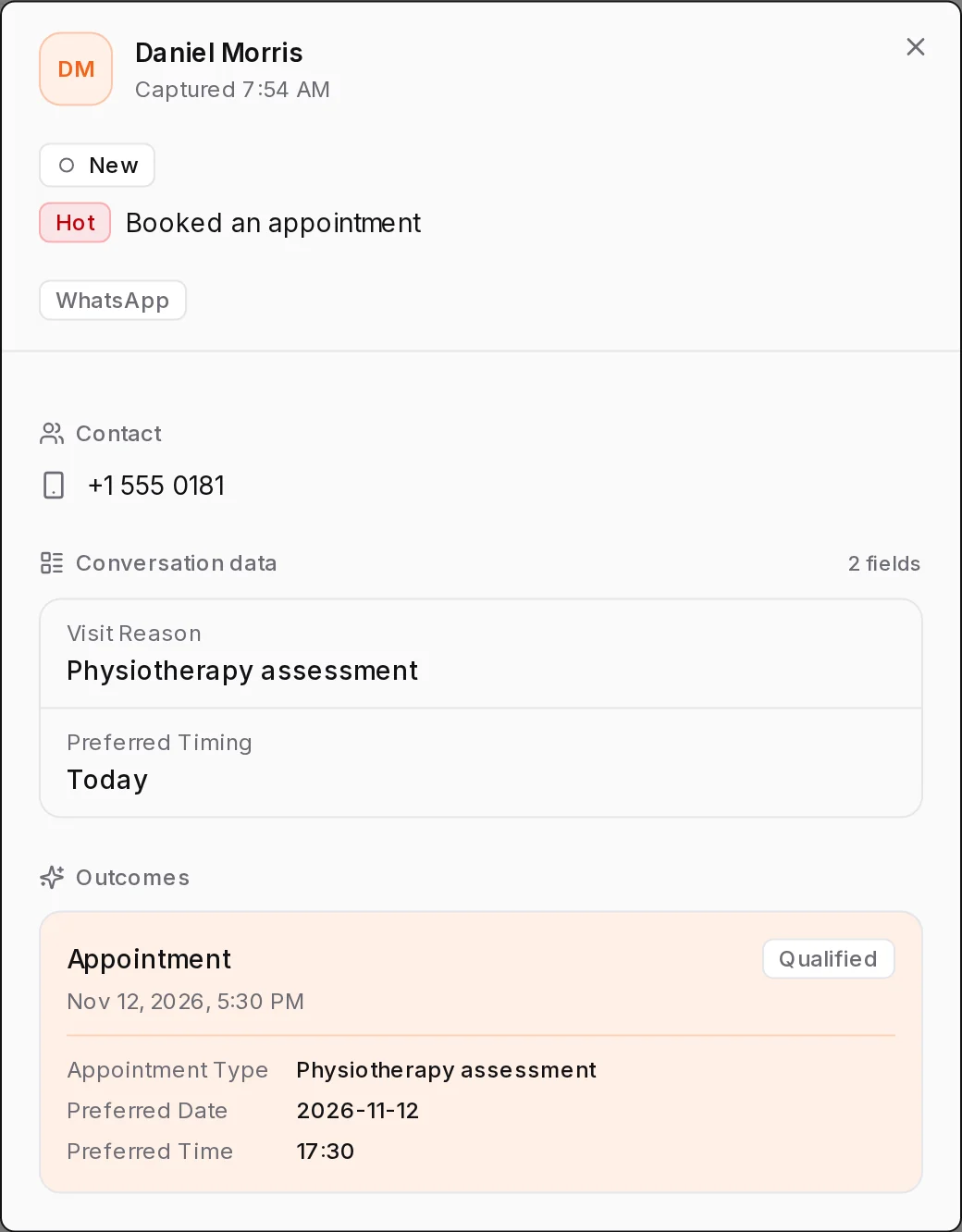
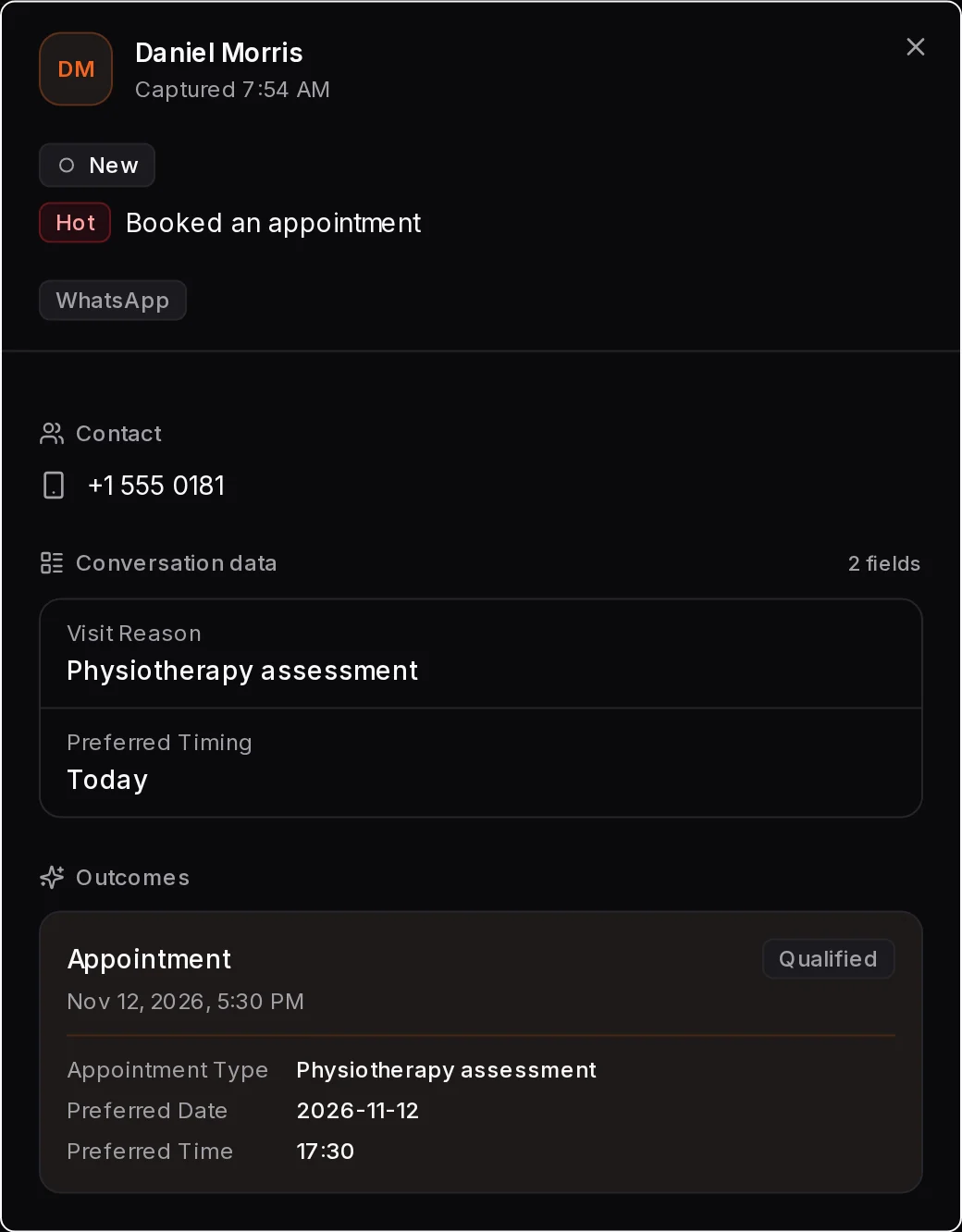
HiQBot’s AI answers on your website chat, WhatsApp, Instagram and Messenger from your own documents: services, physios, hours, prices and insurers. It asks what your front desk asks: a first assessment or a follow-up, new or returning, when, which physio, and, if your clinic routes by payment, self-pay or which insurer. Then it asks for the time and tells the patient the front desk will confirm it. It says which insurers you work with and leaves cover for your team to confirm.
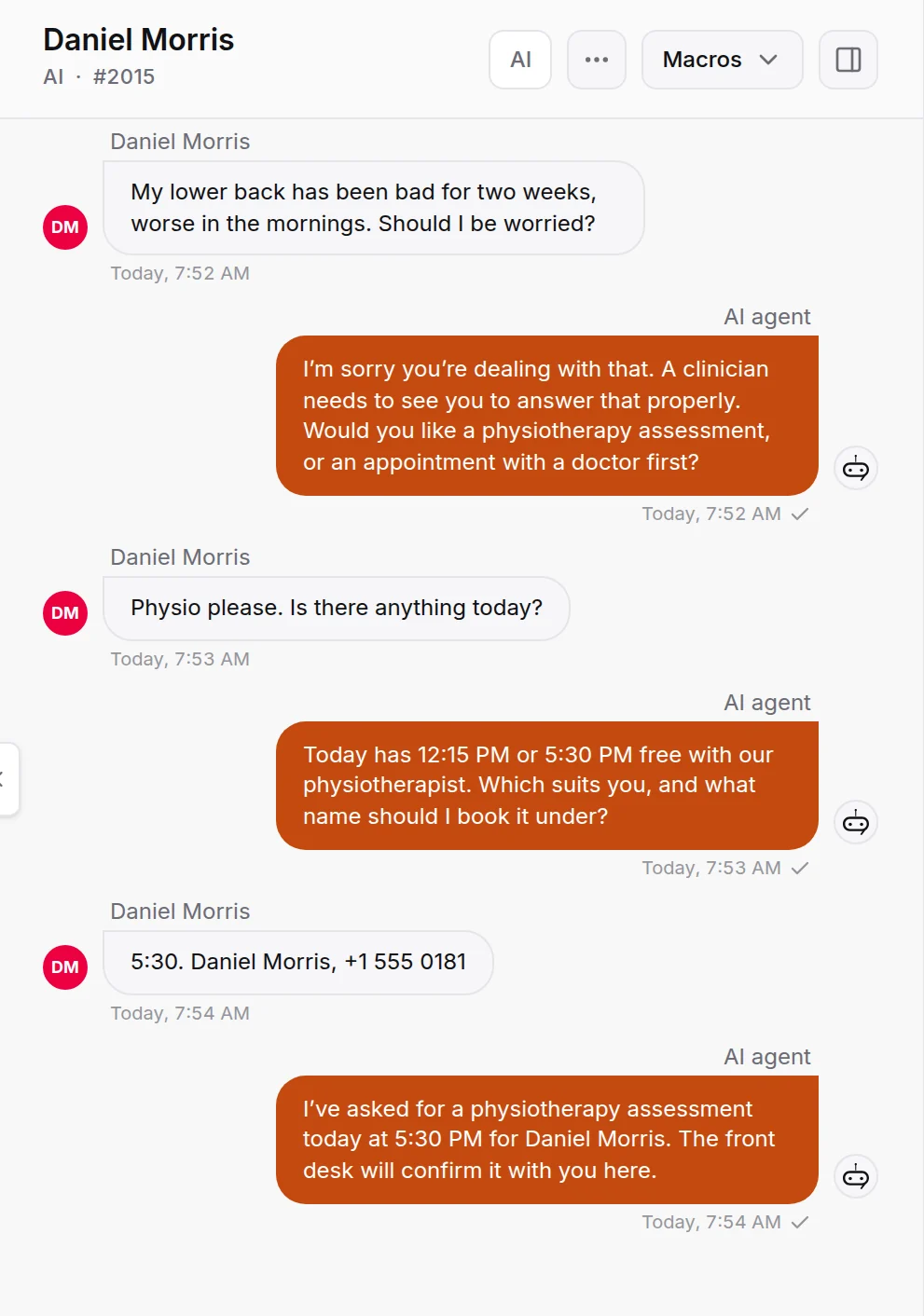
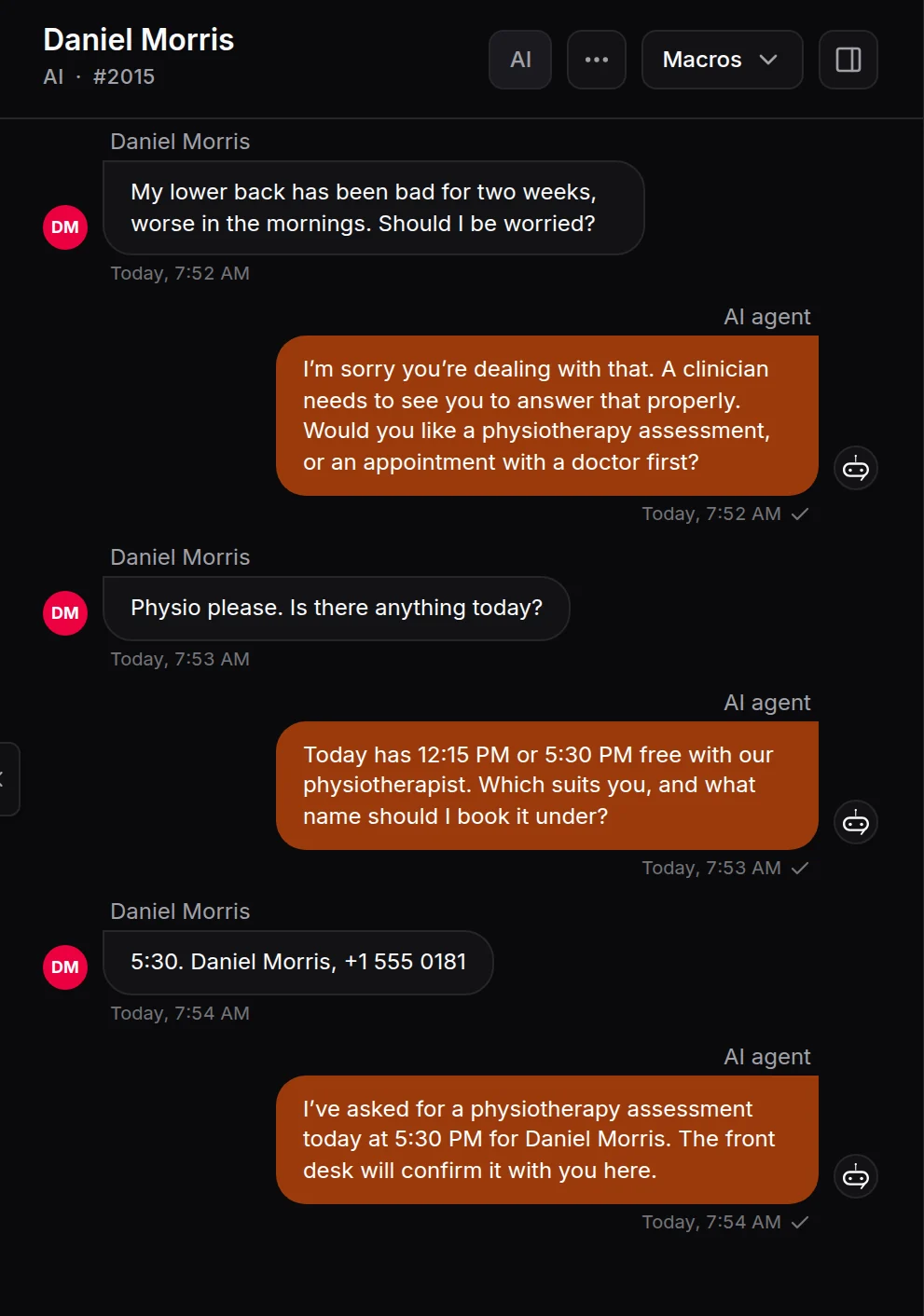
The AI never gives clinical advice. It doesn’t say what pain might mean, whether it can wait or which exercise to do, and it doesn’t repeat symptoms back; it offers an appointment and lets the patient pick the kind. Anyone describing an emergency, such as chest pain, trouble breathing or a serious injury, is told in the first sentence to call the emergency services now, or your urgent line.
Buttons instead of typing
A new WhatsApp chat can open with a guided flow: buttons for the kind of appointment and new or existing patient, then a free time. Any typed answer goes to the AI agent, and a patient who asks for a person goes to your front desk.
A clinic’s WhatsApp booking flow in the HiQBot flow editor, from the welcome buttons to a free time.
What to count
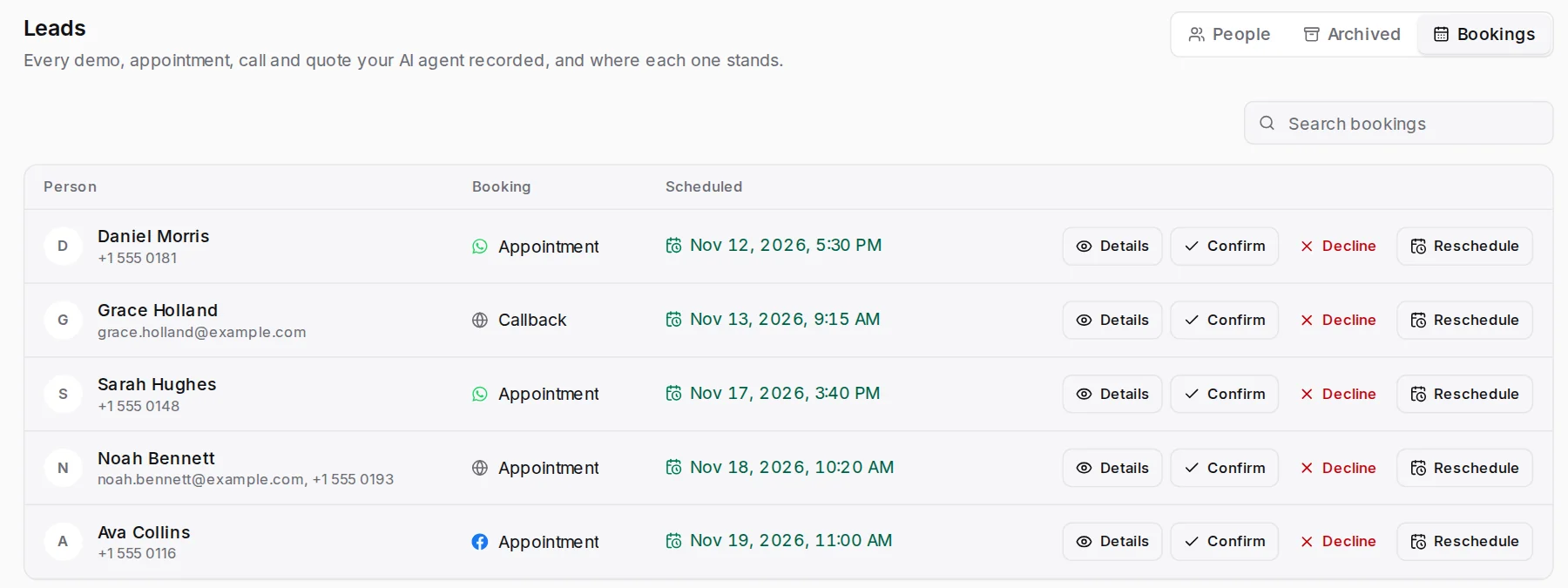
Count enquiries by channel, assessment requests, assessments confirmed, patients who came, and how many finished their plan. Add referrals by doctor and reviews received. In HiQBot, every lead shows the channel it came from, and every appointment and callback request lands in one Bookings list, where your team confirms, declines or moves it, and on Google Calendar if you connect it.
Where HiQBot fits in your physical therapy marketing
HiQBot answers the patients your marketing brings in, in one inbox for website chat, WhatsApp, Instagram DMs and comments, Messenger, Telegram and LINE:
- AI agent: answers questions about services, prices, insurers and hours, and asks for the assessment or a callback for your team to confirm.
- Live chat: your front desk takes over any chat in one inbox, with notes, assignment and AI-drafted replies.
- Guided flows: buttons for the kind of appointment and new or existing patient, with no questions about symptoms.
- WhatsApp calling: patients call your WhatsApp Business number and it rings your team in the inbox. The AI itself works in writing.
HiQBot doesn’t connect to practice management or records systems, design ads or posts, or give clinical advice. The full setup is on our clinic chatbot page, and the wider picture for every kind of practice is in our healthcare marketing guide.
Common questions
How do you market a physical therapy practice?
Market a physical therapy practice locally: a complete Google profile, a website that shows prices, insurers and who treats what, steady reviews, and regular contact with the doctors who refer. Then add one or two channels, such as Instagram or search ads, and answer every message fast.
What is physical therapy marketing?
Physical therapy marketing is how a physical therapy or physiotherapy clinic gets patients to choose it and book a first assessment. It includes the Google profile, website, reviews, doctor referrals, social media and ads, and how fast the clinic answers the patients who get in touch.
How do physiotherapists get more patients?
Physiotherapists get more patients by being easy to find and quick to book. Publish what a first assessment costs, show evening and weekend slots, ask every patient for a review, build referrals with doctors and sports clubs, and reply to enquiries the same evening.
Can I see a physical therapist without a referral?
Usually, yes. Every US state allows some form of direct access, though many set limits on visits or time. In England, many areas let patients refer themselves to NHS physiotherapy, and in Australia no referral is needed.
Can physiotherapists use testimonials in advertising?
In Australia, no: the National Law bans testimonials about the clinical side of a regulated health service, such as the symptom, treatment or outcome. In the UK and the US, testimonials aren’t banned outright; get the patient’s written consent and check your regulator’s advertising rules first.
Can a chatbot book physio appointments?
Yes. HiQBot’s AI asks for the kind of appointment, new or returning, a time, a physio and how the patient is paying, then sends the request to your front desk to confirm. It never gives clinical advice and keeps symptoms out of the booking.
Sources were read on 13 November 2026, and the screens are the real HiQBot product with sample data. How we write and check posts: editorial standards.