Healthcare marketing: how clinics and practices get more patients

Muhammad Hassan, FounderLinkedIn
Published Updated
Healthcare marketing is how a clinic, medical practice or hospital gets patients to choose it and book. It covers your Google profile, website, reviews, social media, ads and referrals, and it ends when a patient asks a question and gets an answer fast enough to book. This guide covers each channel and what happens to the enquiries they bring.
We make HiQBot, a customer service platform with AI agents, live chat, guided flows and WhatsApp calling. This guide is for clinic owners and practice managers doing their own marketing: GP and family practices, specialist and private clinics, physiotherapy, chiropractic, eye care and therapy. The chats come from a sample clinic we set up in HiQBot, and every product screen is real.
What healthcare marketing is
Healthcare marketing, or digital marketing for healthcare when it happens online, is everything a practice does to be found, trusted and booked. Patients search when they need someone, read reviews, check that you take their insurer, and pick the place that can see them soonest. In Tebra’s 2025 survey of 3,964 US adults, 79 percent read reviews before choosing a provider, and 65 percent prioritize getting an appointment as soon as possible (Tebra, 2025).
Many guides sort healthcare marketing into five P’s:
| P | What it means for a clinic |
|---|---|
| Product | The services you offer, the clinicians who offer them, and how a visit feels |
| Price | Self-pay fees, the insurers you work with, and what a first visit costs |
| Place | Where and when patients can see you: sites, opening hours, online visits |
| Promotion | Your website, Google profile, reviews, social media, ads and referrals |
| People | The front desk, the clinicians, and how fast anyone answers a patient |
Medical practice marketing: the basics
Medical practice marketing, or doctor marketing, starts with the places a patient looks before they ever call. Get these right before you spend on ads.
- Your Google Business Profile: the right category, hours, phone, booking link, photos of the entrance and the waiting room, and every service you offer.
- A website that answers the practical questions on the first screen: what you treat, who sees patients, fees or insurers, opening hours, parking, and how to book.
- Reviews. In rater8’s 2025 survey of more than 1,000 US patients, 84 percent check online reviews before choosing a new provider, and 45 percent are swayed by whether doctors respond to them (rater8, 2025). Both rater8 and Tebra sell software to practices, so read their surveys as a guide.
- Listings on the directories patients use in your market, such as Zocdoc in the US, Doctolib in France and Germany or Practo in India, with the same name, address and hours everywhere.
- Referrals from other doctors, dentists, physios and pharmacists near you.
A healthcare marketing strategy on one page
A healthcare marketing strategy for a single practice fits on one page:
- Pick the patients you want more of: new families, a specialty, self-pay patients, a second site.
- Write down what makes you the right choice for them: same-week slots, a clinician, a language, a location.
- Fix your Google profile, website and listings so they say it, with fees, insurers and hours.
- Ask for reviews every week, and reply to each one.
- Choose one or two channels to grow, such as Instagram or local search ads, and post or run them every week.
- Decide who answers patient messages in the evening and at weekends.
- Each month, count enquiries and appointments by channel, and drop what brought neither.
Healthcare marketing ideas
| Idea | Why it works |
|---|---|
| Put fees, insurers and hours on every service page | Patients rule you in before they call, and the front desk answers the same question less often |
| A page for each clinician | Photo, qualifications, languages and what they see, because patients often pick a person |
| Ask every patient for a review | A short message after the visit with your Google review link |
| Answer reviews, good and bad | Thank people and take complaints offline, without confirming that anyone is a patient |
| Same-day and evening slots, said out loud | If you have them, put them on your Google profile and your homepage |
| A referral note for local GPs and specialists | Tell them what you treat, your waiting time and how to refer |
| Recalls for check-ups and annual reviews | A message to patients who agreed to hear from you, with a way to book in the reply |
| Talks and community events | A free session at a school, a gym or a workplace near the clinic |
Recalls and reminders are covered in our guide to WhatsApp for clinics, and ready-to-send wording is in our appointment reminder templates.
Clinic and hospital marketing
Clinic marketing works the same way for a physio, an eye clinic or a specialist outpatient clinic: be easy to find in your area, show the clinicians and the prices, and answer fast. Optometrist marketing leans on eye-test reminders and frames on Instagram; specialist clinics lean on referrals from GPs.
Hospital marketing in India
Hospital marketing in India runs on Google, Practo and WhatsApp. Patients and their families message the hospital’s WhatsApp number in English, Hindi or a regional language, often for someone else, and expect an answer that evening. A multi-specialty hospital also has many departments and doctors to answer for. HiQBot’s AI replies in the patient’s language, and every enquiry lands in one inbox your team can assign. Enquiries from international patients get the same answers, and a coordinator callback when the patient asks for one.
Chiropractic marketing
The best way to market a chiropractic business is local: a strong Google profile, reviews, a clear first-visit price, and posts that show what a first appointment involves. Keep claims about what treatment can do to what you can prove. In the UK, the advertising code says objective health claims must be backed by evidence (CAP Code, rule 12.1). Physiotherapy and chiropractic clinics can take first assessments and follow-ups in chat; see our clinic chatbot page. Physiotherapy clinics have their own physical therapy marketing guide.
Healthcare social media marketing
Healthcare social media marketing works best when it shows the people and the place. Post short clips of your clinicians answering common questions in general terms, the team, a new room or machine, opening hours over a holiday, and health days such as a flu clinic. Instagram and Facebook suit most clinics; LinkedIn suits referrals from other doctors. Never post a patient, their photo or their story without written consent.
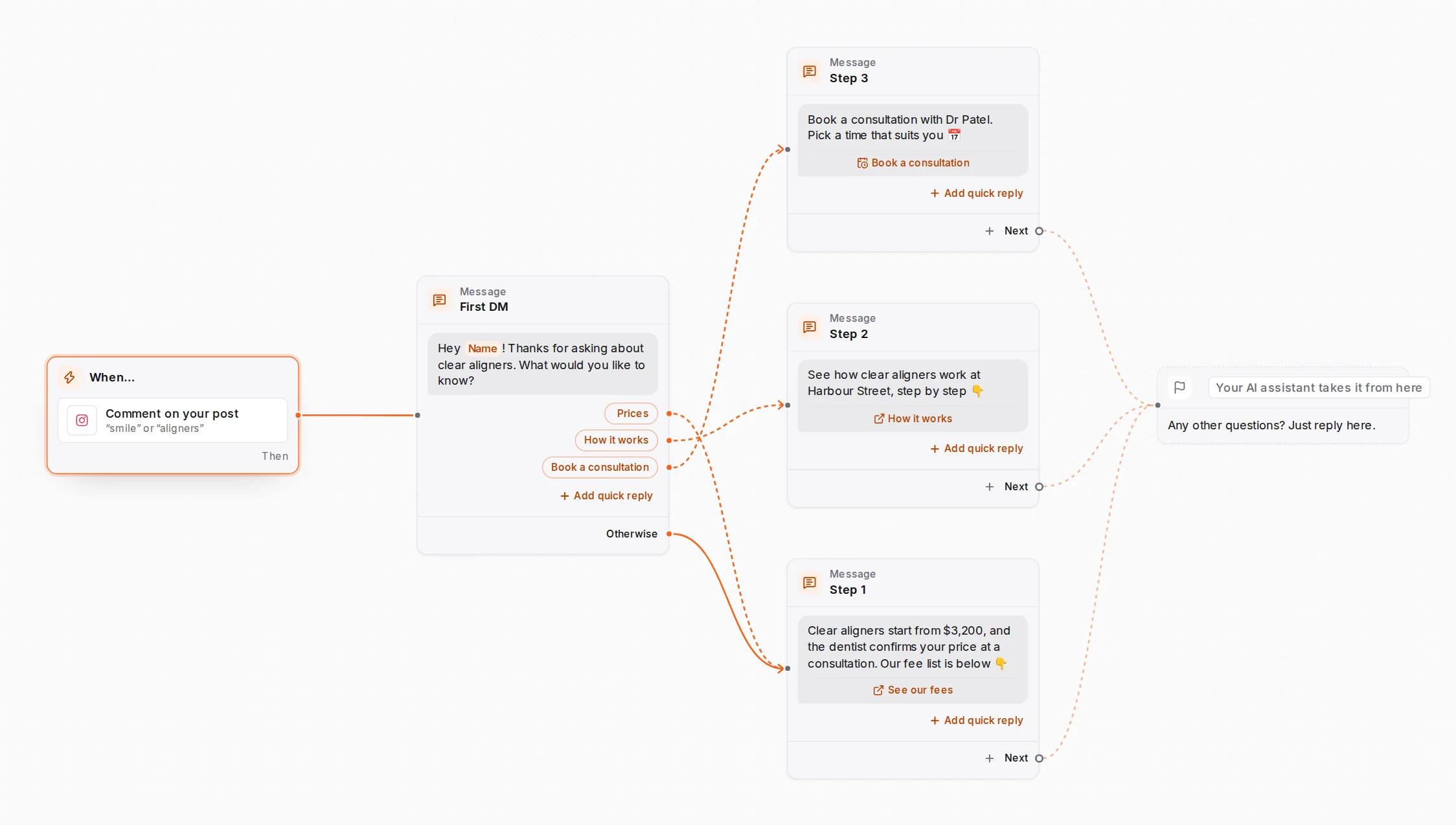
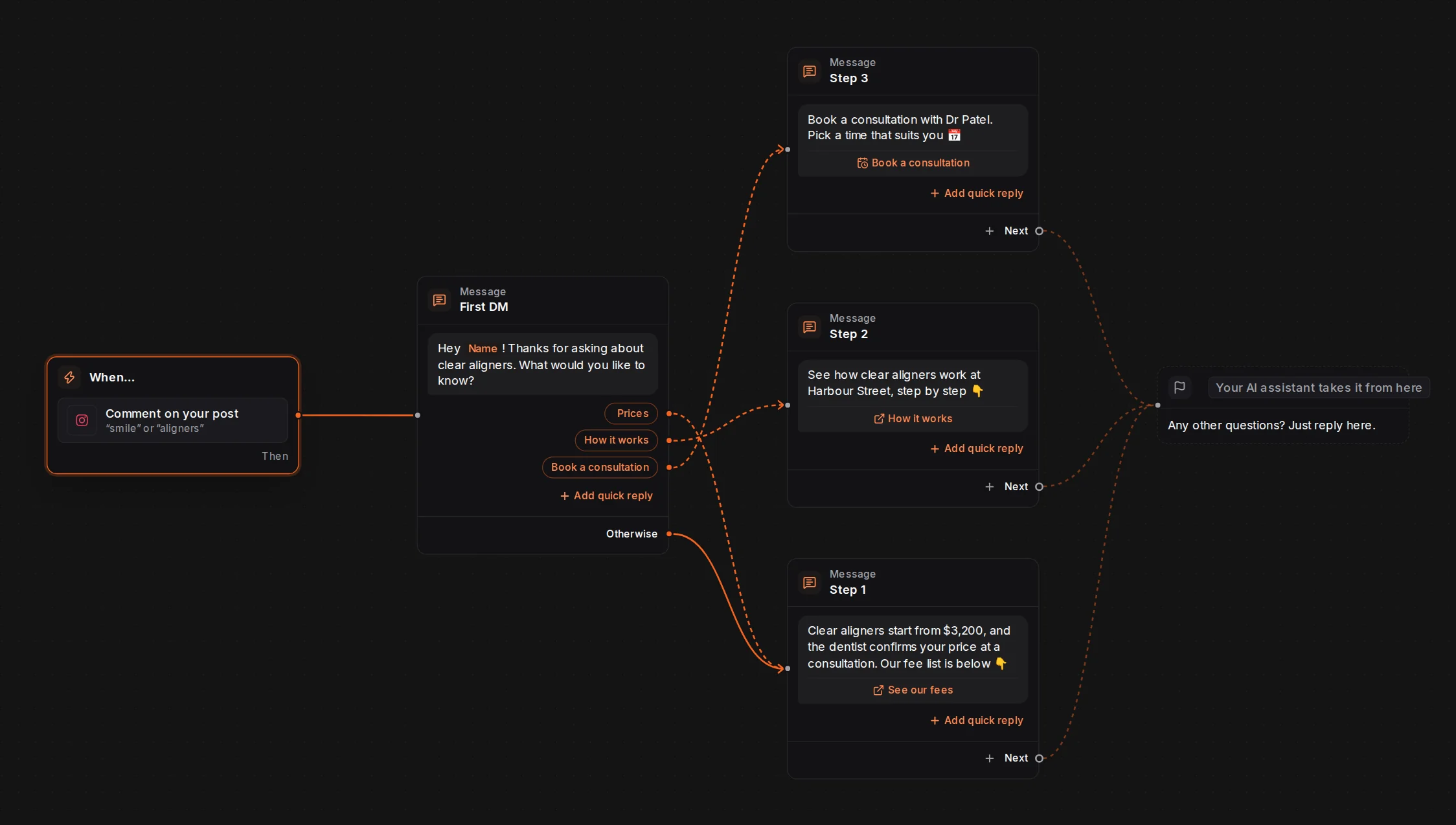
Patients also ask questions in comments and DMs. With HiQBot’s Instagram comment bot, a comment such as “aligners” on a post can open a DM with buttons for prices, how it works and booking a consultation, and the AI agent answers what the patient types next.
Healthcare SEO
Healthcare SEO is getting your practice found in Google for the services and places patients search. For a clinic, most of it is local. Google says local results are mainly based on relevance, distance and popularity (Google Business Profile Help), so:
- Fill in every Google profile field and keep your hours right, including holidays.
- Write one page per service and one per site, each with its own fees, clinicians and directions.
- Answer the questions patients ask your front desk as short pages: what to bring, how referrals work.
- Get reviews steadily, not in a burst.
- Have health content written or checked by a named clinician, with their qualifications, because Google’s search quality rater guidelines hold health pages to a higher standard.
SEO brings patients to your website, and a fast answer to their questions helps them book.
Healthcare advertising rules
Health ads have stricter rules than most, and following them is the practice’s job. In the UK, the CAP Code says objective health claims must be backed by evidence and that ads must not discourage essential treatment (CAP Code, section 12). In the US, the FTC expects health claims to be backed by competent and reliable scientific evidence (FTC), and state medical boards set their own rules. Google Ads restricts healthcare and medicines ads, and online pharmacies and telemedicine providers must apply before they can advertise prescription drug services, with rules that vary by country (Google Ads policy). In India and the Gulf, medical councils and health authorities set their own rules; check yours before you run ads. This is general guidance, not legal advice. Ad types, Google’s and Meta’s health ad rules and sample ads are in our healthcare advertising guide.
An ad that opens a chat on WhatsApp, Messenger or Instagram lands in the HiQBot inbox like any other message, and the AI answers it in seconds, day or night.
When the enquiry arrives
Patients who find you this way usually send a message: can I be seen this week, do you take my insurer, is Dr Clarke free. A practice that answers in the evening has a better chance of booking the patient before they try the next clinic.
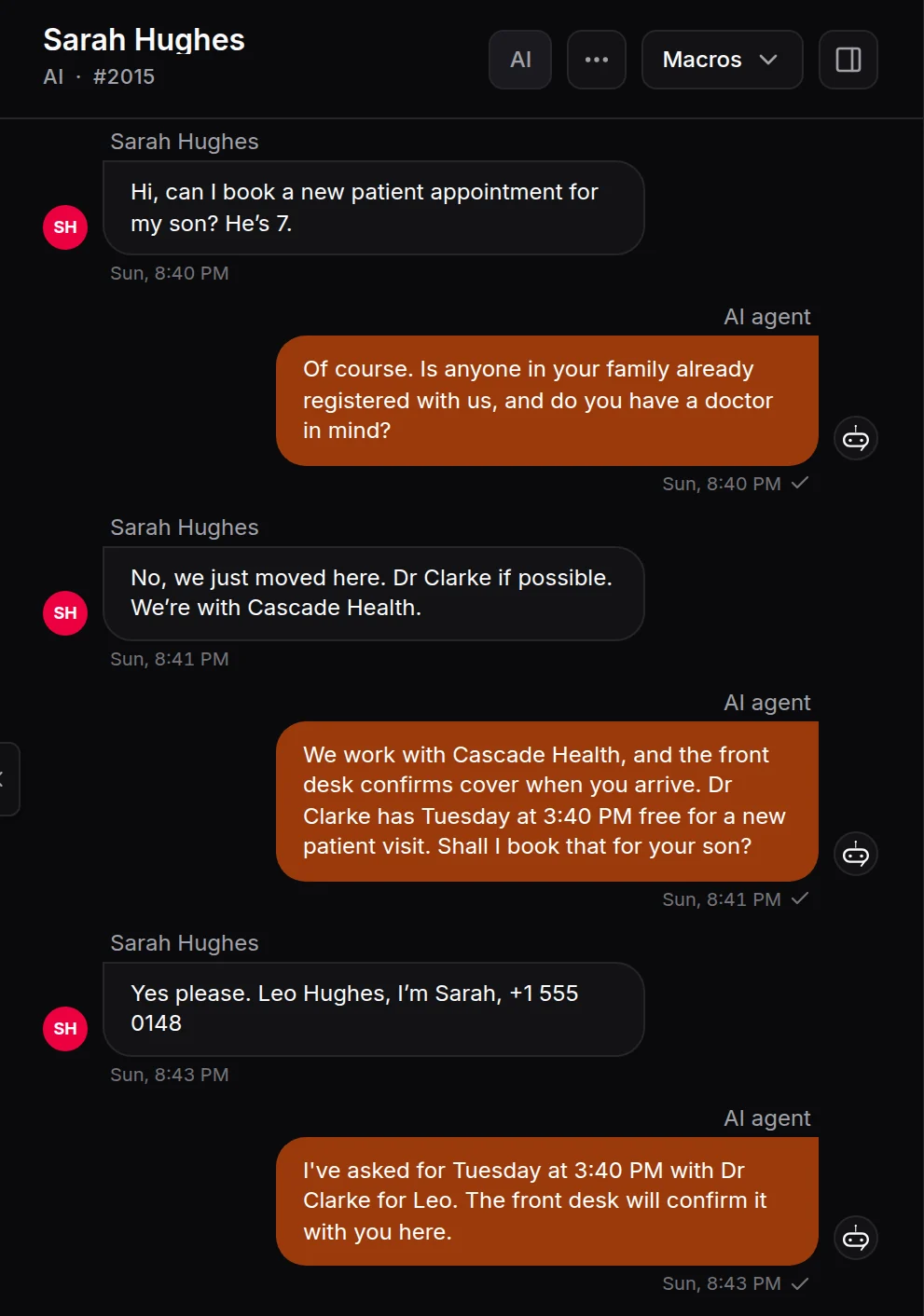
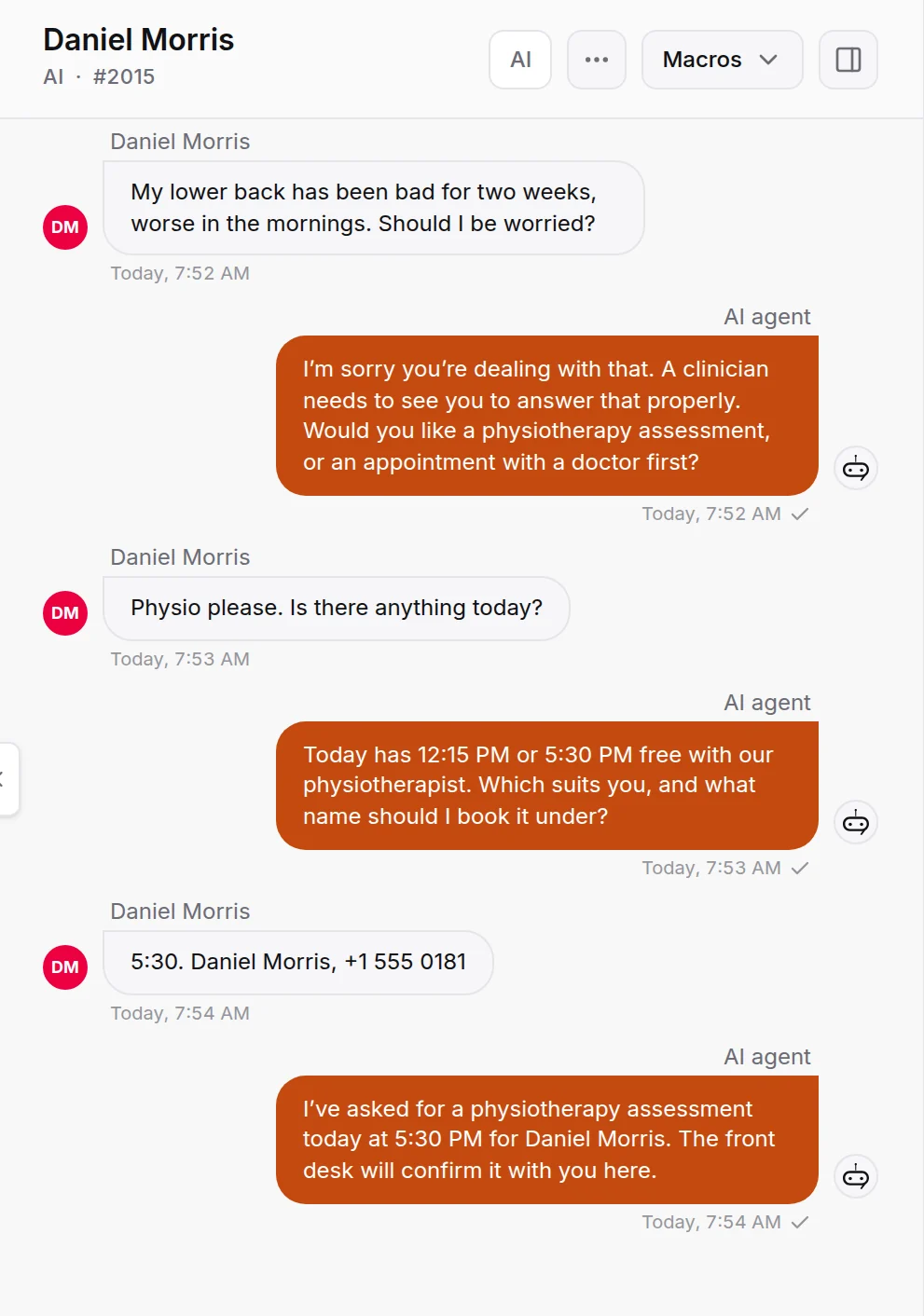
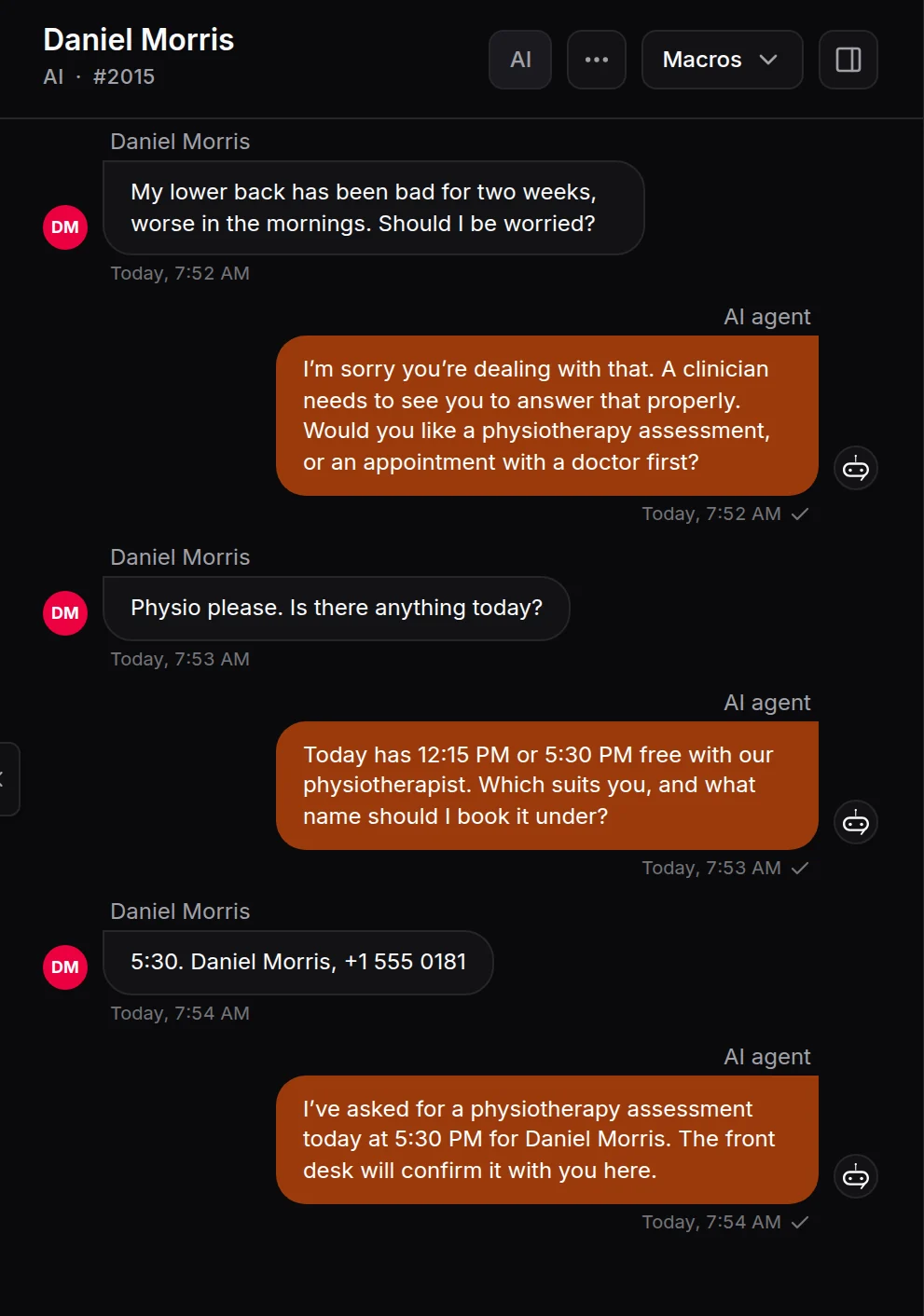
HiQBot’s AI answers on your website chat, WhatsApp, Instagram and Messenger from your own documents: services, clinicians, hours, fees and insurers. It asks what your front desk asks: the kind of appointment in service terms, new or registered, when, which clinician, and self-pay or which insurer. Then it asks for the time and tells the patient the front desk will confirm it. It says which insurers you work with and leaves cover for your team to confirm.
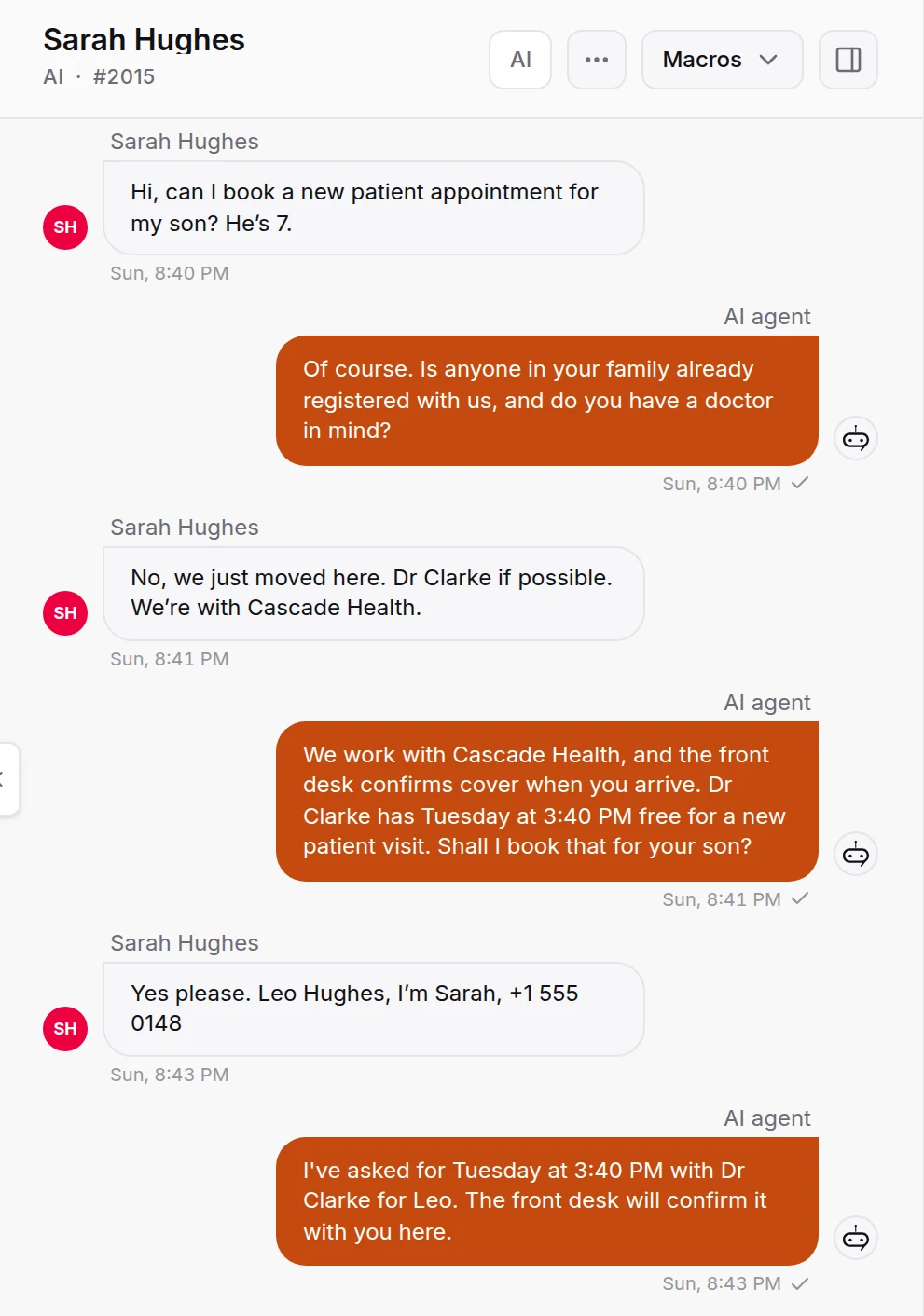
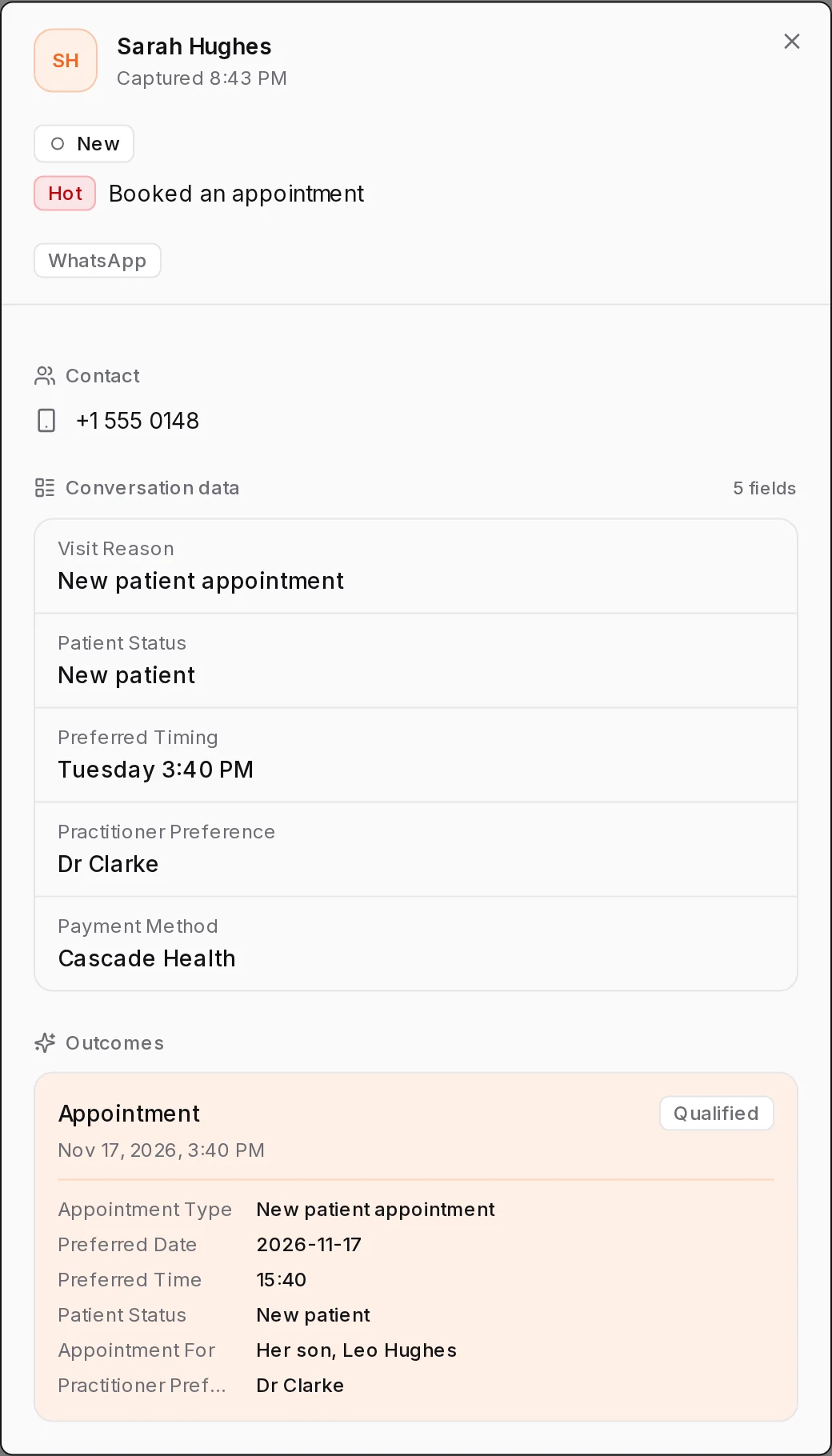
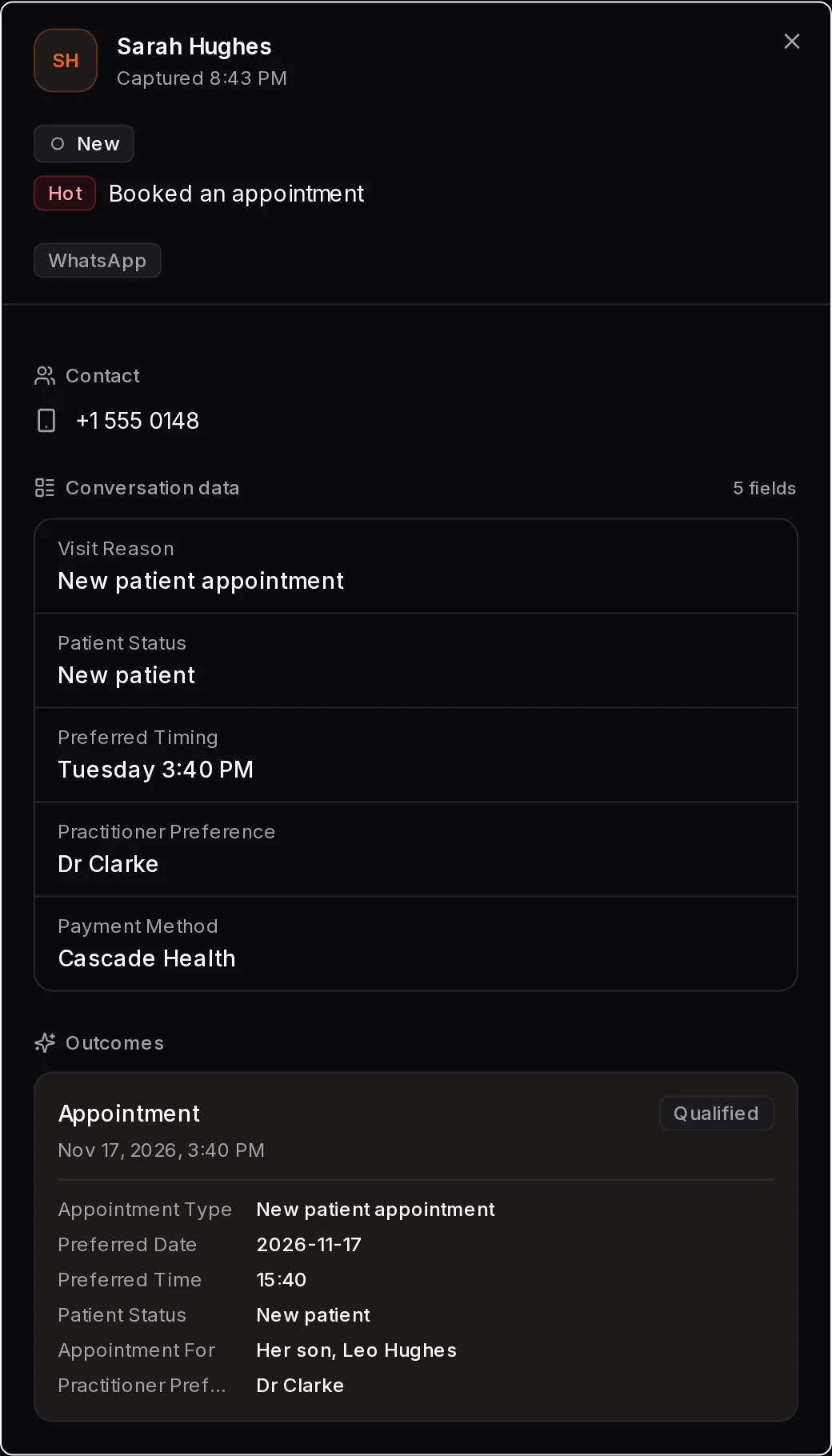
The AI never gives medical advice. When a patient describes symptoms, it doesn’t say what they might mean or repeat them back; it offers the kind of appointment they need, and the booking holds only the appointment type. Anyone describing an emergency, such as chest pain or trouble breathing, is told in the first sentence to call the emergency services now, or your urgent line.
What to count
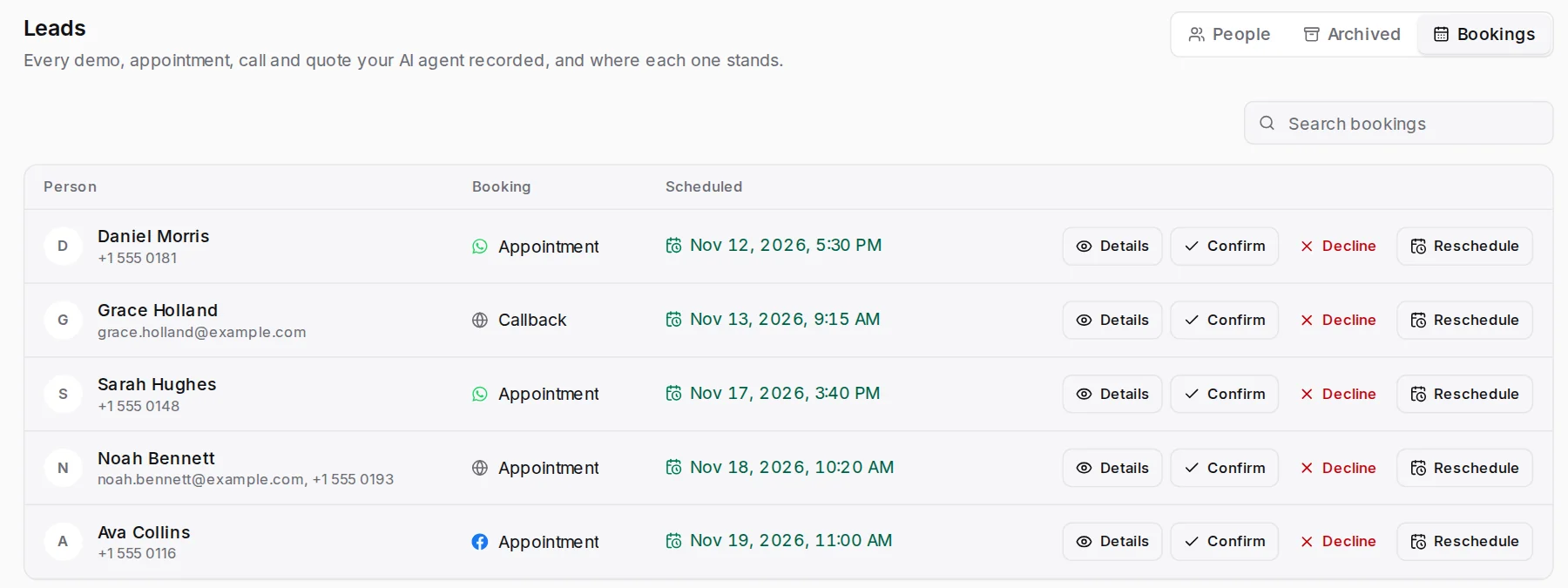
Count enquiries by channel, appointment requests, appointments confirmed, patients who came, and new patients each month. Add reviews received and your average rating. In HiQBot, every lead shows the channel it came from, and every appointment and callback request lands in one Bookings list, where your team confirms, declines or moves it, and on Google Calendar if you connect it.
Where HiQBot fits in your healthcare marketing
HiQBot answers the patients your marketing brings in, in one inbox for website chat, WhatsApp, Instagram DMs and comments, Messenger, Telegram and LINE:
- AI agent: answers questions about services, hours, fees and insurers, and asks for the appointment or a callback for your team to confirm.
- Live chat: your front desk takes over any chat in one inbox, with notes, assignment and AI-drafted replies.
- Guided flows: a new WhatsApp chat can open with buttons for the kind of appointment and new or registered, with no questions about symptoms.
- WhatsApp calling: patients call your WhatsApp Business number and it rings your team in the inbox. The AI itself works in writing.
HiQBot doesn’t connect to practice management or records systems, design ads or posts, or give medical advice. The full setup is on our clinic chatbot page, and dental practices have their own dental chatbot page.
Common questions
What is healthcare marketing?
Healthcare marketing is how a clinic, medical practice or hospital gets patients to choose it and book. It includes the Google profile, website, reviews, directories, social media, ads and referrals, and how fast the practice answers the patients who get in touch.
What are the 5 P’s of healthcare marketing?
The 5 P’s of healthcare marketing are product, price, place, promotion and people. For a clinic, that means your services and clinicians, your fees and insurers, your sites and hours, the channels you promote on, and the team who answer patients.
What does a healthcare marketer do?
A healthcare marketer plans and runs the work that brings patients to a practice or hospital: the website, Google profile, reviews, social media, ads, referral programs and reporting. In a small practice, the practice manager or owner usually does this alongside running the clinic.
What is the best way to advertise a medical practice?
The best way to advertise a medical practice is usually local: Google search ads for your services in your area, a complete Google Business Profile and steady reviews. Check the health advertising rules in your country first, and make sure someone answers the calls and messages the ads bring.
How do doctors get more patients?
Doctors get more patients by being easy to find and quick to book. Keep the Google profile and directory listings complete, publish fees, insurers and hours, ask every patient for a review, build referrals with other clinicians, and answer enquiries in the evening and at weekends.
What is SEO in healthcare?
SEO in healthcare is making a practice’s website and Google profile show up when patients search for a service nearby. It means a page for each service and site, a complete Google profile, reviews, and health content written or checked by a named clinician.
Can a clinic chatbot give medical advice?
HiQBot’s clinic chatbot never gives medical advice. It answers practical questions such as hours, fees and insurers, asks for the appointment, and keeps symptoms out of the booking. Anyone describing an emergency is told first to call the emergency services.
Sources were read on 13 November 2026, and the screens are the real HiQBot product with sample data. How we write and check posts: editorial standards.