Healthcare advertising: medical ads, the platform rules, and what happens after the click
Muhammad Hassan, FounderLinkedIn
Published Updated
Healthcare advertising is paid promotion that puts a clinic, doctor or hospital in front of patients who don’t know it yet: Google search ads, Facebook and Instagram ads, video, print and outdoor. Health ads follow stricter rules than most, set by Google, Meta and the law where you practise.
We make HiQBot, a customer service platform with AI agents, live chat, guided flows and WhatsApp calling. This guide is for clinic owners, practice managers and hospital marketing teams who run their own ads. We read Google’s and Meta’s health ad policies on 13 November 2026 for it. The chats come from a sample clinic we set up in HiQBot, and every product screen is real.
What healthcare advertising is
Healthcare advertising, also called medical advertising, is the paid part of healthcare marketing. Doctor advertising and clinic advertising are the same thing for a single practice: you pay Google, Meta, a radio station or a billboard owner to reach people near you. The unpaid part, such as your Google profile, reviews, SEO and social posts, is in our healthcare marketing guide.
Patients choose fast. In Tebra’s 2025 survey of 3,964 US adults, 65 percent prioritize getting an appointment as soon as possible (Tebra, 2025; Tebra sells practice software). So say in the ad how soon you can see them, and offer a time in the reply.
Types of healthcare ads and where each click goes
When an ad ends in a message or a call, how fast you answer affects what each new patient costs. Pick the ad type by where you want the patient to land, and who will answer them there.
| Ad type and where the click lands | Good for |
|---|---|
| Google search ads (medical PPC)Your website, a call or a booking page | Patients already searching for a service near them, such as “GP near me” or “physio in Leeds” |
| Facebook and Instagram ads that open a chatWhatsApp, Instagram Direct or Messenger | Questions about fees, insurers and the next free slot, answered in the same chat |
| Facebook and Instagram lead form adsA form inside Facebook or Instagram | Collecting names fast, if someone calls each one back the same day |
| Ads to a landing pageOne page on your website for one service | A health check, a new clinic or a specialty, with the fee, the clinicians and a chat on the page |
| YouTube and video adsYour website or a chat | Showing the clinic, the team and what a first visit looks like |
| Print, radio, outdoor and TVYour number, a WhatsApp link or a QR code | Hospitals and new sites that want a whole town to know their name |
A lead form collects a name, but the patient still waits for a call back. An ad that opens a chat lets them ask about fees or the next slot and ask for the appointment while your ad is still on their screen.
Google Ads for doctors and medical PPC
Medical PPC means search ads you pay for per click. For a practice, the best keywords name a service and a place: “pediatrician in Austin”, “private physio Leeds”, “skin specialist Dubai Marina”. Send each one to the page for that service, with the fee or the insurers you take, the clinicians and a way to ask a question.
What Google’s healthcare policy restricts
Google’s Healthcare and medicines policy restricts these health topics, among others (Google Ads policy):
- Online pharmacies and telemedicine providers must apply before they advertise prescription drug services. In the US, telemedicine providers also need LegitScript certification.
- Prescription drug names are restricted in ads, landing pages and keywords, depending on the country.
- Speculative and experimental treatments, and cell and gene therapies, can’t be promoted; in the US, FDA-approved cell and gene therapies can be, with Google’s approval.
- Drug and alcohol addiction services need Google certification where they are allowed, and in the US LegitScript certification as well.
- Clinical trial recruitment is not allowed in most countries.
- Birth control, fertility and STI testing ads aren’t allowed in some countries, and abortion ads need certification in the US, UK and Ireland.
Health ads can’t use your own audience lists
Google treats health as a sensitive interest category. It covers ads about physical or mental health conditions, treatments for long-term conditions, counselling, and procedures such as cosmetic surgery or injections. Those ads can’t use audiences built from your own data, such as Customer Match lists of your patients or lists of people who visited your website (Google, Health in personalized advertising). Google’s own predefined audiences are still allowed. So retargeting everyone who read your knee surgery page is out; a search ad for “knee surgeon near me” is fine.
Healthcare Facebook ads and Instagram ads
Medical Facebook ads suit clinics because you can show them to people within a few miles and send the click straight to a conversation. Meta calls these ads that click to message. You pick where the conversation happens: WhatsApp, Instagram or Messenger, or more than one (Meta). Doctor Facebook ads can show the service, the clinician and when the next slots are; in India, a doctor can’t make themselves or their name the subject of an ad (rule 6.1.1).
Don’t imply you know the reader’s health
Meta’s ad standards bar ads that assert or imply a personal attribute, including physical or mental health. Meta’s own examples: “Depression counseling” is allowed; “Do you have diabetes?” and “Depression getting you down? Get help now.” are not (Meta, personal attributes). Write about the service and when the patient can be seen.
Meta’s health and wellness rules
- Ads for dietary, health, weight loss or weight gain products and services, and for cosmetic procedures, must be shown only to people 18 and over.
- Sexual and reproductive health services, such as fertility clinics and family planning, must also be shown only to people 18 and over.
- No claims to cure diseases on Meta’s list, such as diabetes, cancer, Alzheimer’s or Parkinson’s. Claims about treating or managing symptoms are outside that rule.
- No clickbait: no sensational health claims, and no promise of a result within a set time without a qualifier (Meta, health and wellness).
Keep health details out of your Meta pixel
Meta doesn’t want health information sent through its business tools, such as the Meta pixel on your website. That includes conditions, treatments, medicines and places of treatment. Meta can switch a pixel to what it calls core setup, and so can you. Core setup stops custom details and anything in a web address after the domain from being sent (Meta Business Help). A page address such as /book/ivf-consultation/ can itself name a treatment, so keep condition names out of the addresses of pages you track.
Hospital advertising in India
Hospital advertising in India runs on Google, Facebook and Instagram, Practo and WhatsApp. Patients and their families can message the hospital’s WhatsApp number in English, Hindi or a regional language.
The Code of Medical Ethics Regulations, 2002, published on the National Medical Commission’s website, say soliciting patients, directly or indirectly, by a physician, a group of physicians or an institution is unethical (rule 6.1.1). A private hospital or nursing home run by a physician may be advertised in the lay press, but the ad should hold no more than its name, the type of patients admitted, the facilities and the fees (rule 7.12, NMC). In India, Google also bars ads for pre-natal gender determination, and online pharmacies can’t promote prescription drugs (Google).
That suits ads that list departments, health check packages and fees, and send the click to a chat. HiQBot’s AI replies in the patient’s language, and every enquiry lands in one inbox your team can assign.
Medical advertising rules in the UK, US and Gulf
In the UK, the CAP Code says objective health claims must be backed by evidence and that ads must not discourage essential treatment (CAP Code, section 12). In the US, the FTC expects health claims to be backed by competent and reliable scientific evidence (FTC), and state medical boards set their own rules. In the Gulf, health authorities set their own rules for medical ads; check yours before you run one. Never put a patient, their photo or their story in an ad without written consent. This is general guidance, not legal advice.
What happens after the click
A parent taps your ad on a Sunday evening and asks for a new patient visit with Dr Clarke. The chat an ad opens lands in the HiQBot inbox like any other message, and the AI answers it in seconds, day or night.
HiQBot’s AI answers from your own documents: services, clinicians, hours, fees and insurers. It asks what your front desk asks: the kind of appointment in service terms, new or registered, when, which clinician, and self-pay or which insurer. Then it asks for the time and tells the patient the front desk will confirm it. It says which insurers you work with and leaves cover for your team to confirm.
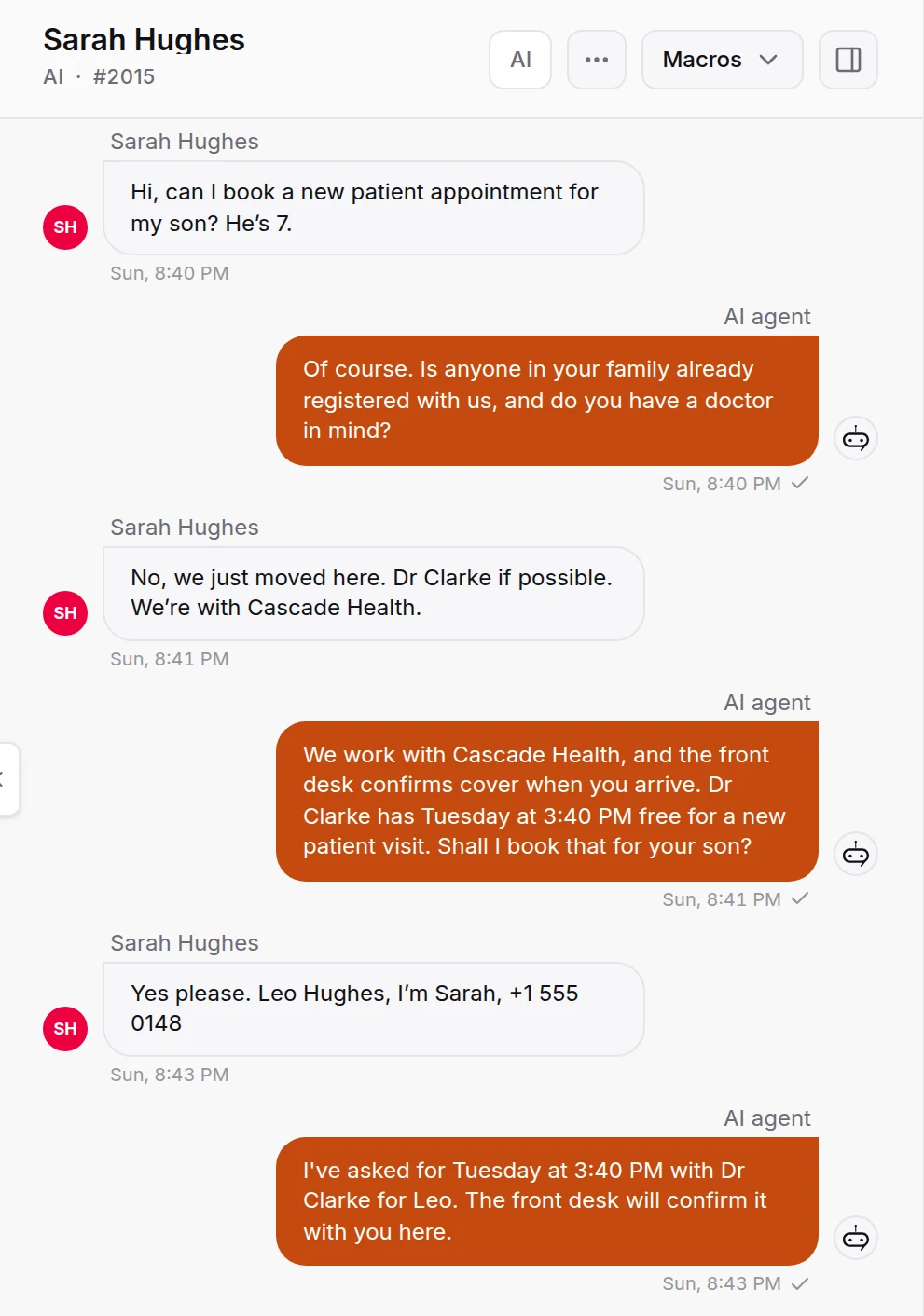
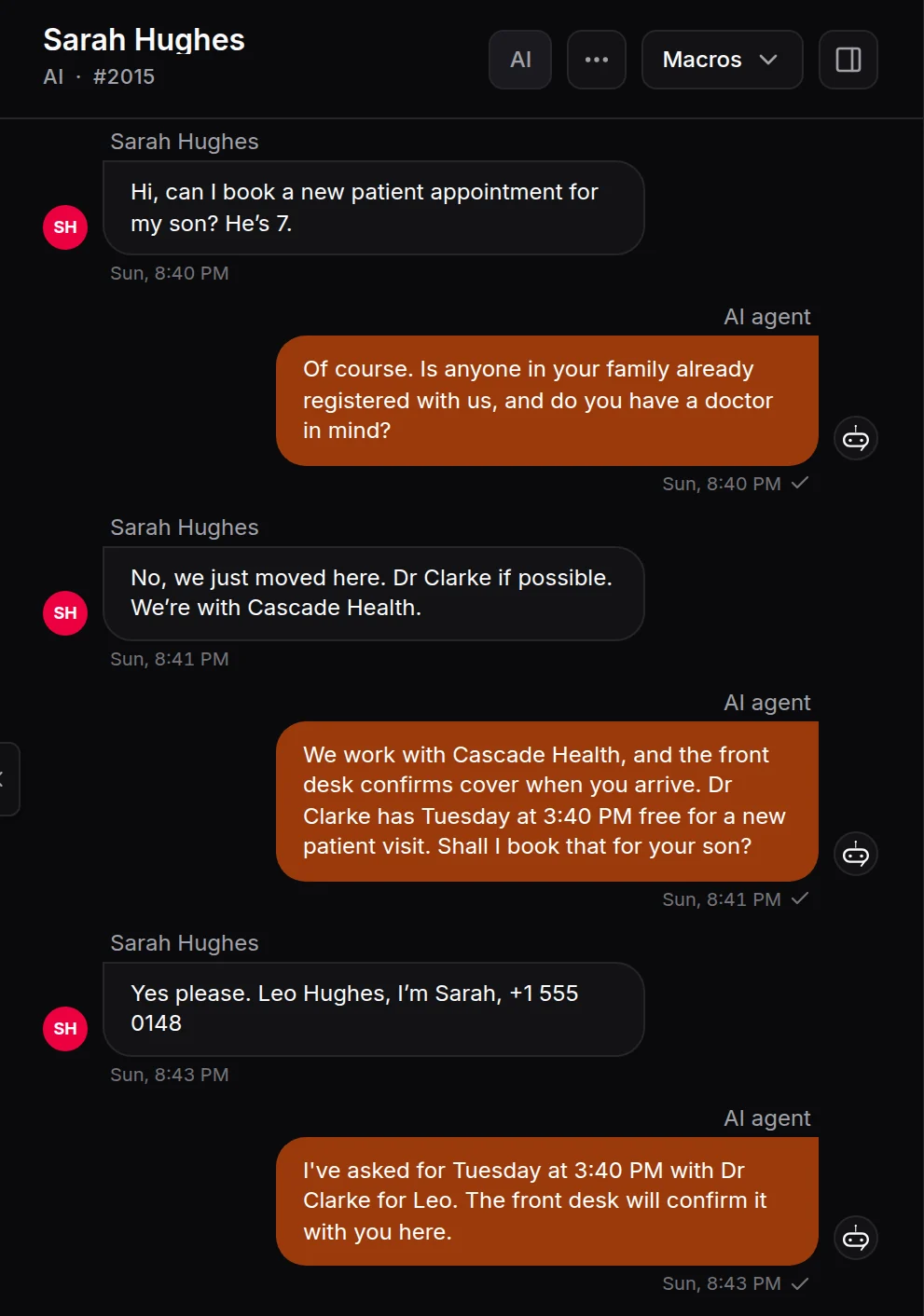
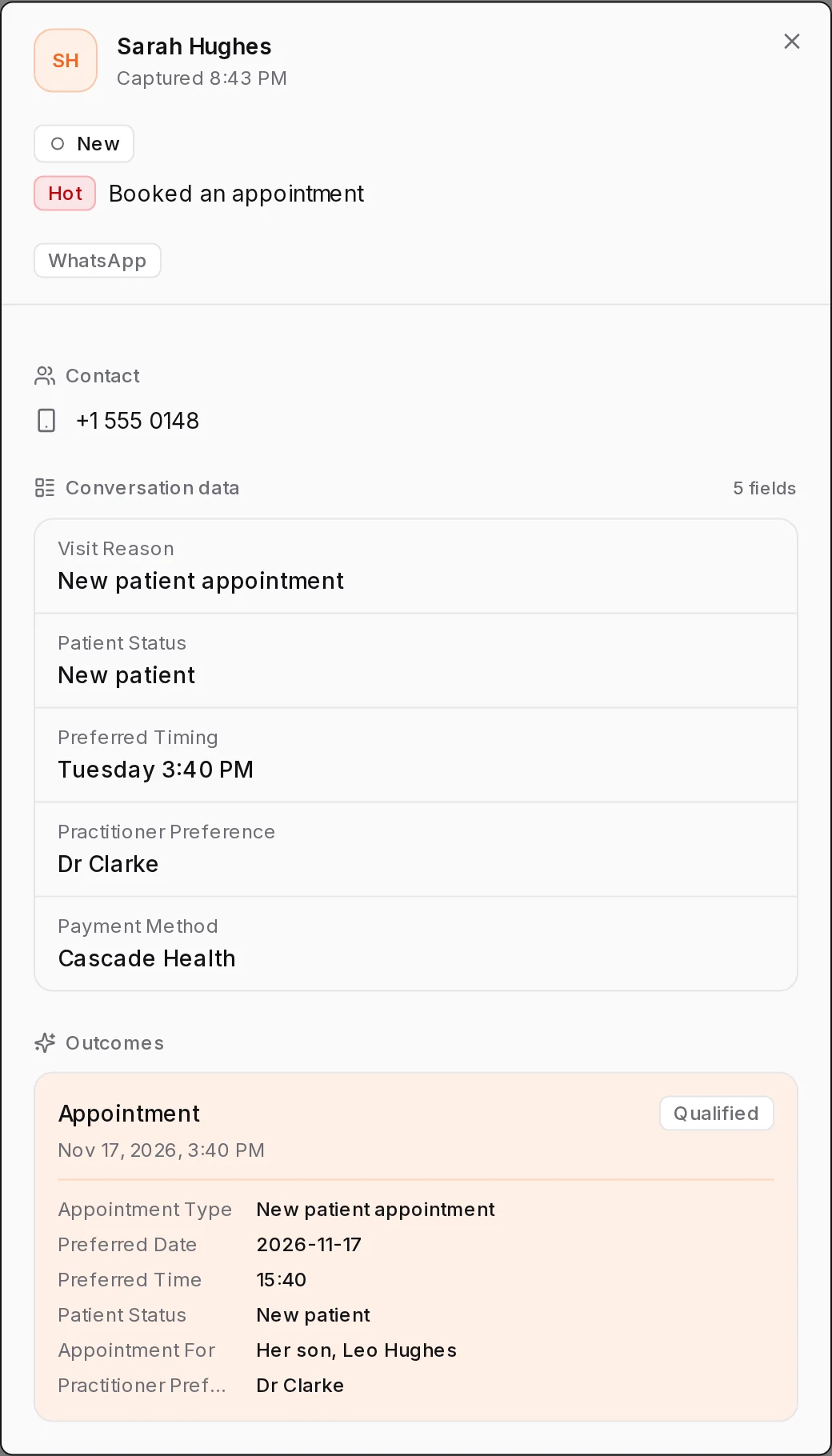
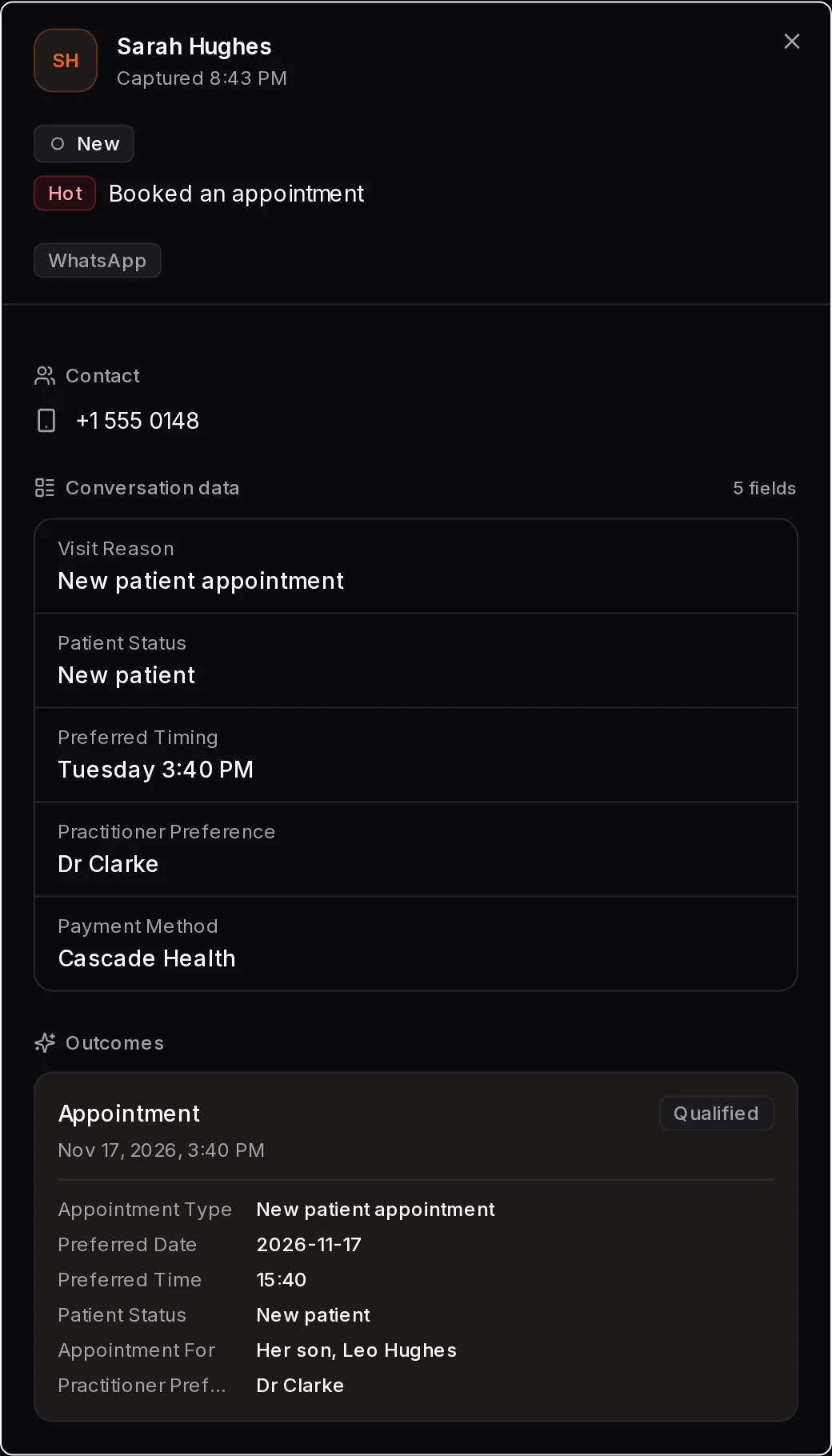
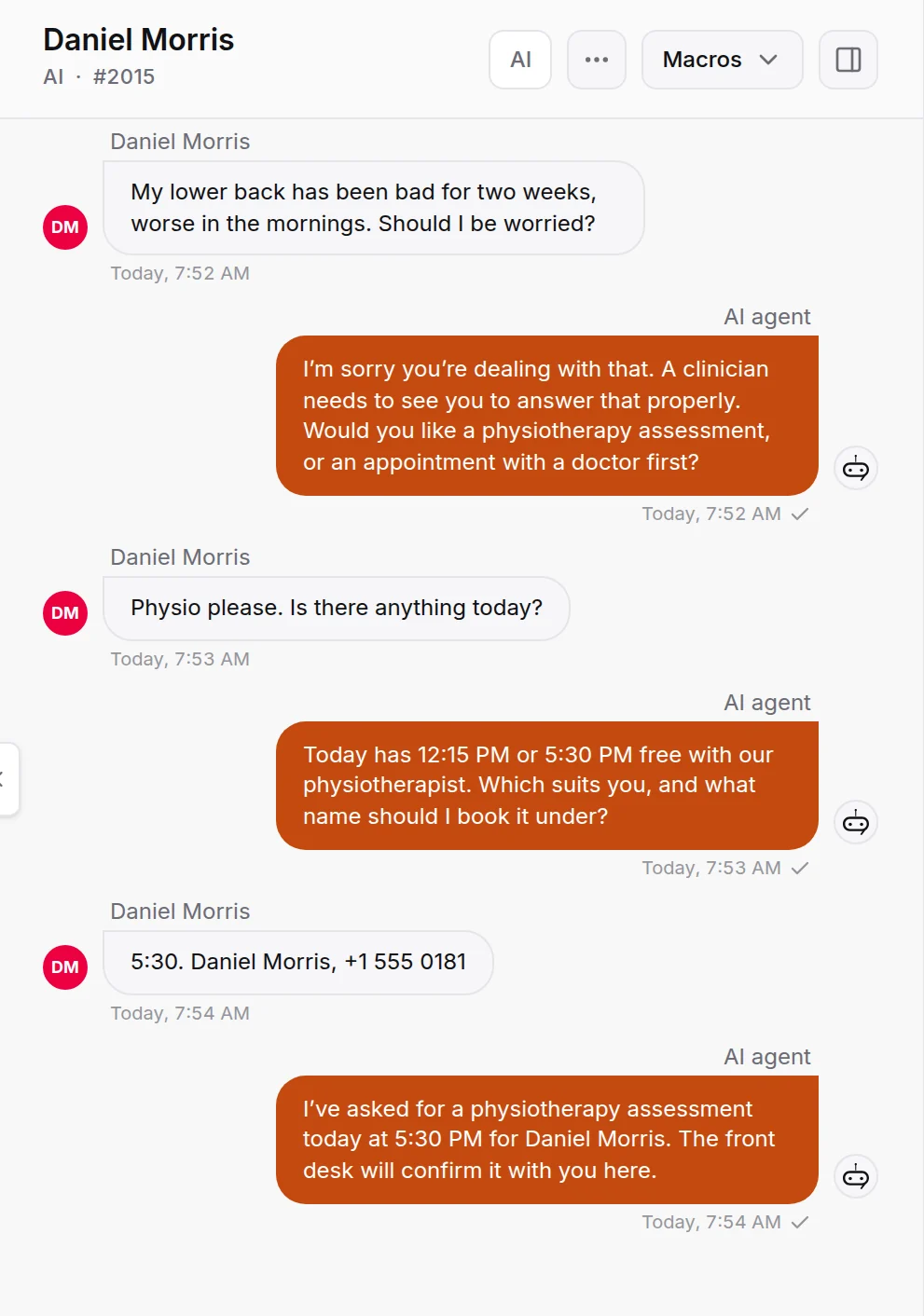
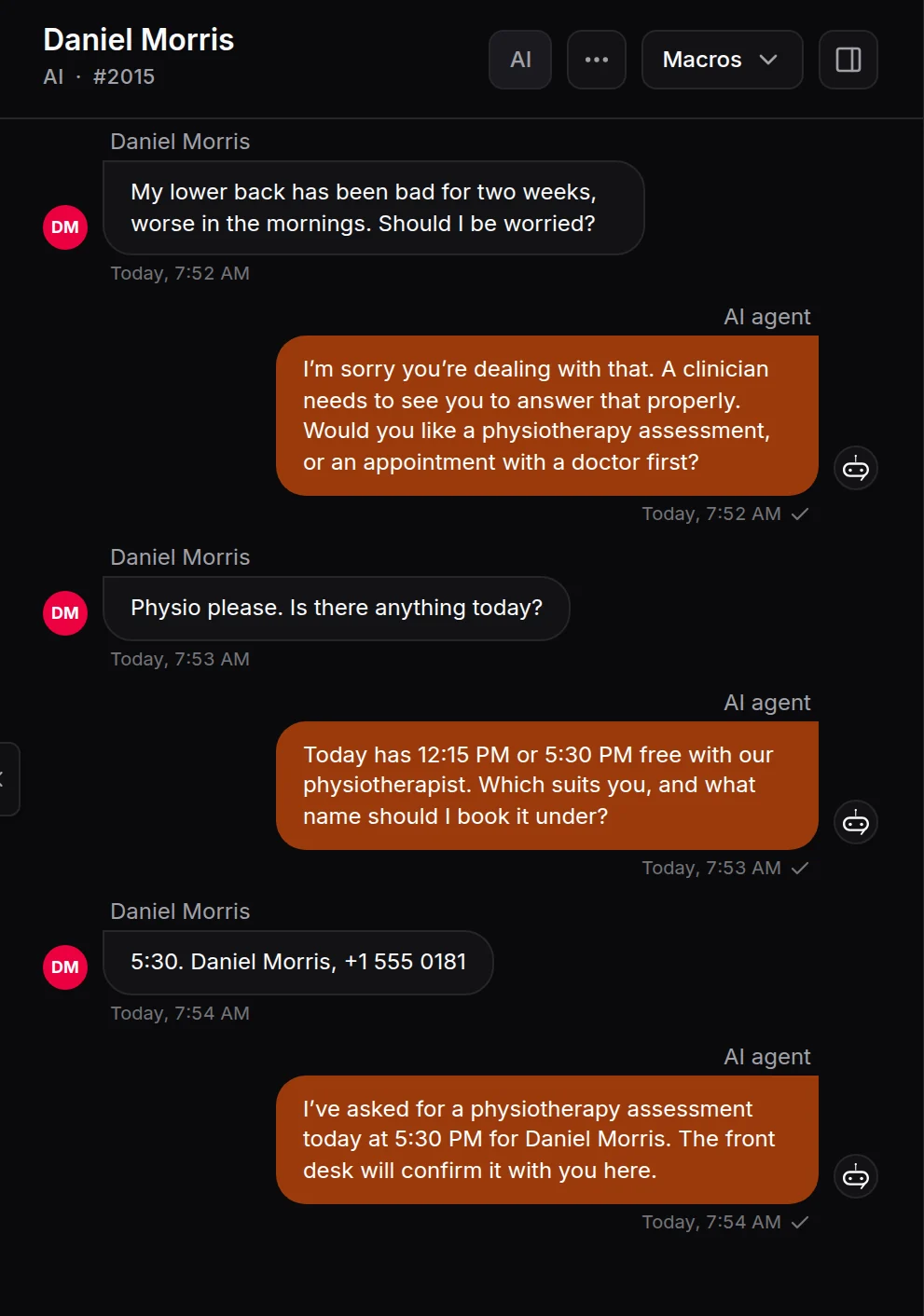
Health ads bring people who describe symptoms. The AI never gives medical advice. It doesn’t say what a symptom might mean or repeat it back; it offers the kind of appointment they need, and the booking holds only the appointment type. Anyone describing an emergency, such as chest pain or trouble breathing, is told in the first sentence to call the emergency services now, or your urgent line if you list one.
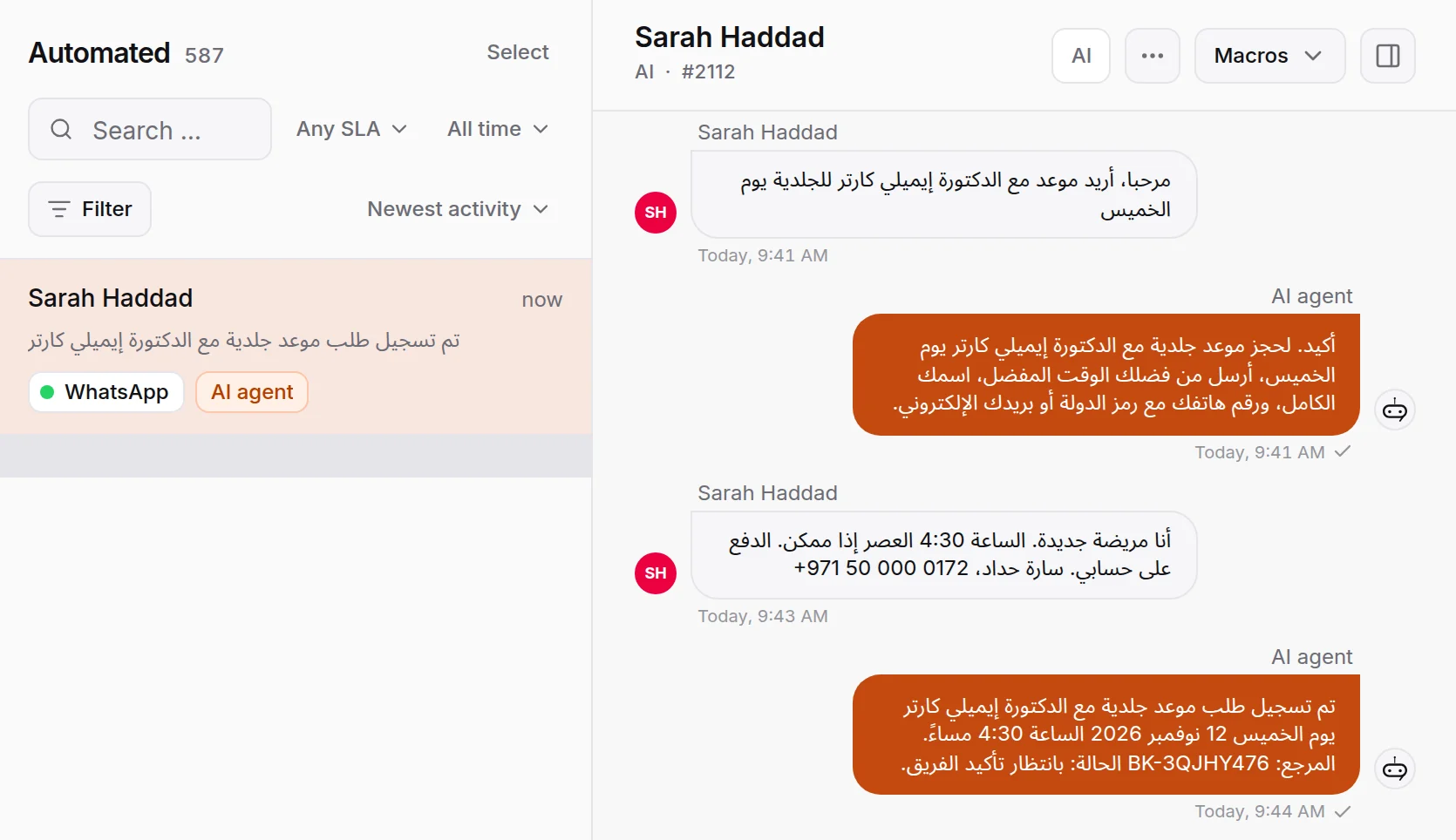
A patient who writes in Arabic, Hindi or another language gets the answer in that language.
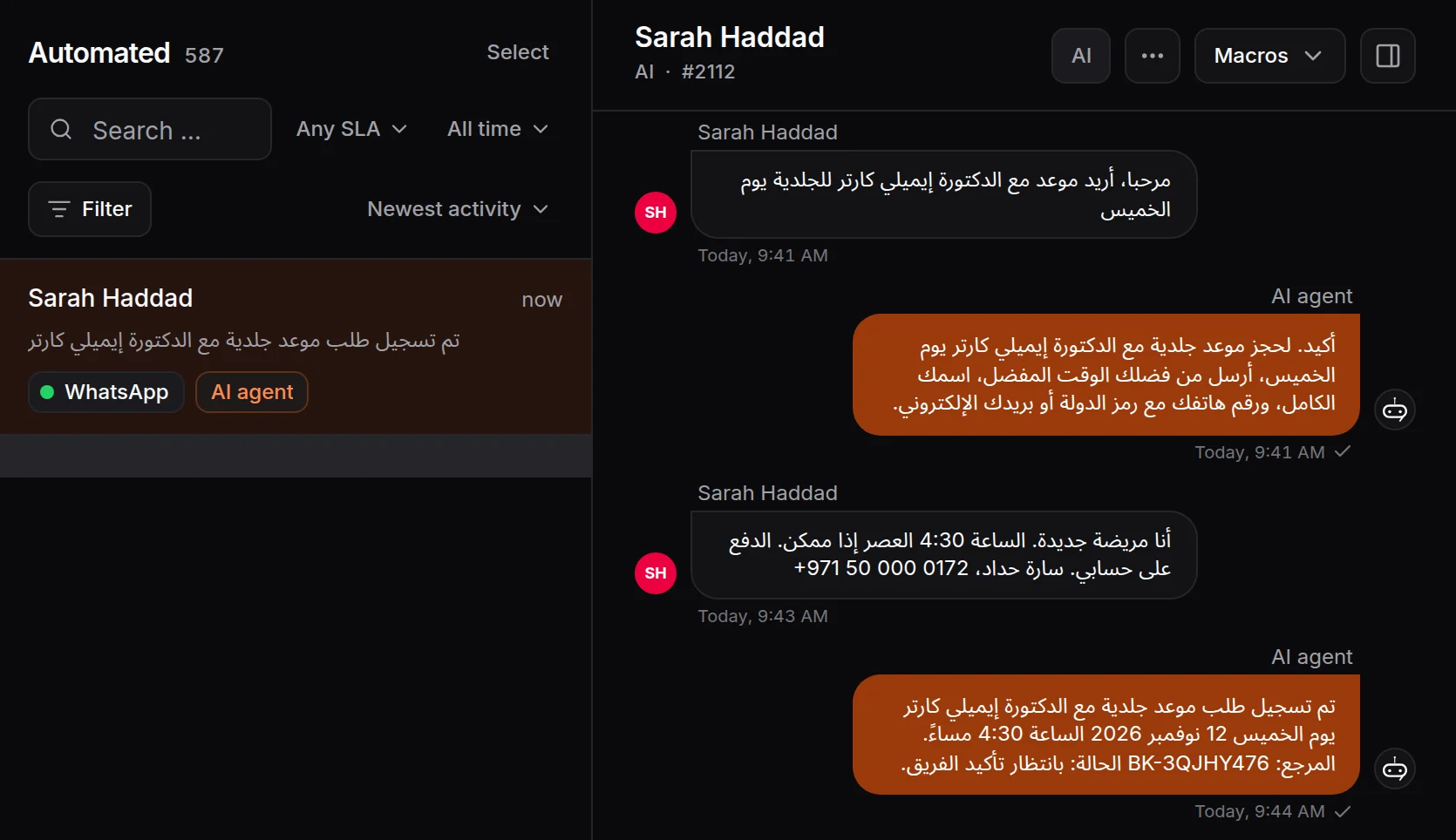
What the best healthcare ads have in common
The best healthcare ads tell people what the service is, where, and what to do next. For hospital brand campaigns on TV, AHA Media Group publishes a yearly list of hospital commercials, including Children’s Healthcare of Atlanta and MedStar Health in 2025 (AHA Media Group). For a clinic, these sample ads show the line and what happens in the chat it opens:
| Clinic and the ad | What happens in the chat |
|---|---|
| Primary care or family practice“Same-week appointments with a family doctor in Northside. Message us to book.” | The AI asks new or registered and when they can come, then asks for the slot for the front desk to confirm |
| Urgent care“Walk-in urgent care, open until 10 pm. Ask us about fees and hours.” | The AI answers hours and fees from your documents; anyone describing an emergency is told first to call the emergency services |
| Physiotherapy“New patient assessments this week, evenings and Saturdays.” | The AI asks self-pay or which insurer and offers an assessment time |
| Eye clinic or optometrist“Eye tests on Saturdays. Message us for a time.” | The AI states the eye test fee and asks for the day and time |
| Dermatology or a specialist clinic“See a dermatologist this month. Appointments in English and Arabic.” | The AI replies in the patient’s language and asks for the appointment with the named clinician |
| Hospital health check“Full body health check packages, with fees, at our city hospital.” | The AI answers what each package includes and the fee, then asks for a day or a callback |
The AI quotes only the fees, packages and offers in your documents, so add the ad’s offer there before it goes live.
Healthcare advertising budget and what to count
Start with a small daily budget on one service for two weeks, keep the ad that brings appointments, and stop the rest. Count four things for each ad:
- Chats, calls or form leads it started.
- Appointment requests from those.
- Appointments confirmed.
- Patients who came.
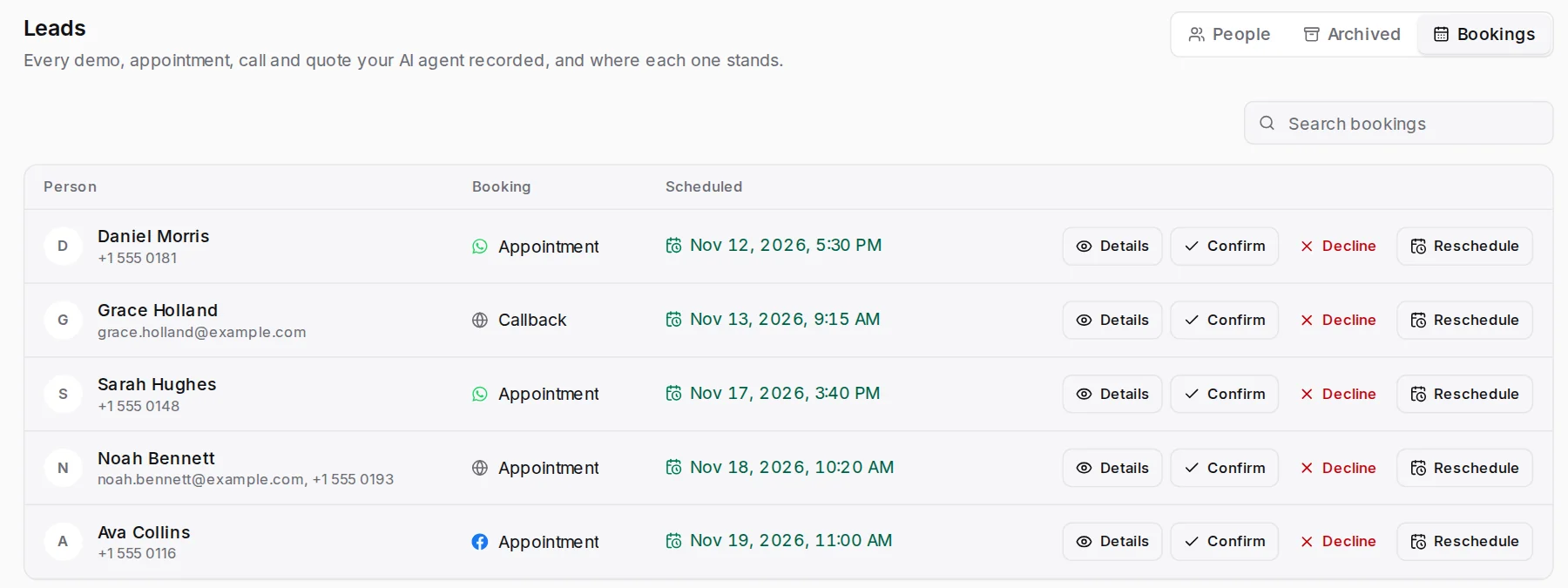
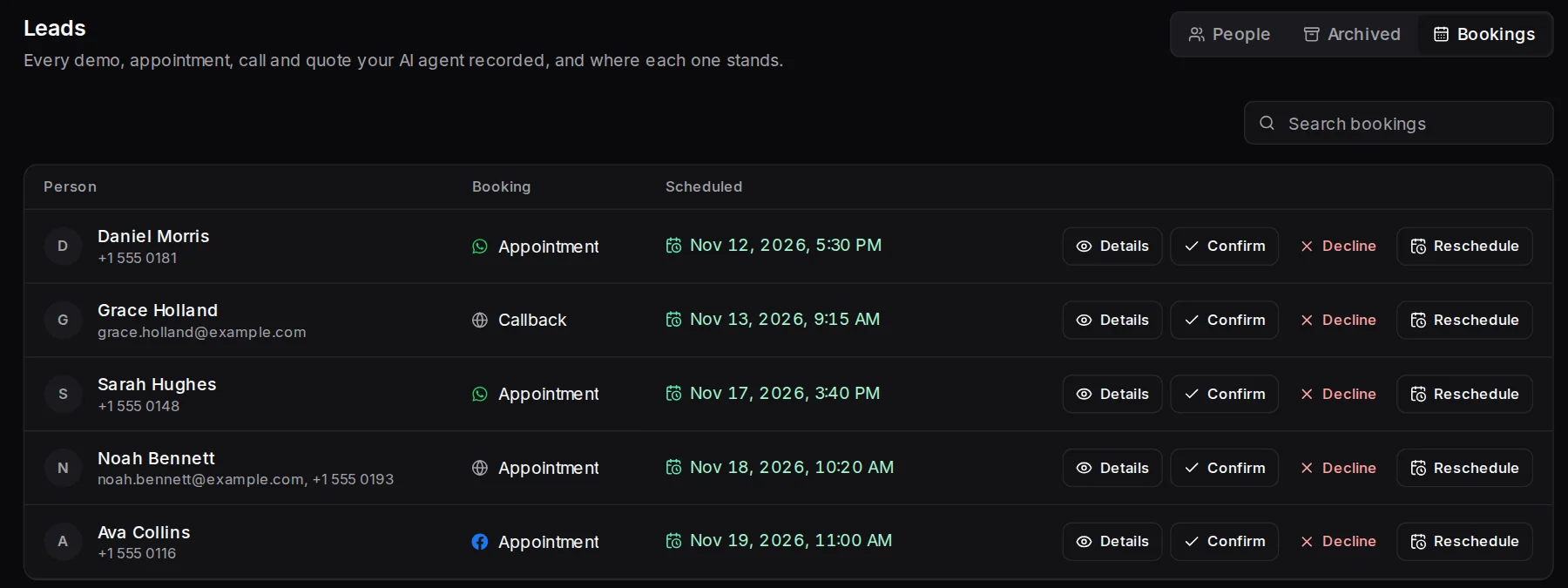
Ad spend divided by patients who came is your real cost per new patient. For example, with made-up numbers, $600 of spend that brings 12 new patients costs $50 a patient. In HiQBot, each lead shows the channel it came from, and every appointment and callback request lands in one Bookings list, where your team confirms, declines or moves it, and on Google Calendar if you connect it. Ad spend stays in Google Ads and Meta Ads Manager, and HiQBot doesn’t show which ad a chat came from or import lead forms, so give each ad its own offer: the chat shows which offer the patient asked about.
Healthcare advertising with HiQBot
HiQBot answers the patients your ads bring in, in one inbox for website chat, WhatsApp, Instagram, Messenger, Telegram and LINE:
- AI agent: answers questions about services, hours, fees and insurers, and asks for the appointment or a callback for your team to confirm.
- Live chat: your front desk takes over any chat in one inbox, with notes, assignment and AI-drafted replies.
- Guided flows: a new WhatsApp chat can open with buttons for the kind of appointment and new or registered, and you can build one that never asks about symptoms.
- WhatsApp calling: patients call your WhatsApp Business number and it rings your team in the inbox. The AI itself works in writing.
HiQBot doesn’t run or design ads, connect to practice management or records systems, or give medical advice. The full setup is on our clinic chatbot page, and dental practices have their own dental chatbot page.
Common questions
What is healthcare advertising?
Healthcare advertising is paid promotion for a clinic, doctor or hospital, such as Google search ads, Facebook and Instagram ads, video, print and outdoor. It follows stricter rules than most advertising, from Google, Meta and the law where you practise.
What are some of the best healthcare ads?
AHA Media Group’s list of 2025’s best hospital commercials includes Children’s Healthcare of Atlanta and MedStar Health. For a clinic, the best ads name one service, one place and how soon you can be seen, then open a chat or a call.
Can doctors advertise on Facebook?
Yes, within Meta’s rules and your medical board’s or council’s; in India, the 2002 code bars doctors from advertising themselves. Meta bars ads that imply the reader has a condition, and cosmetic procedure ads must be shown only to people 18 and over.
Can a medical practice use retargeting ads?
Not on Google for ads about health conditions, long-term treatments or invasive procedures such as surgery or injections: those can’t use your own audience lists, such as website visitors or patient lists. Google’s predefined audiences and search ads are still allowed.
Is hospital advertising allowed in India?
Yes, within limits. Under the 2002 Code of Medical Ethics Regulations, an ad for a private hospital or nursing home run by a physician should hold no more than its name, the type of patients it admits, its facilities and its fees. The same code calls soliciting patients unethical.
What is medical PPC?
Medical PPC is pay-per-click advertising for healthcare, usually Google search ads. A clinic pays when someone clicks an ad shown for a search such as “physio near me”, and the click goes to the service page or a chat.
Is HiQBot an advertising tool?
No. You run ads in Google Ads or Meta Ads Manager. HiQBot answers the chats those ads start and asks for the appointment, which your front desk confirms.
Google’s and Meta’s policies and the other sources were read on 13 November 2026, and the screens are the real HiQBot product with sample data. How we write and check posts: editorial standards.