Patient no-shows: how to reduce them and fill the empty slot
Muhammad Hassan, FounderLinkedIn
Published Updated
A patient no-show is a booked appointment the patient misses without cancelling. Across 105 studies, the average no-show rate was about 23% (Dantas and others, 2018). Practices that reduce no-shows do four things: remind patients before the visit, make moving it as easy as replying, set a clear policy, and fill the empty slot fast.
We make HiQBot, a customer service platform with AI agents, live chat, guided flows and WhatsApp calling for clinics and dental practices. This guide is for practice owners and front desk managers. The screens show a sample clinic set up in the real product.
How common are patient no-shows?
A systematic review of 105 studies put the average no-show rate in healthcare at about 23%. It was highest in Africa (43%) and lowest in Oceania (13%) (Dantas and others, Health Policy, 2018). In an August 2025 MGMA poll of 265 US medical practices, 60% said no-shows were about the same as the year before, 13% said they had fallen and 27% said they had risen (MGMA Stat).
Your own rate matters more than an average. Count the appointments patients missed without cancelling in the last three months and divide by the appointments booked. Work it out by clinician, weekday, appointment type and new or returning patients, because the problem is rarely spread evenly.
Why do patients miss appointments?
When a community health center called patients who had missed primary care visits, the two most common reasons were forgetting (35.5%) and miscommunication (31.5%) (Kaplan-Lewis and Percac-Lima, 2013). Across studies, the strongest predictors were a long wait between booking and the visit, and a patient who had missed before (Dantas and others). Younger patients, patients who live far from the clinic and patients without private insurance also missed more often.
Several of these the practice can change:
- The appointment was booked weeks ahead and nothing reminded the patient.
- The patient wasn’t sure of the day, the time or the location.
- Cancelling meant calling during office hours, and the patient decided to cancel at 9 p.m.
- The patient felt better, or worse, and didn’t know whether to still come.
How to reduce patient no-shows: 7 steps
- Book sooner. The longer the wait, the more patients miss. Offer the earliest free time first, and keep some same-week slots open.
- Confirm when they book. Send the clinician, day, time and address straight away, with how to move it.
- Remind them 24 hours before. Add a reminder 48 to 72 hours ahead when the patient must prepare.
- Make moving as easy as replying. “Reply here to move or cancel” turns a no-show into a cancellation you can refill.
- Answer that reply at any hour. A patient who writes at night and hears nothing until morning may not come either way.
- Follow up every no-show the same day. Offer a new time, and note it on the patient’s record.
- Write a policy and track the rate. Check it monthly by clinician and appointment type.
Some practices also double-book the slots that are missed most. Do that only from your own numbers, or you will have two patients in the waiting room for one clinician.
Appointment reminders from 2 hours to 7 days before
In a Cochrane review of eight trials with 6,615 people, 78.6% of patients sent a text reminder came to their appointment, against 67.8% with no reminder (Gurol-Urganci and others, 2013).
| Message | When | What it says |
|---|---|---|
| Confirmation | When the patient books | Who, what, when, where, and how to move it |
| Preparation reminder | 48 to 72 hours before | Only for visits that need fasting, forms or a long slot |
| Main reminder | 24 hours before | The appointment and “reply here to move or cancel” |
| Same-day reminder | 2 hours or more before | For patients who have missed before |
Keep the reason for the visit out of the message, because it shows on a lock screen. Ready-to-copy wording is in our appointment reminder templates.
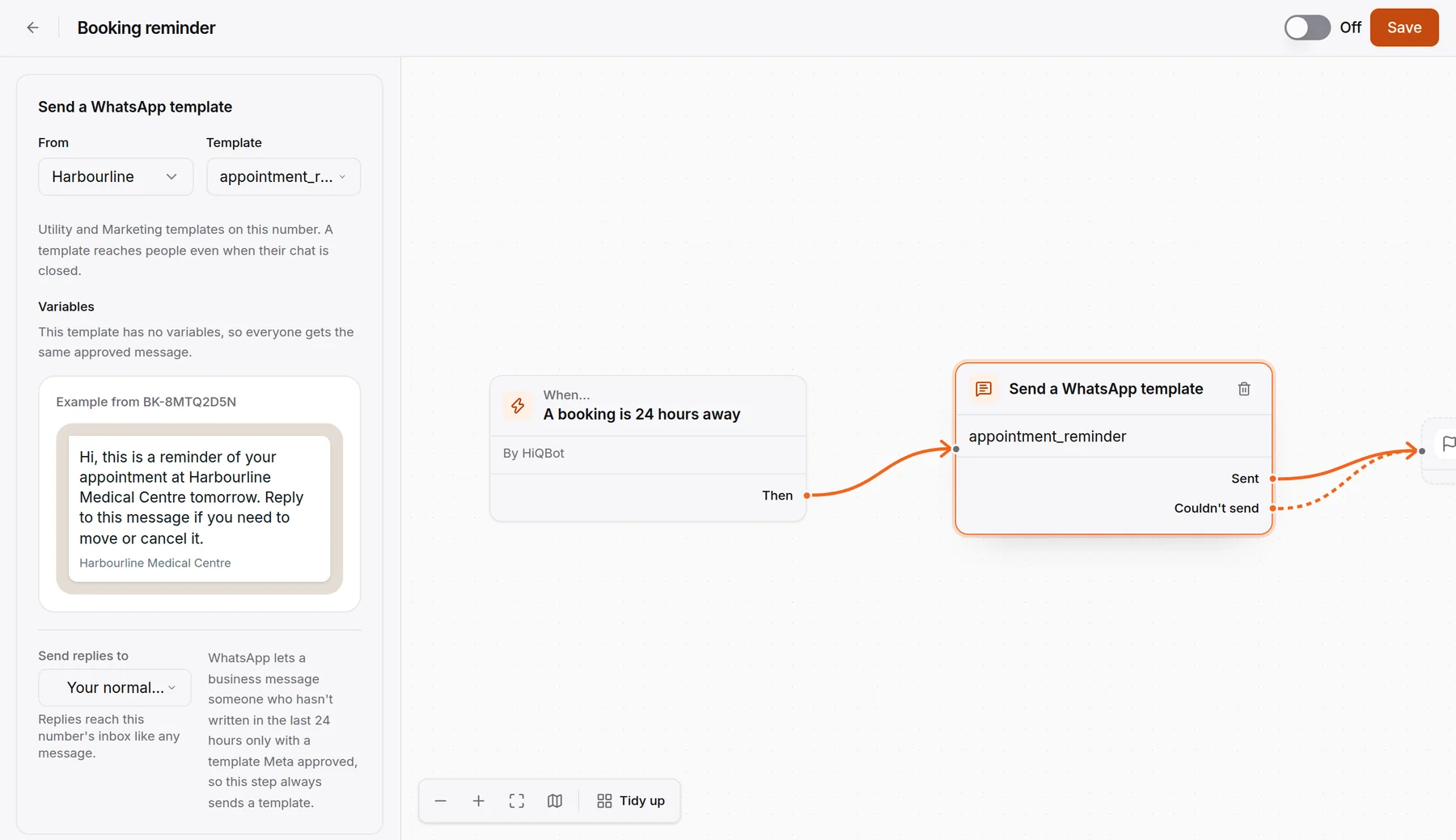
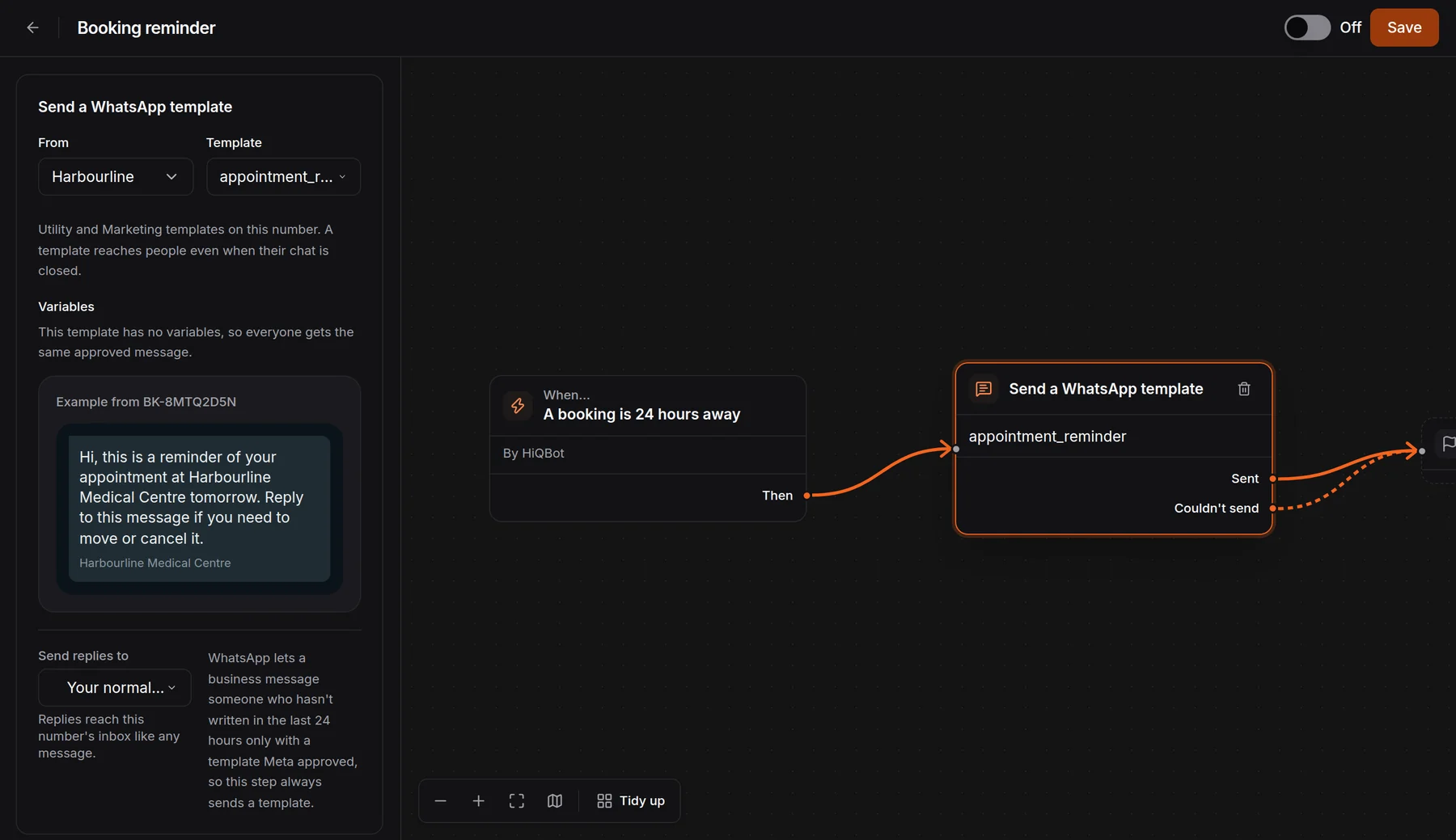
In HiQBot, a reminder automation goes out from 2 hours to 7 days before each booking. It writes in the patient’s own chat if it is still open, or sends your approved WhatsApp template, and you can set sending hours so nothing goes out at night. A booking made in your website chat is reminded on the WhatsApp number the patient gave. A cancelled booking gets no reminder, and a moved one is reminded at its new time.
Rescheduling in the chat
When the patient replies to move or cancel, the AI agent answers in the same chat, on WhatsApp, your website, Instagram, Messenger, Telegram or LINE. It finds the appointment by the phone number or email the patient booked with and checks which one they mean before it changes anything.
- A patient who asks to cancel is offered a new time once, and the AI cancels if they say no.
- If the change falls inside your notice window, the AI says so and what it costs, as your policy is written, before it changes the booking. Waiving a fee is your decision, so it passes that request to your team.
- It never judges whether they still need the visit. A patient cancelling because they feel worse is told to call the emergency services first when it sounds urgent. The AI never says what a symptom means and keeps symptoms out of the booking.
- With Google Calendar connected, a moved appointment updates the event and a cancelled one removes it.
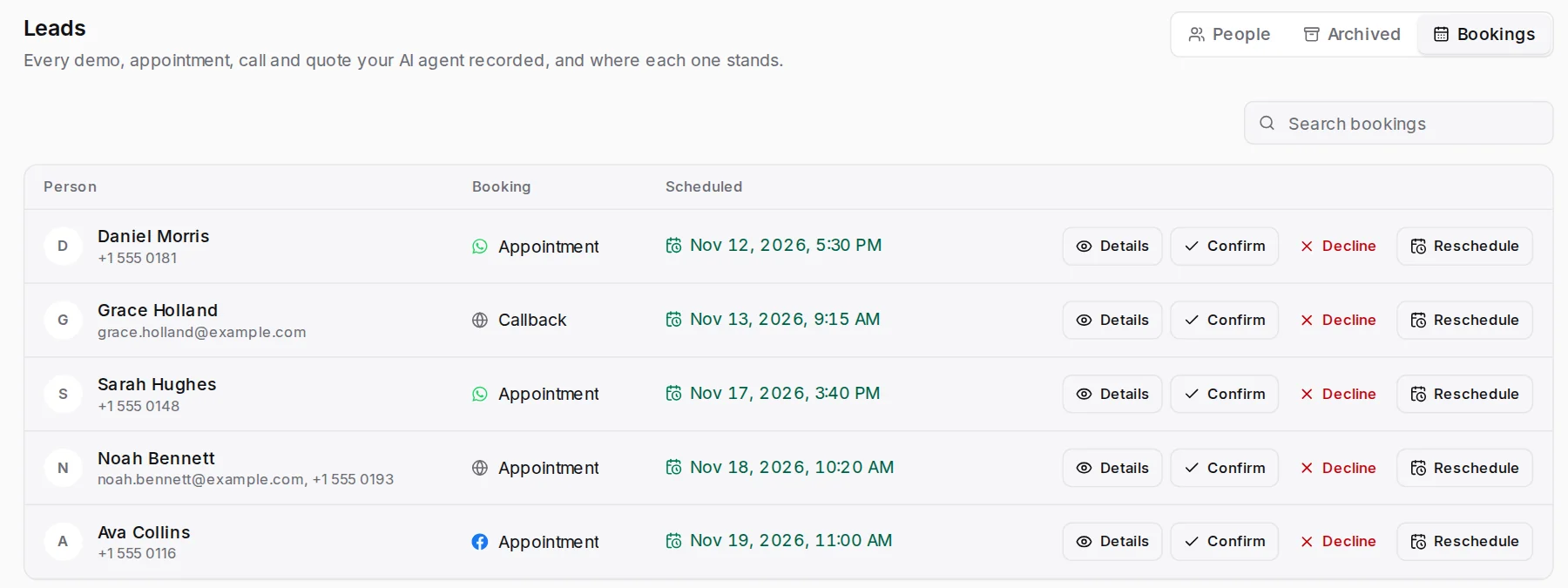
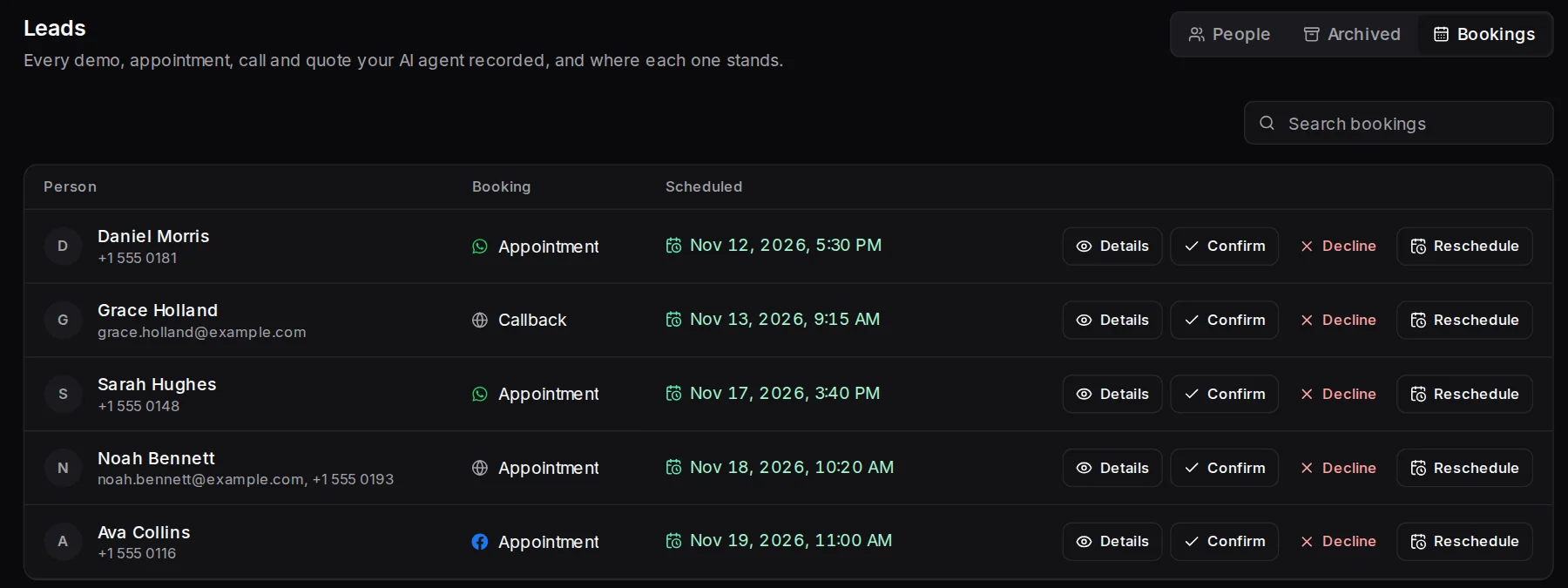
Your front desk can take over any chat in the same inbox, and can move or cancel any booking from the bookings list. A patient who would rather talk can call your WhatsApp Business number, which rings your team in the inbox (WhatsApp calling). The AI itself works in writing. On WhatsApp, Instagram, Messenger, Telegram and LINE, a guided flow can also let patients tap to pick a new free time.
Filling the empty slot
A cancellation only helps if someone else takes the time. Once a booking is cancelled, that time is free again, and the AI offers the earliest free times to the next patient who asks, at any hour. The patient asks for the time, and your front desk confirms it.
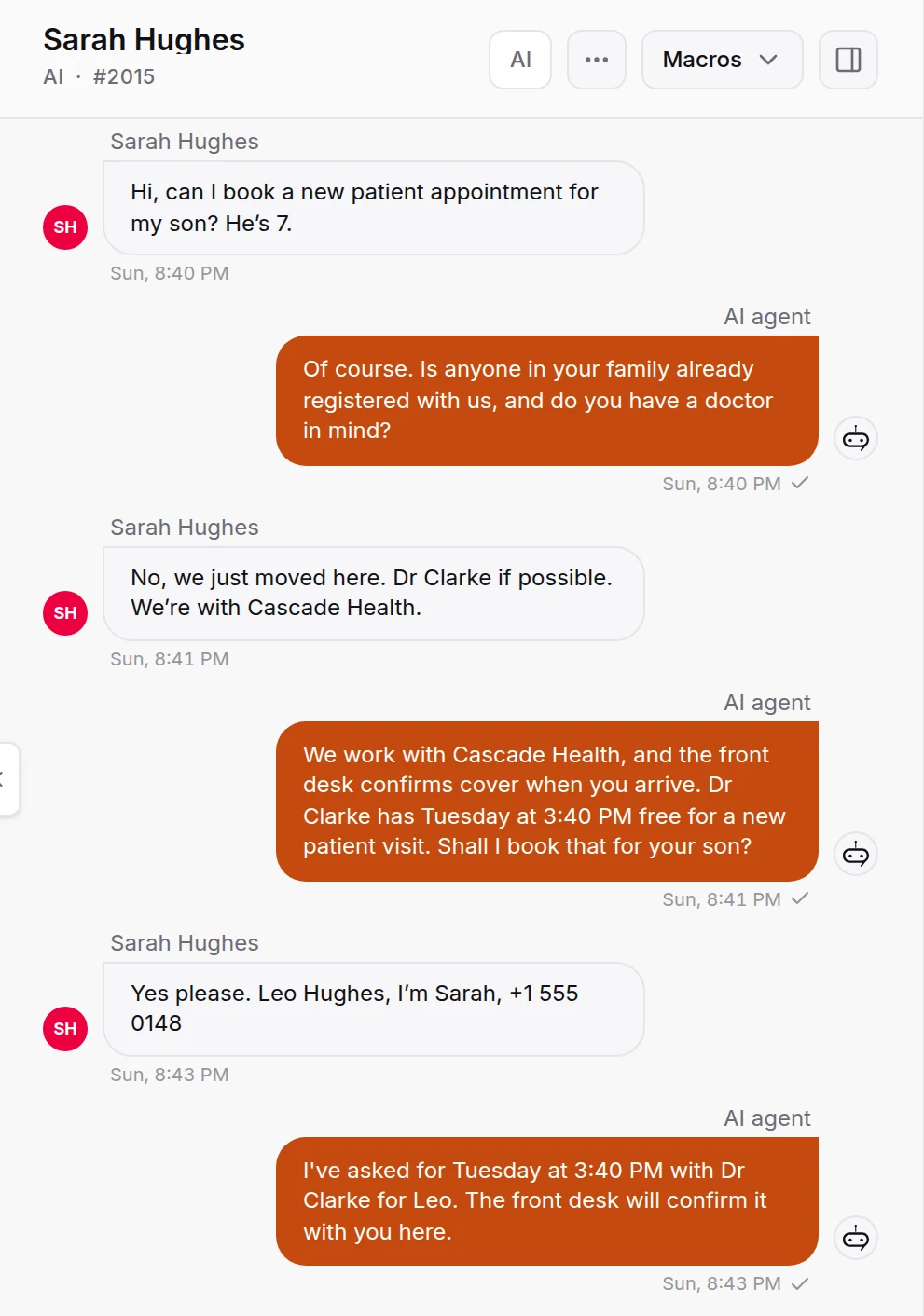
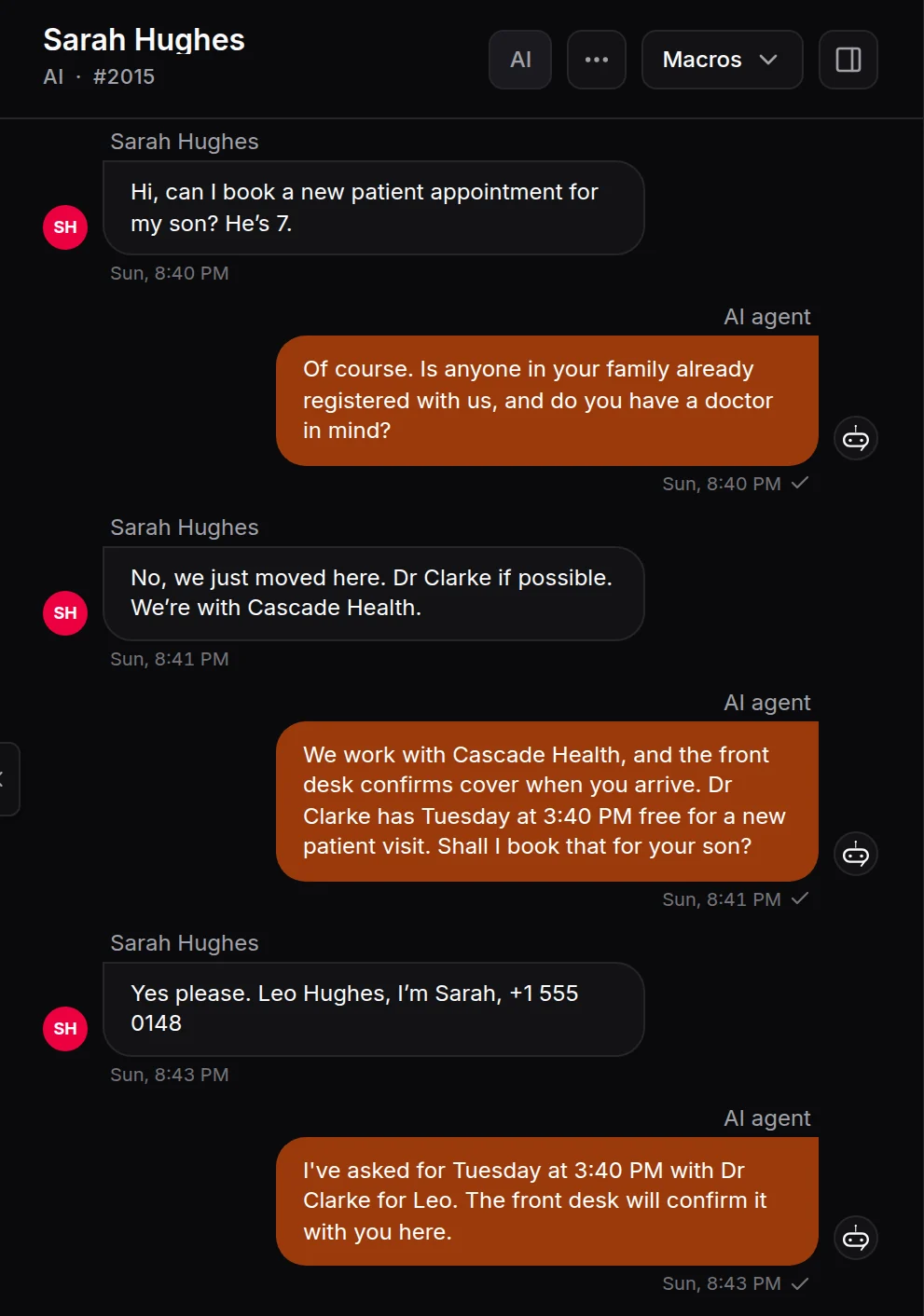
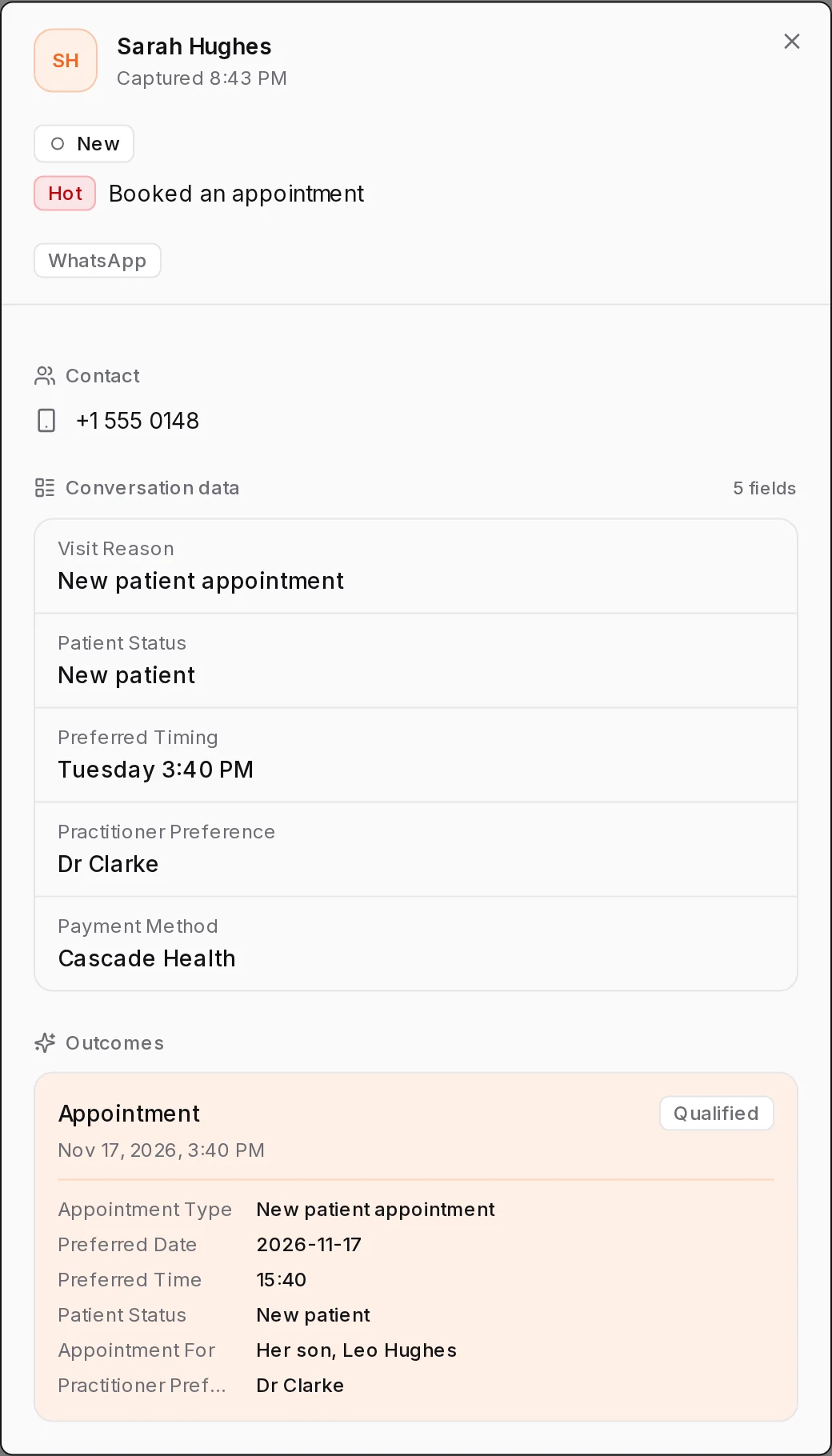
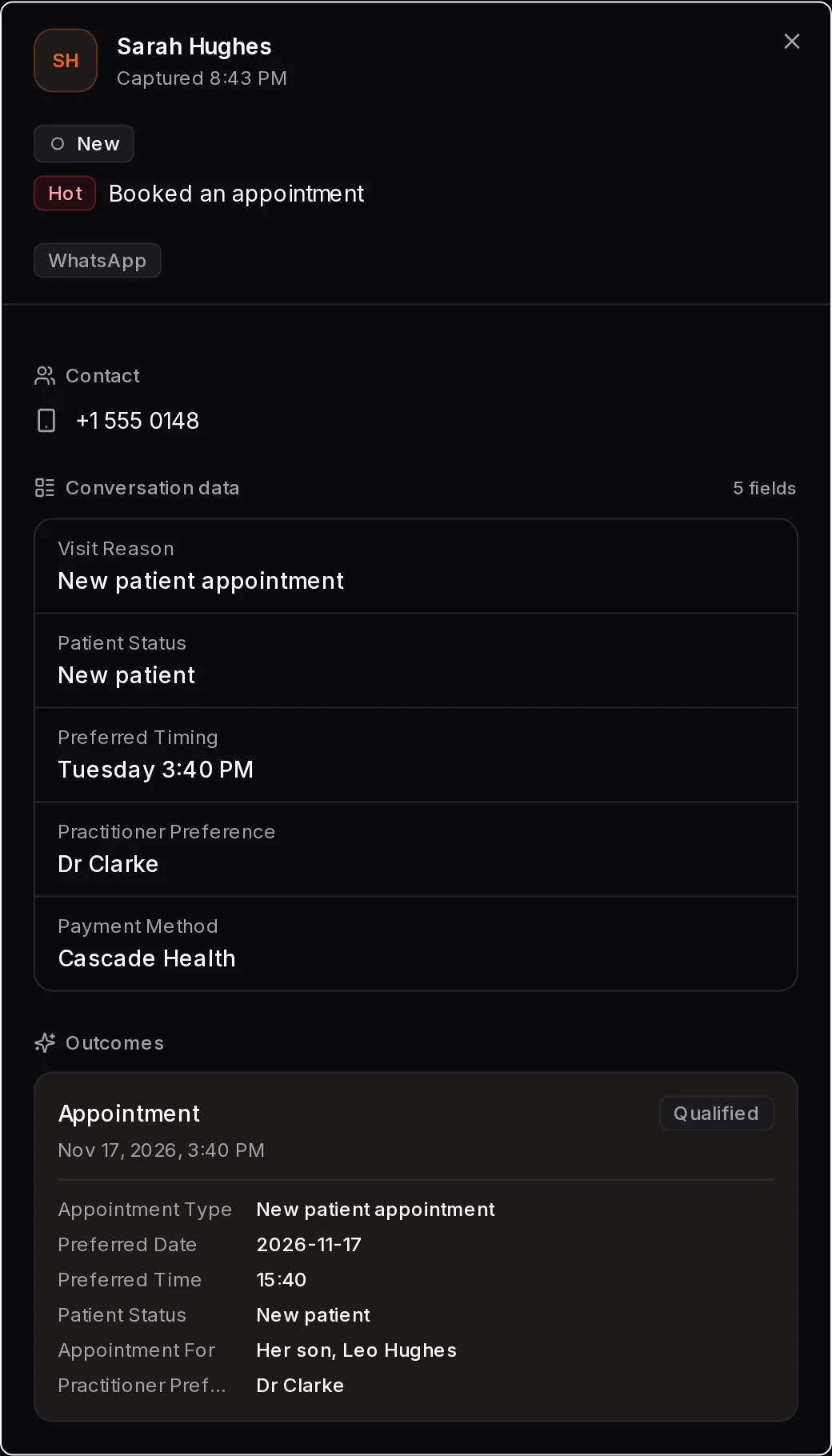
For patients who asked for an earlier appointment, keep a short list. Tag them in HiQBot, and when a slot opens your front desk messages them from the inbox. On WhatsApp, a patient who hasn’t written in the last 24 hours needs an approved template.
A patient no-show policy and no-show fee
A no-show policy is a short written rule patients see before their first visit. It says:
- how much notice you need to move or cancel (24 hours suits most visits; longer for long treatment slots);
- how to cancel, including “reply to your reminder”;
- what counts as a no-show, such as arriving more than 15 minutes late;
- whether you charge a fee, and how much;
- what happens after repeated no-shows.
Please give us 24 hours’ notice to move or cancel an appointment. Reply to your reminder, message us on WhatsApp or call the practice. Appointments missed without notice, or more than 15 minutes late, may be charged a $25 fee. After three missed appointments in a year, we may ask you to book only same-day appointments.
Sample text. Set the amounts and rules your practice uses.
Can you charge a no-show fee?
It depends on where you practise and your insurer contracts. In the US, Medicare lets practices charge Medicare patients for missed appointments only if they charge other patients too, and the same amount. Medicare itself doesn’t pay for missed appointments (CMS, MLN Matters MM5613). Insurer contracts and public health schemes elsewhere can rule fees out, so check yours.
When a patient asks the AI about cancelling late, it quotes the fee from your own policy. If your policy isn’t in its documents, it says it can’t confirm it and passes the patient to your team.
Cancellation policy for clinics, dental and physical therapy practices
The same policy works for most practices, with a notice window that gives you time to refill the slot. Dental hygiene and treatment visits take long chair time, so a dental practice may want more notice. Physical therapy and therapy practices book a series of visits, so a policy can name what happens to the remaining sessions after a no-show. How dental practices send reminders and recall messages on WhatsApp is on our dental practice chatbot page.
Missed appointment letter: a sample message
Send it the same day, keep it friendly, and offer a new time. A message in the patient’s chat is read faster than a letter.
Hi Daniel, we missed you at Harbourline Medical Centre today at 5:30 p.m. We hope everything is all right. Reply here and we’ll find you a new time.
No automation fires on a missed appointment, so your front desk sends it from the inbox, where a saved reply makes it one click. When the patient answers, the AI can book the new time. The full clinic setup is on our clinic chatbot page.
Common questions
What is the average no-show rate for doctor appointments?
About 23%, averaged across 105 studies, with wide differences by region and specialty. Compare against your own rate over the last three months, not an average.
How do I stop patient no-shows?
Book patients sooner, confirm when they book, remind them 24 hours before, and let them move the appointment by replying. Follow up every no-show the same day and write a policy patients see before their first visit.
How do you deal with no-show patients?
Message them the same day, offer a new time, and record the no-show. Apply your policy the same way to every patient, and talk to a patient who misses often before you charge or restrict bookings.
Can a doctor charge a no-show fee?
It depends on your state and insurer contracts; tell patients in a written policy first. Medicare patients in the US can be charged only if every patient is charged the same amount, and insurer contracts may forbid fees.
Do appointment reminders reduce no-shows?
Yes. In a Cochrane review of eight trials, 78.6% of people sent a text reminder came to their appointment, against 67.8% with no reminder.
Can an AI chatbot reduce no-shows?
Yes, for the causes you control: HiQBot sends reminders, moves or cancels appointments when patients reply, and offers freed times to the next patient at any hour. It doesn’t send SMS or email, and the AI never gives medical advice.
The studies, the MGMA poll and the CMS article were read on , and the screens are the real HiQBot product with sample data. How we write and check posts: editorial standards.