Social commerce: what it is, how it works, platforms, examples and selling in the chat

Muhammad Hassan, FounderLinkedIn
Published Updated
Social commerce is selling products directly through social media: people find a product in a feed, video or chat, ask about it there, and buy in the app, on the seller’s website or through the chat. It covers shops inside apps such as TikTok Shop, product tags on Instagram, and orders taken in Instagram DMs, WhatsApp and Messenger.
This guide is for online stores and D2C brands. It covers how social commerce works, the platforms, examples, and conversational commerce, the part where the sale happens in a chat. We make HiQBot, a customer service platform whose AI agent answers those chats, so we show where it fits near the end.
What social commerce is
Social commerce is buying and selling where people already spend time online. A shopper watches a reel, taps a product tag or sends "price?" in a DM, and the sale starts right there. Social media marketing points people to a store; social commerce lets them ask and buy where they found the product.
A sale usually ends in one of three places:
- Inside the app. TikTok Shop lets people pay without leaving TikTok.
- On your own website. Instagram and Facebook shops show your products, then send the buyer to your site to pay. Meta's checkout URL guide says checkout "takes place on your own website".
- In the chat. The buyer asks in a DM or on WhatsApp, and you send a checkout link or take the order and confirm it.
How social commerce works
- Discovery. A post, reel, live stream, creator video or ad shows the product in use.
- The question. The buyer comments or sends a DM: price, size, stock, delivery time, whether it suits them.
- The answer. A fast, clear reply keeps the buyer. A reply the next morning may come after they have bought elsewhere.
- Payment. In the app, on your checkout, or by a payment link, bank transfer or cash on delivery agreed in the chat.
- After the sale. "Where is my order?" and return questions come back to the same chat, and happy buyers post about it, which starts the next sale.
Social commerce vs ecommerce
Ecommerce is any sale made online. Social commerce is the part of ecommerce that starts and often finishes on a social app. Most small stores do both: a website for the checkout, and social media where people find them and ask questions.
| Ecommerce on your website | Social commerce | |
|---|---|---|
| Where the shopper finds you | Search, ads, email, your own site | A feed, a video, a creator or a friend |
| Where questions get asked | A contact form, email or website chat | Comments and DMs on the same app |
| Where the shopper pays | Your own checkout | In the app, on your checkout, or arranged in the chat |
| Who owns the customer data | You | Shared with the platform, or yours if they pay on your site |
| What it needs from you | Search and ads to bring people in | Regular posts and fast replies |
Benefits and drawbacks for a small store
- Benefits. Buyers find you without a big ad budget, see the product in use, and can ask a question the moment they want to buy.
- Drawbacks. Each app sets its own rules and fees and can change them, and in-app checkout gives you less of the customer relationship. Questions also arrive on several apps at once, at all hours.
Social commerce platforms
Each app sells in its own way. For a small store, the questions are where buyers find you and where they pay.
| Platform | Where products show | Where the buyer pays | Source |
|---|---|---|---|
| TikTok Shop | Videos, LIVE and a shop tab | In the TikTok app | TikTok Shop |
| Shop, product tags in posts and reels, DMs | On your own website, or arranged in the DM | Meta checkout guide | |
| Shop on your Page, Messenger | On your own website, or arranged in Messenger | Meta checkout guide | |
| A catalogue in the Business app, and the chat | Usually arranged in the chat, after the seller confirms the order | WhatsApp Business | |
| Product Pins | On your own website | Pinterest merchants | |
| YouTube | Product tags in videos, Shorts and live streams | Usually on your store’s website | YouTube Help |
TikTok Shop is not open everywhere. In Europe it runs in the UK, France, Germany, Ireland, Italy and Spain, and from June 2026 in Austria, Belgium, the Netherlands and Poland too (TikTok newsroom, May 2026). On WhatsApp, a buyer can pick items from your catalogue and send them to you as a single message; you reply to agree delivery and payment. YouTube offers in-app checkout only with a few store platforms in a few countries. Shop features change often, so check each platform's seller pages for your market.
Social commerce examples
- A live sale on TikTok Shop. A seller shows a product on a TikTok LIVE, viewers tap it and pay in the app.
- Instagram product tags. A clothing brand tags each item in a reel. A buyer taps the tag and pays on the brand's website.
- "Comment PRICE" on a reel. Everyone who comments the word gets a short public reply and a DM with the price and a link.
- A bakery on WhatsApp. Customers send a message with the cake, size and pickup day. The baker confirms the order and takes payment by transfer or on pickup.
- A skincare brand answering DMs. A buyer asks which serum suits oily skin, gets a suggestion and a checkout link in the same chat.
- Click-to-message ads. An ad opens a WhatsApp, Messenger or Instagram chat instead of a web page (Meta, click-to-message ads), so the sale starts as a conversation.
In the last four, the sale depends on someone answering a message, which is conversational commerce.
Conversational commerce: selling in the chat
Conversational commerce, also called chat commerce, is selling through a conversation: a buyer asks questions in a messaging app or website chat and gets answers, a recommendation and a way to pay in the same thread. It is the part of social commerce that happens in Instagram DMs, WhatsApp, Messenger and similar chats.
Meta says there are "more than one billion active threads with businesses on WhatsApp, Messenger and Instagram every day" (Meta, June 2026). Salesforce found that 36 percent of shoppers bought something through a messaging app in 2023 (Salesforce, conversational commerce).
A good chat sale goes in this order:
- Answer the question first: price, stock, size, delivery.
- Narrow it down: ask which size or colour, and suggest something in stock if the first choice has sold out.
- Make paying easy: a checkout link, or the name, phone and address for an order you confirm.
- Stay in the same chat after the sale for order status and returns.
Buyers message at night and on weekends, and nobody can watch every app all the time. An AI agent can answer each chat in seconds from your catalogue and policies, and hand the harder ones to a person.
Two rules apply to WhatsApp. You need the customer's opt-in before you message them first (Meta, getting opt-in), and since 1 April 2025 Meta has not delivered marketing templates to WhatsApp users in the United States (Meta, marketing messages). Replies to customers who message you first are not affected.
A social commerce strategy for a small store
- Pick one or two apps. Go where your buyers already are. A fashion brand may start with Instagram, a bakery with WhatsApp.
- Decide where people pay. Your own checkout keeps your payment methods, discount codes and customer list. In-app checkout is fewer taps but the platform keeps more of the relationship.
- Put the price where people can see it. "DM for price" creates a queue of DMs you then have to answer fast.
- Answer every comment and DM the same day. Set a reply time you can keep, and get help when you can't.
- Use video. Show the product in use, on a person, in a room, before and after.
- Measure what sells. Count how many chats ended in an order or a checkout link, and which products people ask about most.
For the step-by-step on one app, see our guides on how to sell on Instagram and selling on WhatsApp. Our ecommerce marketing guide covers the channels around them.
Selling in the chat with HiQBot
With HiQBot, chats from your website, WhatsApp, Instagram, Messenger, Telegram and LINE land in one inbox, and the AI agent answers them in your customer's language. What it sells from depends on what you connect.
A WooCommerce store
The AI finds products from how the shopper describes them, answers price and stock from your store, quotes your shipping rates and sends a checkout link with the items in the cart. The shopper pays on your store's own checkout. On website chat it shows product cards and a checkout button; on WhatsApp, Instagram and Messenger the link comes in the message. Our WooCommerce chatbot page shows the connection.
A product list or Google Sheet
For sellers without a website. Upload a product list or link a Google Sheet and switch it to take orders. The AI quotes the items total and delivery charge and takes the order with the buyer's name and phone, for pickup, local delivery or shipping. Your team confirms or declines it in Orders, and the buyer hears back in the same chat.
Comments, leads and orders after the sale
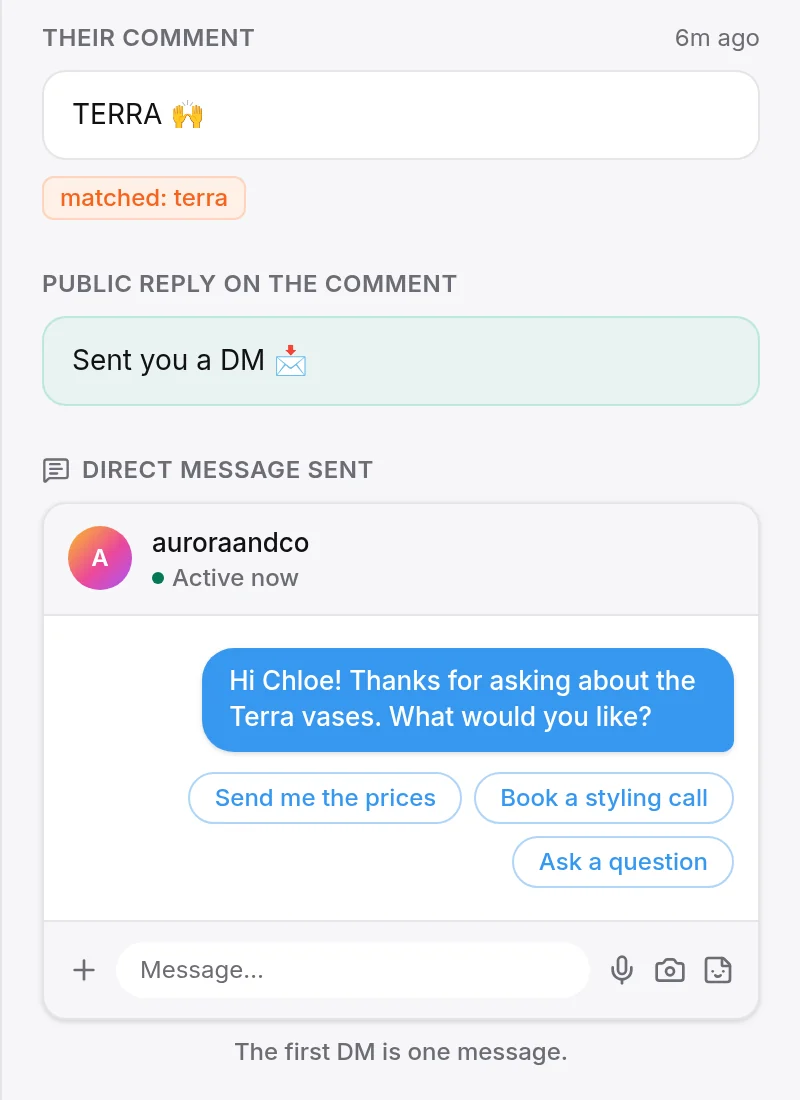
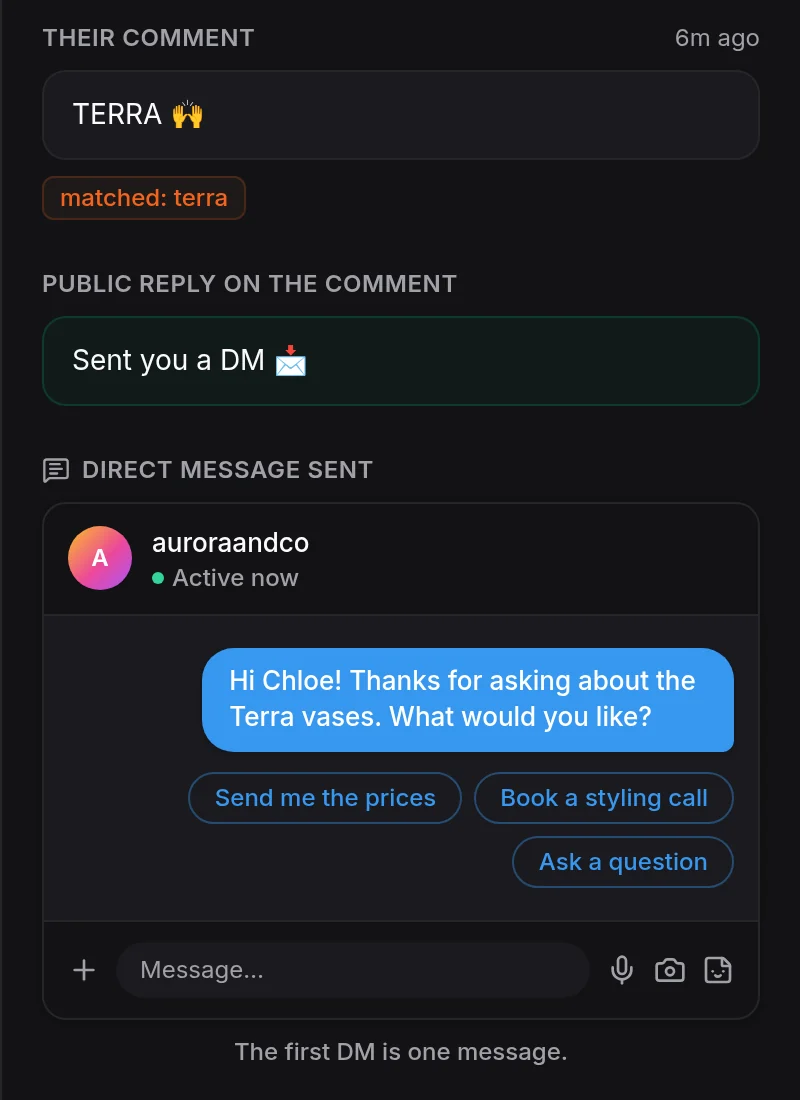
On Instagram, a comment rule replies under a post with your own words and sends the commenter a DM; the AI then answers in the DM knowing which post they came from. See our Instagram comment bot page.
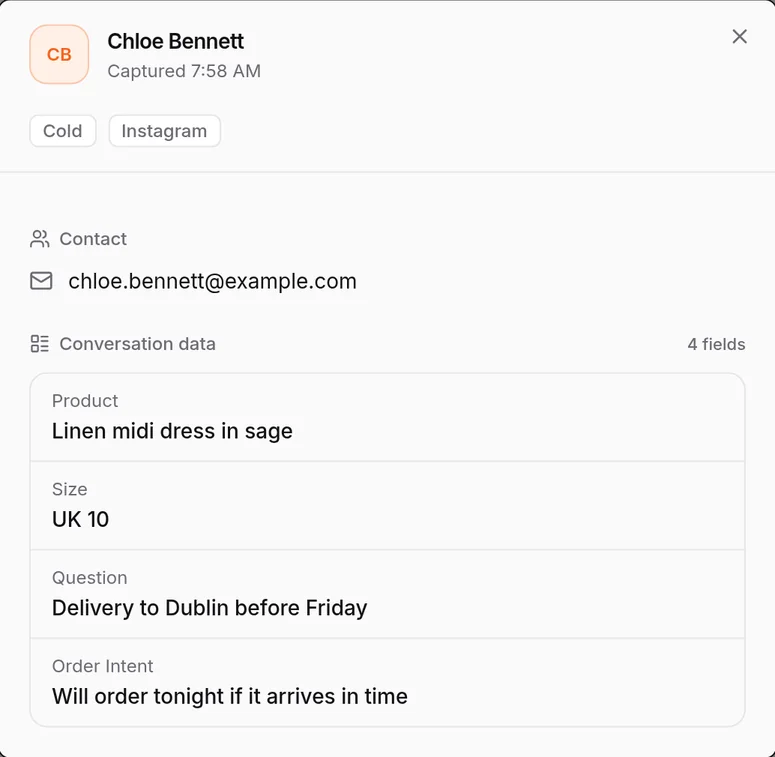
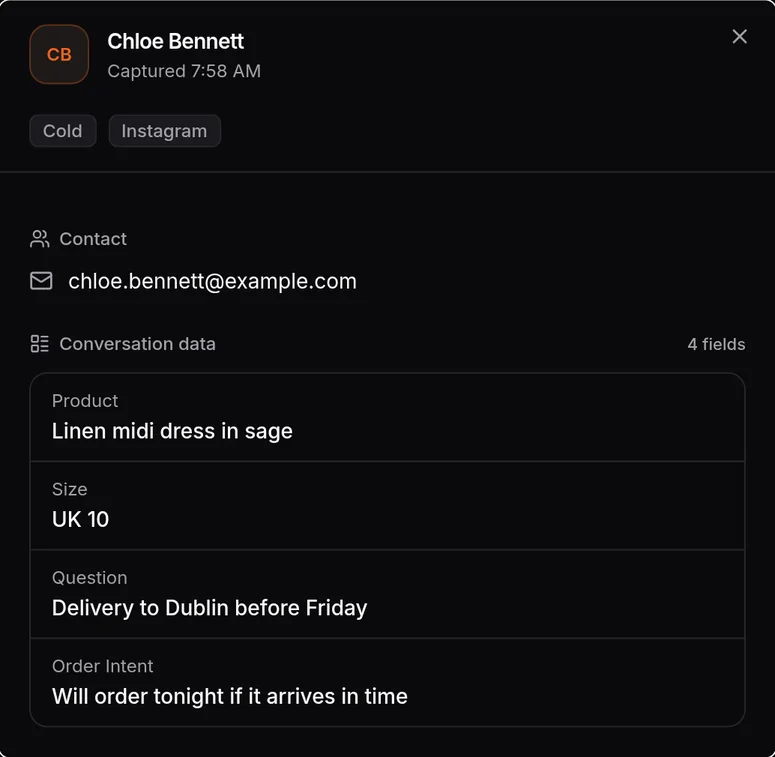
A buyer who isn't ready yet becomes a lead, with the product, size and question, so your team can follow up.
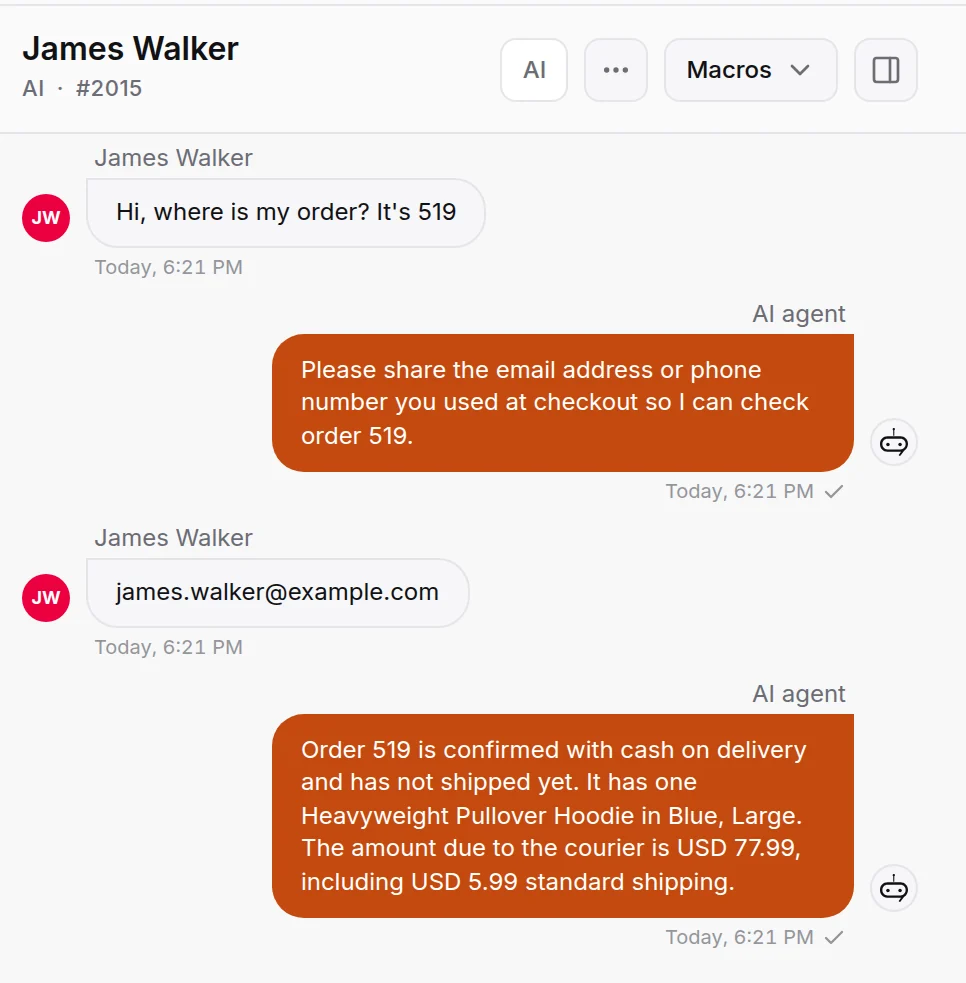
With a WooCommerce store, order status works in the same chat. Once the shopper gives the order number and the email or phone used at checkout, the AI reads the order from your store. Refunds, exchanges and cancellations go to a person to approve.
Your team, guided flows and calls
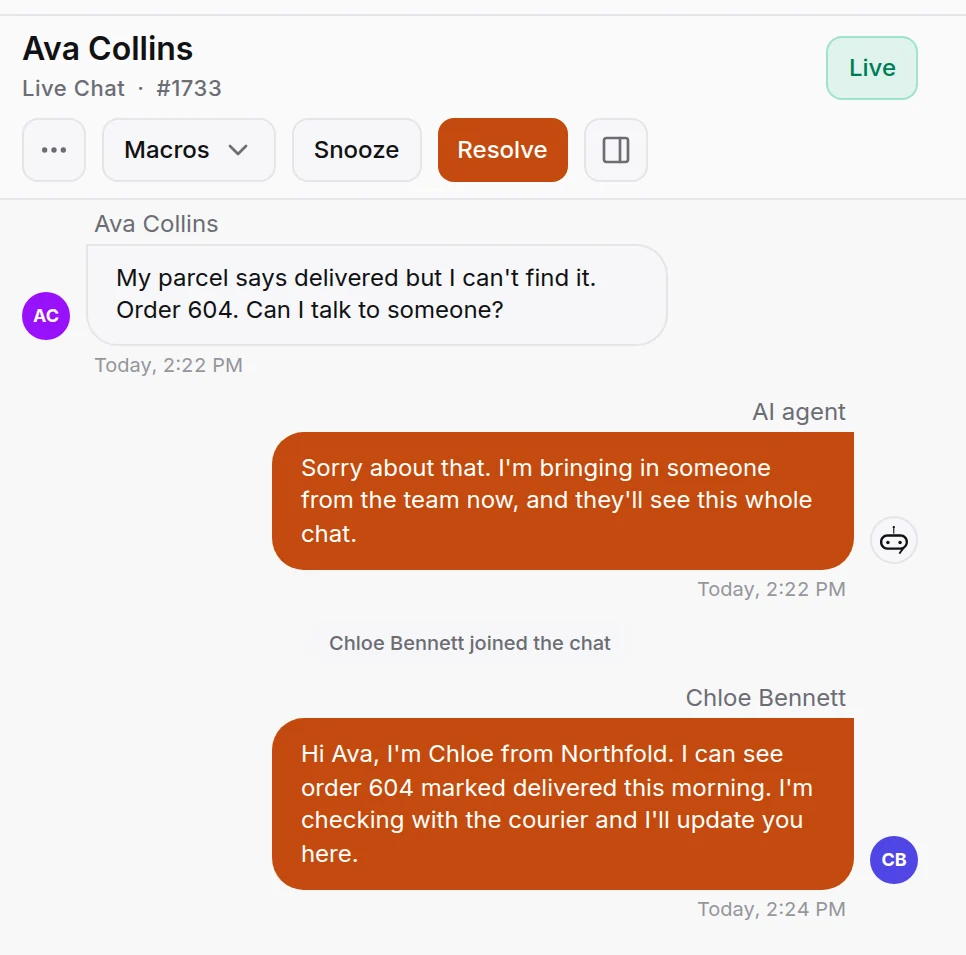
When a buyer needs a person, the AI brings in your team, who see the whole chat and can add notes, assign it and use AI drafts. Guided flows send buttons and cards you write on WhatsApp, Instagram, Messenger, Telegram and LINE, for questions you want answered the same way every time. Customers can also call your WhatsApp Business number, and the call rings your team in the HiQBot inbox; the AI itself works in writing.
What it doesn't do: the AI never takes payment in the chat, never refunds or changes an order by itself, and sends no messages to shoppers who left a cart. WhatsApp broadcasts go out as Meta-approved templates, and consent is yours to collect. For the whole store setup, see our AI chatbot for ecommerce page.
How we checked
On 13 November 2026 we read the Google results for "social commerce" and "conversational commerce", and each platform's own pages linked in the table above, Meta's WhatsApp opt-in and marketing message rules included. The HiQBot screens are real captures with sample data. To report an error, see our editorial standards.
Common questions
What is social commerce in simple words?
Social commerce is selling on social media. People find a product on an app like Instagram, TikTok or WhatsApp, ask about it there, and buy it in the app, on the seller's website or by arranging it in a chat.
Is TikTok a social commerce platform?
Yes. TikTok Shop lets people find products in videos and LIVE streams and pay inside the TikTok app.
What is an example of social commerce?
A buyer sees a dress in an Instagram reel, sends "price?" in a DM, gets the price, sizes and a checkout link, and pays on the brand's website. A bakery taking cake orders on WhatsApp is another.
What is the difference between social commerce and ecommerce?
Ecommerce is any online sale. Social commerce is the part that starts on a social app, where the buyer finds the product and asks questions before paying in the app, on your site or through the chat.
What is conversational commerce?
Conversational commerce is selling through a chat. The buyer asks questions on WhatsApp, Instagram, Messenger or website chat and gets answers, recommendations and a way to pay in the same thread, from a person or an AI agent.
Can an AI agent sell in Instagram DMs and WhatsApp?
Yes. With HiQBot, the AI agent answers from your WooCommerce store or product list, sends checkout links or takes orders for your team to confirm, and brings in a person when needed. It never takes payment in the chat.