Ecommerce marketing: strategy, channels and ideas for a small online store

Muhammad Hassan, FounderLinkedIn
Published Updated
Ecommerce marketing is how an online store gets shoppers to find it, visit and buy, then come back. It covers search, ads, social media, email, WhatsApp and the chat on your store. Good ecommerce marketing does two jobs: it brings the right people in, and it answers their questions fast enough that they buy.
We make HiQBot, a customer service platform with AI agents, live chat, guided flows and WhatsApp calling. This guide is for owners of small online stores and D2C brands who run their own marketing. The screens come from a sample clothing store we set up in HiQBot, and every screen is real.
What ecommerce marketing is
Ecommerce marketing, also called ecommerce digital marketing or online business marketing, is everything a store does to turn strangers into buyers and buyers into repeat customers. For a small store it comes down to five steps:
- Get found: search, marketplaces, social posts and ads.
- Get the visit: a product page or a chat that opens from an ad or a post.
- Answer the questions: size, fit, stock, delivery time, shipping cost, returns.
- Make buying easy: a short checkout with the payment methods your buyers use.
- Bring them back: email, WhatsApp updates and good service after the sale.
Big guides on this topic are written for brands with a marketing team and a customer data platform. A store with two people needs fewer channels done well.
Ecommerce marketing strategy in five questions
An ecommerce marketing strategy fits on one page. Answer these five questions, then review them every quarter.
| Question | Your answer |
|---|---|
| Who you sell to | One buyer you can describe: what they buy, what it is for, what they spend |
| Where they look | Google, Instagram, marketplaces, WhatsApp groups, gift guides |
| What you offer | The product, the price with shipping, delivery time, returns |
| Who answers | You, a teammate, or an AI agent that answers from your catalogue at any hour |
| What you count | Visits, chats, checkout links or orders, sales and repeat buyers, by channel |
Start with two or three channels where your buyer already looks. Add a channel only when the ones you have bring orders you can count.
Ecommerce marketing channels
These are the channels most small stores use. Most of them end with a shopper asking a question.
Search: ecommerce SEO and Google Shopping
Ecommerce SEO means product and category pages that match what shoppers type, with clear names, real photos, prices and stock. Google’s guide for online stores covers structured data, URL design and site navigation (Google Search Central). You can share product data with Google through structured data on your product pages or a Merchant Center feed. Merchant Center isn’t needed to appear in Google Search, but it is needed for the Shopping tab (Google, sharing product data).
Ecommerce content marketing works best close to a purchase: size guides, care guides, gift guides and “which one should I buy” comparisons.
Ecommerce advertising
Ecommerce advertising is mostly search ads, shopping ads and social ads on Instagram and Facebook. A click-to-message ad opens a conversation on WhatsApp, Messenger or Instagram instead of a web page (Meta, click-to-message ads). That suits products people ask about before they buy: clothes, furniture, beauty, anything with sizes or options. In HiQBot, the chat an ad opens lands in your inbox and the AI answers it in seconds, day or night.
Ecommerce social media marketing
On Instagram, reels of the product in use do most of the selling. Many shoppers then send a DM: price, size, “is this still available?”. HiQBot answers Instagram DMs from your catalogue, and a comment rule can send a private DM to everyone who comments a word you choose on a post.
Ecommerce email and SMS marketing
Email marketing for ecommerce means a welcome email, new arrivals, restocks and order updates to people who signed up. In the US, CAN-SPAM requires a clear way to opt out, honoured within 10 business days, and your physical postal address in every marketing email (FTC, CAN-SPAM guide). Other countries have their own rules, often stricter about consent. HiQBot doesn’t send email newsletters or SMS; use your store platform or an email tool for those.
WhatsApp marketing
WhatsApp marketing suits stores whose buyers already message shops on WhatsApp, as many do in India and the Gulf. Messages you start go out as templates that Meta approves. Get each person’s agreement before you send them marketing (Meta, getting opt-in), and note that since 1 April 2025 Meta has not delivered marketing templates to WhatsApp users in the United States (Meta, marketing messages).
HiQBot sends WhatsApp broadcasts from approved templates to the contacts you tag, skips US numbers for marketing templates, and stops marketing to anyone who replies STOP. Consent is yours to collect: HiQBot keeps no separate opt-in record. Replies land in the inbox, where the AI answers them. Tools compared, with prices, are in our WhatsApp marketing software guide.
Chat on your store
A chat on your website catches the shopper who is on a product page with one question left. It is the channel closest to the sale, and it often goes unanswered at night.
Marketing a D2C brand
D2C marketing (direct to consumer) means selling your own brand on your own site and channels, not through retailers. You keep the margin and the customer, and you pay for every visit yourself. That makes two things matter more than for a marketplace seller: repeat buyers, and turning the visits you paid for into orders.
- Treat Instagram and WhatsApp as shop counters if your buyers message you there. Answer every message, including the late ones.
- Where many buyers pay cash on delivery, as in India, make it clear in the chat and at checkout which payment methods you take, and confirm orders before you ship.
- Collect WhatsApp numbers and emails from people who ask for restocks, with their agreement.
- Spend on ads only after the product page and the chat answer the usual questions well.
Ecommerce marketing ideas
| Idea | Why it works |
|---|---|
| Put the delivered price on the product page | Shipping and other extra costs are the top reason shoppers leave at checkout |
| Write product pages in the words shoppers use | “Warm hoodie for winter walks” is what they type, in search and in chat |
| Answer size, fit and delivery questions in chat | A shopper left waiting until morning may buy somewhere else |
| Add a message button to your ads | A click-to-message ad opens a chat, and the shopper asks before they buy |
| Reply to comments with a DM | Ask people to comment a word on a post, then send the link privately |
| Ask customers to opt in to WhatsApp updates | Then send restocks and offers to the people who agreed |
| Email new arrivals to buyers who signed up | They asked to hear from you, so the email is welcome |
| Show real customer photos and reviews | They answer “what does it look like on?” better than studio shots |
| Publish your returns policy in plain words | It is one of the questions shoppers ask before they pay |
| Check every channel’s numbers each month | Drop what brings visits but no orders, and spend more on what sells |
What happens after the click
After the click, the shopper still has to decide. Baymard Institute’s average of 50 studies puts online cart abandonment at 70.22 percent. In its survey of reasons, leaving aside shoppers who were only browsing, 40 percent left because extra costs such as shipping, tax and fees were too high, and 13 percent because the returns policy wasn’t good enough (Baymard).
Many of those shoppers have a question first: what does delivery cost to my city, is the medium in stock, can I return it. In a small store, much of ecommerce conversion rate optimization is answering those questions while the shopper is still deciding.
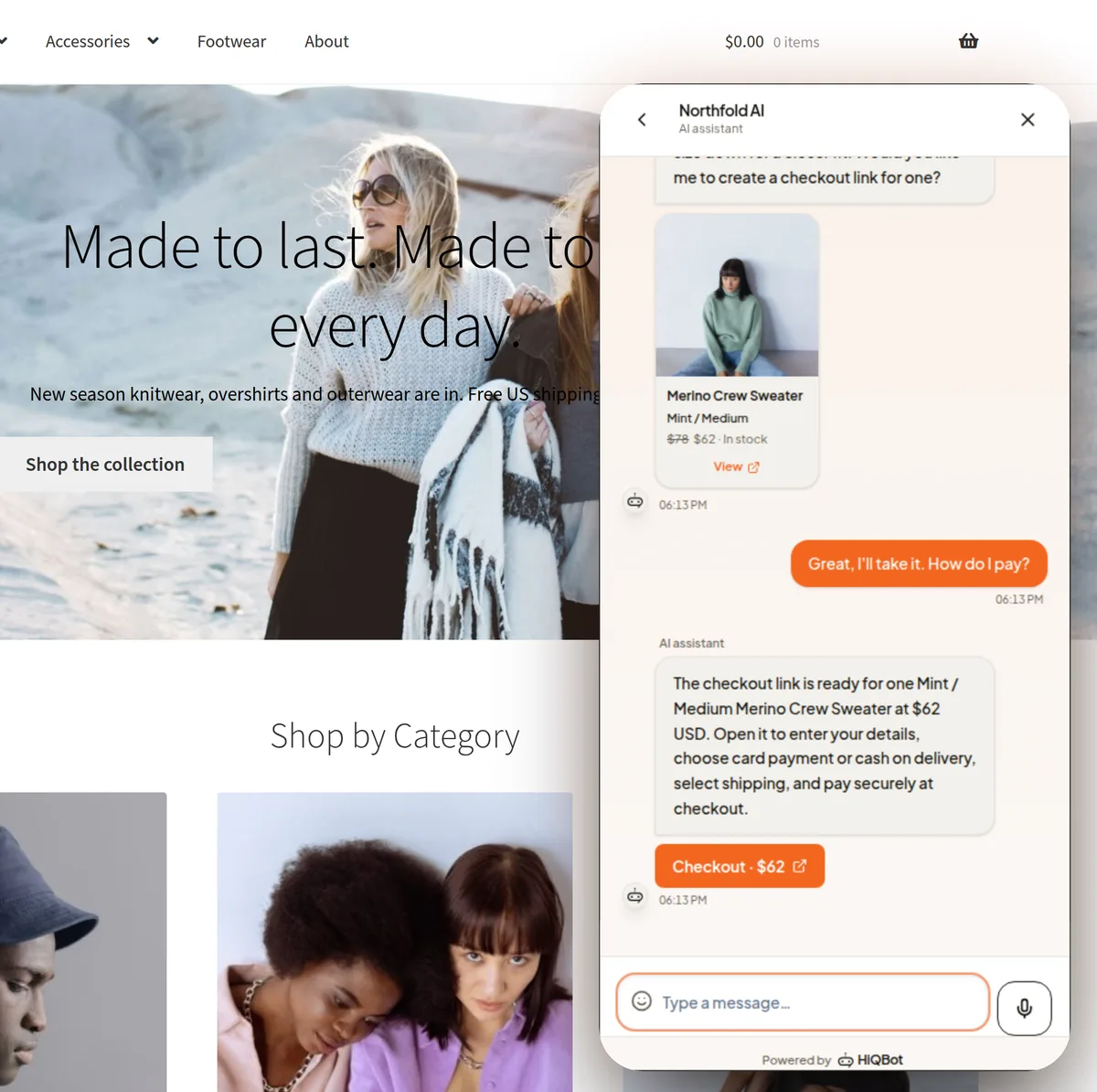
With a WooCommerce store connected, HiQBot’s AI finds the product from the shopper’s own words, answers price and stock from your catalogue, quotes your own shipping rates for their address, and sends a checkout link with the items in the cart. The shopper pays on your checkout; the AI never takes payment. Stores without a website can connect a product list or Google Sheet instead, and the AI takes the order in the chat for your team to confirm.
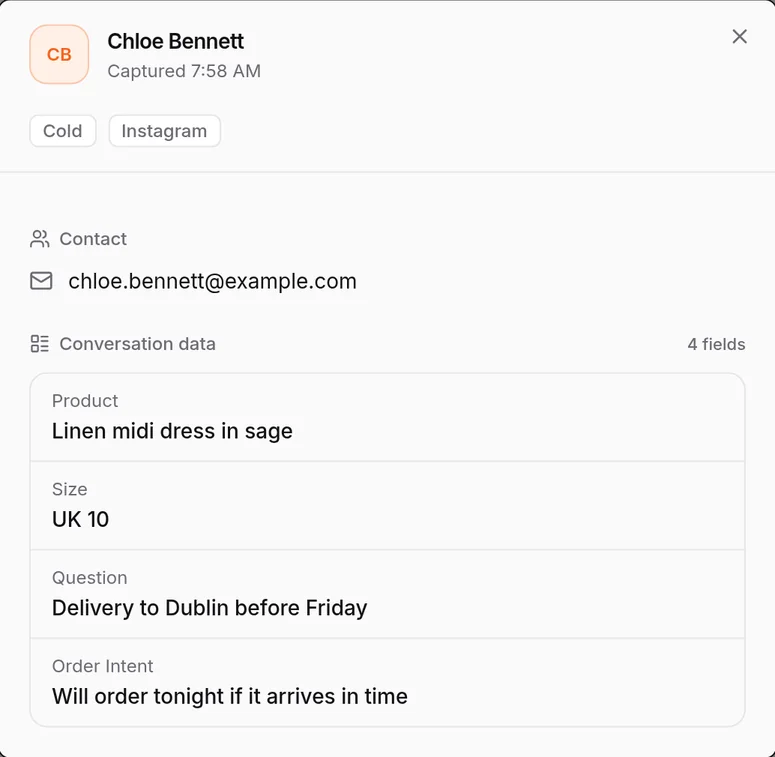
When a shopper isn’t ready to buy, the AI records what they asked for on a lead card, so your team knows what they want.
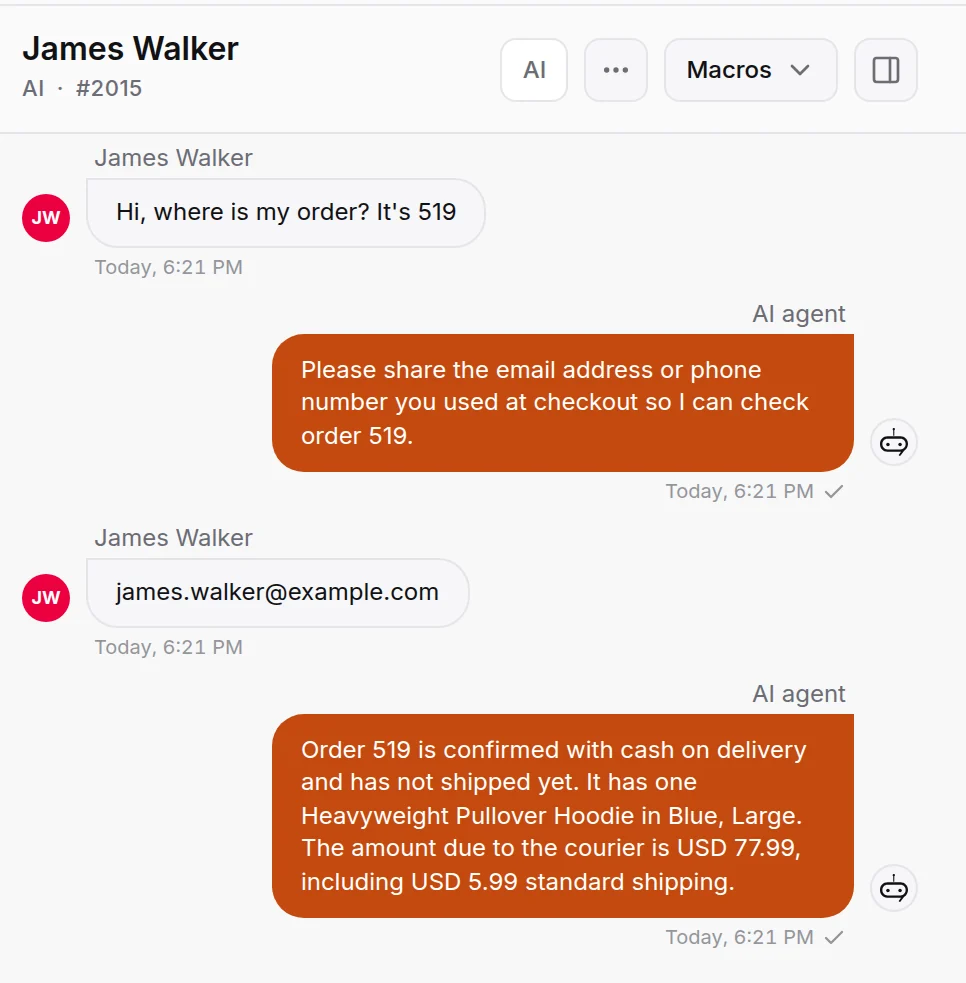
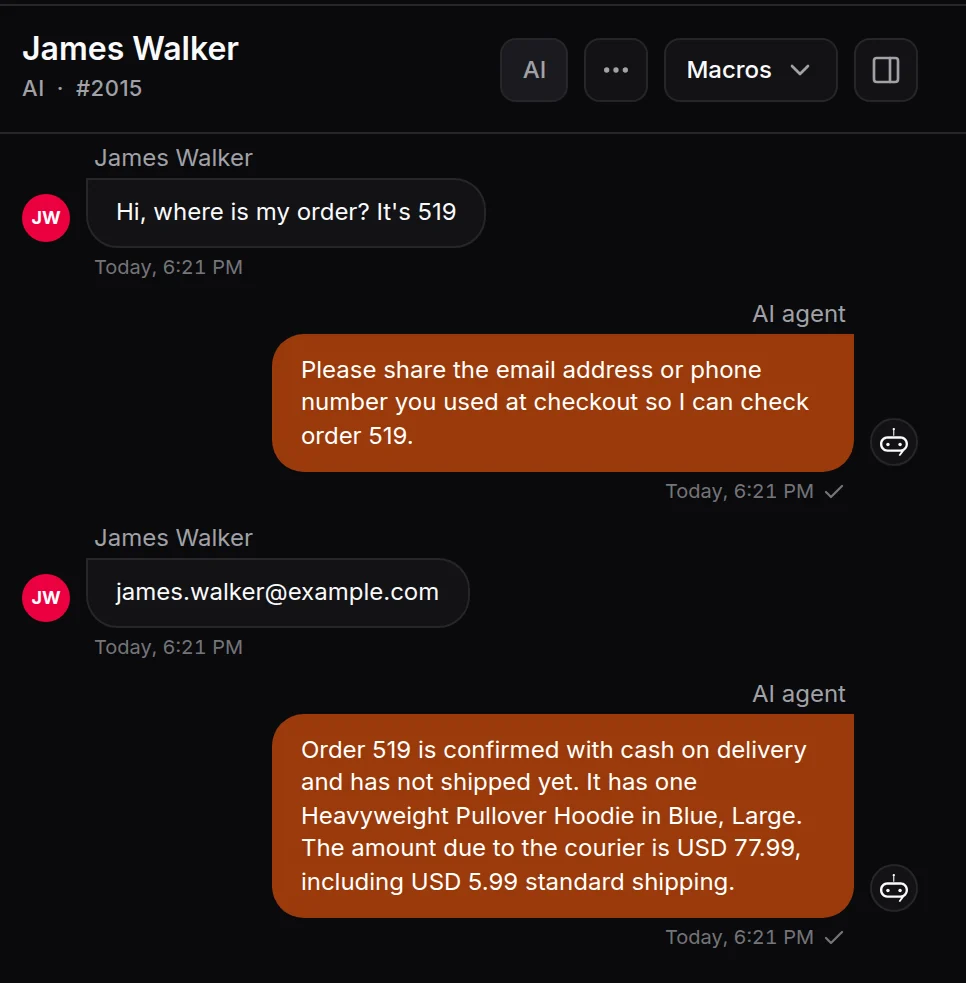
After the sale, the questions turn to orders. The AI asks for the order number and the checkout email or phone, then reads the order from your store, including cash on delivery and tracking details when your store records them.
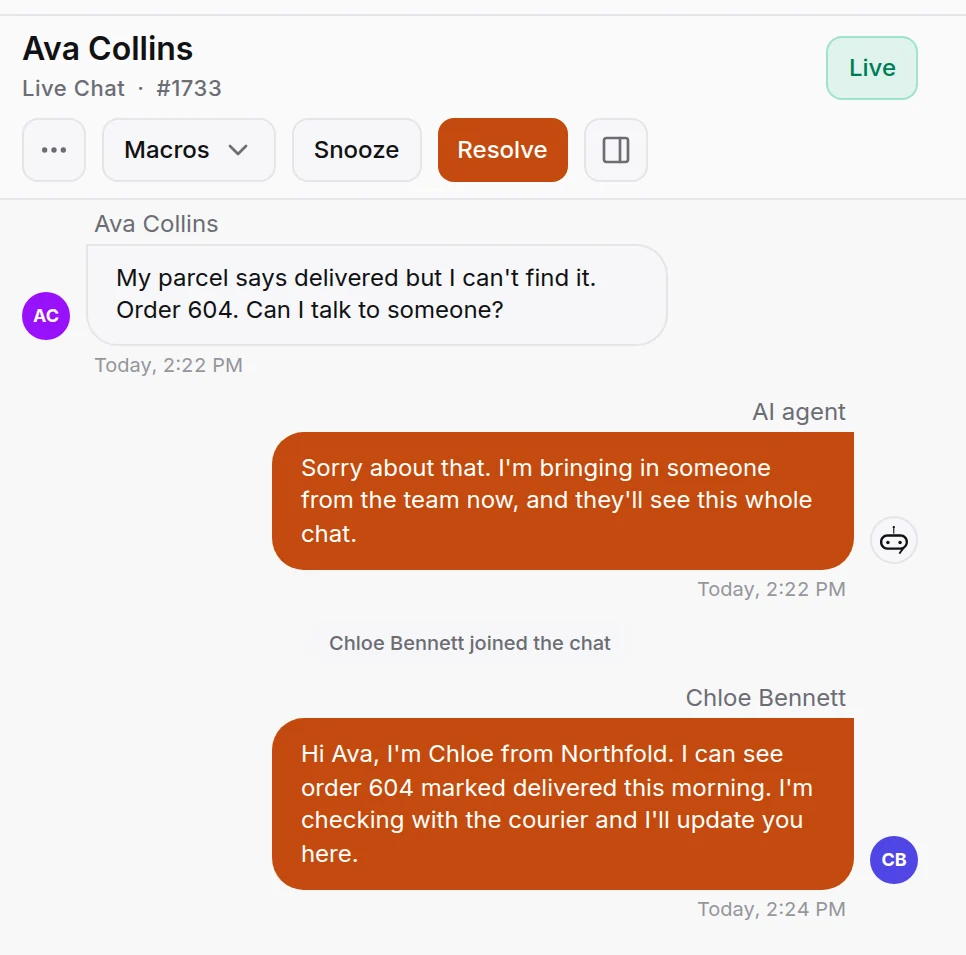
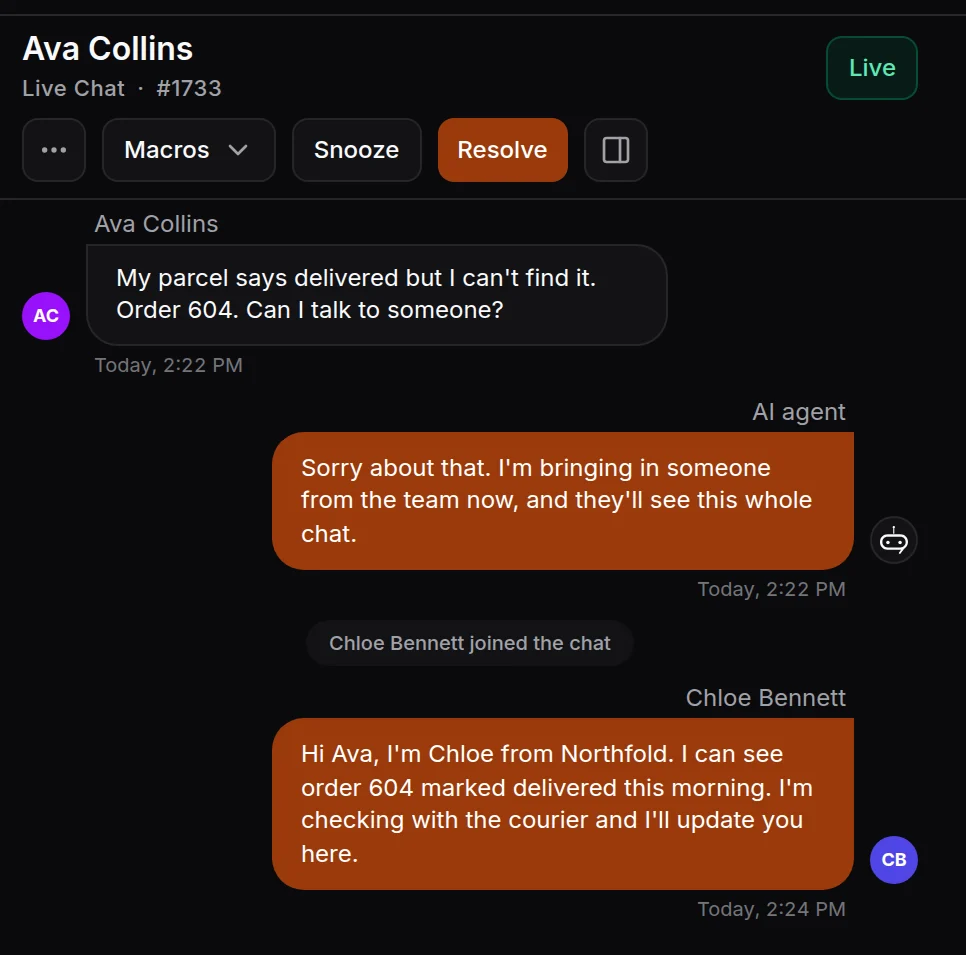
Refunds, exchanges and cancellations go to your team to approve. When a customer wants a person, the AI brings one in and the teammate sees the whole chat. Customers who prefer to call can ring your WhatsApp Business number, and it rings your team in the HiQBot inbox; the AI itself works in writing.
Where HiQBot fits in your ecommerce marketing
HiQBot answers the shoppers your marketing brings in, in one inbox for website chat, WhatsApp, Instagram, Messenger, Telegram and LINE:
- AI agent: finds products, answers price, stock and shipping from your catalogue, sends checkout links or takes orders for your team to confirm, answers order status and files return and exchange requests.
- Live chat: a teammate takes over any chat, with notes, assignment and AI-drafted replies.
- Guided flows: a chat can open with buttons such as New arrivals, Track my order and Talk to us.
- WhatsApp calling: customers call your WhatsApp Business number and it rings your team in the inbox.
- WhatsApp broadcasts: restocks and offers from approved templates to the contacts you tag.
HiQBot doesn’t run your ads, send email newsletters or SMS, take payment in the chat, or message shoppers who left a cart. The full setup for stores is on our AI chatbot for ecommerce page, and the store connection is on the WooCommerce chatbot page.
Common questions
What is ecommerce marketing?
Ecommerce marketing is how an online store gets shoppers to find it, visit and buy, then come back. It covers search, ads, social media, email, WhatsApp and the chat on the store, and it includes answering shoppers’ questions fast enough that they buy.
What are the main types of ecommerce marketing?
The main types are search (SEO and shopping ads), paid social ads, social media content, email and SMS, messaging apps such as WhatsApp, and chat on the store itself. Most small stores do best with two or three of these done well.
What is a good ecommerce marketing strategy for a small store?
A good strategy for a small store names one buyer, picks the two or three channels where that buyer looks, and counts orders by channel each month. Show the delivered price early, answer questions at any hour, and drop the channels that bring visits but no sales.
How do I market my online store with no budget?
Market an online store with no budget through product pages written in shoppers’ words, Google listings, Instagram posts and reels, replies to every DM and comment, and an email or WhatsApp list of people who asked to hear from you. All of these cost time, not ad spend.
Is ecommerce still worth it in 2026?
Ecommerce is still worth it for a product people search for, at a margin that survives ads, shipping and returns. Work those three costs out per order before you scale, and keep the buyers you win: you can reach them again by email or WhatsApp without paying for another ad.
Can I send WhatsApp marketing messages to customers in the US?
No. Since 1 April 2025, Meta has not delivered WhatsApp marketing templates to users with US numbers, whatever software you use. Utility messages, such as order updates, and replies to customers who message you still go.
Can an AI chatbot help an online store sell?
An AI chatbot helps a store sell by answering the questions shoppers ask before they pay. HiQBot’s AI finds the product, answers price, stock and shipping from your catalogue, and sends a checkout link; the shopper pays on your own checkout.
Sources were read on 13 November 2026, and the screens are the real HiQBot product with sample data. This guide is general information, not legal advice. How we write and check posts: editorial standards.