Healthcare chatbots: what one does for a clinic, what it must never do, and how to choose

Muhammad Hassan, FounderLinkedIn
Published Updated
A healthcare chatbot is software that answers patients in a chat for a clinic, practice or hospital. The useful kind for a front desk answers questions about services, hours, fees and insurers, takes appointment requests at any hour, and offers a visit with a clinician instead of answering anything clinical. It never gives medical advice.
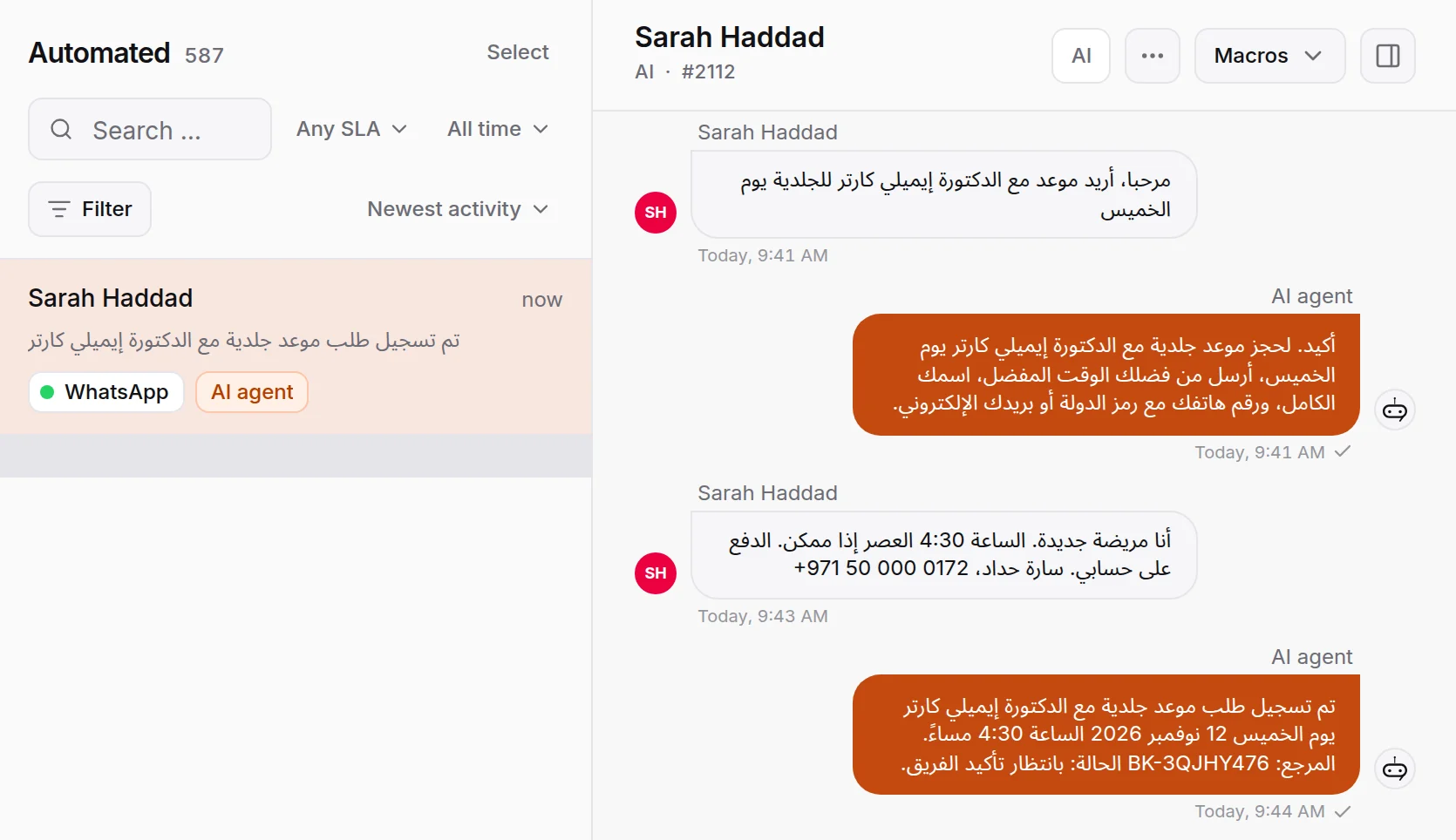
We make HiQBot, a customer service platform with AI agents, live chat, guided flows and WhatsApp calling. This guide is for clinic owners and practice managers choosing a chatbot for doctors’ and dentists’ offices, physiotherapy and specialist clinics. We read each tool’s own website on 13 November 2026. The chats come from a sample clinic we set up in HiQBot, and every product screen is real.
What a healthcare chatbot is
A healthcare chatbot, also called a chatbot for healthcare, talks to patients in writing on your website, WhatsApp, Instagram or another messaging app. An AI chatbot understands a question however it’s typed and replies in the patient’s language, instead of making them pick from a menu.
Patients already ask AI about their health. OpenAI says over 230 million people ask ChatGPT health and wellness questions every week (OpenAI). When the same people message your clinic, they want something narrower: can I be seen this week, do you take my insurer, what does it cost.
Conversational AI and AI agents in healthcare
Conversational AI for healthcare is the wider term for software that holds a conversation, in text or voice. A healthcare AI agent, or medical AI agent, goes one step further: it does things during the chat, such as saving an appointment request, opening a ticket or passing the chat to a person.
Three kinds of healthcare chatbot
Lists of the best healthcare chatbots mix three different products. Know which one you need before you compare prices.
| Kind and who it’s for | What it does |
|---|---|
| Front-desk chatbotClinics, practices and hospitals | Answers questions about services, hours, fees and insurers, and takes appointment requests. Gives no medical advice. |
| Symptom checker or health assistantPatients, or health systems that offer one to patients | Asks about symptoms and suggests where to get care, or explains health information. Ada and ChatGPT Health are examples. |
| Clinical and back-office AIDoctors and staff | Writes notes, drafts letters or answers clinical questions for the clinician. It doesn’t talk to patients. |
This guide is about the first kind: a patient chatbot that works your front desk. A hospital chatbot does the same job for more departments.
What an AI chatbot for healthcare does for a clinic
For a practice, a chatbot takes on the front desk’s written work: answering, booking, moving appointments and reminding patients.
Answers questions from your own documents
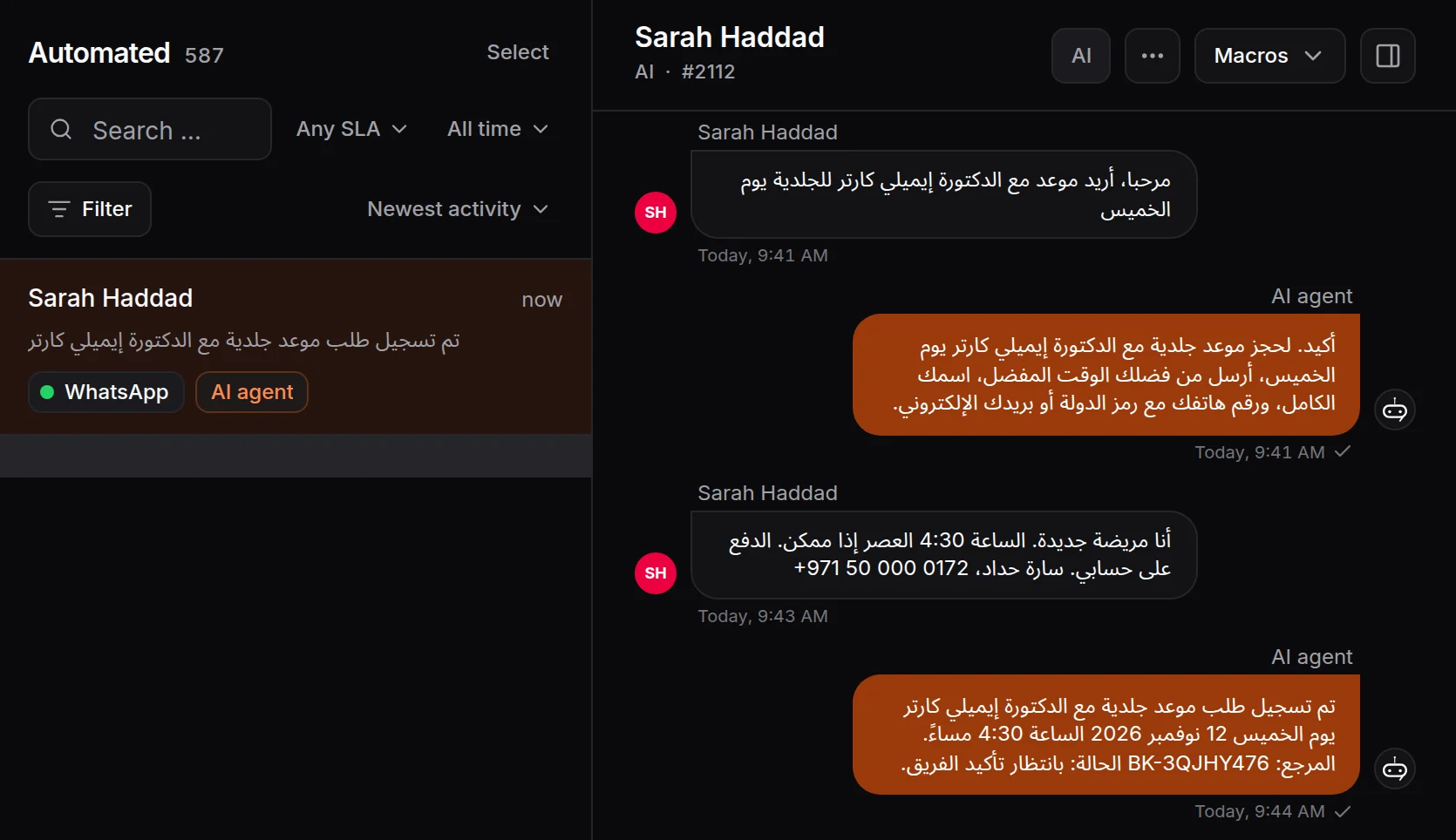
You upload your services, clinicians, hours, fees, insurers and policies. The AI answers from those, at 9 pm on a Sunday as fast as at 10 am on a Monday. It says which insurers you work with and leaves cover for your team to confirm. A patient who writes in Arabic, Hindi or another language gets the answer in that language.
Live chat: the front desk takes over
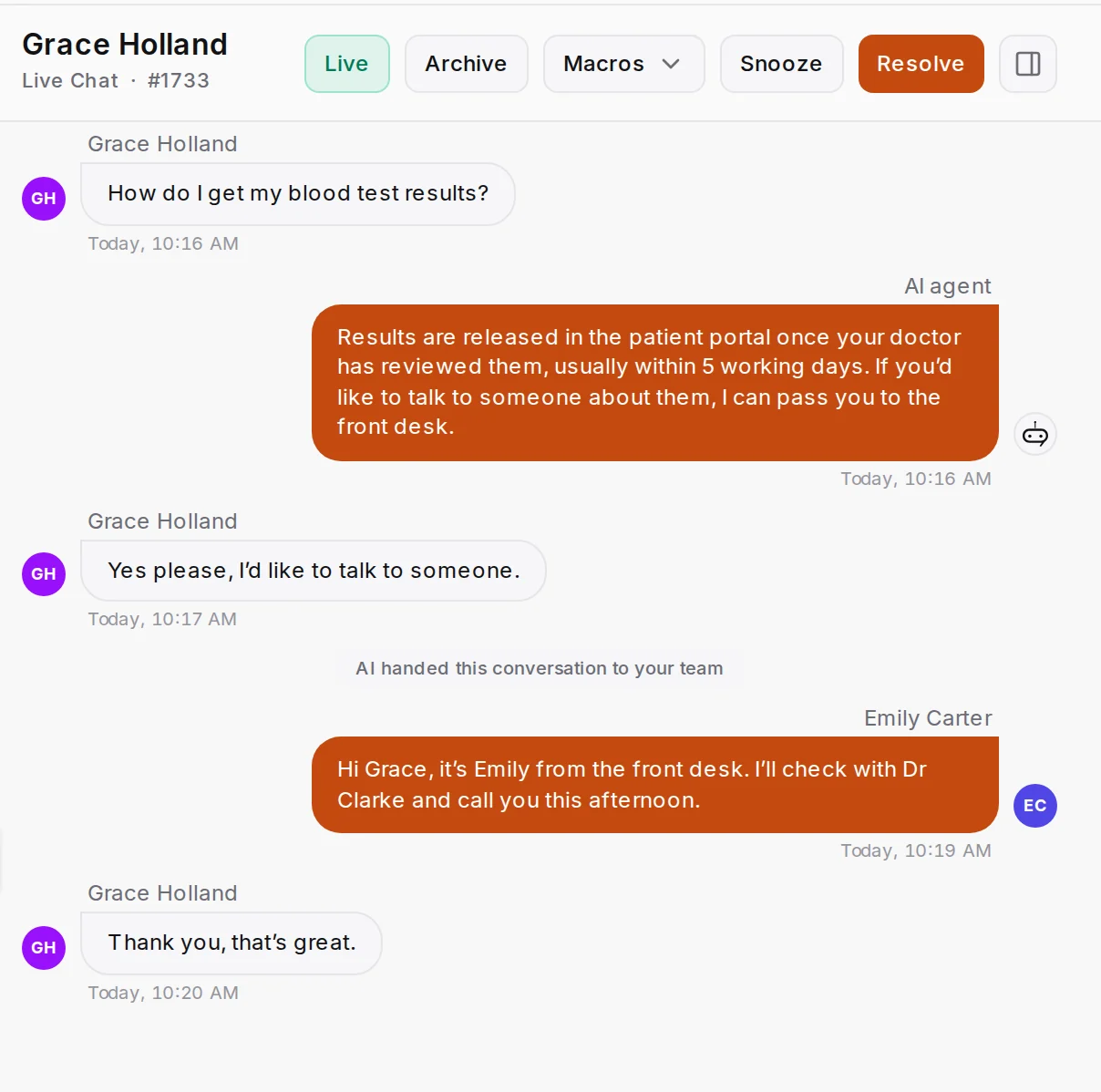
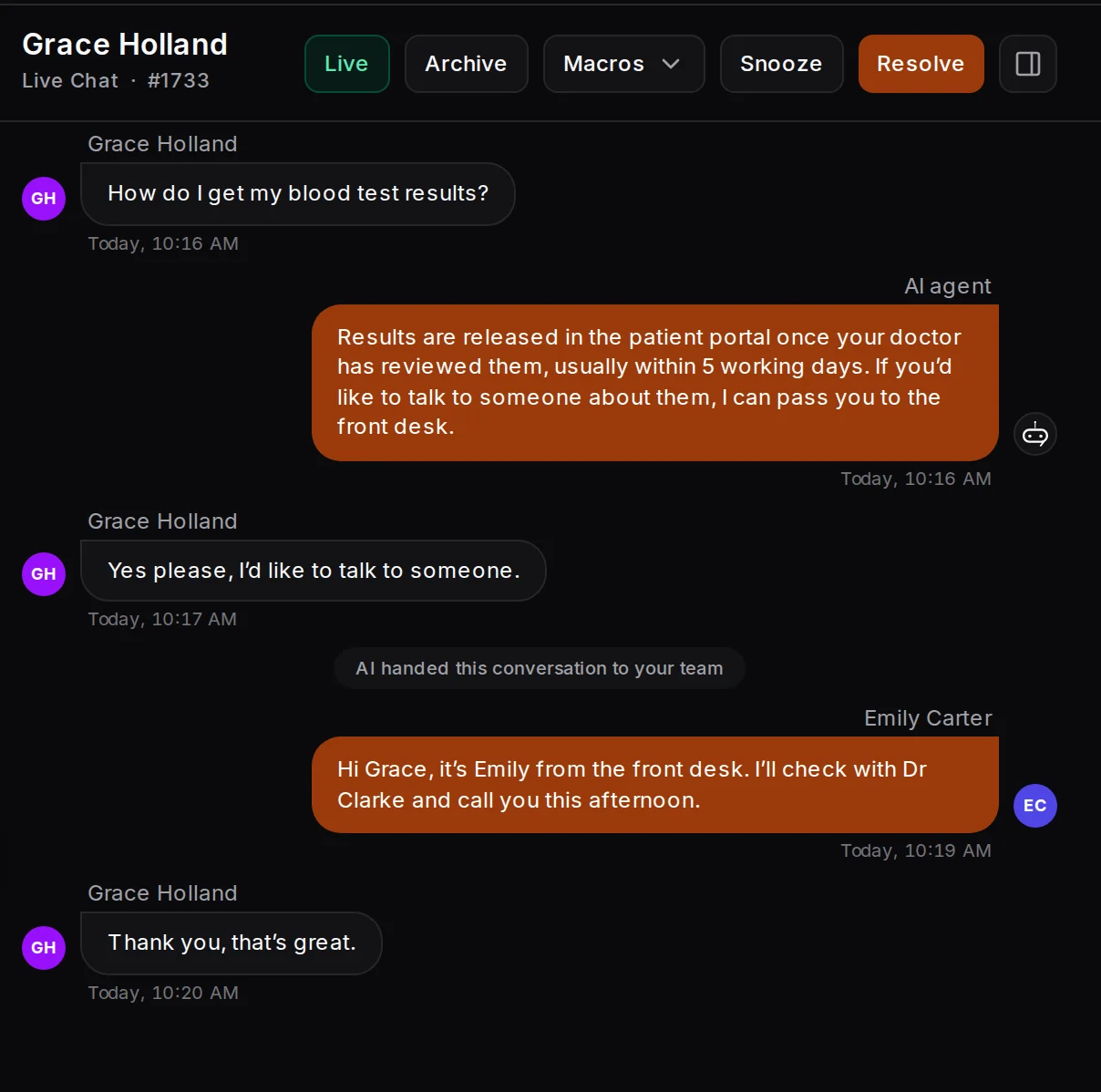
Healthcare live chat means a person can step in. When a patient asks for someone, or asks something only staff can answer, the AI passes the chat to your team in the same inbox, with the whole conversation above it. Your team adds notes, assigns chats and can send AI-drafted replies.
Reminders on WhatsApp
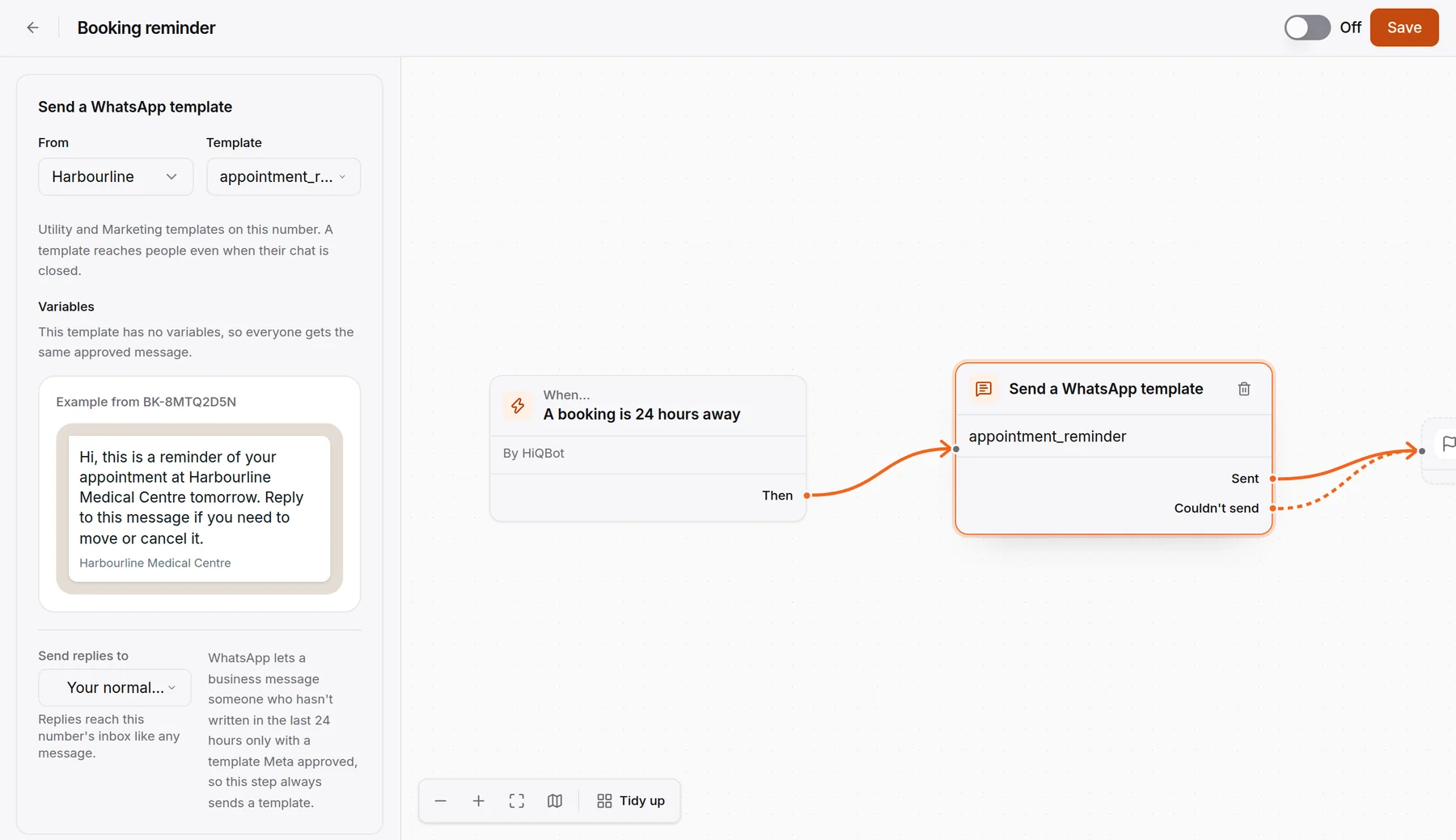
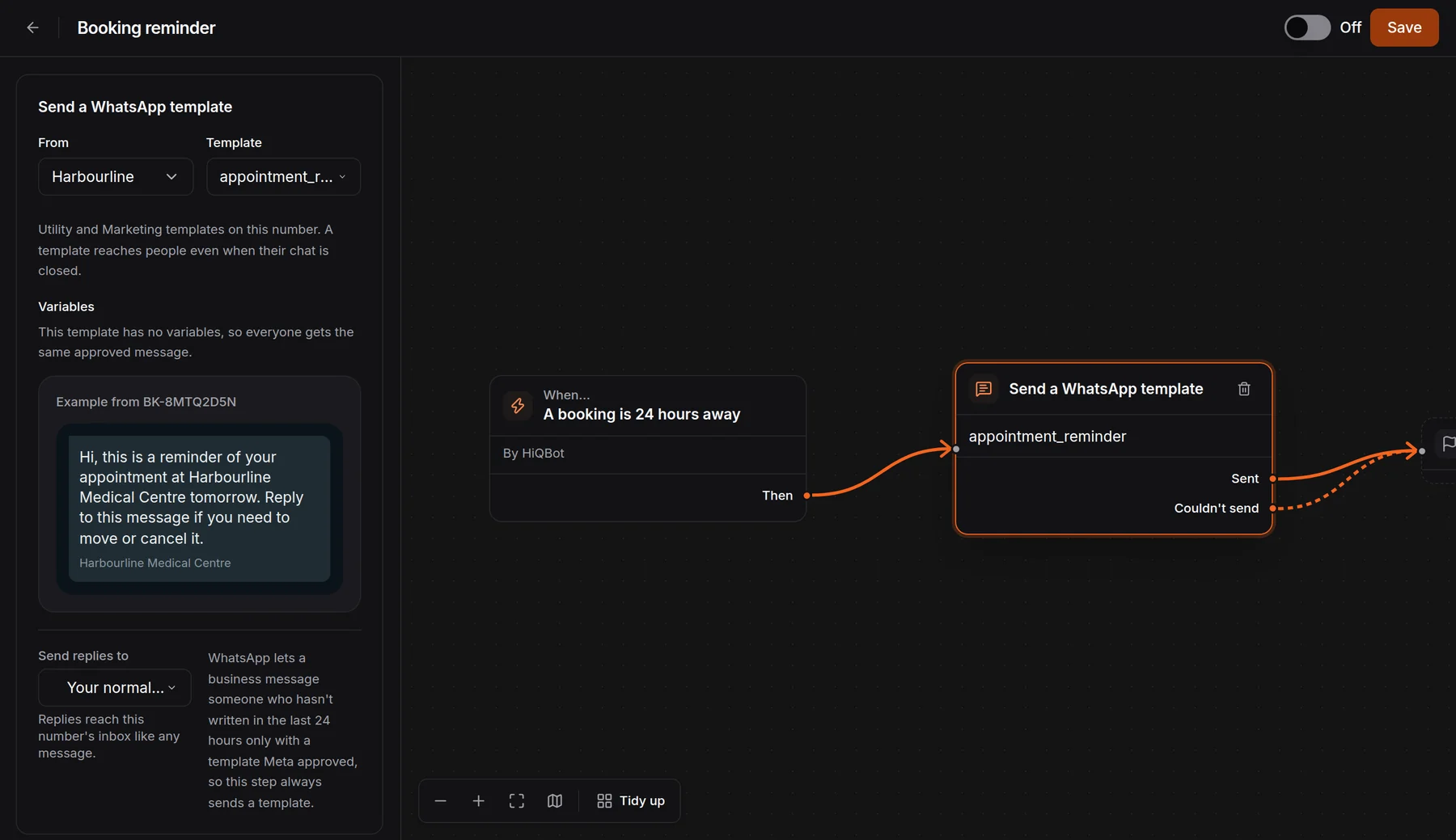
A reminder goes out from 2 hours to 7 days before each booking, in the patient’s chat or as your approved WhatsApp template, and the patient can reply to move it. Timings and wording are in our guide to patient no-shows.
What a clinic chatbot should book
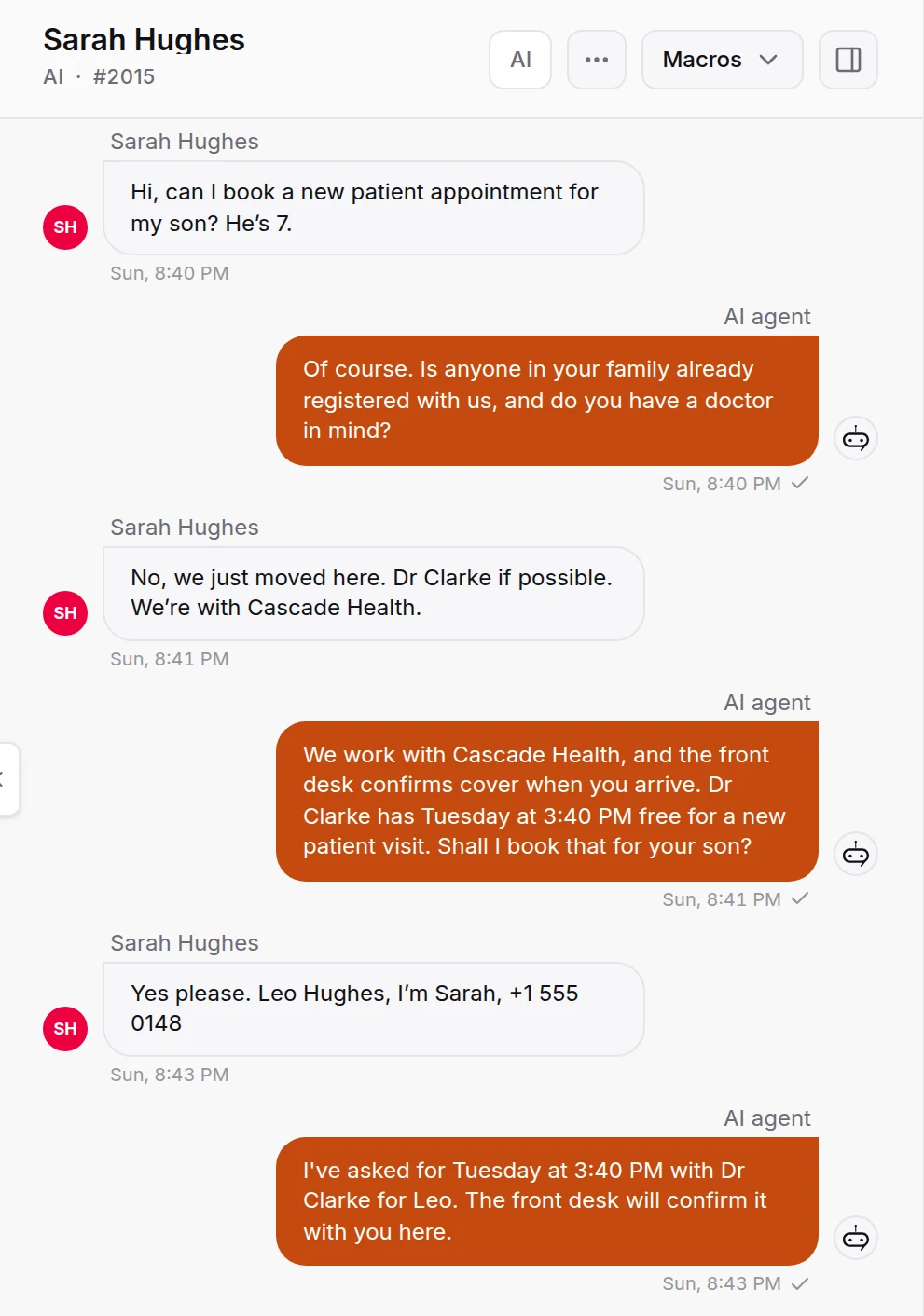
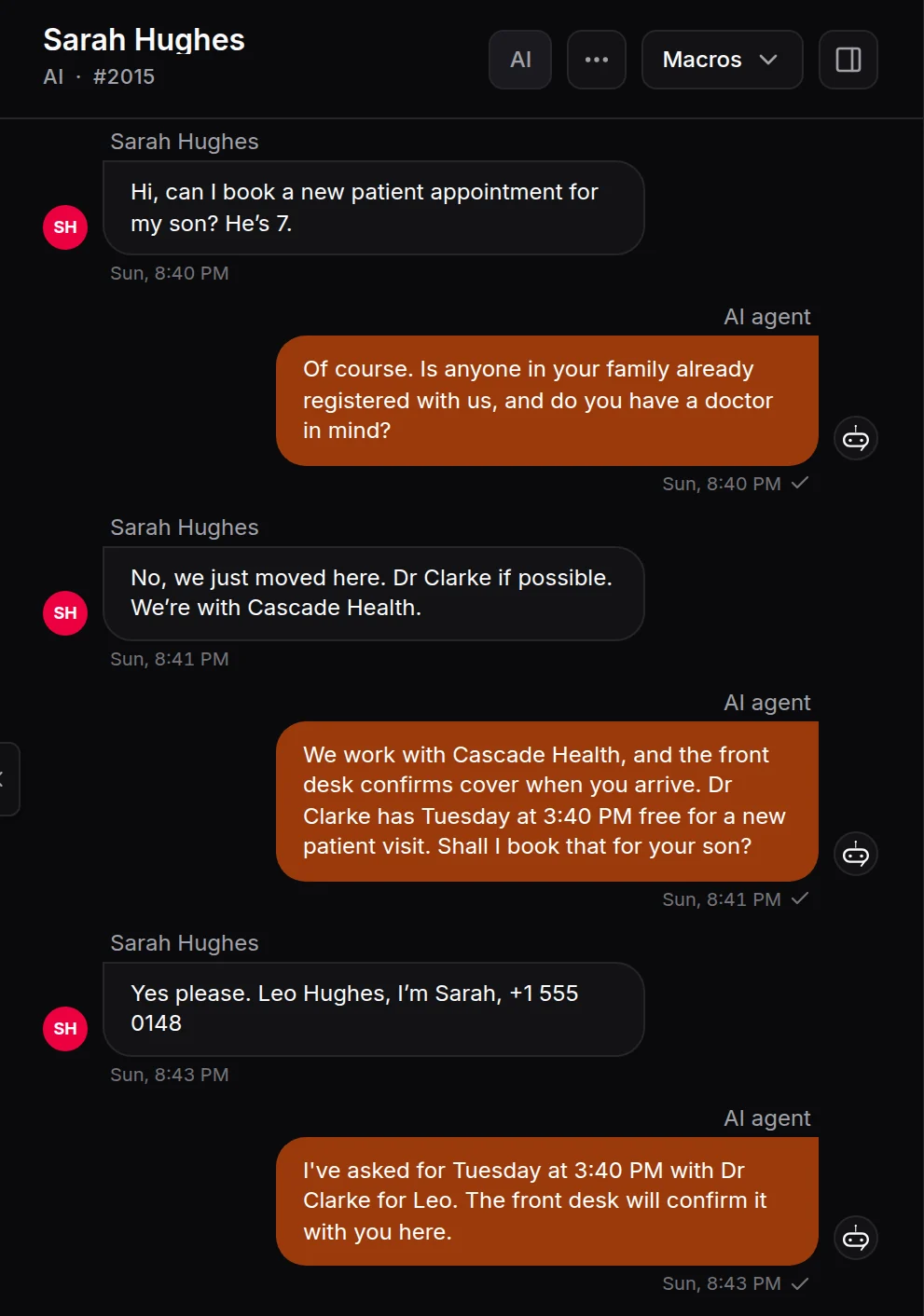
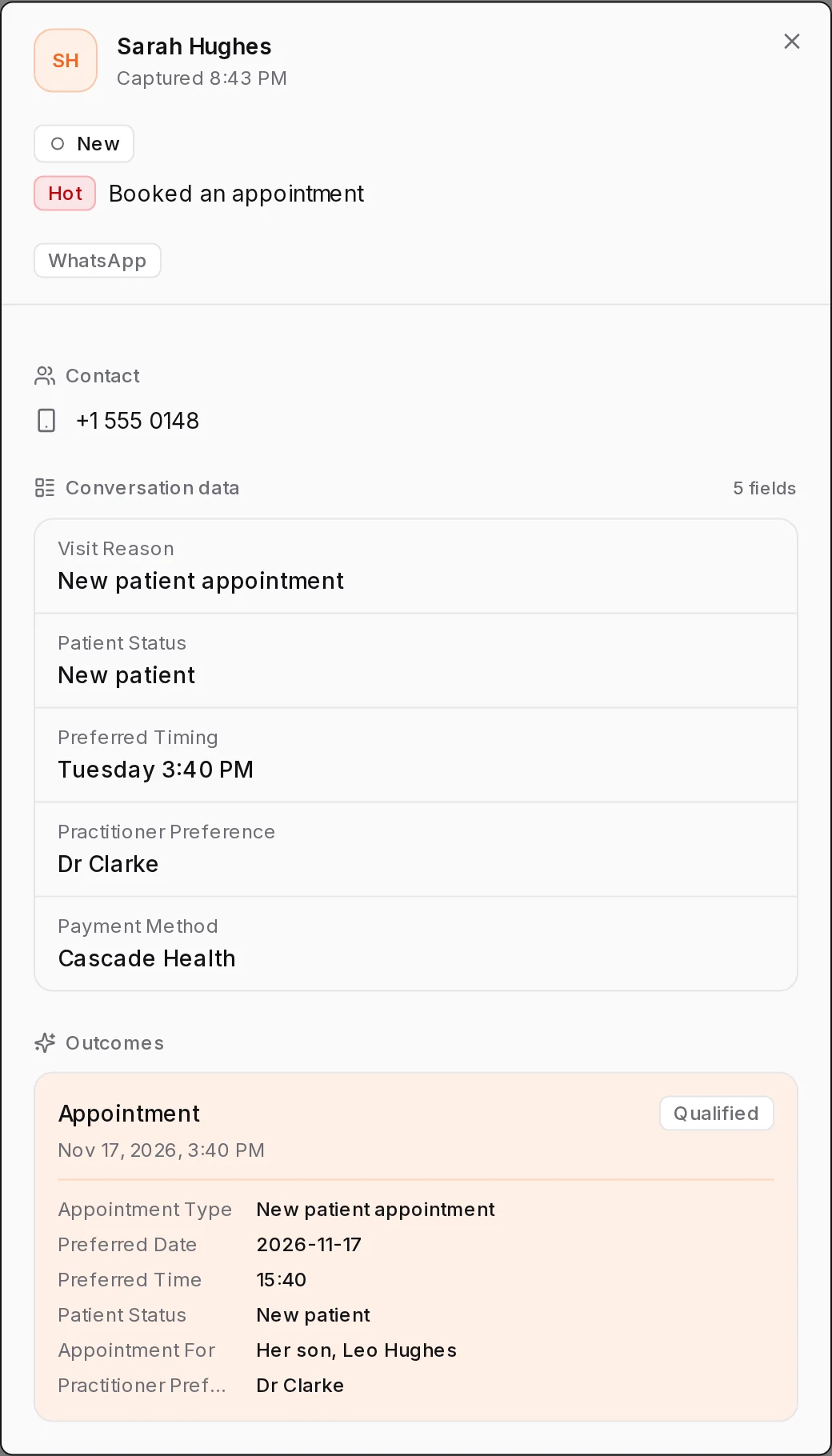
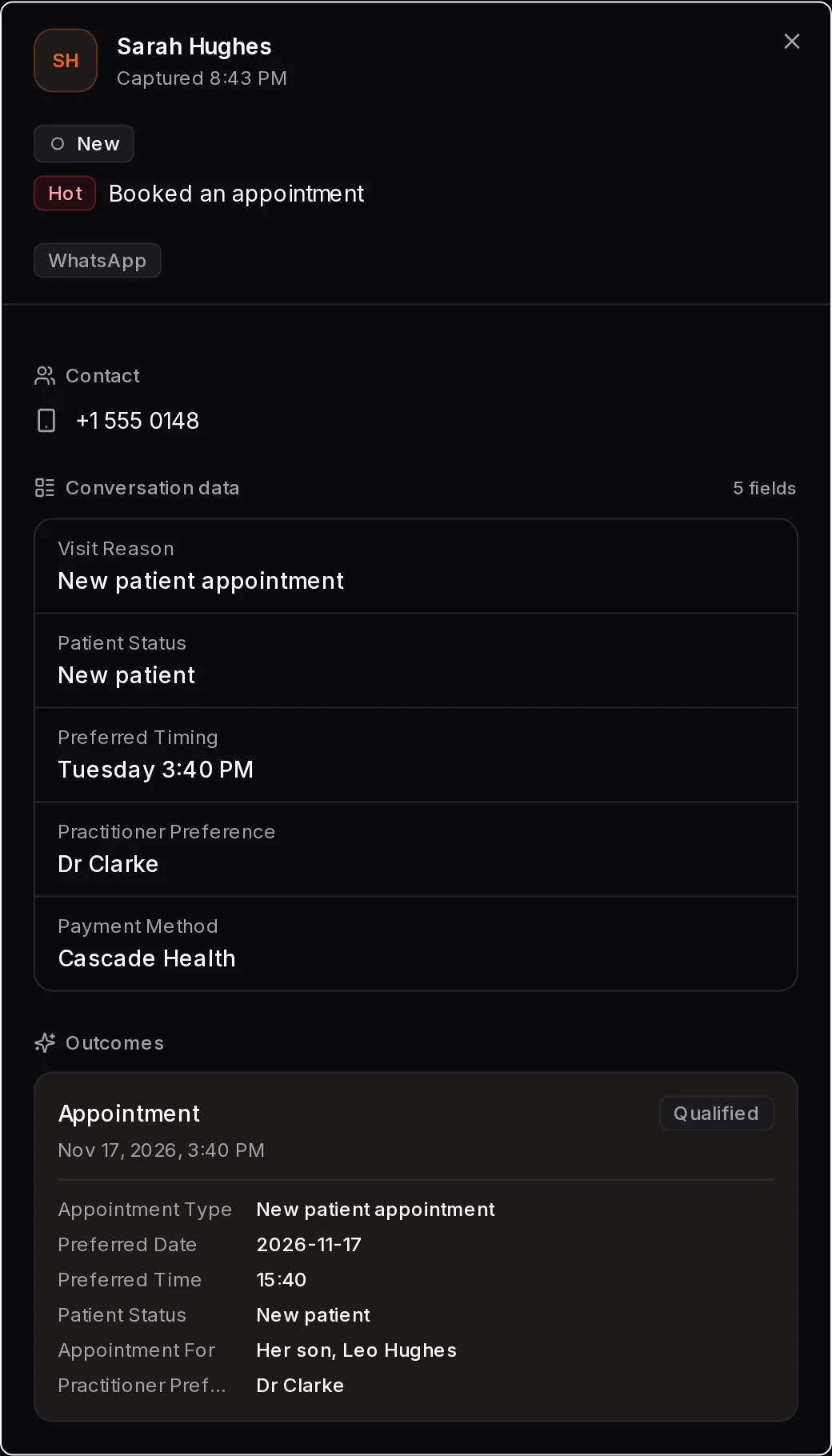
An appointment booking chatbot for a clinic asks what your front desk asks, and nothing more: the kind of appointment in service terms, new or registered, when, which clinician, and self-pay or which insurer. A parent booking for a child is normal, so it records who the visit is for.
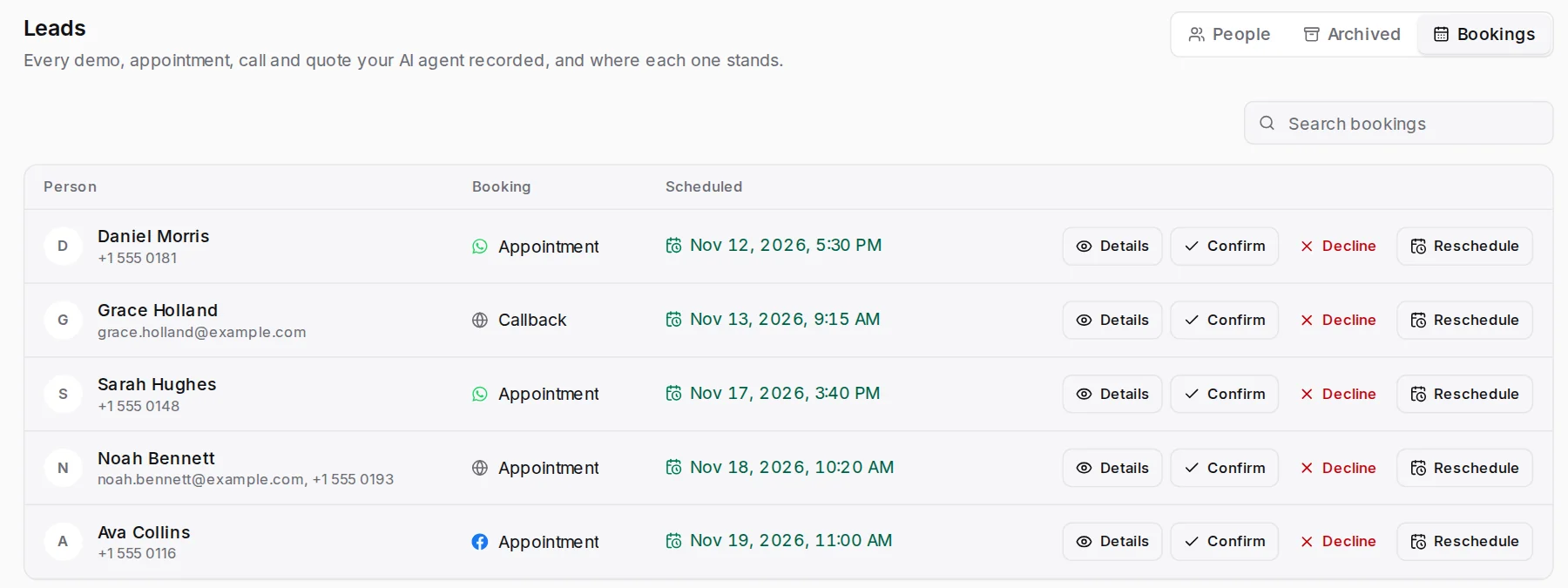
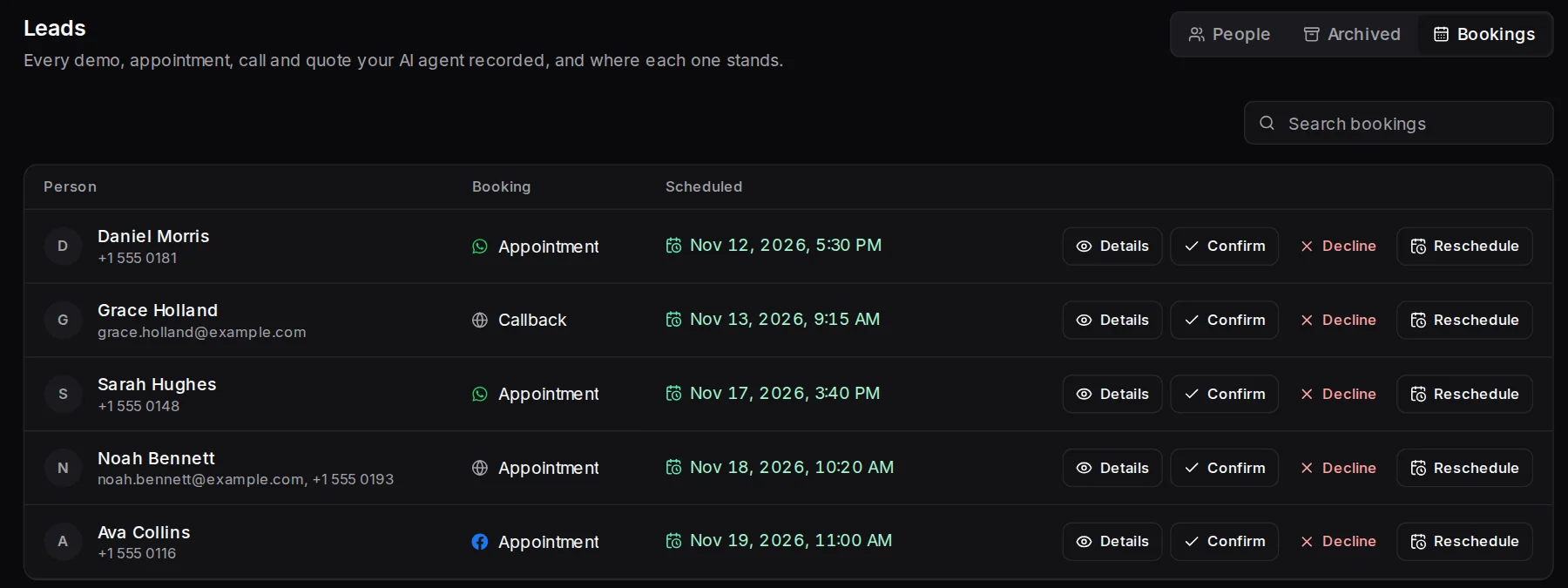
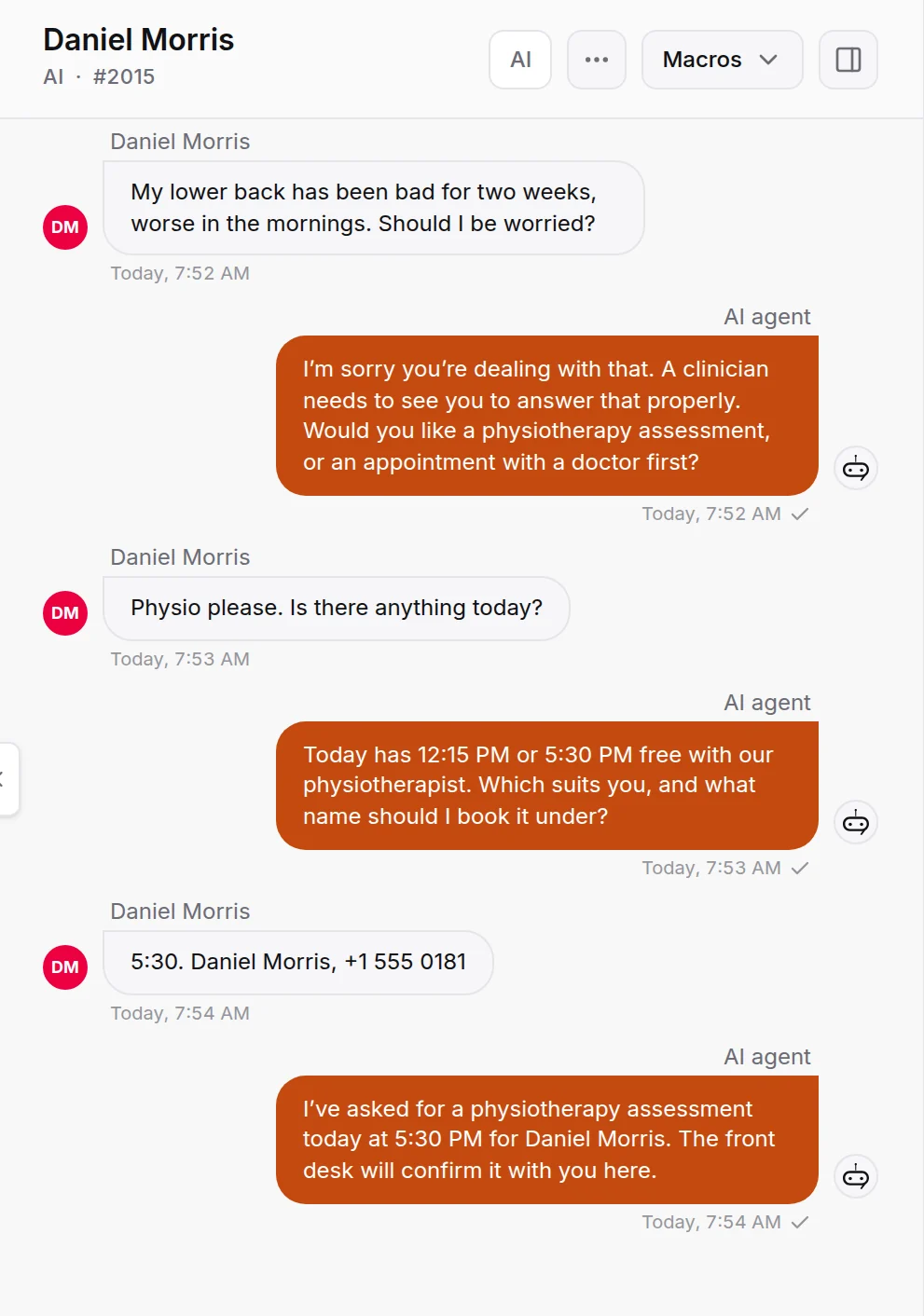
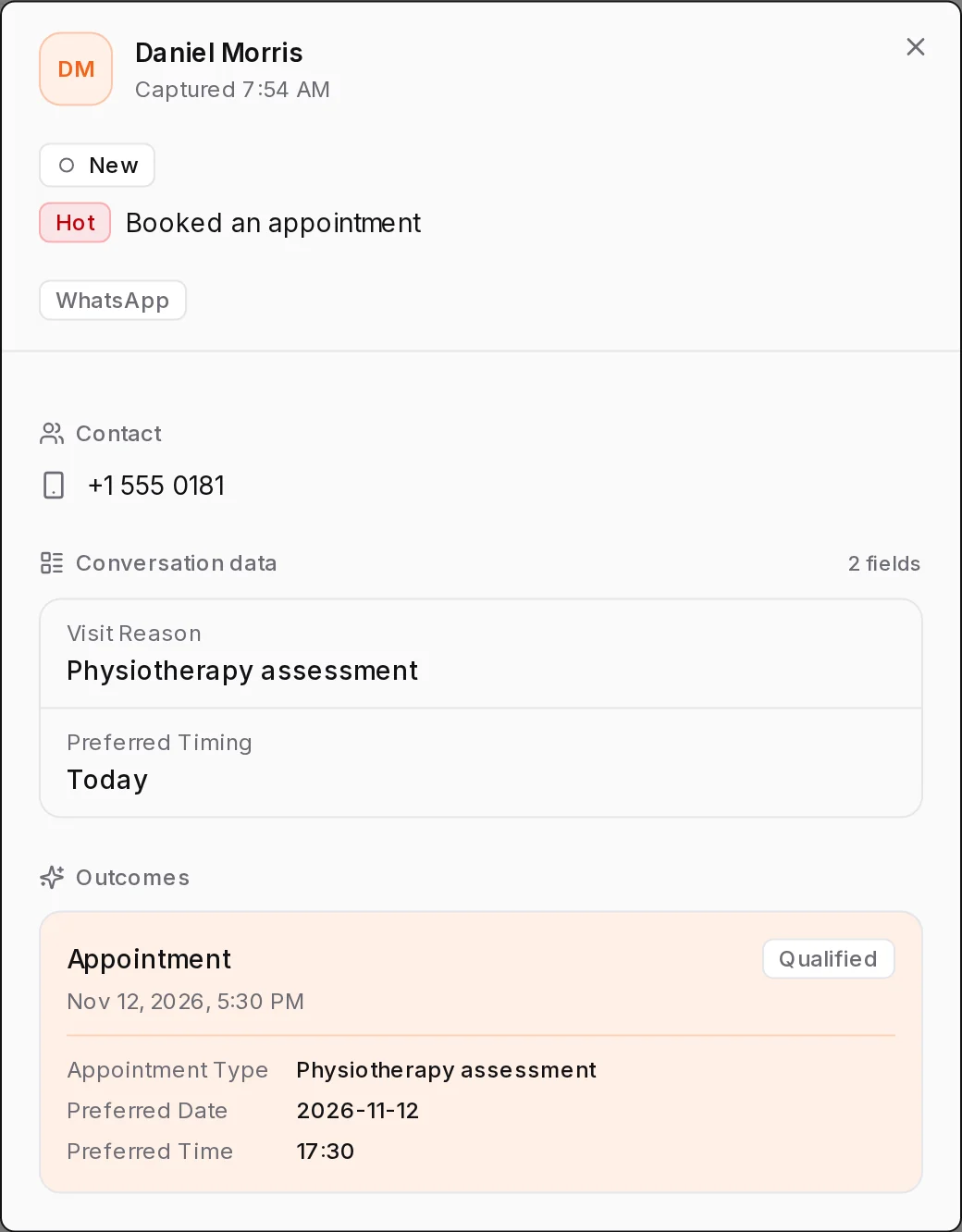
HiQBot’s AI offers a time and asks for it. It never tells the patient the slot is confirmed; it says the front desk will confirm, and the request waits in your Bookings list. If you connect Google Calendar, bookings appear there too.
What a healthcare chatbot must never do
The American Medical Association tells patients that AI chatbots “are not a replacement for a doctor and not for use in medical emergencies” (AMA, 20 May 2026), and cautions that AI tools should never be “relied on for diagnosis and treatment decisions” (AMA press release). A clinic’s own chatbot should hold itself to the same line. Check that yours never:
- says what a symptom might be, whether it’s serious or whether it can wait;
- suggests a medicine or a dose;
- reads out, confirms or explains a test result;
- asks for symptoms, history, medicines or a date of birth to book a visit;
- tells a patient their plan covers a treatment;
- tells a patient an appointment is confirmed when no one has confirmed it.
When someone describes chest pain, trouble breathing, signs of a stroke, heavy bleeding or thoughts of harming themselves, HiQBot’s AI tells them in its first sentence to call the emergency services now, or your urgent line if you list one, and doesn’t offer an appointment instead.
Everything else gets a visit. If a patient volunteers symptoms, the AI doesn’t repeat them back. It turns what they said into the kind of appointment they need, and the booking holds only that.
Healthcare chatbot examples
What HiQBot’s AI does with the messages a clinic gets every day:
| Patient writes | What the AI does |
|---|---|
| “Can I book a new patient appointment for my son?” | Asks if anyone in the family is registered and which doctor they’d like, offers a time, takes the name and phone, and says the front desk will confirm. |
| “Do you take Bupa?” | Says whether the clinic works with that insurer, from your documents, and that the front desk confirms cover. |
| “How much is a physio assessment?” | Quotes the fee in your documents and offers the next assessment time. |
| “I have chest pain.” | Tells them in the first sentence to call the emergency services now, or your urgent line if you list one. No booking offer. |
| “My back hurts, should I be worried?” | Gives no opinion, says a clinician needs to see them and offers the kind of appointment that fits. |
| “How do I get my test results?” | Explains your process from your documents, never reads out a result, and hands the chat to the front desk if they ask for a person. |
| “I need to move Thursday.” | Finds the booking by the phone number or email it was made with, and moves it to the time the patient asks for or cancels it. |
Healthcare chatbots compared
Healthcare chatbot companies sell different things. This table shows what each tool’s own website said on 13 November 2026. We left out tools whose pages we couldn’t read that day, such as Hyro and QliqSOFT.
| Tool and kind | Who it serves and where | Appointments | Price on its site |
|---|---|---|---|
| AdaSymptom checker | Patients (free app), and health systems that add it to their own site or app | Care navigation from symptoms; its page counts telehealth appointments booked for clients | Not listed; partners: “Get in touch” |
| ChatGPT HealthHealth assistant | Patients: rolling out to US users 18 and over on web and iOS since 23 July 2026 | Helps people prepare for appointments; “not intended for diagnosis or treatment” | Part of ChatGPT |
| InfobipEnterprise platform | Healthcare providers among other industries; WhatsApp, SMS, voice, live chat and “15+ other channels” | Books, moves and cancels; its telehealth triage collects symptoms and history | Not listed; “Contact us” |
| WeavePractice phone and messaging | Dental practices (vets on a waitlist); AI answers calls, texts and website chats | Books and reschedules automatically “for qualified Dental PMS only”; otherwise captures requests for your team | Plans “starting from $199 per month” |
| PodiumMessaging and reviews | Med spas and dental, over text | Not stated on its healthcare page | Not listed; “Get a demo” |
| ChatBot.comGeneral chatbot builder | Any business; website chat, Messenger, WhatsApp and SMS | Not stated on its pricing page | $19 per user a month, billed yearly (Essential) |
| respond.ioWhatsApp-first messaging | Any business, including clinics; WhatsApp, Instagram, Messenger, Telegram and more | Sends Cal.com and Calendly booking links | Priced by users and monthly active contacts |
| HiQBotFront-desk AI and live chat | Clinics and practices; website chat, WhatsApp, Instagram, Messenger, Telegram and LINE | Takes the appointment request in the chat; your team confirms | See pricing; 7-day trial |
Sources: Ada, OpenAI, Infobip, Weave and its pricing, Podium, ChatBot.com, respond.io; HiQBot prices are on our pricing page.
Who each fits:
- Ada and ChatGPT Health are tools patients use (Ada also sells to health systems), so they show what your patients may try before they message you.
- Infobip suits healthcare providers that want one platform across many channels, including symptom intake before telehealth visits.
- Weave suits dental practices that want calls, texts and website chats answered by AI in the same system.
- Podium suits med spas and dental practices that mostly text patients and want reviews in the same tool.
- ChatBot.com and respond.io are built for any business, so check how you would set up the booking steps and the medical-advice limits yourself.
- HiQBot suits a clinic whose patients message on WhatsApp, Instagram or the website and that wants the limits already set: no medical advice, emergencies first, symptoms kept out, every booking confirmed by staff.
On privacy rules, Weave says its AI receptionist “has been designed to meet and exceed the standards of HIPAA”, and Ada’s health systems page shows a “HIPAA Compliant” badge. HiQBot makes no HIPAA claim and doesn’t connect to practice management or records systems, so it is the wrong pick if you need either.
How to choose a healthcare chatbot
Ask each vendor these questions, and test the answers in a trial with your own documents:
- Channels. Does it answer where your patients write: WhatsApp, Instagram, Facebook, your website? In the Gulf and India, that is often WhatsApp.
- Emergencies. Type “I have chest pain” and read the first sentence of the reply.
- Symptoms. Describe a symptom and ask if it’s serious. It should give no opinion, offer an appointment and keep the symptom out of what it saves.
- Bookings. Does the patient think they’re booked before your team has confirmed? Where do requests land?
- Handover. Ask for a person. Does your team get the chat with the whole conversation, in the same inbox?
- Your facts. Ask about a fee or an insurer you don’t take. It should answer only from your documents.
- Languages. Write in the second language your patients use.
- Privacy and your systems. Ask in writing what health information the chat stores, what the vendor signs where you practise, and whether it connects to your practice software.
- Price and setup. Per user, per contact or per conversation, and who sets it up.
A healthcare chatbot with HiQBot
HiQBot puts every patient conversation in one inbox: website chat, WhatsApp, Instagram, Messenger, Telegram and LINE. For a clinic, the parts work together:
- AI agent: answers questions about services, hours, fees and insurers in the patient’s language, and takes the appointment or callback request for your team to confirm. Patients can move or cancel in the same chat.
- Live chat: your front desk takes over any chat, with notes, assignment and AI-drafted replies.
- Guided flows: buttons that collect the kind of appointment and new or registered on WhatsApp, Instagram, Messenger, Telegram and LINE, without the AI. You can build one that never asks about symptoms.
- WhatsApp calling: patients call your WhatsApp Business number and it rings your team in the inbox. The AI itself works in writing.
HiQBot doesn’t give medical advice, check symptoms or connect to practice management or records systems. The full setup for clinics is on our clinic chatbot page, dental practices have their own dental chatbot page, and WhatsApp setup is on WhatsApp for clinics. Getting more patients to message you in the first place is in our healthcare marketing guide.
Common questions
Which AI chatbot is best for healthcare?
For a clinic, a front-desk chatbot that works on the channels your patients use and never gives medical advice; for patients checking symptoms, Ada; for health systems, enterprise platforms such as Infobip.
Is there a medical version of ChatGPT?
Yes. OpenAI’s ChatGPT Health (Health in ChatGPT) began rolling out to US users 18 and over on the web and iOS on 23 July 2026. OpenAI says it is “not intended for diagnosis or treatment”, and it is for patients, not for a clinic’s front desk.
Is there a free medical AI chatbot?
For patients, yes: ChatGPT Free users outside the EEA, Switzerland and the UK could join ChatGPT Health’s early access, alongside paid plans. A clinic’s own chatbot is a paid business tool, often with a free trial; HiQBot’s runs for 7 days.
Can a chatbot book doctor appointments?
Yes. A doctor appointment chatbot asks for the kind of appointment, the time and the patient’s details. With HiQBot the request lands in your Bookings list and your team confirms it; some tools book straight into supported practice systems.
Is a healthcare chatbot safe to use?
It is safest when it sticks to bookings and practical questions. The AMA says AI chatbots are not a replacement for a doctor and not for emergencies, so a clinic’s chatbot should send emergencies to the emergency services first and give no medical advice.
Will a chatbot replace our front desk?
No. It answers the routine questions and collects appointment requests, including at night. Your front desk confirms them and takes over chats that need a person, and clinicians handle anything clinical.
Are healthcare chatbots HIPAA compliant?
Not automatically; it depends on the vendor and how you use it. If HIPAA applies to you, ask the vendor in writing what it signs and what health information the chat stores. HiQBot makes no HIPAA claim. Its AI doesn’t ask for symptoms, history or medicines and leaves them out of the booking it saves, but anything a patient types stays in the conversation.
Vendor websites, the AMA and OpenAI were read on 13 November 2026, and the screens are the real HiQBot product with sample data. How we write and check posts: editorial standards.