B2B marketing: strategy, channels and ideas that turn buyers into booked meetings

Muhammad Hassan, FounderLinkedIn
Published Updated
B2B marketing brings in other businesses as customers. It works when the buyer it attracts gets an answer and a meeting in the same visit. This guide covers what business to business marketing is, how it differs from B2C, a B2B marketing strategy, the digital channels and ideas worth trying, and how to measure it.
We make HiQBot, a customer service platform with AI agents, live chat, guided flows and WhatsApp calling. Its AI agent answers a buyer’s questions from your own documents and website, qualifies them and books the demo or discovery call, and your team confirms with one tap. The screens below are the real product with sample data.
What is B2B marketing?
B2B marketing, short for business-to-business marketing, is how a company promotes its products or services to other businesses instead of to consumers. It reaches the people who research and approve a purchase on their company’s behalf, through content, search, LinkedIn, email, advertising and events, and it usually ends in a sales conversation: a demo, a discovery call or a quote.
A software company selling to finance teams does B2B marketing. So does a manufacturer selling parts to assemblers, an IT services firm, a logistics company, an agency, a wholesaler or a law firm with business clients. B2B tech marketing and industrial B2B marketing follow the same rules with different buyers.
B2B vs B2C marketing
B to B and B to C marketing use the same channels. What changes is who decides and how long they take.
| B2B marketing | B2C marketing | |
|---|---|---|
| Who buys | A company, through several people with different jobs | One person, for themselves or their family |
| How they decide | Against a business problem, a budget and other tools | On need, taste, price and convenience |
| How long it takes | Weeks or months, with research, a meeting and approvals | Often minutes or days |
| What marketing sells | A result for the business: time saved, revenue, less risk | A product and how it feels to own it |
| Where it converts | A booked demo, discovery call, quote or proposal request | Checkout, an order or a store visit |
The conversion point is the biggest practical difference. A B2C ad can send someone straight to checkout. A B2B ad usually has to end in a conversation, so the page it lands on needs someone ready to answer.
The B2B buying committee
B2B purchases are group decisions. Forrester’s State of Business Buying 2024 found that 13 people are involved in the average buying decision, and 89% of purchases involve two or more departments (published 4 December 2024). The user, their manager, finance, IT or security and procurement each ask different questions.
They also prefer to do much of the work alone. A Gartner sales survey published in March 2026 found that 67% of B2B buyers prefer a buying experience without a sales rep. Your marketing has to answer the IT lead’s integration question and the finance lead’s pricing question at whatever hour they read your site, and then make it easy to book time with a person when the group is ready.
A B2B marketing strategy in seven steps
A B2B marketing strategy fits on one page. Write these down before you spend:
- Your ideal customer: the kind of company, the problem it has, and the job titles in the buying group. Take the wording from sales calls and support chats.
- Your position: why a buyer would pick you over the tool or supplier they use now, in one sentence they would repeat to their boss.
- Reach and capture. Most buyers are not shopping today: in a paper for LinkedIn’s B2B Institute, Professor John Dawes of the Ehrenberg-Bass Institute set out the 95-5 rule, that about 95% of potential B2B buyers are out of the market at any time (2021; he presents the number as a rule of thumb). Split the plan between staying known to the 95% and capturing the 5% who are ready.
- Two or three channels to start, chosen by where your buyers already read and search. Add one when the first ones book meetings you can count.
- One conversion per page: a demo, a discovery call, a quote or a proposal request. Inbound marketing for B2B only pays when the page converts.
- The answer at 11 pm: decide who answers a buyer’s question outside office hours and in other time zones, and how fast.
- What you count: booked meetings, pipeline and cost per meeting, by channel.
Lead generation is the capture half of this plan. Our B2B lead generation guide covers it in depth, including outbound and what happens to a lead after the first reply. Software companies can go further with B2B SaaS marketing, which adds trials, pricing pages and demo hand-offs.
B2B digital marketing channels
B2B digital marketing is B2B marketing done online. Business to business digital marketing usually draws on these channels; few teams need all of them at once.
Content marketing
Guides, comparisons, case studies and use-case pages that answer what buyers search for. The hard part is the ending: in the Content Marketing Institute’s 2026 research, 40% of B2B marketers named creating content that prompts a desired action as their top challenge (1,015 B2B marketers surveyed June to August 2025, published October 2025). Every piece should end with a way to ask a question and book.
SEO and AI search
Search brings buyers who are already looking. Give each page one main search term, a matching title, clear headings and links from related pages, as in Google’s SEO starter guide. Buyers also ask AI assistants for shortlists; a plain definition near the top, dated facts and an FAQ make a page easier to quote.
LinkedIn and B2B social media marketing
B2B marketing on social media centres on LinkedIn, where you can reach people by job title, company and industry, and where founders and experts post under their own names. Instagram and Facebook reach B2B buyers too, for trades, wholesale and services. Business to business social media marketing works best when a reply or a click opens a conversation with your team or your AI agent.
Email marketing
Email keeps you known to buyers who are not ready yet: a short welcome series, a useful monthly note and event invites. In the US, commercial email needs an accurate sender, a working unsubscribe and your postal address (FTC CAN-SPAM guide). Add a link to your chat so a reader with a question can ask it.
Business to business advertising
B2B advertising pays to reach buyers you cannot reach yet through search or content: Google search ads on high-intent terms, LinkedIn ads by role, retargeting for visitors who read the pricing page, and sponsorships in the newsletters and podcasts your buyers follow. Send each ad to a page with one offer and a chat that answers the first question.
Events and webinars
Trade shows, meetups and webinars put you in front of a buying group at once. The follow-up decides whether the event pays: book the meeting while interest is fresh.
Account-based marketing
Account-based marketing (ABM) picks a list of named companies and aims content, ads and outreach at the people in each buying group. It suits deals worth a lot to you, where a handful of accounts can make the year.
B2B marketing ideas that end in a conversation
Each of these ideas is built to finish with a buyer asking a question and booking a meeting.
- Answer the pricing-page questions in the chat: integrations, security reviews, contract terms. These are the questions that stall a buying group.
- Write a page for each comparison buyers search, with dated facts about each option and a way to ask which one fits.
- Point LinkedIn ads at a page with the chat already open, so a buyer can ask a question straight after the click.
- Offer WhatsApp on your site and in your ads for buyers who would rather message than fill in a form.
- Ask readers to comment a keyword on an Instagram post, then send the guide or price list by DM and offer a call.
- Turn the questions your chat could not answer into new pages, help articles and sales talking points.
- Publish case studies by role, so the finance lead and the IT lead each find their proof.
- After a webinar, invite attendees to a chat where they can ask their question and book a call.
Turning B2B marketing into booked meetings
A common leak in B2B marketing: a buyer arrives with a question, nobody answers, and they open a competitor’s tab. B2B conversational marketing closes that gap. With HiQBot on your site and messaging apps, the AI agent answers from your product documents, website pages and product lists. When the buyer is a fit, it asks what they want to build or buy, their pain points, the timeline, and their name and work email, one question at a time.
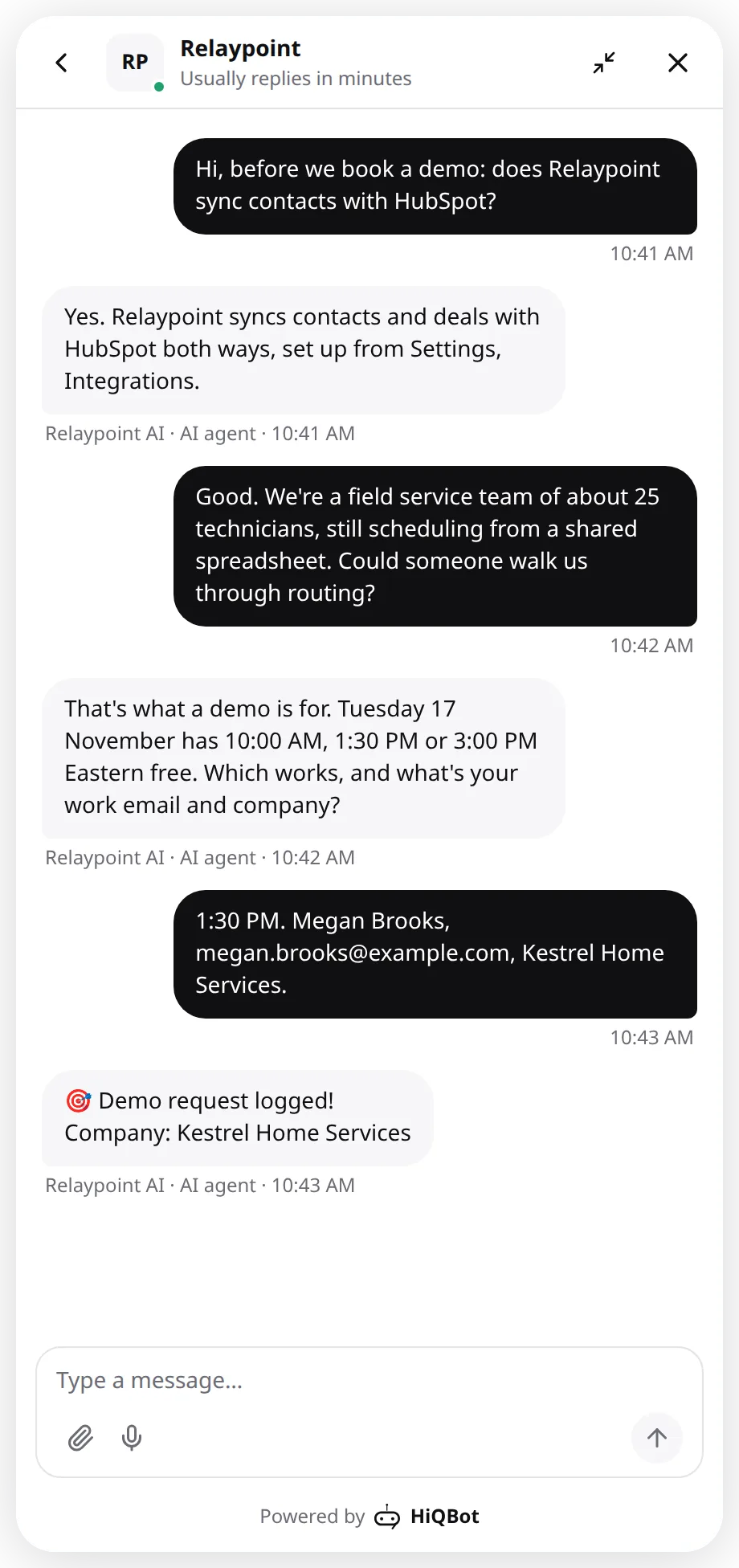
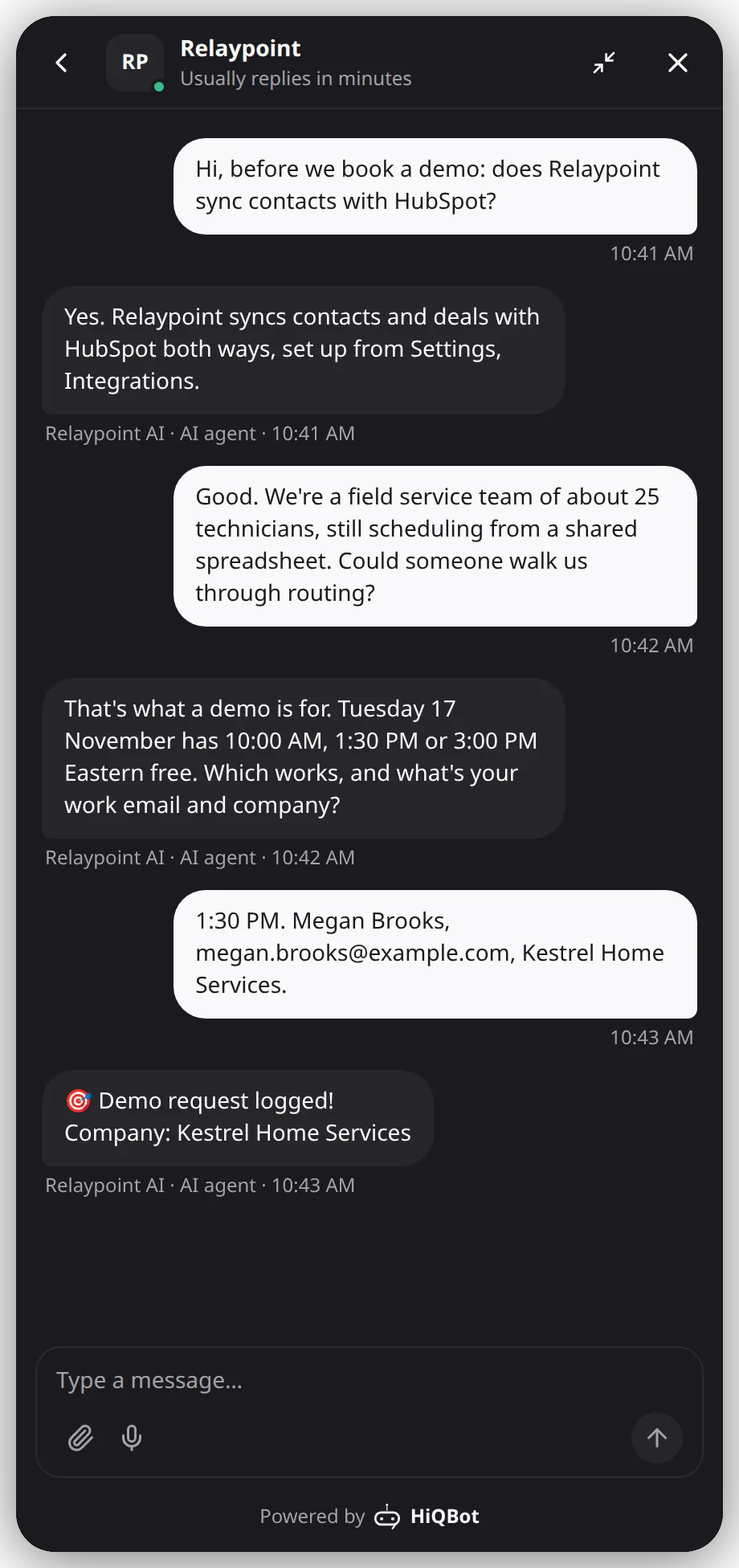
Then it books the product demo or a discovery call, or takes a proposal request. The lead is saved with what the buyer said and a hot, warm or cold label, so sales reads the context before the call.
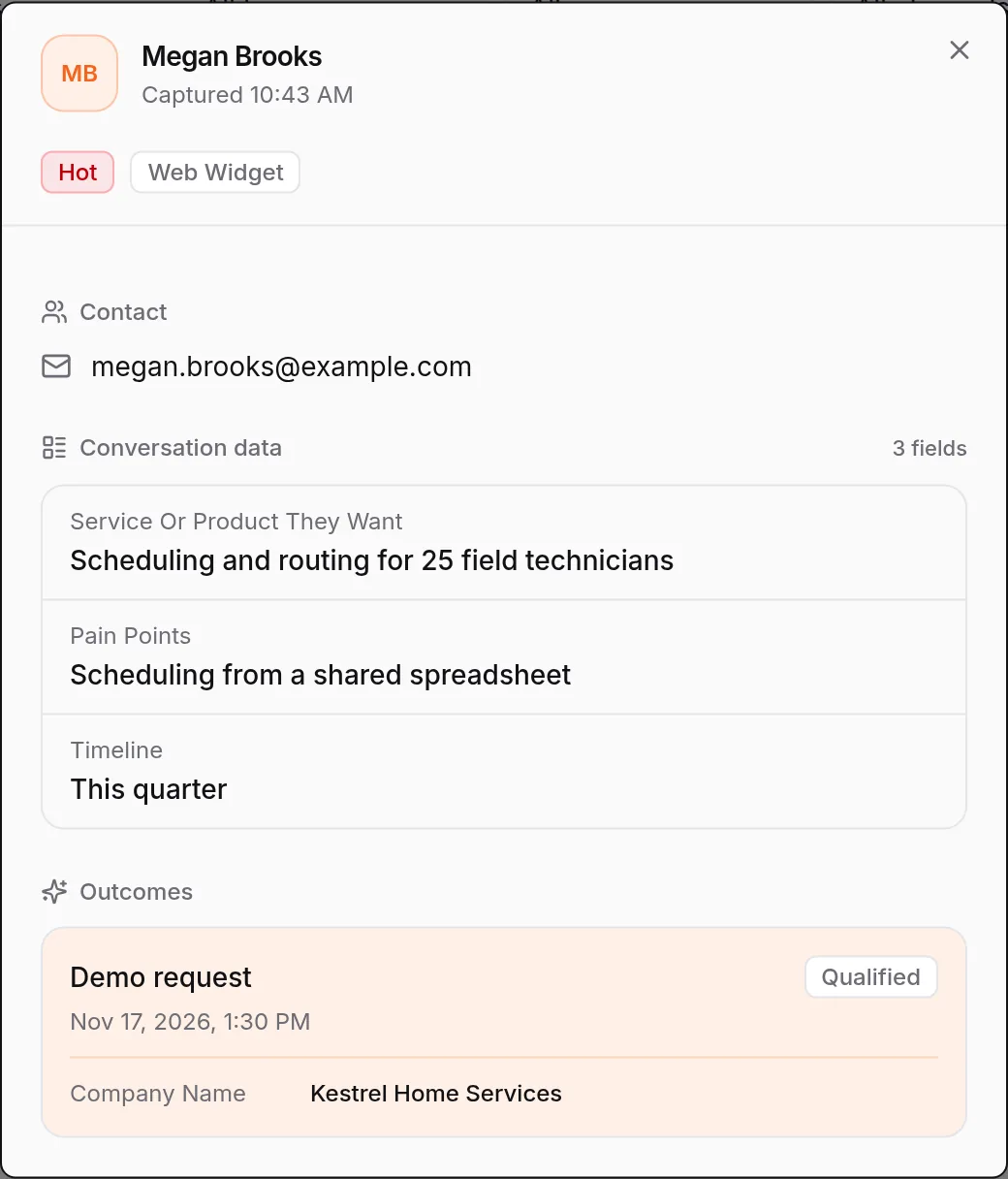
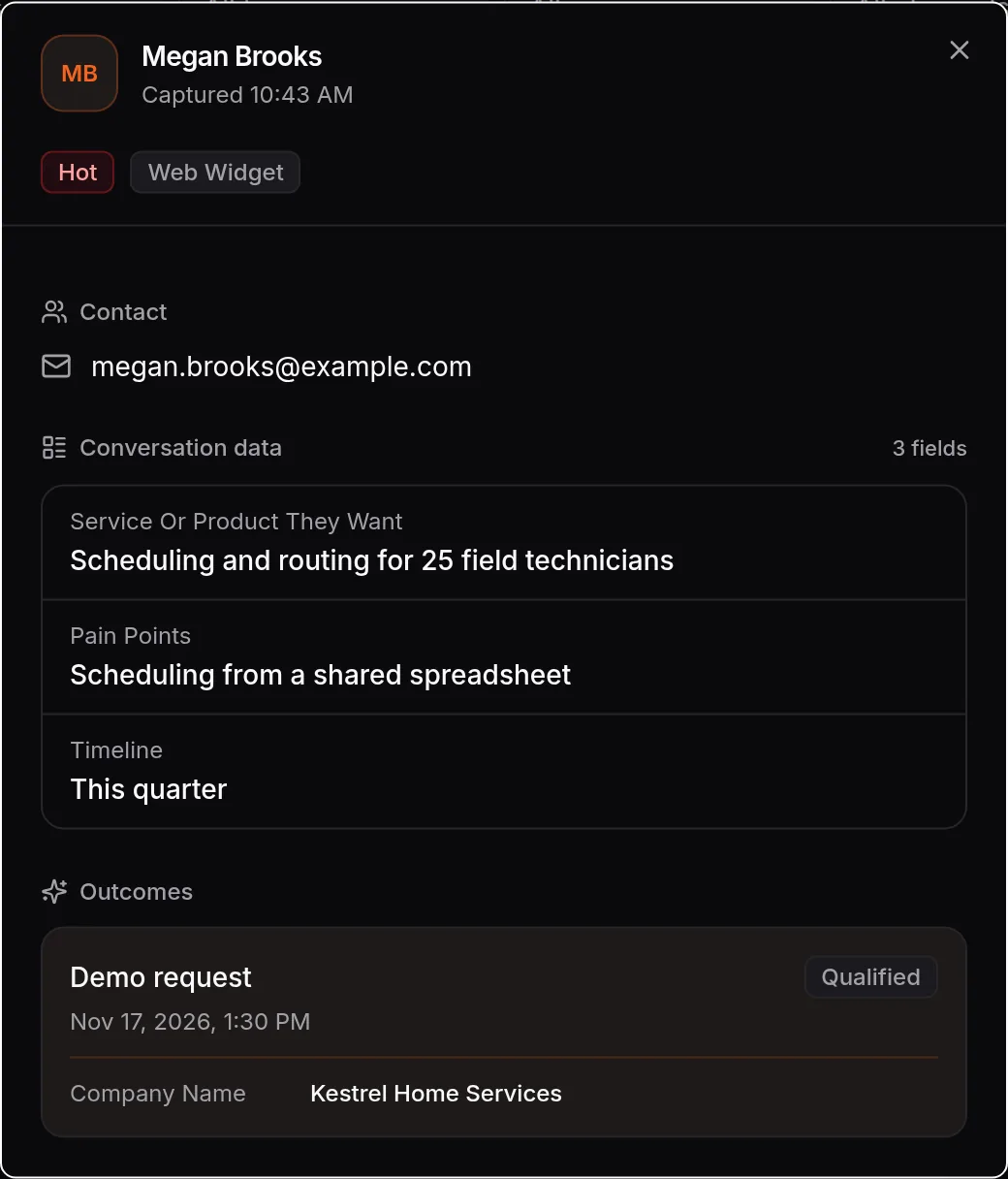
Demos land in your Bookings list, and on Google Calendar when it is connected. Your team confirms each one with one tap, declines it or offers another time, and HiQBot can send the buyer a reminder before the call. With HubSpot connected, the leads you choose go to HubSpot as contacts, with a deal if you want one.
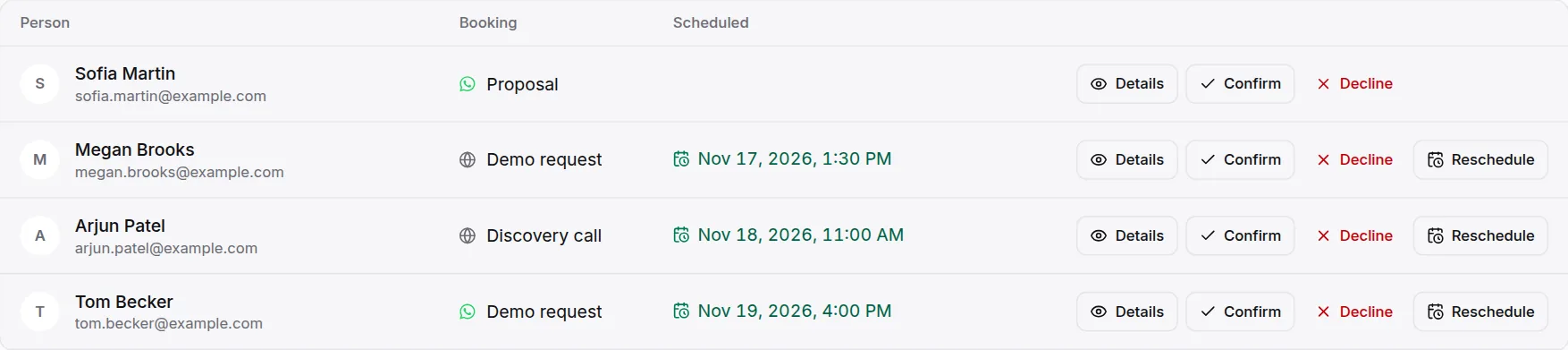
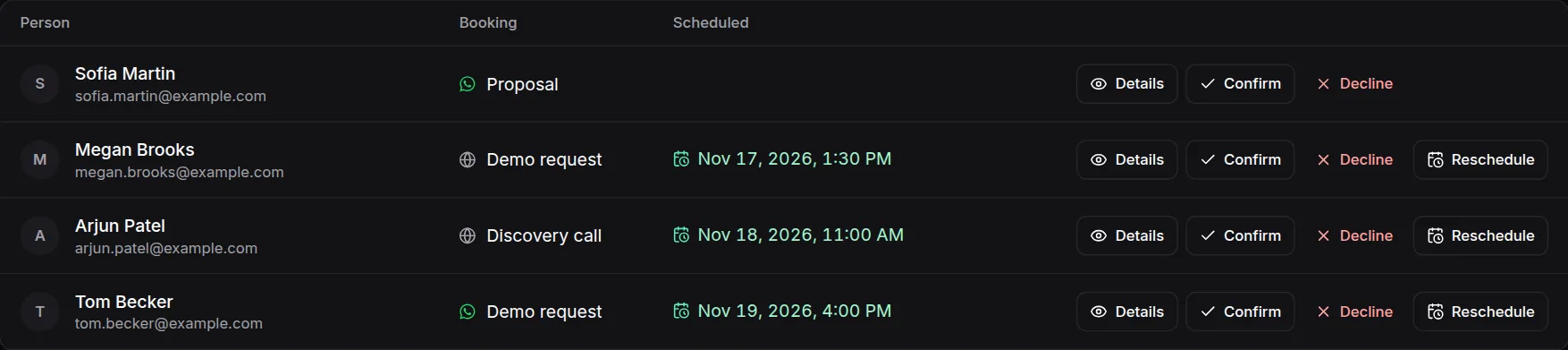
The same AI agent works on website chat, WhatsApp, Instagram, Messenger, Telegram and LINE, 24/7, and LinkedIn traffic lands in the website chat. Every conversation sits in one inbox where a rep can take over with the history in view. Buyers can also call your WhatsApp Business number, and the call rings your team in that inbox; the AI itself works in writing. HiQBot works the inbound side: it answers the buyers your marketing brings in, while cold outreach stays in your sales tools.
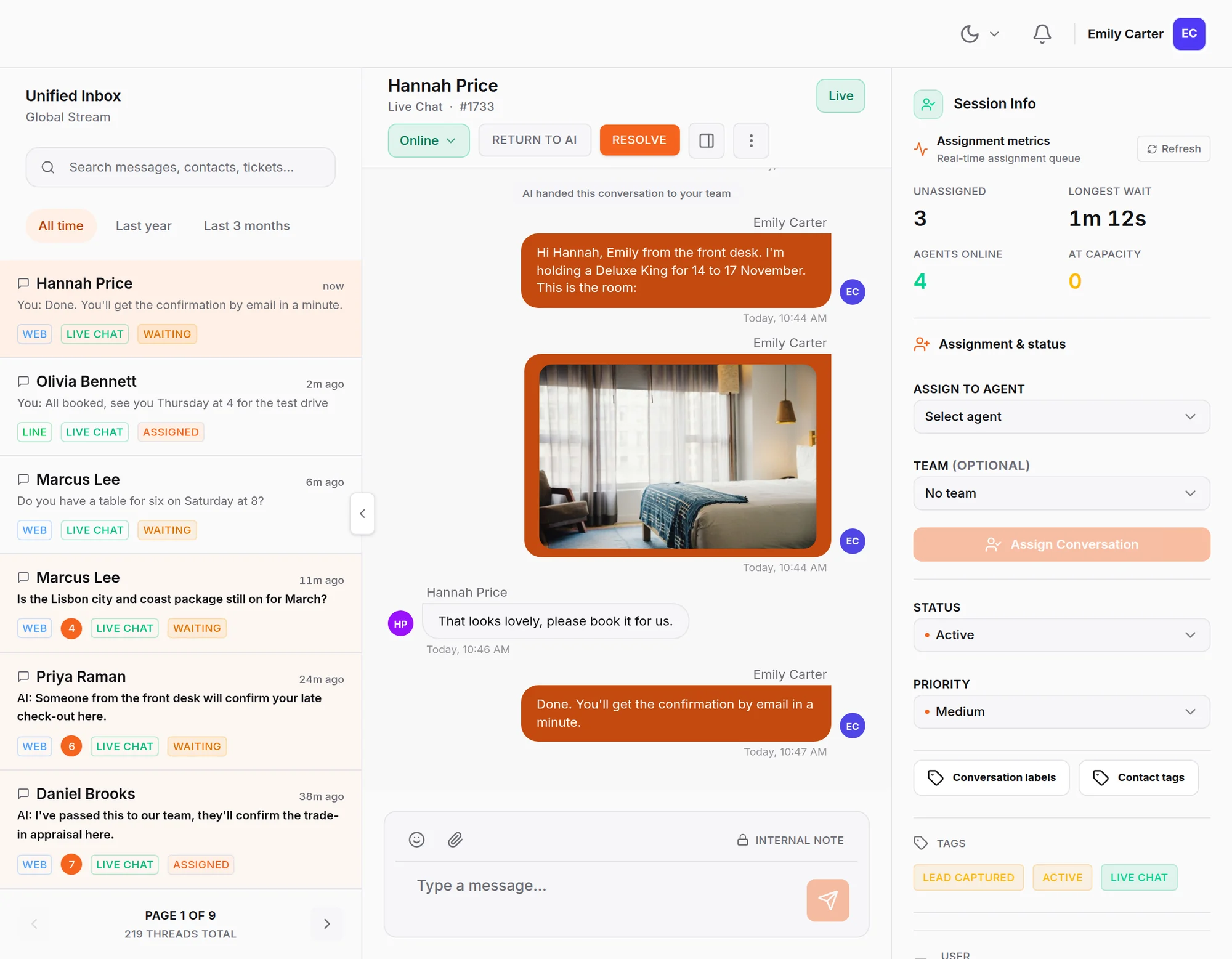
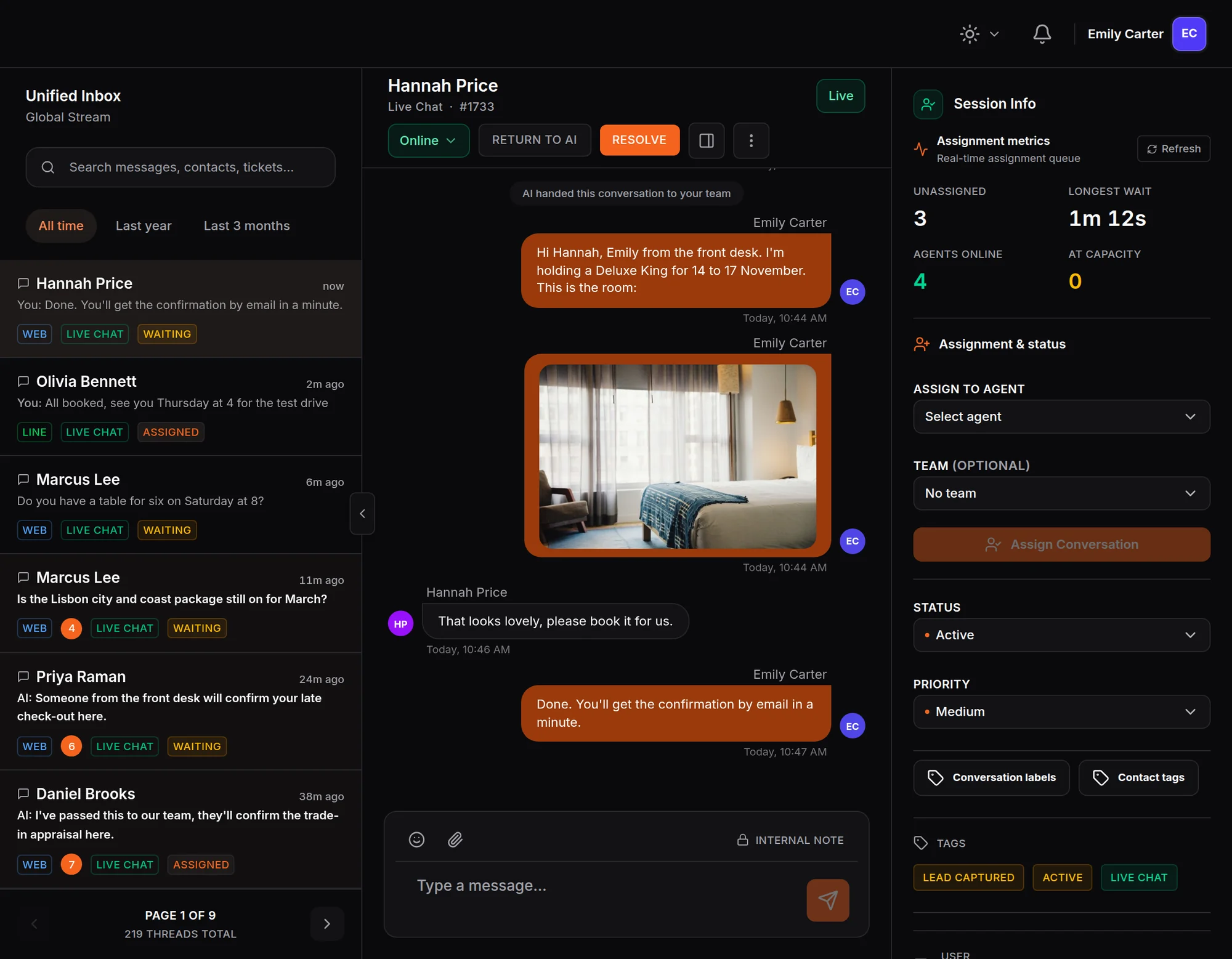
More on how the AI qualifies buyers in lead qualification, why the first reply matters in speed to lead, and the full setup for software and IT companies on our SaaS chatbot page. The agent comes set up for your trade, from software and IT services to trade and wholesale suppliers.
How to measure B2B marketing
Measure B2B marketing by the meetings and pipeline it creates, by channel, every month:
| Metric | What it tells you |
|---|---|
| Booked meetings | Demos, discovery calls and consultations booked, by channel and by landing page |
| Meeting show rate | Share of booked meetings that take place |
| Pipeline created | Value of the deals that started from marketing this month |
| Cost per booked meeting | Channel spend divided by meetings it booked |
| Win rate | Share of qualified deals that close |
| Sales cycle length | Days from the first conversation to a signed deal |
| CAC | Customer acquisition cost: sales and marketing spend divided by new customers |
Traffic, followers and downloads tell you whether people noticed. Booked meetings and pipeline tell you whether the marketing worked. HiQBot reports show where leads came from, your busiest hours and the questions the AI could not answer, which feed straight back into your content plan.
Common questions
What is B2B marketing?
B2B marketing is how one business promotes its products or services to other businesses. It targets the people who research and approve purchases for their company, through content, search, LinkedIn, email, ads and events, and it usually ends in a demo, a discovery call or a quote.
What is an example of B2B marketing?
A software company writing a guide for finance teams, running LinkedIn ads to finance managers and offering a demo on its pricing page is B2B marketing. So is a parts manufacturer exhibiting at a trade show and following up with buyers on WhatsApp.
What is the difference between B2B and B2C marketing?
B2B marketing sells to businesses, where several people decide over weeks or months and the sale ends in a meeting or quote. B2C marketing sells to individuals, who often decide alone and buy at checkout.
What are the main B2B marketing channels?
The main B2B marketing channels are content, SEO, LinkedIn and other social media, email, paid advertising, events and webinars, and account-based marketing. Start with two or three and send each to a page where buyers can ask a question and book.
What is a B2B marketing strategy?
A B2B marketing strategy is a one-page plan naming the ideal customer, your position, the channels you will use, the one conversion on each page and the numbers you will count. It balances reaching future buyers with capturing the ones ready now.
How do you measure B2B marketing?
Measure B2B marketing by booked meetings, meeting show rate, pipeline created, cost per booked meeting, win rate and CAC, each split by channel. Those show which channels produce customers.
Statistics link to their sources with the date each was published, and the screens are the real HiQBot product with sample data. How we write and check posts: editorial standards.