SaaS marketing: a B2B SaaS marketing strategy that turns traffic into booked demos

Muhammad Hassan, FounderLinkedIn
Published Updated
SaaS marketing is how a software-as-a-service company brings in buyers and turns them into paying customers: content, SEO, ads, email, events and partners that send people to the product, the pricing page and the demo. In B2B SaaS marketing the conversion point is usually a booked demo or a trial, so the strategy has to end there.
We make HiQBot, a customer service platform with AI agents, live chat, guided flows and WhatsApp calling. Its AI agent answers a visitor’s product questions from your docs, qualifies them and books the demo or discovery call, and your team confirms with one tap. This guide is for founders, marketers and sales leads at SaaS, software and IT services companies. The screens are the real product with a sample software company.
B2B SaaS marketing strategy in six steps
A SaaS marketing strategy fits on one page. Marketing software as a service differs from selling a one-off product in two ways: the customer pays every month, so retention counts as much as the first sale, and buyers often want to see the product before they talk to anyone. Write these six things down before you spend:
- Who buys: the job title, the company type and the problem they search for in their own words, taken from sales calls and support chats.
- Your motion: product-led (sign up and start a trial), sales-led (book a demo) or both, by plan or by buyer.
- The one conversion per page: trial on the self-serve pages, demo on the pages for buyers who need a walkthrough, a security review or a custom quote.
- Two or three channels to start: search, content, paid ads, email, LinkedIn, partners or events. Add a channel once the first ones bring demos you can count.
- Who answers a buyer’s question at 11 pm: buyers read your pricing page outside office hours and in other time zones. Decide what happens when they have a question then.
- What you count: booked demos, trials, demo to paid and CAC by channel.
SaaS content marketing
SaaS content marketing writes for the searches and questions your buyers have before they know your name. Three kinds of content tend to bring buyers who book:
- Problem guides on the job your product does, written with the steps a buyer would follow without you, then with you.
- Comparisons and alternatives for buyers choosing between tools, with dated facts about each.
- Use-case and industry pages that show the product doing the job for one kind of customer.
Write from first-hand use: real screens, real numbers from your own product and the questions customers ask you. Google’s guidance asks for content made for people, with clear sourcing and visible expertise (Google Search Central). End each piece with a way to ask a question and book.
SaaS SEO
B2B SaaS SEO starts with the pages closest to a purchase: your product, use-case, integration, pricing and comparison pages. Then come the guides above. Give each page one main search term, a title that matches it, clear headings, fast loading and links from related pages (Google’s SEO starter guide).
Buyers also ask AI assistants which tools to shortlist. Pages with a plain definition near the top, dated facts and an FAQ are easier for those answers to quote.
SaaS advertising and PPC
SaaS advertising pays to reach buyers you would not reach yet through search or content. The common channels:
- Google search ads on high-intent terms: your category, “[competitor] alternative”, “[job] software”.
- LinkedIn ads targeted by job title, company and industry.
- Retargeting for visitors who read the pricing page and left.
- Review sites and newsletters your buyers already read.
Every paid click should land where it can convert. Send each ad to a page with one offer and a chat that answers the buyer’s first question and offers demo times right away. A form that promises “we’ll be in touch” loses buyers who wanted an answer now.
SaaS email marketing
SaaS email marketing does two jobs: it nurtures people who are not ready to buy, and it helps trial users reach the moment the product proves itself. Keep a short welcome series, a trial series tied to the steps that predict paying, and a monthly product update. In the US, commercial email needs an accurate sender, a working unsubscribe and your postal address (FTC CAN-SPAM guide). Put a link to your chat in each email so a reader with a question can ask it and book a demo in the same place.
SaaS lead generation: from visit to booked demo
SaaS lead generation is where marketing spend turns into pipeline, or leaks. A buyer lands on the pricing page with one question: does it integrate with our CRM, is there SSO, can it handle our volume. If nobody answers, they open a competitor’s tab.
With HiQBot on your site, the AI agent answers from your product docs, help center and website pages. When the buyer is a fit, it asks what they want to build or buy, their pain points, the timeline, and their name and work email, one question at a time. Then it offers demo times and books the demo or a discovery call, or takes a proposal request.
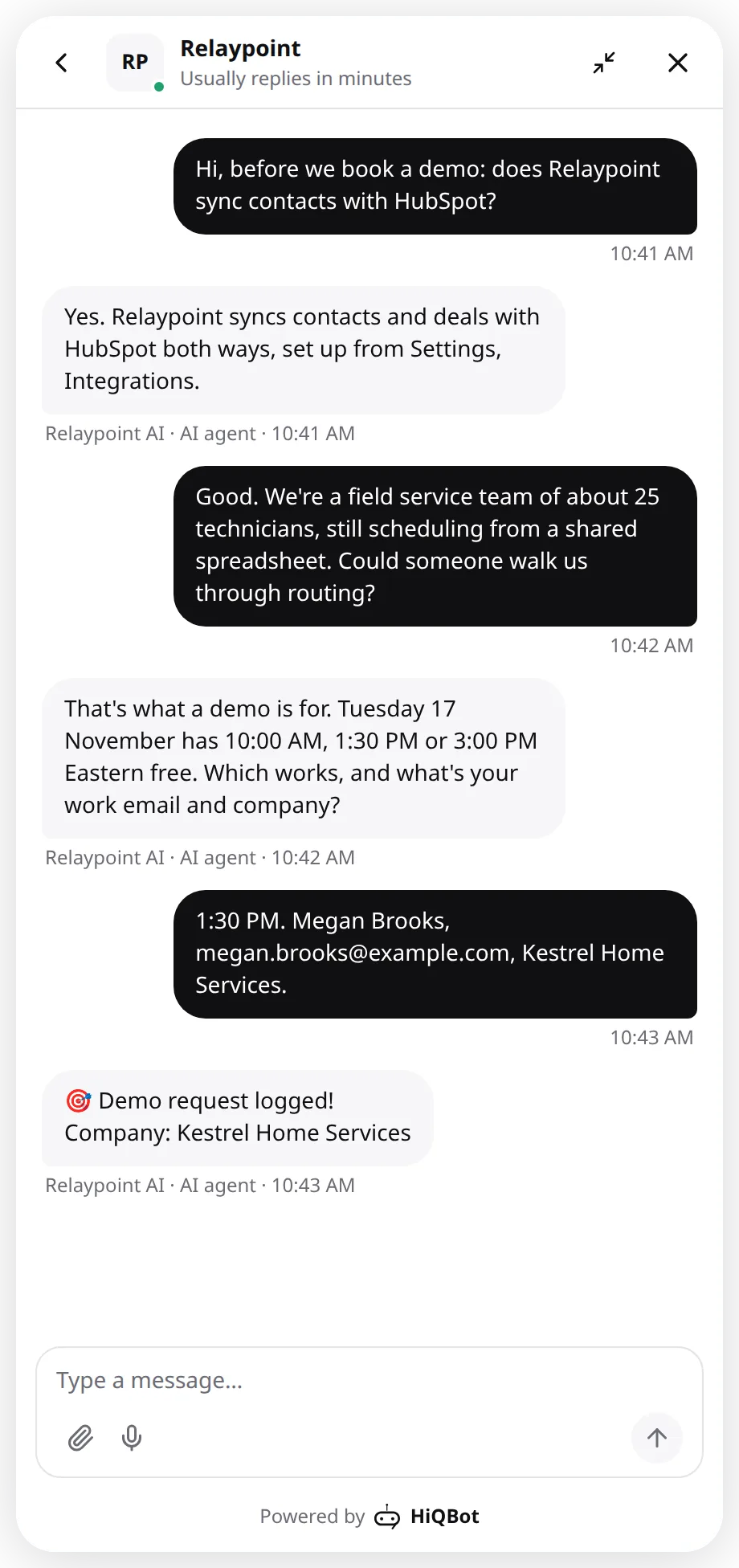
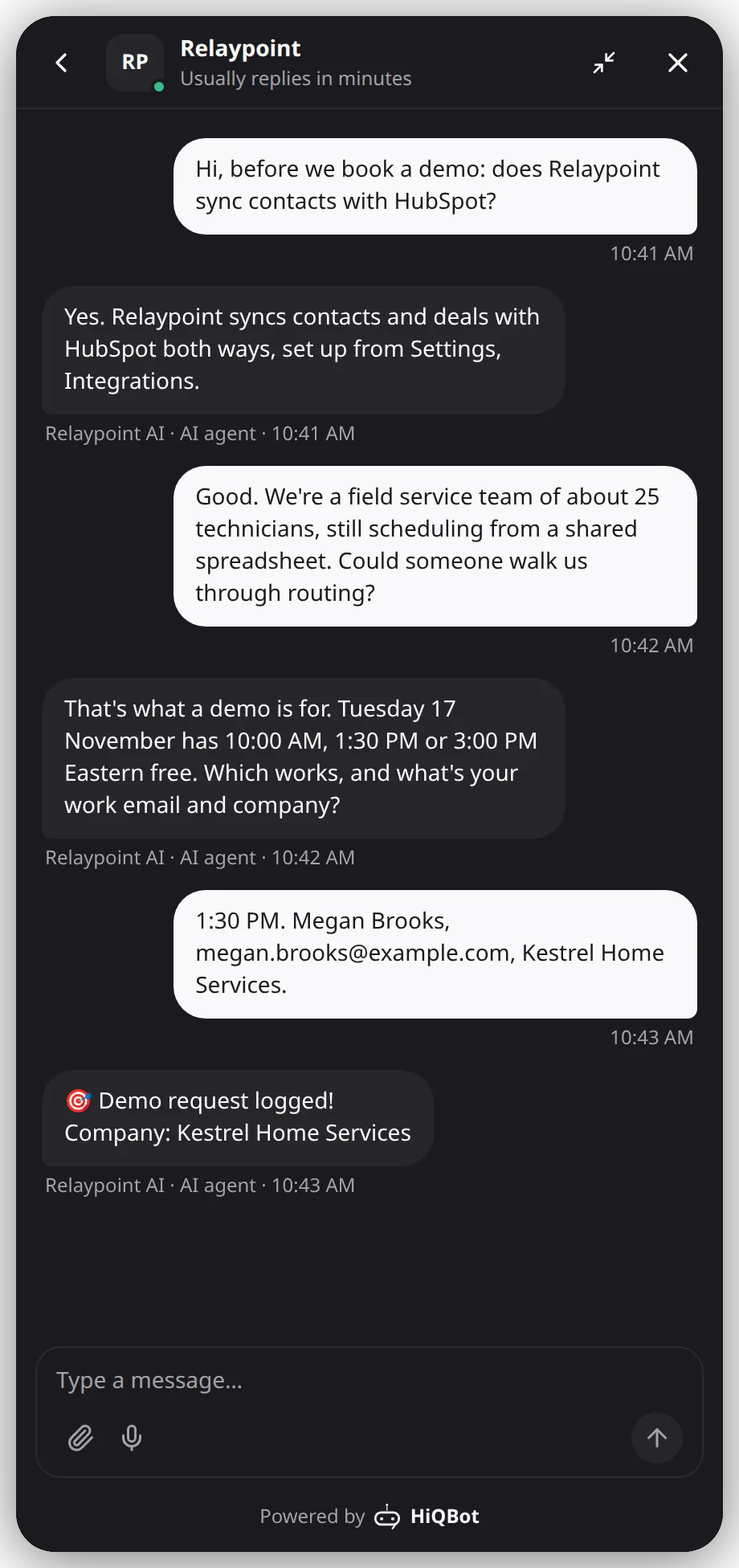
The lead is saved with what the buyer said, so sales reads the context before the call. Hot, warm and cold labels show who to call first.
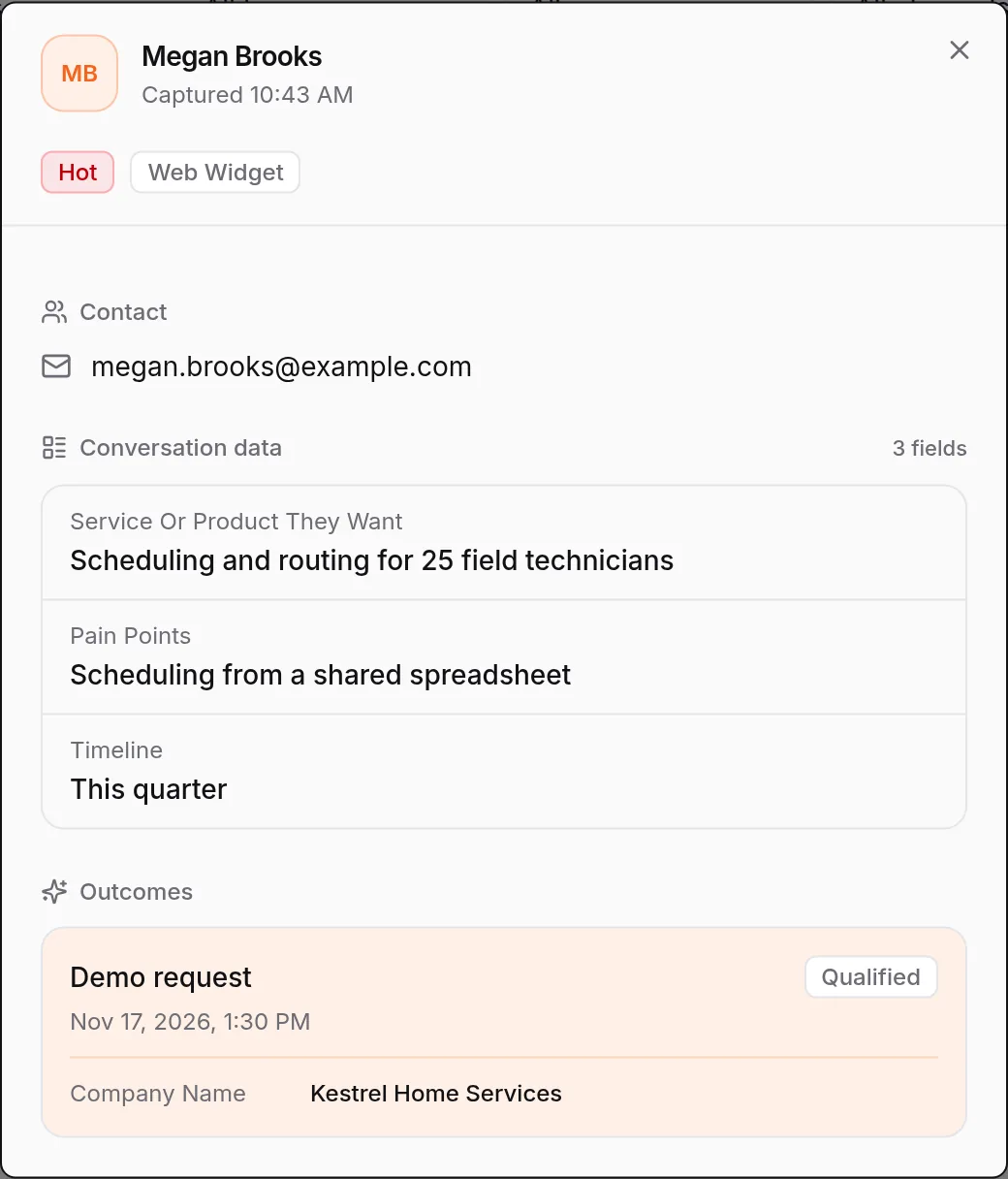
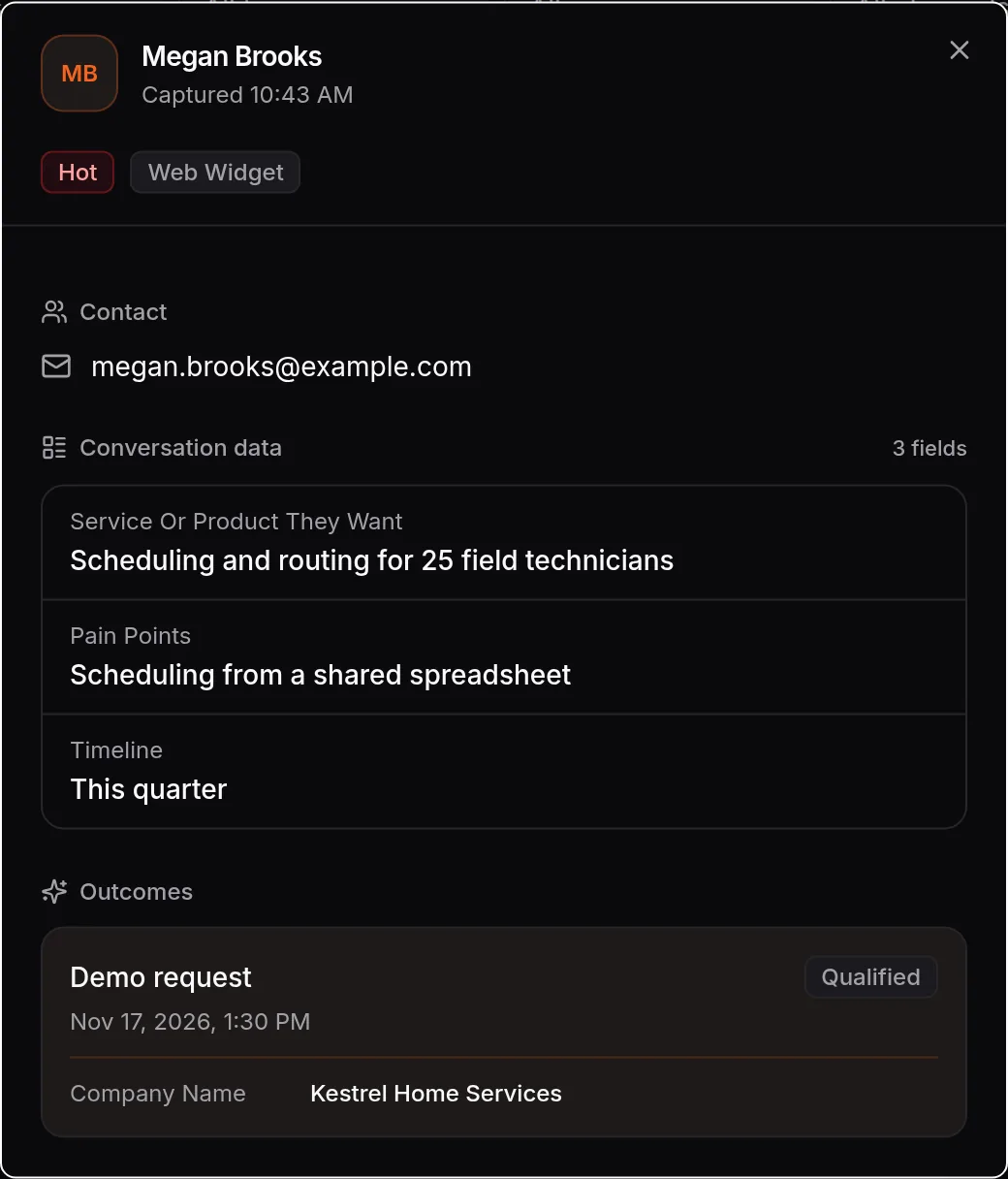
Demos land in your Bookings list and on Google Calendar when it is connected. Your team confirms, declines or reschedules each one, and HiQBot can send the buyer a confirmation and a reminder before the call. Read more on lead qualification and why the first reply matters in speed to lead.
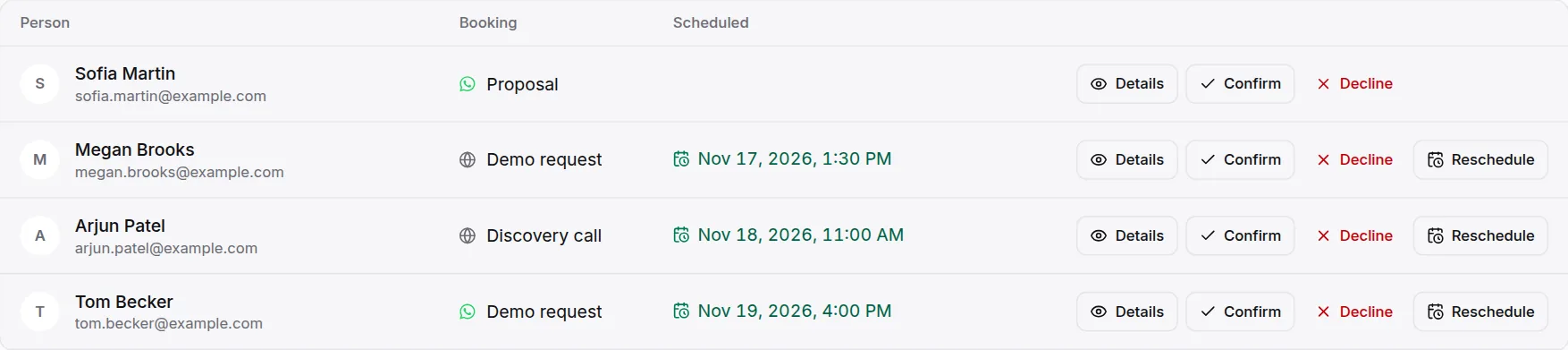
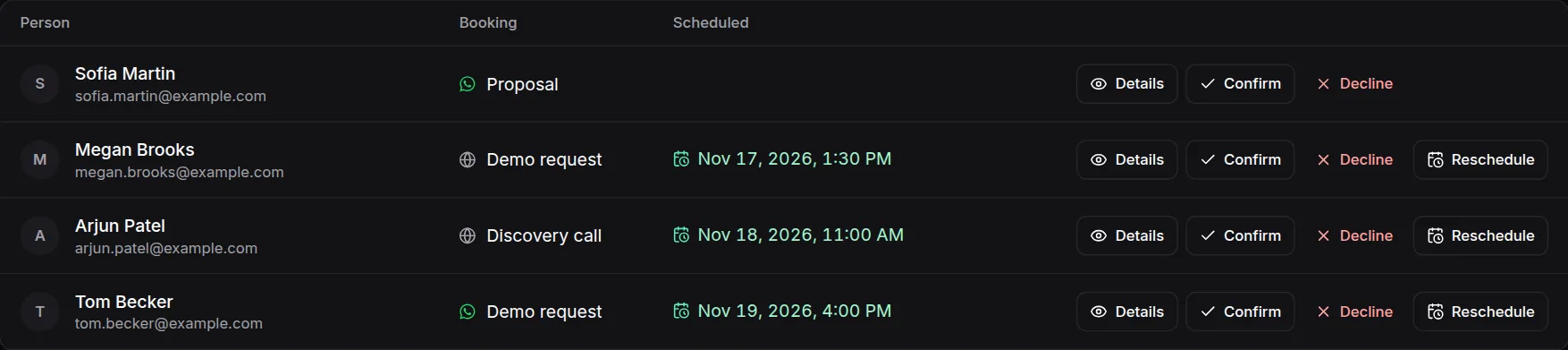
For the wider B2B picture, including LinkedIn, outbound and events, see our guide to B2B lead generation.
Conversational marketing for SaaS
Conversational marketing replaces “fill in the form and wait” with a chat that answers and books in the same visit. For SaaS it fits the pricing page, comparison pages and ad landing pages. It also fits the channels buyers use outside your site: WhatsApp for buyers abroad, Instagram and Messenger for those who find you on social. HiQBot runs the same AI agent on website chat, WhatsApp, Instagram, Messenger, Telegram and LINE, with every conversation in one inbox. Buyers can also call your WhatsApp Business number, and the call rings your team in that inbox; the AI itself works in writing.
On WhatsApp, Instagram, Messenger, Telegram and LINE, a guided flow can greet a new chat with buttons such as Book a demo, Pricing question and Talk to sales, so the buyer picks the path in one tap.
From marketing to SaaS sales: the demo hand-off
SaaS sales picks up where marketing ends: the demo, the follow-up, the trial or pilot, procurement and the contract. In B2B SaaS sales a deal can stall at the hand-off, when a qualified buyer waits a day for a reply or repeats everything to a rep. Make the hand-off carry the context:
- The rep sees the chat, what the buyer needs, the timeline and the work email before the demo.
- A rep can take over a live chat from the AI with the history in view, using notes and assignment in the same inbox (live chat).
- With HubSpot connected, leads go to HubSpot as contacts with a deal (integrations).
HiQBot works the inbound side: it answers the buyers who come to you and books their demos. Cold outreach and prospect lists stay in your sales tools.
SaaS growth metrics
SaaS growth comes from more buyers, better conversion and lower churn. Track a few numbers by channel every month:
| Metric | What it tells you |
|---|---|
| Demos booked | Booked demos and discovery calls per week, by channel and by page |
| Demo show rate | Share of booked demos that happen; reminders lift it |
| Demo to paid | Share of held demos that become customers |
| Trial to paid | For self-serve plans, the share of trials that start paying |
| CAC | Customer acquisition cost: sales and marketing spend divided by new customers |
| LTV and payback | What a customer is worth over their lifetime, and the months it takes to earn back CAC |
| MRR and churn | Monthly recurring revenue, and the share of customers or revenue lost each month |
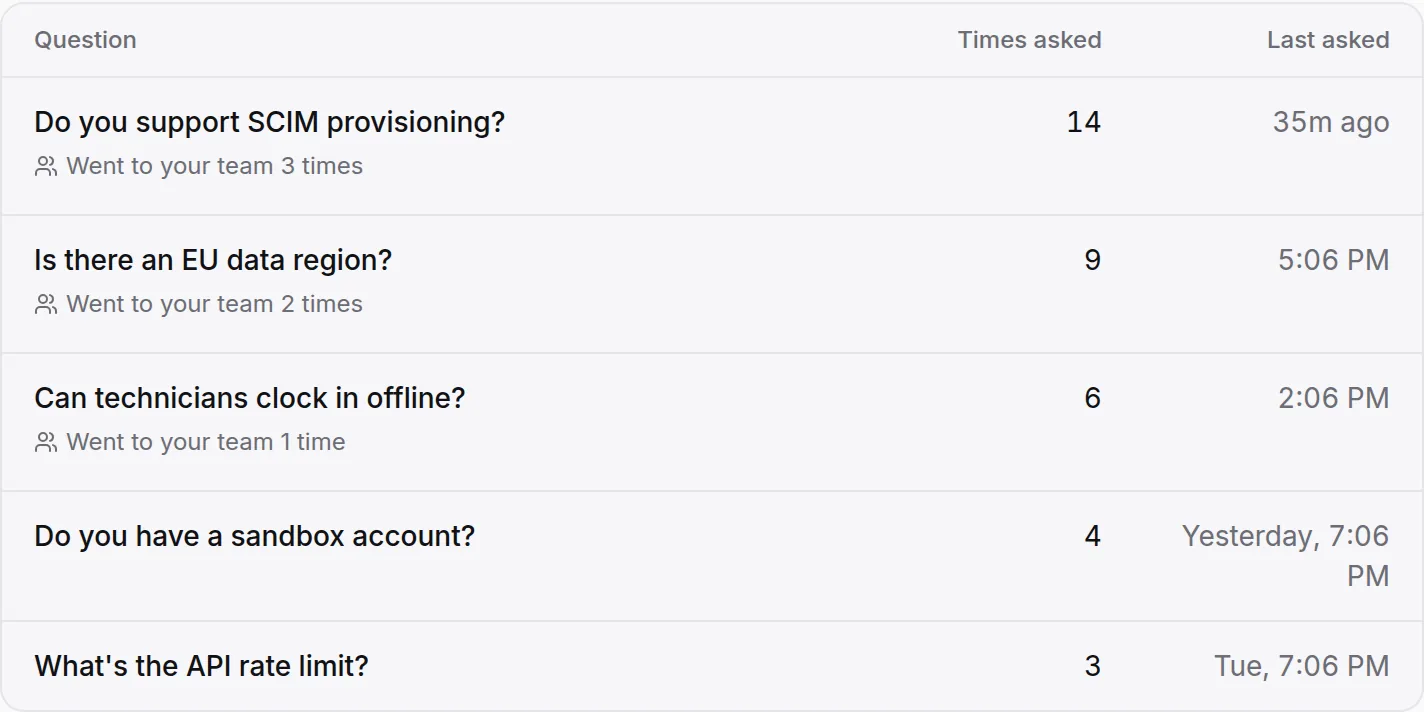
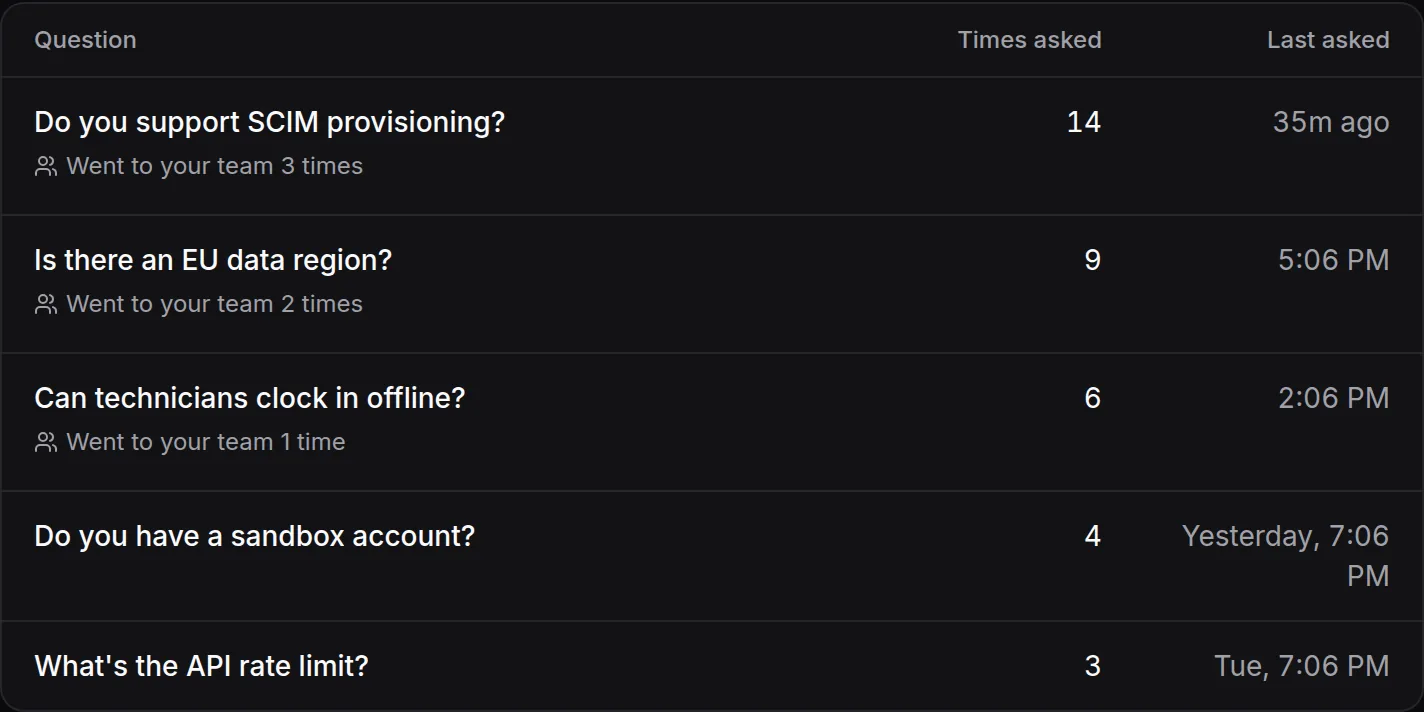
HiQBot reports show where leads came from, your busiest hours and the questions the AI could not answer. Those questions are a content plan: each one is a doc to write, a pricing-page line to add or an objection to answer on a landing page.
SaaS marketing tools for booking demos
Most SaaS marketing tools serve one channel: SEO, ads, email or analytics. These five serve the step this guide is about, turning a visit into a booked demo. HiQBot comes first as our pick. Facts were read on each vendor’s site on 13 November 2026.
| Tool | What it does | Facts and prices |
|---|---|---|
| HiQBot (our pick) | Turns website, WhatsApp, Instagram, Messenger, Telegram and LINE chats into booked demos | The AI answers from your product docs, qualifies the buyer and books the demo or discovery call; your team confirms each one. Leads can go to HubSpot as contacts with a deal. 7-day free trial.Prices on our pricing page |
| Chili Piper | Books meetings from web forms and routes them to reps | Growth from $1,250 a month with 15 seats, Scale from $3,500 a month with 30 seats, billed yearly only.chilipiper.com/pricing |
| Qualified | An AI SDR agent in website chat that schedules sales meetings | Premier, Enterprise and Ultimate plans with no published prices. Lists Salesforce CRM integration.qualified.com/pricing |
| HubSpot Marketing Hub | Email, forms and marketing automation on the HubSpot CRM | Starter priced per seat; Professional from $800 a month with 3 core seats and a $3,000 onboarding fee; Enterprise from $3,600 a month.hubspot.com/pricing/marketing |
| Calendly | A booking link the buyer picks a time from | Free plan; Standard $10 and Teams $16 per seat a month on yearly billing; Enterprise from $15,000 a year.calendly.com/pricing |
HiQBot
Fits B2B SaaS, software and IT services companies that want buyers answered and booked on the website and on messaging apps. The AI answers from your docs, qualifies the buyer and books the demo or discovery call into Bookings for your team to confirm. Live chat, guided flows and WhatsApp calling sit in the same inbox. More on our SaaS chatbot page.
Chili Piper
Fits sales teams whose buyers already fill in a demo form. It turns the form into a booked meeting and routes it to a rep. Growth starts at $1,250 a month with 15 seats, billed yearly (Chili Piper pricing, read 13 November 2026).
Qualified
Fits sales teams that want an AI SDR agent in their website chat; its pricing page lists Salesforce CRM integration. Prices are on request (Qualified pricing, read 13 November 2026).
HubSpot Marketing Hub
Fits teams that run email, forms and nurture in HubSpot. Professional starts at $800 a month with 3 core seats and a $3,000 onboarding fee (HubSpot pricing, read 13 November 2026). HiQBot connects to HubSpot, so the two work side by side.
Calendly
Fits teams that want a booking link in emails and on a page. It has a free plan, and Standard is $10 per seat a month on yearly billing (Calendly pricing, read 13 November 2026).
SaaS marketing with HiQBot
HiQBot is one inbox for website chat, WhatsApp, Instagram, Messenger, Telegram and LINE, with four parts that work alone or together:
- AI agent: answers product, pricing and integration questions from your docs, qualifies the buyer and books the demo or discovery call for your team to confirm.
- Live chat: a rep takes over any chat with the history in view, with notes, assignment and AI-drafted replies.
- Guided flows: buttons such as Book a demo and Talk to sales on WhatsApp, Instagram, Messenger, Telegram and LINE.
- WhatsApp calling: buyers call your WhatsApp Business number and it rings your team in the inbox.
The full setup for software companies is on our SaaS chatbot page.
Common questions
What is SaaS marketing?
SaaS marketing is how a software-as-a-service company attracts buyers and turns them into paying subscribers, through content, SEO, ads, email, events and partners. Because customers pay every month, it covers keeping customers as well as winning them.
How is B2B SaaS marketing different?
B2B SaaS marketing sells to a team, so several people take part and the sale often runs through a demo. It leans on search, content, LinkedIn and comparison pages, and it counts booked demos and pipeline as well as sign-ups.
What is the best marketing strategy for SaaS?
The best SaaS marketing strategy picks one buyer, one conversion per page and two or three channels, then measures booked demos or trials by channel. Make sure every page lets a buyer ask a question and book in the same visit.
How do I get more SaaS demos booked?
Answer the buyer’s question on the page where they ask it, and offer demo times in the same reply. An AI agent on the pricing page can do this at any hour, collect the work email and timeline, and leave the booking for your team to confirm.
Which SaaS marketing metrics matter most?
Booked demos, demo show rate, demo to paid, trial to paid, CAC, LTV and churn. Track each by channel, so you know where to spend next month.
Vendor facts were read on 13 November 2026, and the screens are the real HiQBot product with sample data. How we write and check posts: editorial standards.