Speed to lead: what the research says, and how to answer every lead in seconds

Muhammad Hassan, FounderLinkedIn
Published Updated
Speed to lead is the time between a lead getting in touch and your first useful reply. It matters because interest fades fast: in the best-known study on it, the odds of reaching a web lead within 5 minutes were 100 times higher than at 30 minutes. In the audits that followed, most companies took more than an hour, and many never replied.
We make HiQBot, a customer service platform with AI agents, live chat, guided flows and WhatsApp calling. This guide covers what the research measured and what it did not, how to work out your own response time, and how to answer every new lead in seconds on chat, WhatsApp and Instagram, with examples by industry. It is written for owners, sales managers and support leads whose leads come in at all hours. The method works whichever tools you use.
What is speed to lead?
Speed to lead is how long a business takes to reply to a new lead, counted from the moment the lead fills in a form, sends a message or calls, to the first reply that helps them. Sales teams also call it lead response time. A shorter time means more leads reached and qualified.
An automatic “thanks, we'll be in touch” email does not count. The clock stops when the lead gets an answer to their question or a next step, from a person or from an AI agent that can give one.
The research behind speed to lead
Most speed-to-lead figures you will see trace back to a few studies. Here is what each one measured, read from the original where we could get it.
The 2007 Lead Response Management Study
Dr James Oldroyd, then a faculty fellow at MIT, and InsideSales.com, a sales software company, looked at three years of data from six companies: more than 15,000 web leads and 100,000 call attempts. They found that “the odds of contacting a lead in 5 minutes versus 30 minutes drop by 100 times”, and the odds of qualifying the lead drop 21 times. Even waiting 10 minutes instead of 5 cut the odds of qualifying by 4 times. The study counted calls that reached and qualified a lead; in its own words, it “did not address close ratios.”
Harvard Business Review, 2011
In The Short Life of Online Sales Leads, Oldroyd, Kristina McElheran and David Elkington sent a test web lead to 2,241 US companies. Of those, 37% replied within an hour, 16% within one to 24 hours, 24% took longer, and 23% never replied. Among those that replied within 30 days, the average was 42 hours.
The same article looked at 1.25 million leads at 42 companies. Firms that tried to reach a lead within an hour were nearly seven times as likely to qualify it as firms that tried an hour later, and more than 60 times as likely as firms that waited 24 hours or more. Qualifying meant having a meaningful conversation with a key decision maker.
Later audits
InsideSales.com (later renamed XANT) sent test leads to 14,061 companies in 2013. Of the 9,538 that received one, 47% never responded, and among companies that called back, the median first call came after 3 hours and 8 minutes. Velocify's 2012 contact study of about 3.5 million leads, citing its earlier research, says a call “within a minute of lead generation can increase your likelihood of conversion by nearly 400%.” Velocify measured conversion; the 2007 and 2011 studies measured contact and qualification.
What the studies leave out
All of this research looked at web-form leads answered by phone or email. None of it measured chat, WhatsApp or Instagram messages. The XANT audit only sent test leads between 8 AM and 5 PM, so evenings and weekends are missing from the benchmarks.
Some figures you will see quoted, such as “78% of customers buy from the first company to respond”, “35 to 50% of sales go to the vendor that responds first” and “the odds of qualifying drop 80% after 5 minutes”, have no original study we could trace. The last is probably a rounding of the 2007 figure for 5 against 10 minutes. We leave them out.
How to measure lead response time
To calculate speed to lead, take two timestamps for each new lead and subtract:
- When the lead arrived: the form sent, the first message or the call.
- When they got the first useful reply: an answer or a next step, not an automatic acknowledgement.
Do this for a month of leads and look at the median rather than the average. One lead answered three days late drags an average up and hides how fast you usually are. Then split the numbers three ways, because one figure hides where leads wait:
- By channel: website chat, WhatsApp, Instagram, Messenger, calls and forms.
- By hour: office hours against evenings, weekends and holidays.
- By who answered: a person, the AI agent, or nobody.
Count the leads that never got a reply as their own line. A lead answered the next morning is slow; a lead never answered is lost, and averages tend to leave those out. Next to response time, track the share of leads that reached the next step: a showing, a trial, a demo or an appointment.
What is a good speed to lead?
For web forms, within 5 minutes is the figure the research supports, and within an hour is the least you should aim for. No study has measured chat, but people are still on the page or in the app when they write, so we recommend seconds there. A reply that arrives after they have closed the chat reads like an email.
Look at reply times by hour as well as the average. If your team replies in two minutes from 9 to 5 and nobody replies after that, a lead who writes at 6 PM waits 15 hours, whatever the daytime number says.
Why leads wait
Most slow replies come from a handful of causes:
- Leads arrive when nobody is free: at night, at weekends, or while you are with a client.
- Messages are spread over several apps, such as the WhatsApp Business app on one phone, Instagram on another and a website form in someone's inbox.
- Nobody owns the first reply, so everyone assumes someone else has answered.
- Calls ring a phone nobody can pick up, and missed callers are never called back.
- The first reply asks the lead to wait (“someone will call you”) instead of answering and offering a time.
How to answer every lead in seconds, on every channel
No team can sit by every channel around the clock. The usual answer is to split the work: software takes the first reply on every channel, and people take over where a person is wanted. In HiQBot that split looks like this.
Let an AI agent take the first reply
An AI agent answers on website chat, WhatsApp, Instagram, Messenger, Telegram and LINE within seconds, day or night. It answers from your own documents, prices and listings, asks the questions your business needs, and offers the next step. Here a buyer writes at 9:40 PM about a home on a team's website. The AI answers the HOA question from the team's listings, asks two questions and takes a request for a Saturday showing with Megan, one of the agents, three minutes later.
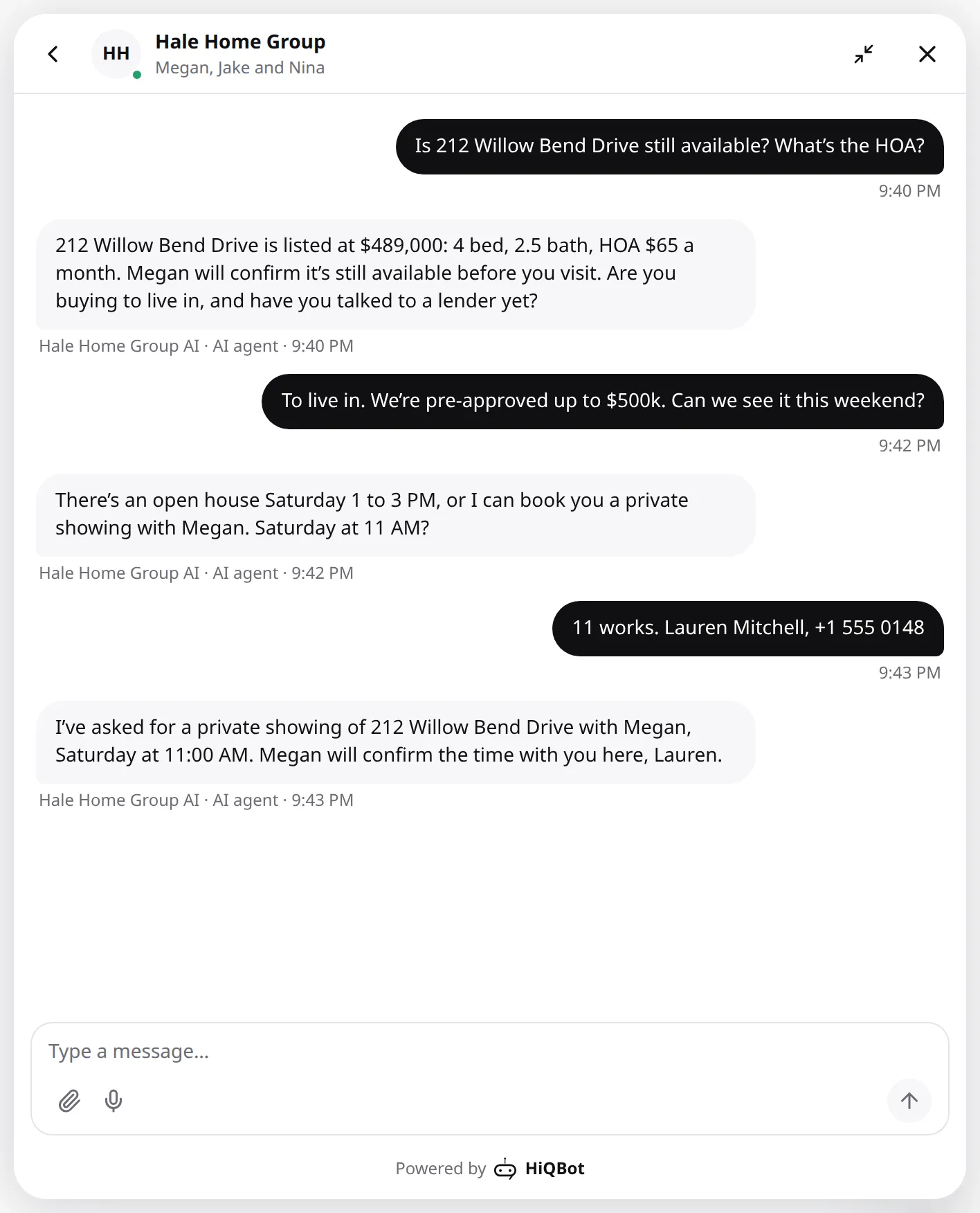
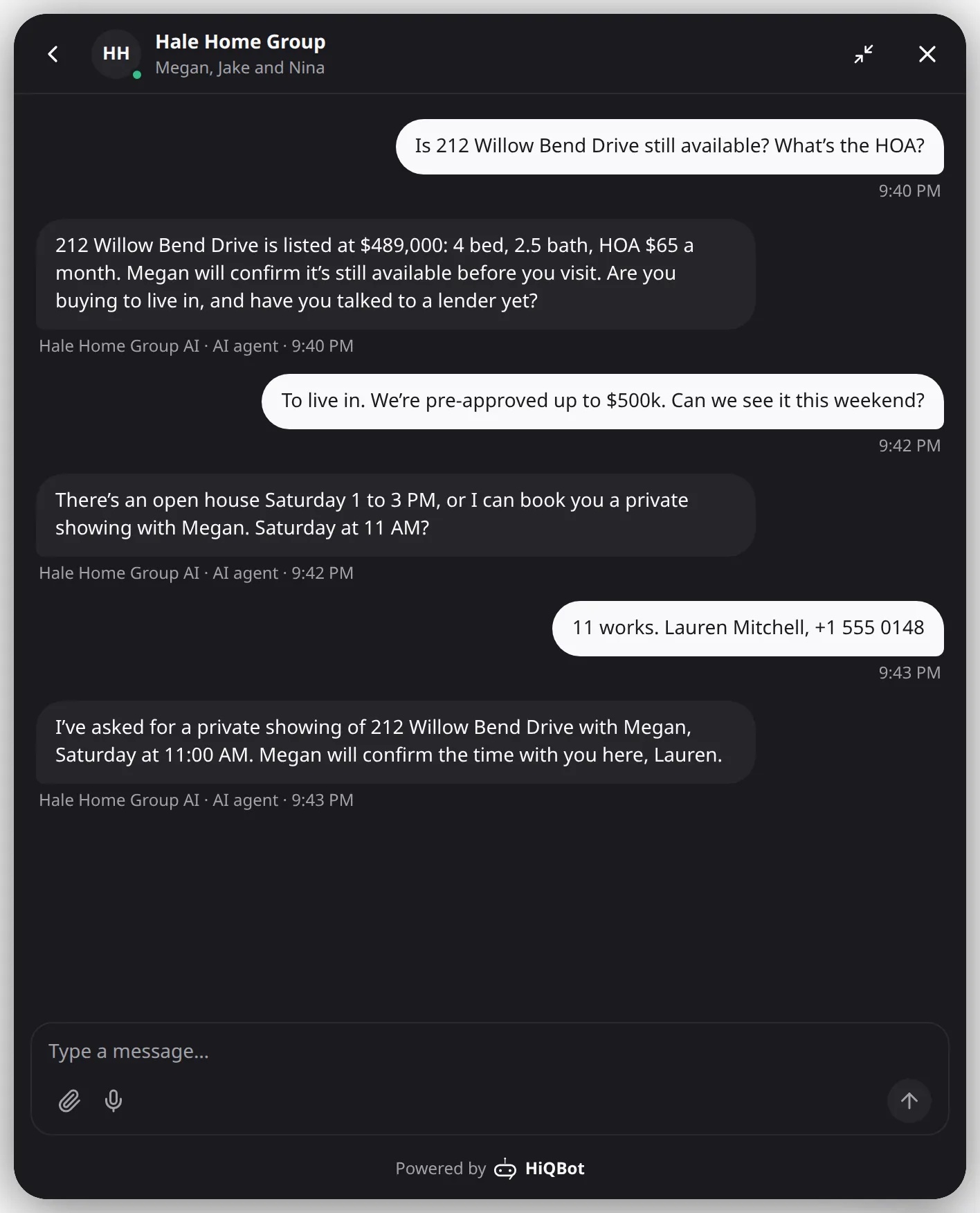
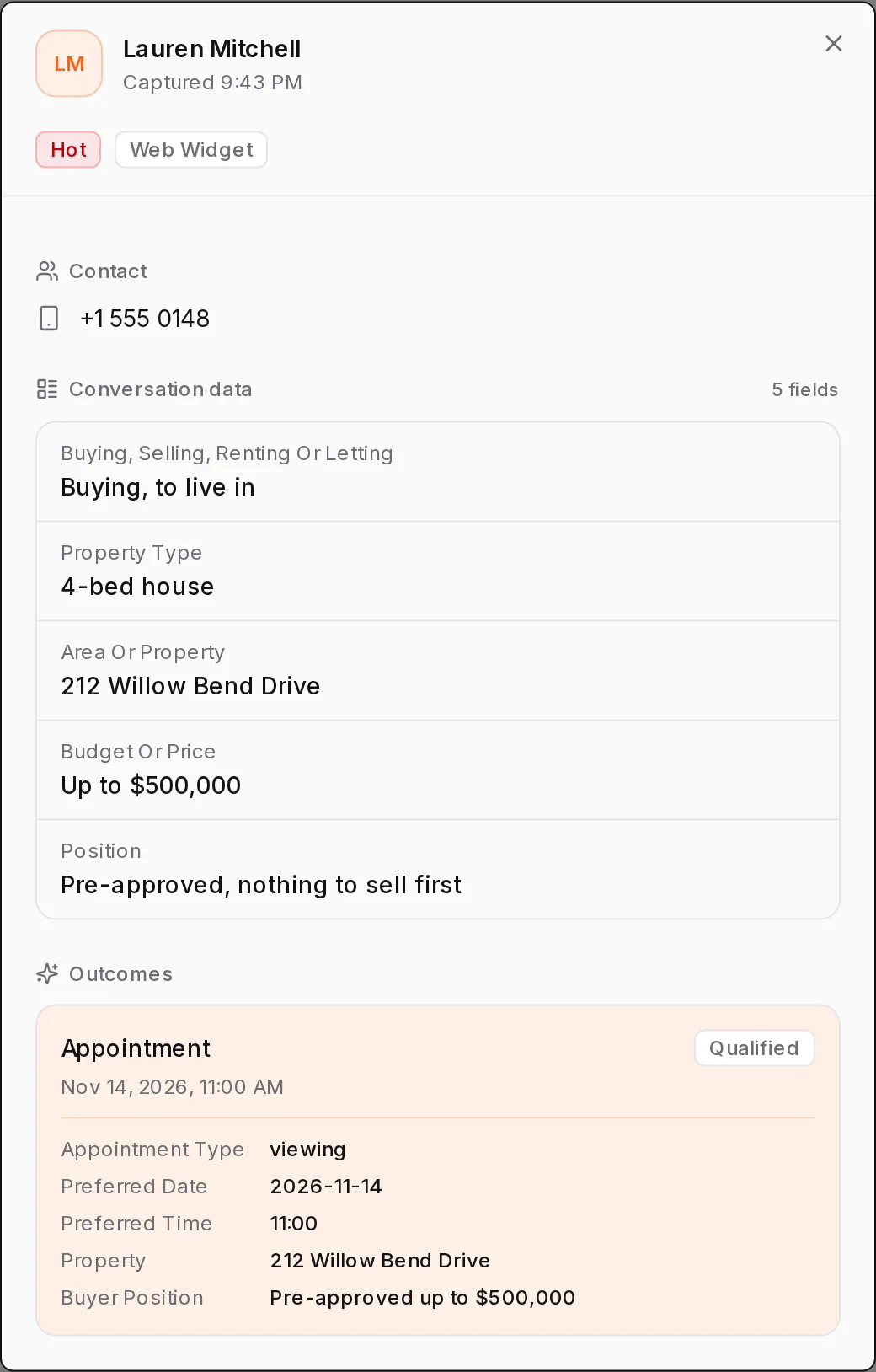
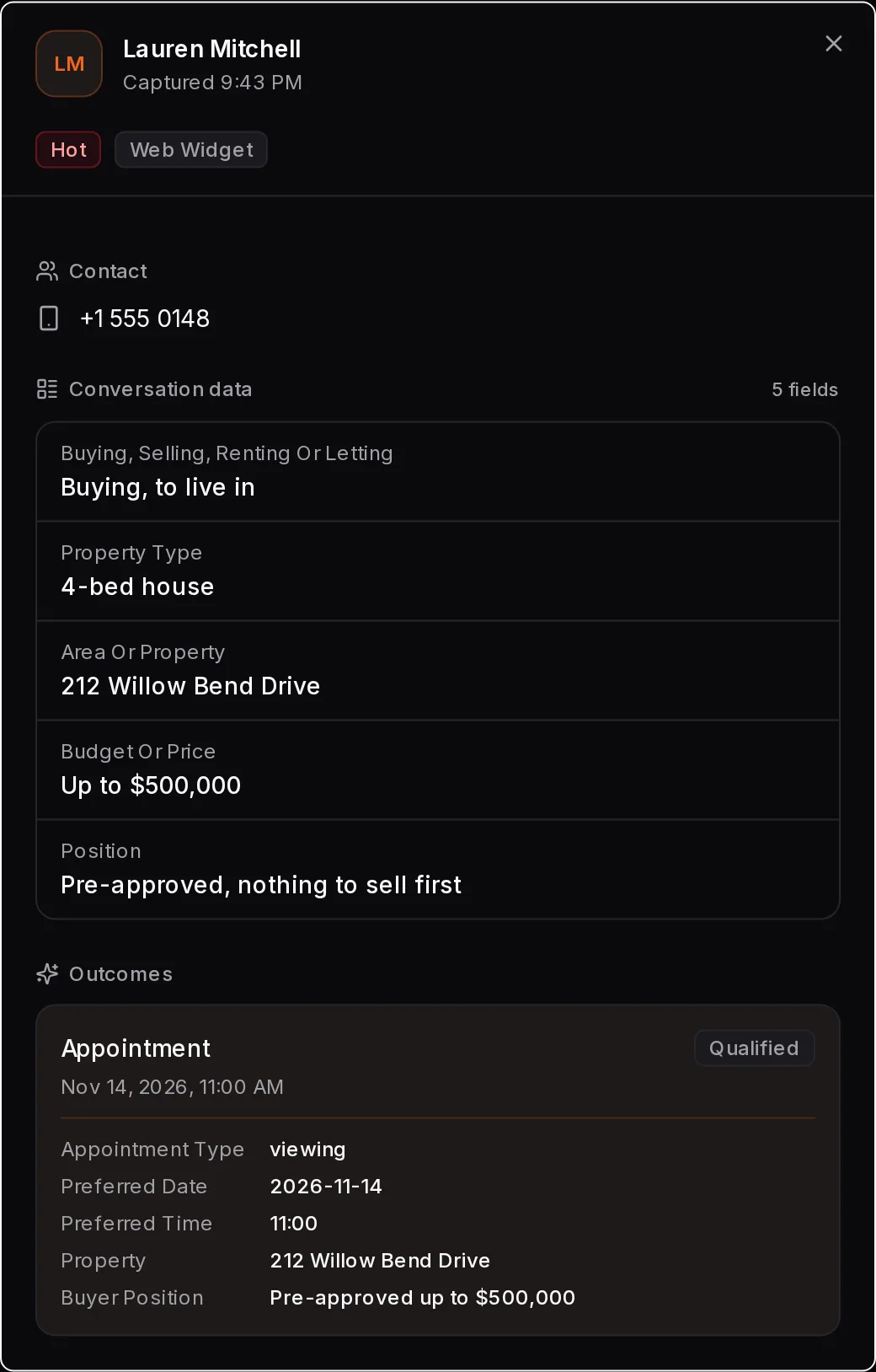
The agent gets a lead card with what the buyer said, so the follow-up call starts where the chat ended. The AI asks for a time and tells the buyer the agent will confirm it.
Book the next step in the same reply
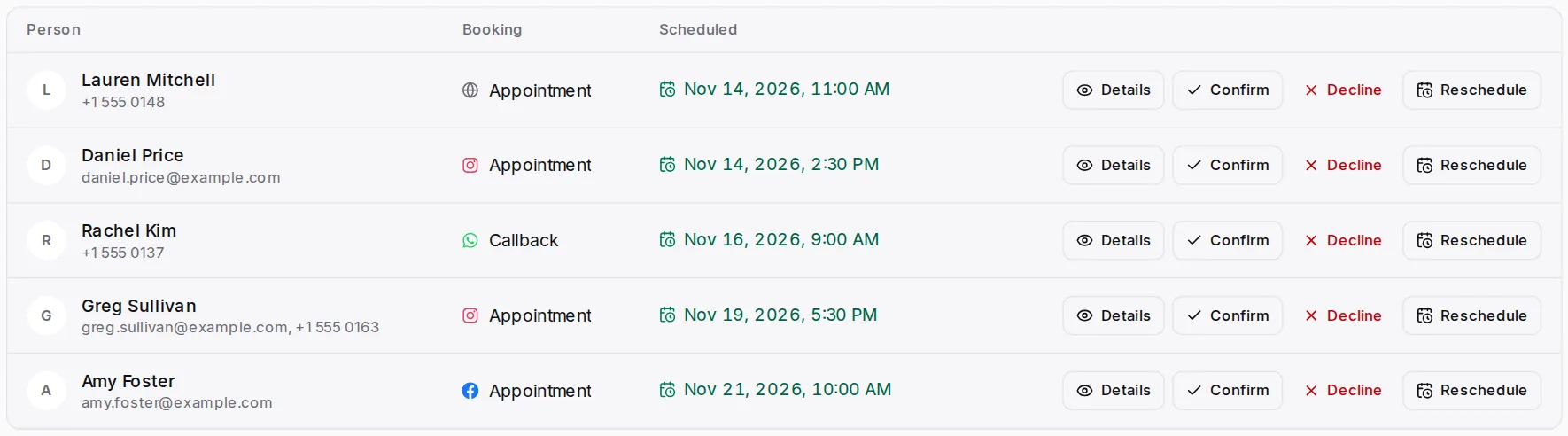
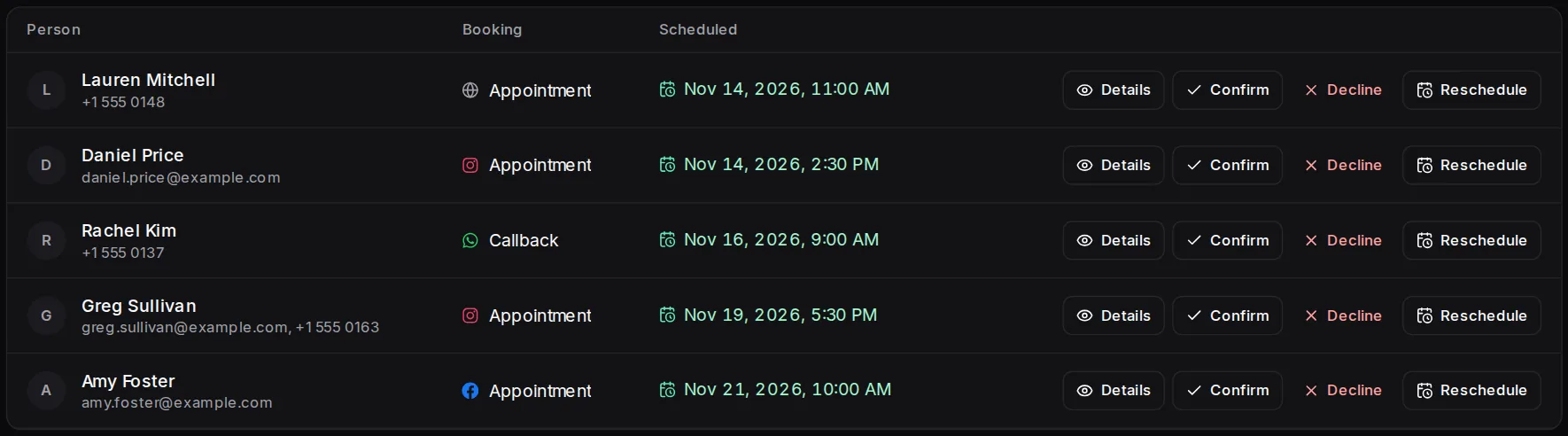
A fast reply that ends with “someone will be in touch” still leaves the lead waiting. The first reply should end with a time: a showing, a trial class, a test drive or a demo. Requests from every channel land in one bookings list, and with Google Calendar connected, the bookings the assistant takes land on your team's calendar too. Your team confirms each one.
Hand hot leads to a person in one inbox
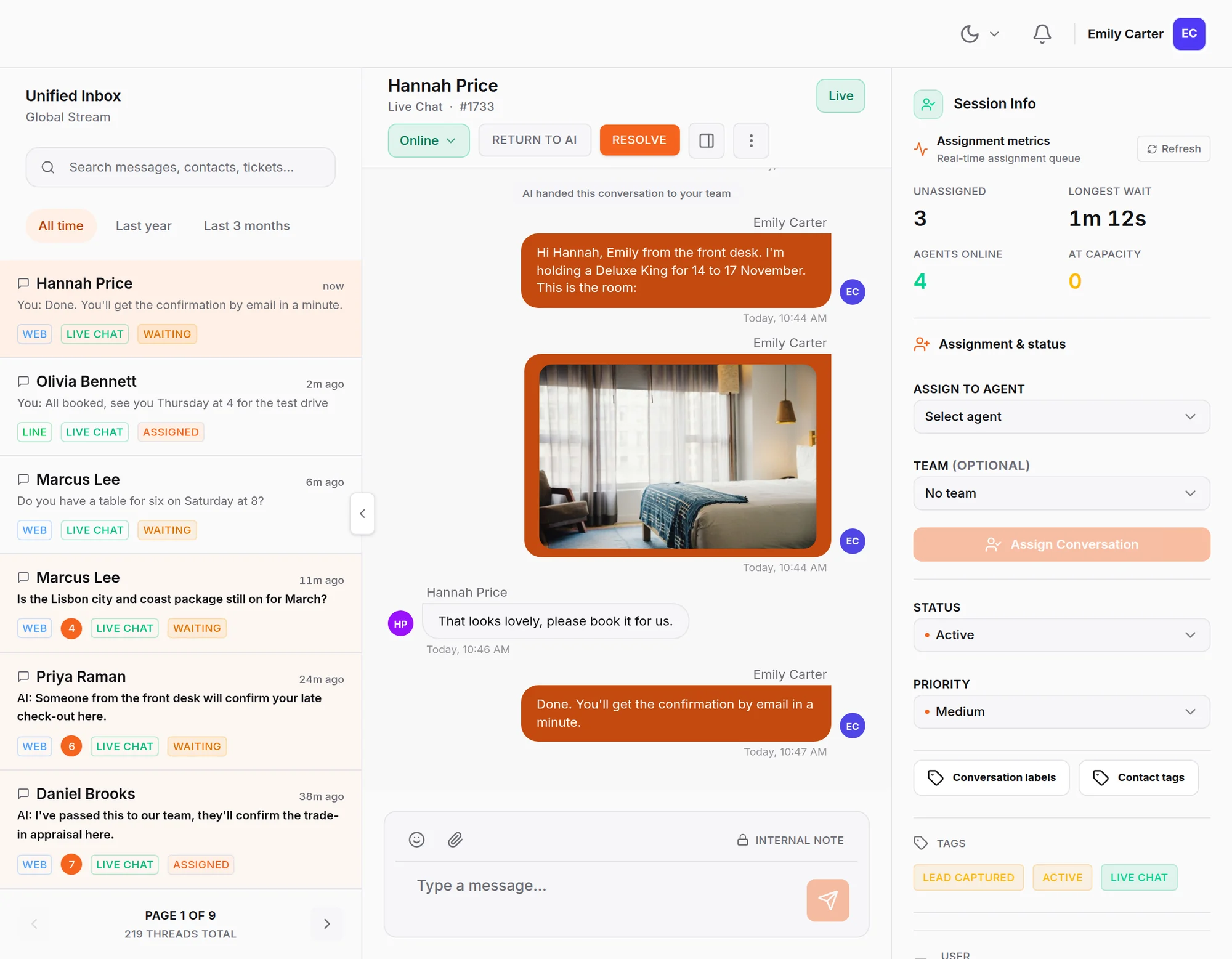
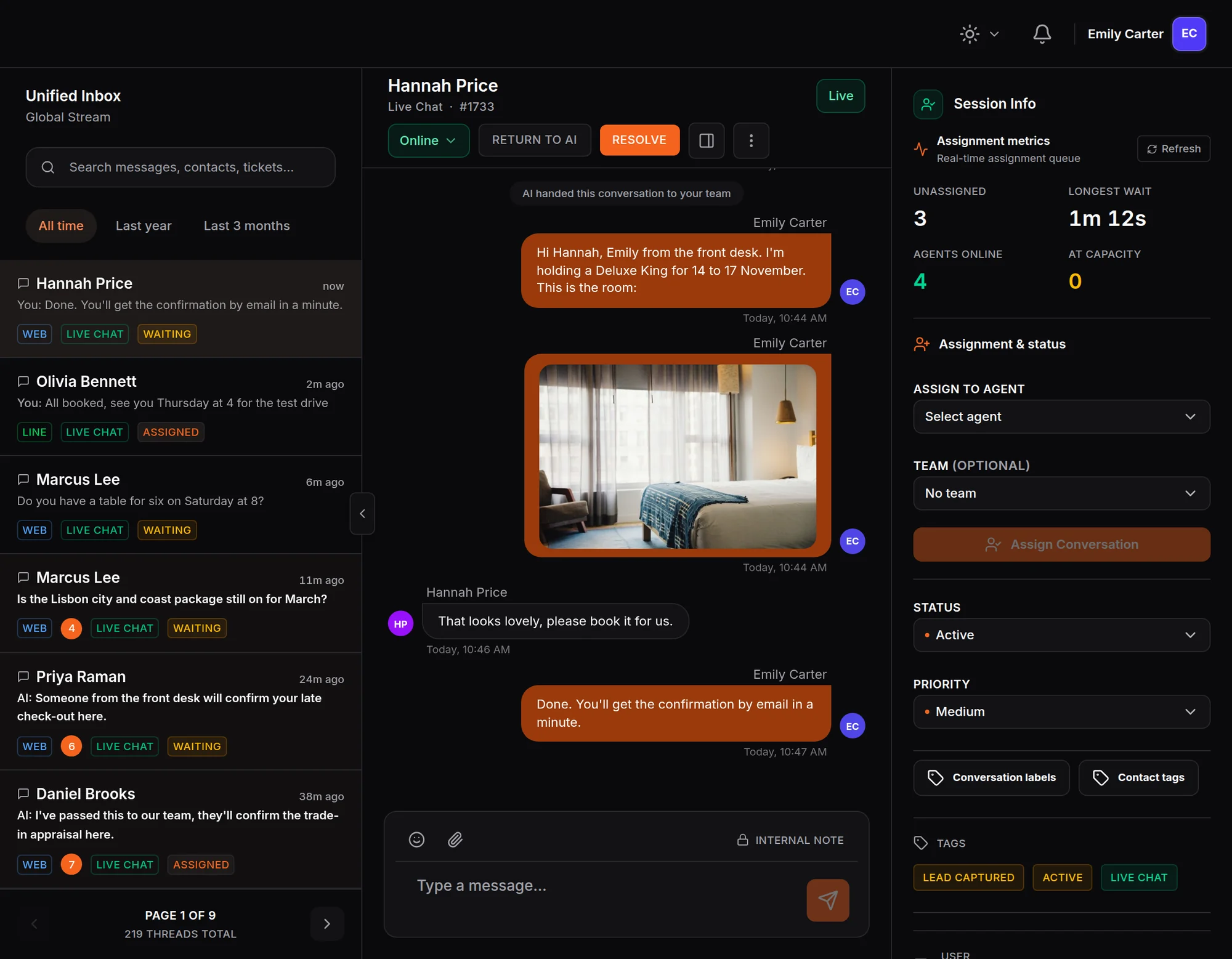
Some leads want a person, and some questions need one. With live chat, every channel lands in one inbox. A teammate takes over any conversation with the whole chat in front of them, so the lead never repeats themselves, and can add a private note or let the AI draft a reply. You can also set up an automation that tells your team about each new lead the moment it is captured.
Take calls where the chat is
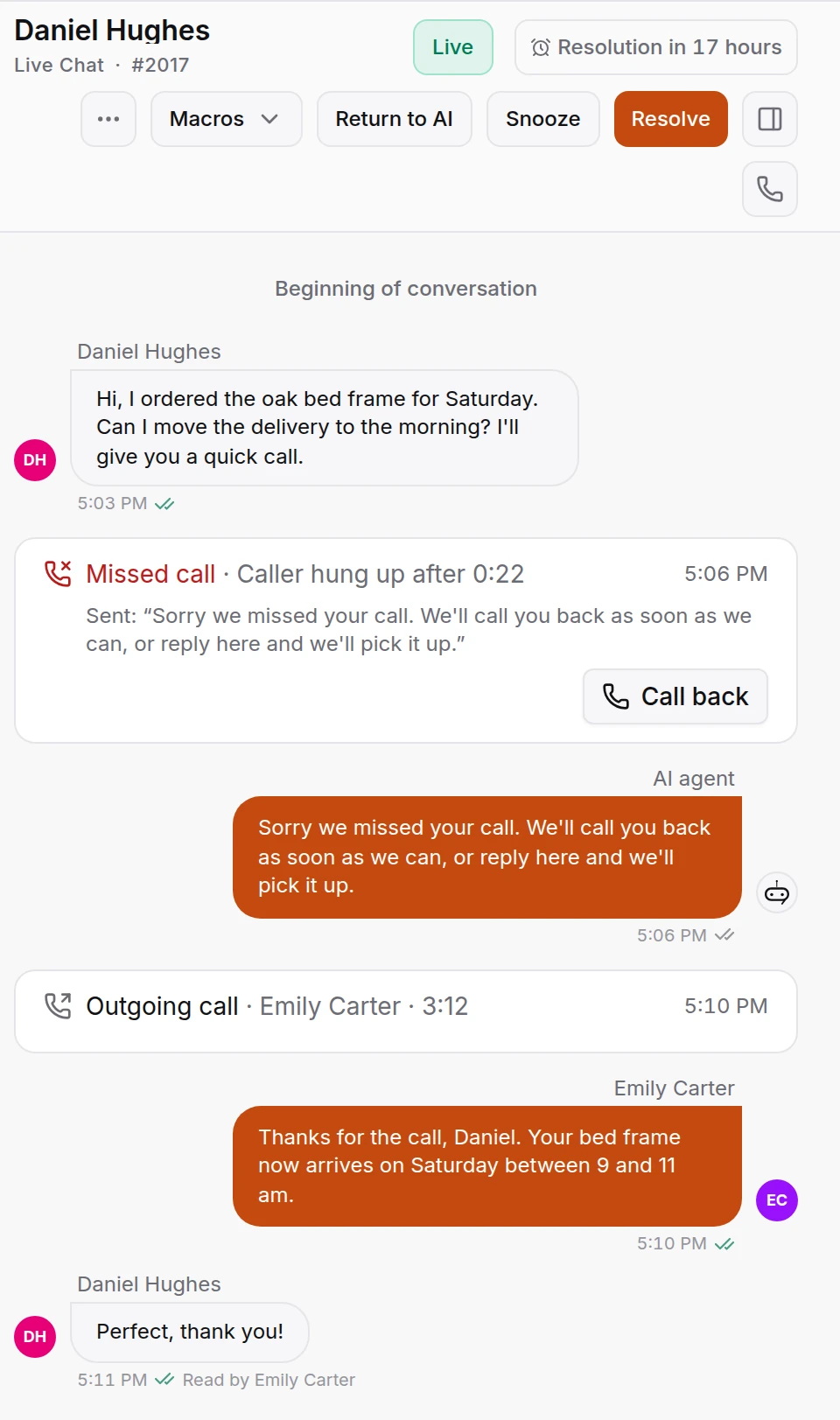
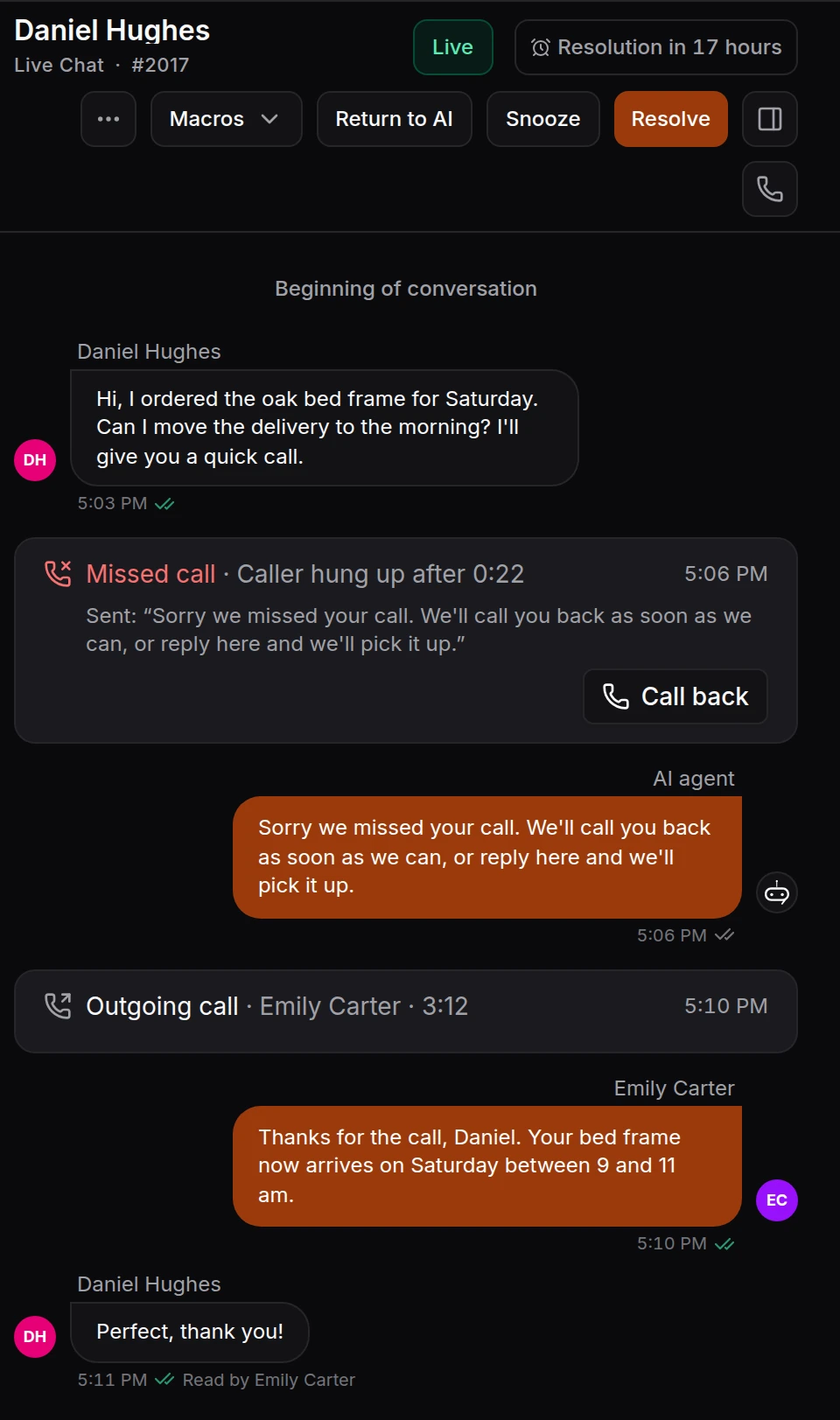
Many leads still call. With WhatsApp calling, a customer calls your WhatsApp Business number and it rings your team in the HiQBot inbox, beside the chat. If nobody picks up, the caller gets a message straight away and the missed call goes on a call-back list, and your team calls back from the same conversation. The AI agent works in writing and does not answer calls.
Ads that open a chat
Click-to-WhatsApp, Click-to-Messenger and Instagram Direct ads open an ordinary conversation, so the chat an ad opens is answered in seconds, day or night, like any other message. That matters most for paid leads, because the ad has already cost you money by the time the chat opens.
Use guided flows for the first questions
On WhatsApp, Instagram, Messenger, Telegram and LINE, a guided flow greets every new chat with buttons, such as buy, sell or talk to someone, and asks for a name and phone number. Any answer can go to the AI agent or to your team.
Speed to lead by industry
The first question changes from one business to the next, and so does the next step a fast reply should reach. HiQBot's AI agent is set up for each of these industries; each link goes to that industry's page.
| Business | What the lead asks first | Where the first reply should get to |
|---|---|---|
| Real estate (real estate chatbot) | Is it still available? What is the HOA? | A showing, a viewing or a valuation the agent confirms |
| Clinics and dental (clinic chatbot) | Do you have anything this week? Do you take my insurer? | An appointment request the front desk confirms |
| Salons and med spas (beauty and aesthetics chatbot) | How much is it, and who does it? | A consultation, a patch test or a treatment booking |
| Gyms and studios (gym chatbot) | Can I try a class first? | A trial class or a tour |
| Car dealers and service (automotive chatbot) | Is the car still there? What does a brake job cost? | A test drive or a service drop-off |
| Hotels (hotel chatbot) | Do you have a family room for these dates? | A reservation request the front desk confirms |
| Restaurants (restaurant chatbot) | Can you seat six on Friday? | A table request the team confirms |
| Wedding and event venues (event venue chatbot) | Is our date free? What is the price per head? | A venue tour, a tasting or a proposal request |
| Travel and tours (travel chatbot) | How much is the tour for four in March? | A place on a departure, or a quote request |
| Software companies (SaaS chatbot) | Does it work with our CRM? | A demo or a discovery call |
| Online stores (AI chatbot for ecommerce) | Do you have this in a medium? When will it arrive? | A checkout link from a connected store, or an order the team confirms |
Real estate lead response
In real estate, many clients talk to only one agent. In NAR's 2024 Profile of Home Buyers and Sellers, 81% of sellers contacted only one agent before choosing, and 77% of repeat buyers interviewed only one. Our real estate lead generation guide covers where agents' leads come from and the questions to ask. HiQBot's AI never prices a home; when a seller asks what theirs is worth, it asks for a time for a valuation the agent confirms.
Clinics and dental practices
A patient asking about an appointment this week wants a time. A fast reply asks for one, and the front desk confirms it. The AI never gives medical advice and keeps symptoms out of the booking; anyone describing an emergency is told to call the emergency services first.
Software and B2B
In software sales, a demo request often sits in a queue until a rep picks it up. An AI agent answers the product question on the spot, asks about team size and timing, and takes the demo request with a time, while the rep still makes the call.
A speed-to-lead checklist
- Measure your median response time for one month, by channel and by hour.
- Bring every channel into one inbox, so no lead sits in an app nobody checks.
- Put an AI agent on the first reply on every channel, answering from your own information.
- Decide the one next step each kind of lead should reach, and let the first reply offer it.
- Set who takes over when a lead asks for a person, and what happens out of hours.
- Send missed callers a message and call them back from the chat.
- Each month, check response time, unanswered leads and booked next steps.
Common questions
What does speed to lead mean?
Speed to lead means how fast you reply to a new lead, from the moment they get in touch to the first reply that helps them. The faster the reply, the more leads you reach and qualify.
How do you calculate speed to lead?
Subtract the time a lead arrived from the time of their first useful reply, for every lead over a month. Use the median, split it by channel and by hour, and count leads that got no reply separately.
What is a good lead response time?
Under 5 minutes for web forms, and seconds for chat. The 2007 Lead Response Management Study found the odds of reaching a lead fell sharply between 5 and 30 minutes.
Does speed to lead matter more than follow-up?
No. Speed reaches the lead while they are interested, and follow-up keeps the ones who were not ready.
Can AI improve speed to lead?
Yes. An AI agent replies in seconds at any hour, answers from your information and offers the next step, so no lead waits for office hours. People still matter for the hot leads, the calls and anything that needs judgment.
Does HiQBot call leads back?
Your team does. Customers can call your WhatsApp Business number and it rings your team in the HiQBot inbox, and your team calls back from the same chat. The AI agent replies in writing and does not make or answer calls.
Sources were read on 13 November 2026, and the screens are the real HiQBot product with sample data. How we write and check posts: editorial standards.