Therapist marketing: how a private practice finds clients, and what happens when they write

Muhammad Hassan, FounderLinkedIn
Published Updated
Therapist marketing is how a therapist, counsellor or psychologist in private practice helps the right clients find them and book a first session. It covers your website, directory profiles, Google profile, referrals, social media and ads, within your profession’s ethics code, and it ends with a quick, kind reply to the person who writes in.
We make HiQBot, a customer service platform with AI agents, live chat, guided flows and WhatsApp calling. This guide is for solo and group practice owners who market their own practice. HiQBot’s AI never acts as a therapist or assesses anyone: it answers practical questions and asks for a first session for you to confirm. The screens come from a sample medical clinic we set up in HiQBot; therapy practices run on the same rules, and every screen is real.
What therapist marketing is
Therapist marketing, also called mental health marketing or counseling marketing, is everything a practice does so that people who need its help can find it and start. Most of it is quiet work: a website that says who you see and what it costs, a directory profile written in plain words, and colleagues who know when to refer to you.
Where clients find a therapist
Many people start with someone they trust. In a 2025 Thriveworks survey of more than 2,000 US adults in therapy, recently in therapy or planning to start, 39 percent said they used or would use a primary care provider, 32 percent friends and family, 31 percent their insurer, 28 percent a search engine, and 26 percent an online directory such as Psychology Today (Thriveworks, 2025). People could pick more than one answer, and Thriveworks runs therapy practices itself, so read the figures as a guide.
So therapist digital marketing is only part of the job. A practice that wants more of the right clients needs:
- Referrers who know what you treat and when you have space: GPs, psychiatrists, school counsellors, other therapists.
- A place on your insurers’ provider lists, kept up to date, if you take insurance.
- A Google Business Profile and a website that answer the practical questions.
- A directory profile, written in plain words, with your approach and your fees.
Private practice marketing: the basics
Private practice marketing starts before you spend anything. When people ask how to grow a private practice, the answer is usually these five steps, in this order:
- Pick who you help. A practice for “adults with anxiety, depression and relationship problems” blends in; one for “new parents” or “couples after an affair” is easier to find and to refer to.
- Write a website that answers the practical questions first: who you see, your approach in a sentence, session fees and any sliding scale, the insurers you accept, online or in person, your hours, and how to start.
- Fill in your Google Business Profile and one or two directory profiles, with the same details everywhere.
- Tell your referrers when you have openings, and thank them when they refer.
- Decide who answers enquiries in the evening, and how fast.
Therapist marketing ideas
| Idea | Why it works |
|---|---|
| Name who you help | A clear niche, such as couples, teenagers, perinatal anxiety or trauma, is easier to find and to refer to |
| Put fees, insurers and formats on your website | Clients rule you in or out before they write: session fee, sliding scale, insurers, online or in person |
| Show when you have openings | A line such as “taking new clients for evening sessions” answers a question most enquiries ask |
| Complete one or two directory profiles | Write the profile in plain words, with a photo, your approach and how a first session works |
| Fill in your Google Business Profile | Category, hours, address or “online only”, and a link to book a first session |
| Meet five referrers | GPs, psychiatrists, school counsellors and other therapists whose waiting lists are full |
| Write about common questions | What a first session is like, how to choose a therapist, what couples therapy costs |
| Run a free workshop or talk | At a school, a workplace or a community group, on a general topic such as stress or sleep |
| Reply to every enquiry the same day | Say whether you have space and when; if you don’t, name a colleague who might |
Ethical marketing for a mental health practice
Mental health marketing has rules most businesses don’t. Your profession’s code covers your website, directory profile and ads.
- In the US, the APA code says psychologists don’t make false or deceptive public statements, which include paid advertising and directory listings, and that they “do not solicit testimonials from current therapy clients/patients” or from others vulnerable to undue influence (APA Ethics Code, 5.01 and 5.05).
- The ACA code for counselors goes further: counselors who use testimonials don’t solicit them from current or former clients, and they discuss and get permission for any testimonial they use (ACA Code C.3.b, quoted in Counseling Today).
- In the UK, psychologists registered with the HCPC must take reasonable steps to make sure their promotional activities “are accurate and are not likely to mislead” (HCPC standards, 9.3, in force from 1 September 2024). Counsellors also follow their own body’s framework, such as BACP’s.
- In India, the Rehabilitation Council of India’s 1998 regulations stop registered clinical psychologists from soliciting any person with disabilities, directly or indirectly, including through advertisements, circulars or handbills; they may announce in the press that they are starting a practice or have moved (Nyaaya summary of the regulations).
In practice, that means:
- Never ask current clients for reviews or testimonials, and never post a client’s story, even without a name.
- Promise a process, never an outcome: “weekly sessions for couples” rather than “save your marriage”.
- State your qualifications and licence exactly as they are.
- Put a crisis line on your website, your directory profile and your social profiles, and say you are not an emergency service.
- Check your professional body’s guidance on using messaging apps and outside software for client enquiries.
Psychologist marketing and advertising
Psychologist marketing follows the same steps, with one difference: many psychologists are full. In the APA’s 2025 Practitioner Pulse Survey of 1,742 US psychologists, 46 percent had no openings for new patients and 40 percent had a waitlist (APA, 2025). If you are full, market for the right referrals and say clearly how your waitlist works. If you have space, say so on every profile.
Therapist advertising: Google Ads and Facebook ads
Therapist Google Ads suit searches with a place in them, such as “couples therapist in Leeds”. Google treats health as a sensitive category, and that includes ads about mental health conditions and counselling. Those ads can’t use audiences built from your own data, such as lists of clients or of people who visited your website (Google, Health in personalized advertising). Drug and alcohol addiction services need Google certification where they are allowed, and in the US LegitScript certification as well (Google Ads policy).
Therapist Facebook ads must not assert or imply anything about the reader’s health. Meta’s own examples: an ad for “Depression counseling” is allowed, and “Depression getting you down? Get help now.” is not (Meta, personal attributes). Describe the service, the format and when you have space. An ad can open a chat on WhatsApp, Messenger or Instagram, and that chat lands in the HiQBot inbox like any other message, where the AI answers it in seconds, day or night.
Directories are the other paid channel, and the one therapist advertising sites mostly mean. A Psychology Today profile in the US costs $29.95 a month with no contract (Psychology Today). Count the enquiries each directory brings for three months before you keep paying for it.
Therapist social media and Instagram
Therapist social media works when it sounds like you: short posts or clips on what therapy is like, how to choose a therapist, what a first session involves, and when you have openings. A psychologist on Instagram might post a short explainer on a topic they know well. Keep it general, never about a client, and add a line on what to do in a crisis.
Ask people to message you rather than comment, because a comment on a therapy post is public. HiQBot answers Instagram DMs from your own material, in the same inbox as your website chat and WhatsApp.
When a client gets in touch
Every channel above ends in a message: do you have evening sessions, do you take my insurer, how much is a first session, can we meet online. Each one is a person deciding whether to start, and some write while you are in session or asleep.
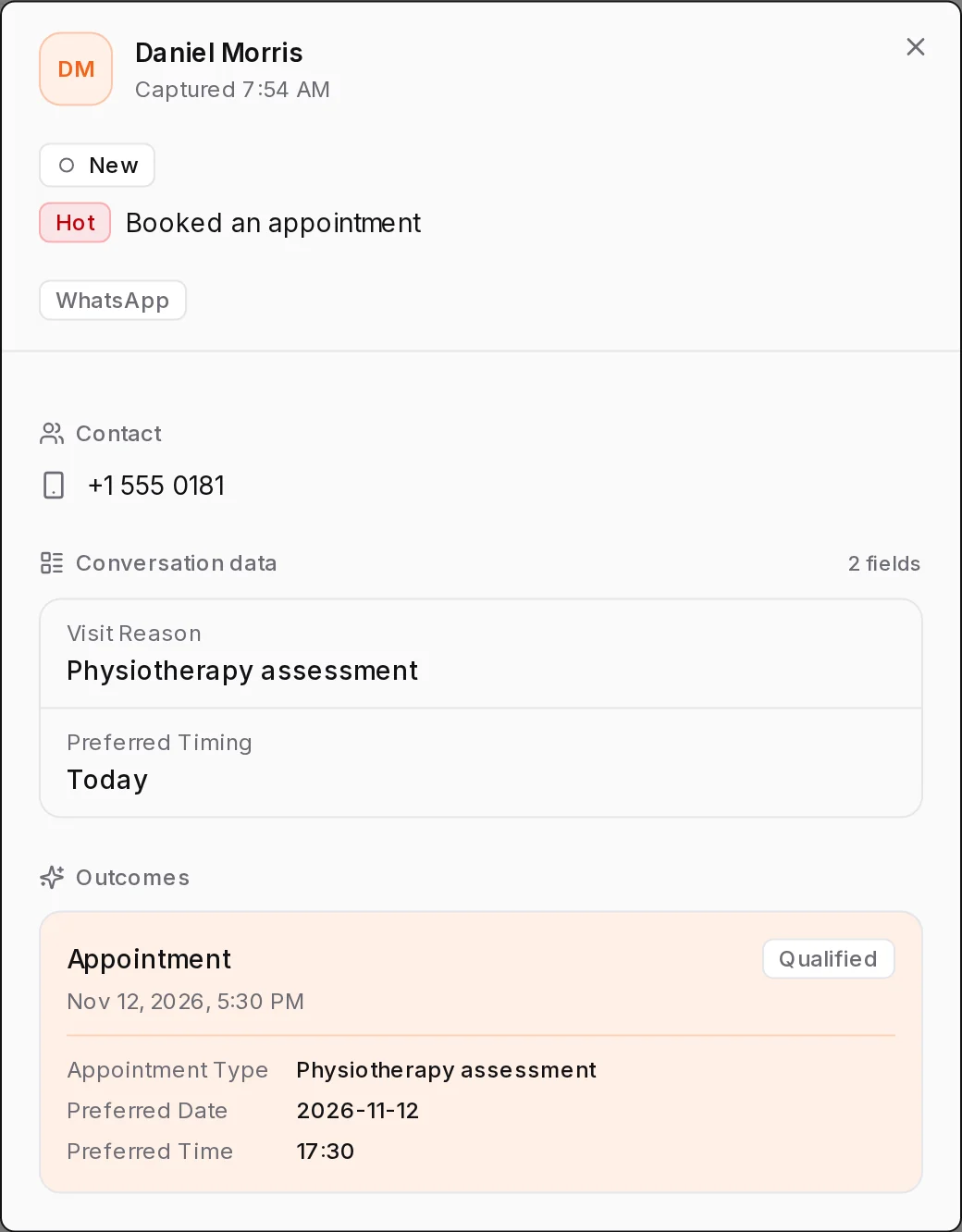
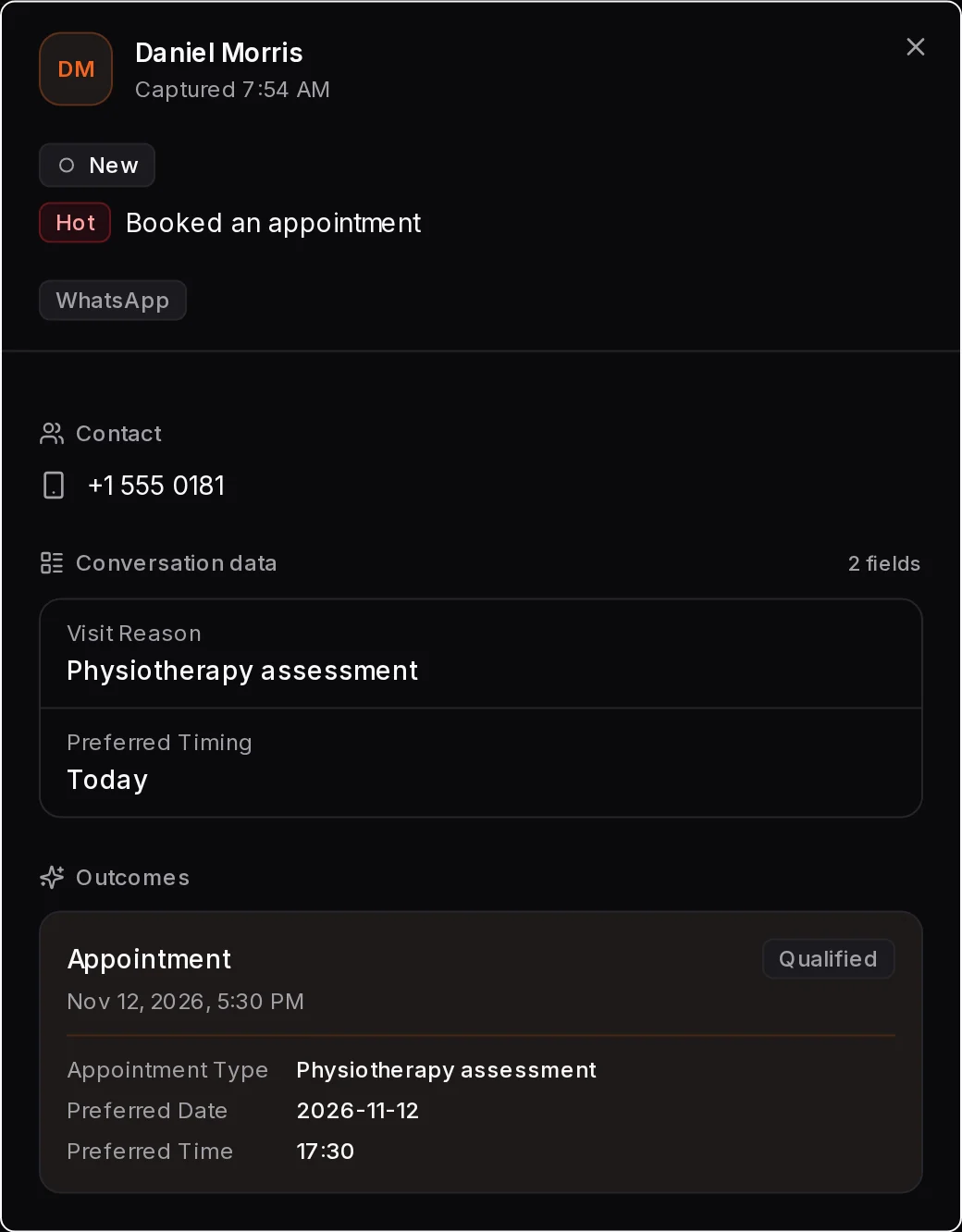
HiQBot’s AI answers on your website chat, WhatsApp, Instagram and Messenger from your own documents: fees, insurers, formats, hours and therapists. It asks only what a booking needs: the kind of session (for example a first individual or couples session, online or in person), new or returning, when, which therapist, self-pay or insurer if you sort clients by payment, and a name and phone number. It says you will confirm the time. It says which insurers you accept and leaves cover for you to confirm.
It never assesses anyone or says what they might be going through. If someone shares what is wrong, the AI acknowledges it once, offers a first appointment, and keeps those details out of the booking. Anyone who mentions thoughts of harming themselves is told in the first sentence to call the emergency services now, or your urgent line if your documents give one, and is not offered an appointment instead.
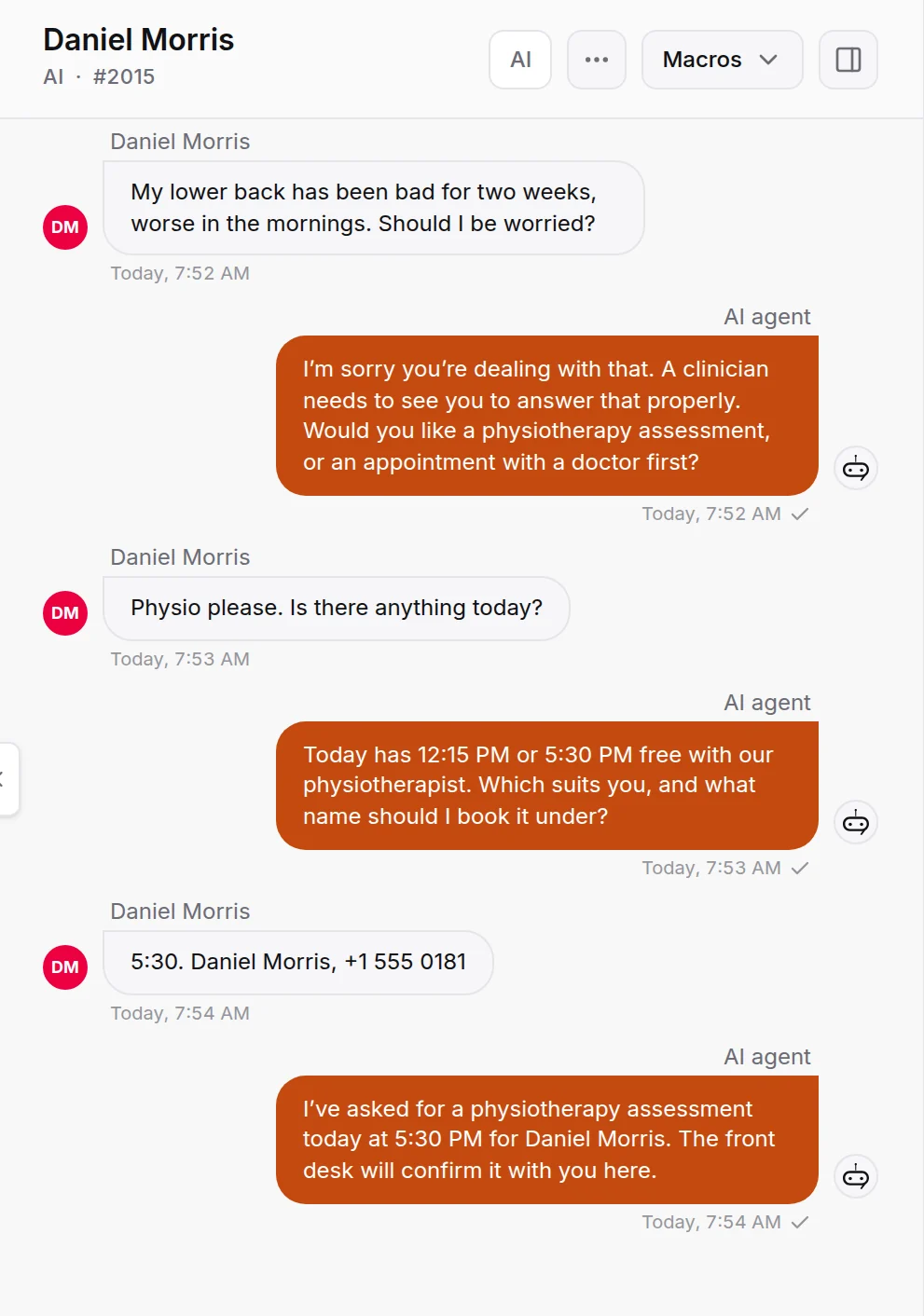
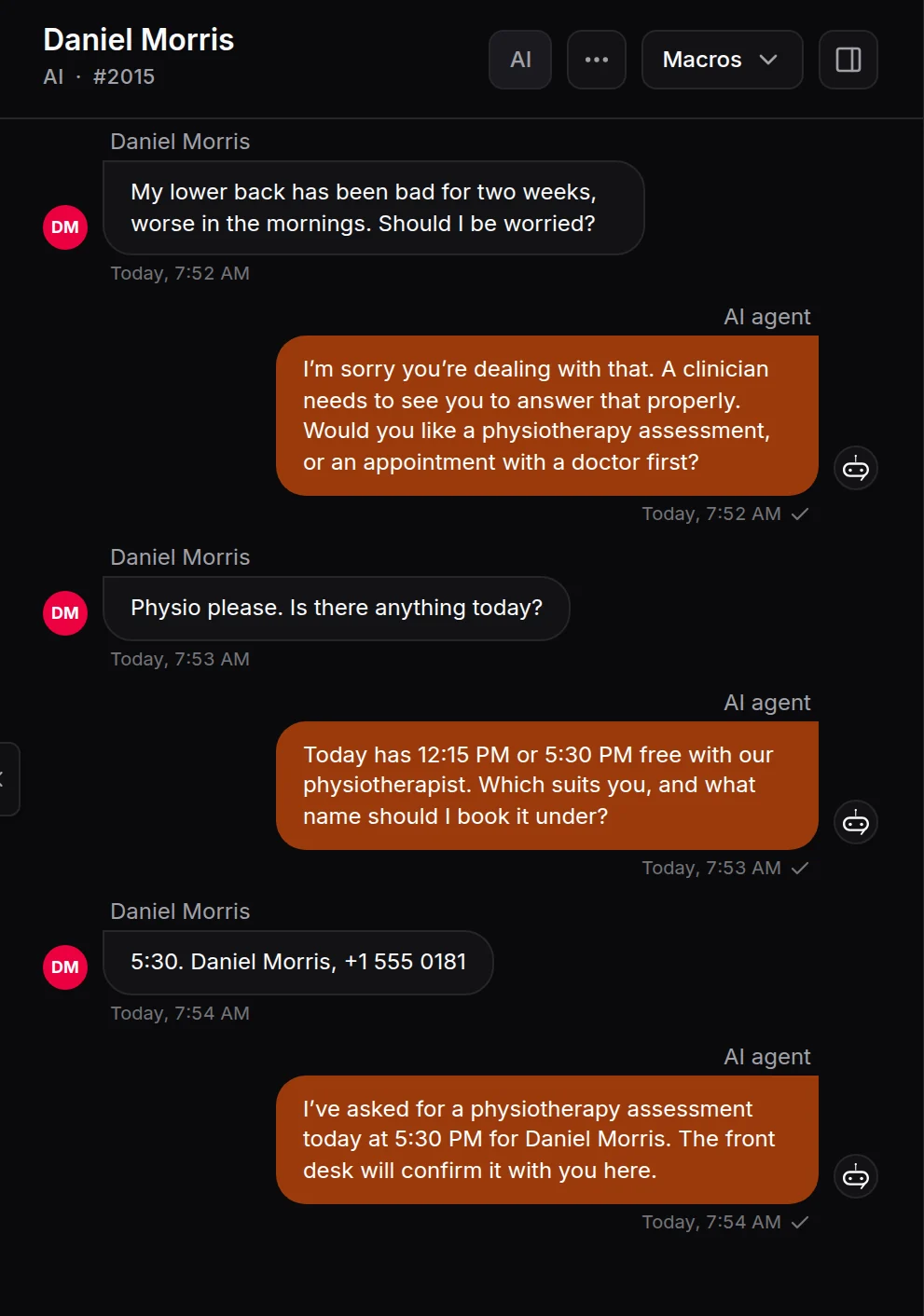
When someone would rather talk to a person, the AI hands the chat to you or your admin in the same inbox. Clients who prefer to call can ring your WhatsApp Business number, and it rings your team in the HiQBot inbox; the AI itself works in writing.
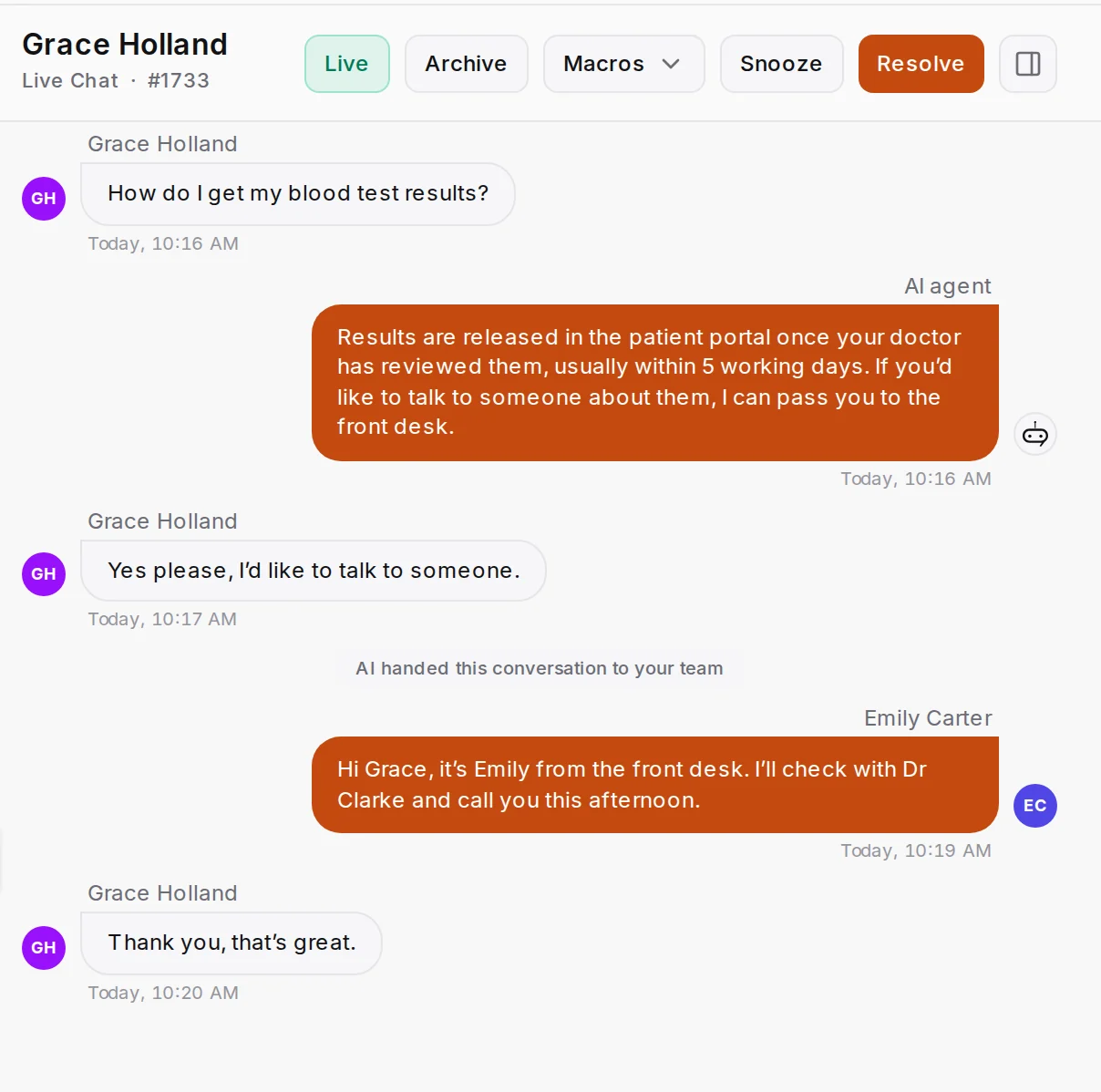
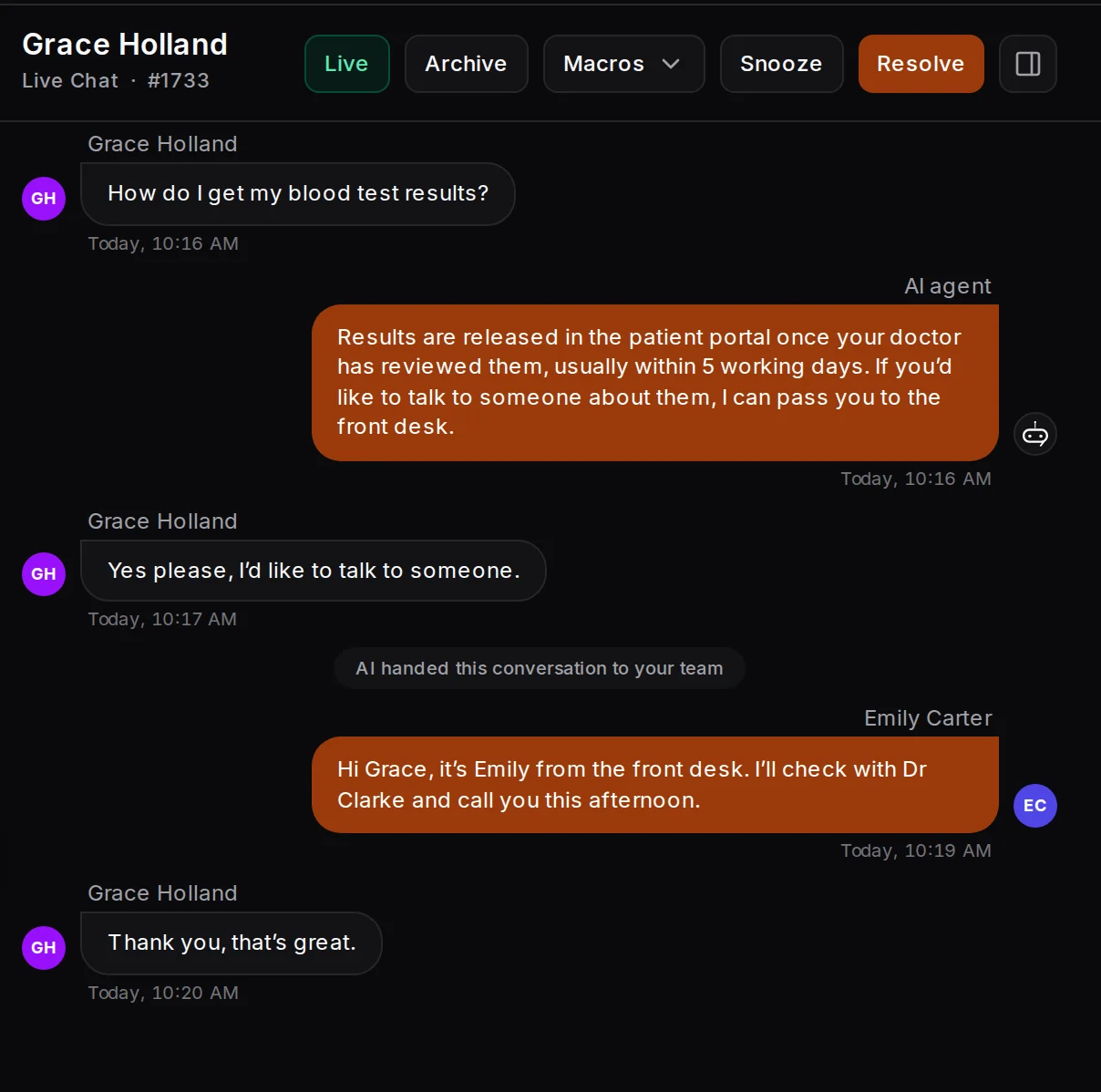
Missed first sessions hurt a small practice. Reminders and a cancellation policy are in our guide to patient no-shows.
A therapist marketing plan on one page
Marketing strategies for therapists can be short. Your plan fits on one page: answer five questions and review them each quarter.
| Question | Your answer |
|---|---|
| Who | The clients you want more of, and the sessions you have free |
| Where they look | Directories, Google, referrers, insurers’ lists, Instagram |
| What you publish | Fees, insurers, formats, openings, your approach, how to start |
| Who answers | You, an admin, or an AI that answers practical questions and takes first-session requests |
| What you count | Enquiries by source, first sessions requested, first sessions held |
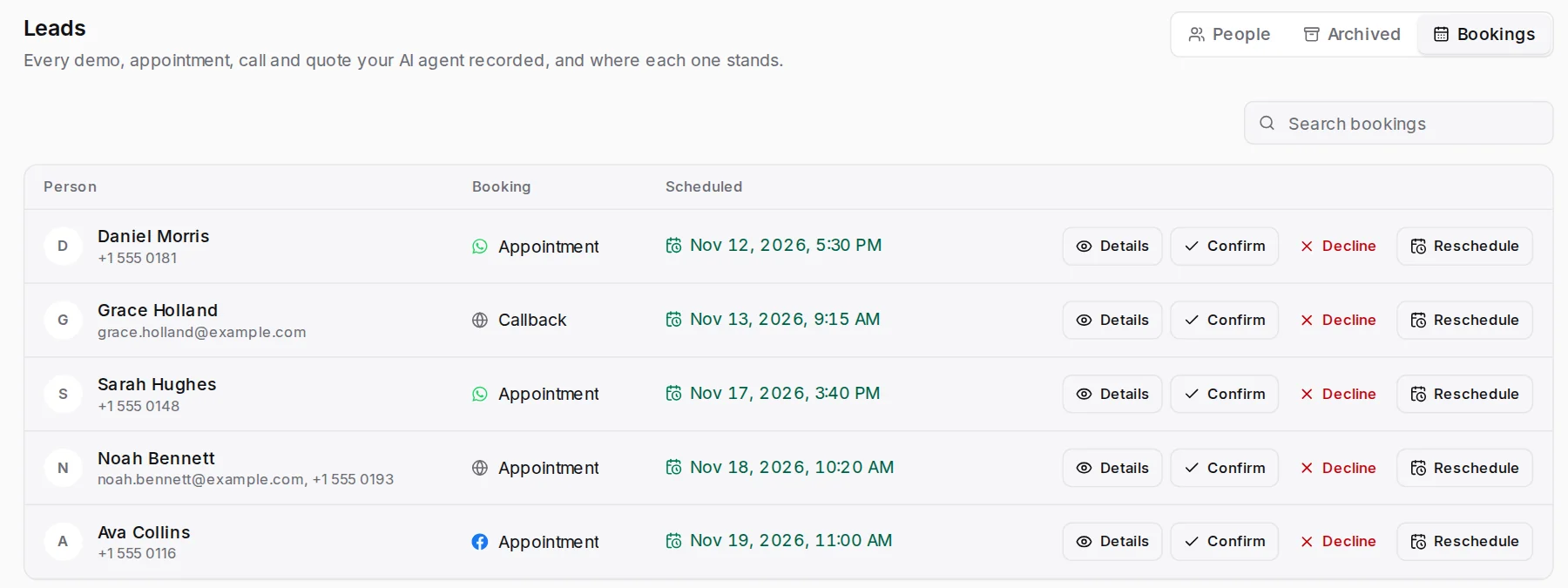
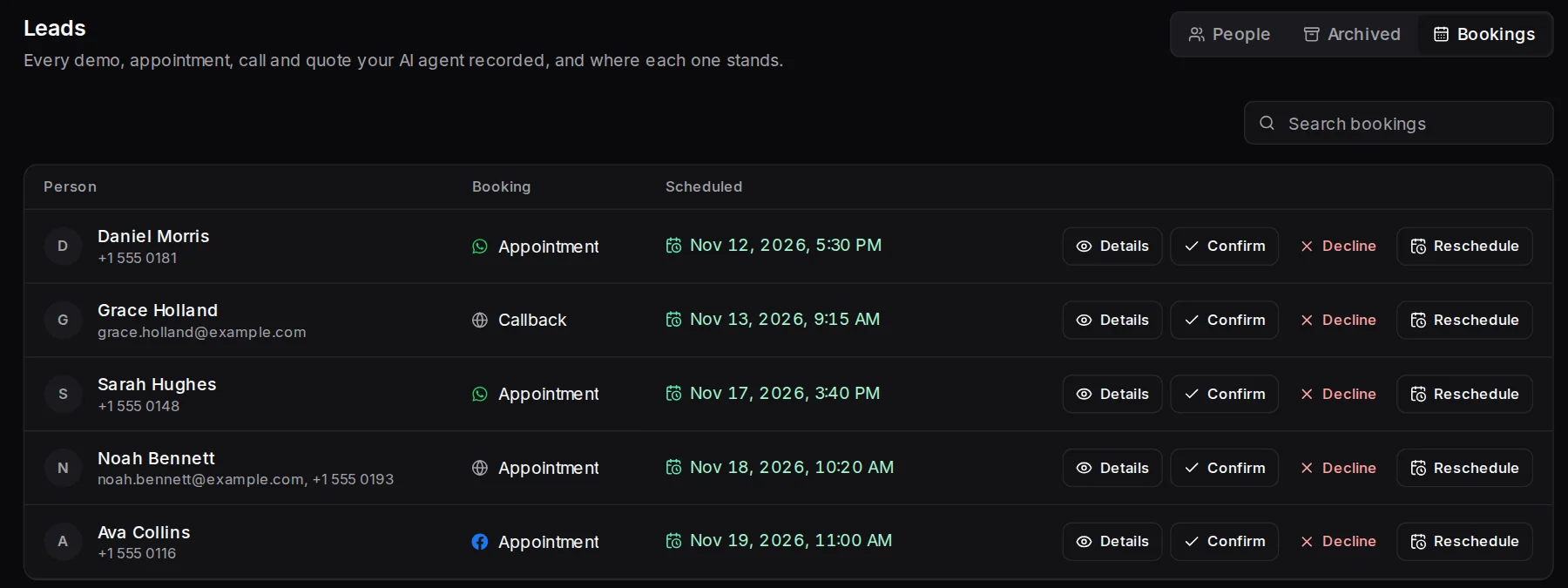
In HiQBot, every lead shows the channel it came from, and every first-session or callback request lands in one Bookings list, where you confirm, decline or move it. With Google Calendar connected, new bookings appear there too.
Where HiQBot fits in your therapist marketing
HiQBot answers the people your marketing brings in, in one inbox for website chat, WhatsApp, Instagram, Messenger, Telegram and LINE:
- AI agent: answers questions on fees, insurers, formats and openings, and asks for a first session or a callback for you to confirm.
- Live chat: you or your admin take over any chat, with notes, assignment and AI-drafted replies.
- Guided flows: a new WhatsApp, Instagram or Messenger chat can open with buttons such as Fees, Online or in person, and Request a first session.
- WhatsApp calling: clients call your WhatsApp Business number and it rings your team in the inbox.
HiQBot doesn’t offer therapy, assess anyone, connect to practice management or records systems, or run your ads. The full setup for clinics is on our clinic chatbot page, and the wider picture is in our healthcare marketing guide.
Common questions
What is therapist marketing?
Therapist marketing is how a therapist, counsellor or psychologist in private practice helps the right clients find them and book a first session. It covers the website, directory profiles, Google profile, referrals, social media and ads, within the rules of the therapist’s professional code.
How do I market myself as a therapist?
Market yourself as a therapist by naming who you help, publishing your fees, insurers and formats, and keeping one or two directory profiles and your Google profile complete. Then tell referrers when you have space, and reply to every enquiry the same day.
How do I get clients for my private practice?
Most private practice clients come from referrals, insurers’ lists, search and directories. Build relationships with GPs and other therapists, keep your listings current, say when you have openings, and answer enquiries fast, including in the evening.
Can therapists use testimonials?
Sometimes, within your code’s limits. Psychologists can’t ask current clients for testimonials under the APA code, and counselors under the ACA code can’t ask current or former clients. Check your own professional body’s code before you use any review or testimonial on your website.
Can therapists advertise on Facebook and Google?
Therapists can advertise on Facebook and Google, within each platform’s health rules. Facebook ads must not imply anything about the reader’s mental health, and Google doesn’t allow health ads to use your own client or visitor lists. Addiction treatment ads need certification.
Is Psychology Today worth it for therapists?
Psychology Today is worth testing if your profile is complete and specific. A US profile costs $29.95 a month with no contract, so try it for three months and count the enquiries and first sessions it brings.
Can an AI chatbot answer therapy enquiries?
An AI chatbot can answer the practical part of a therapy enquiry: fees, insurers, formats and openings. HiQBot’s AI does only that, asks for a first session for the therapist to confirm, never assesses anyone, and tells anyone who mentions harming themselves to call the emergency services first.
Sources were read on 13 November 2026, and the screens are the real HiQBot product with sample data. This guide is general information, not legal or ethics advice. How we write and check posts: editorial standards.