Ecommerce customer service: the questions an online store gets, and how to answer each

Muhammad Hassan, FounderLinkedIn
Published Updated
Ecommerce customer service is the help an online store gives shoppers before, during and after a purchase: answering product, delivery and payment questions, telling people where their order is, and handling returns, exchanges and refunds. It happens in writing, on chat, WhatsApp, Instagram and email, often outside office hours.
We make HiQBot, a customer service platform with AI agents, live chat, guided flows and WhatsApp calling. This guide is for store owners and support teams who answer their store’s messages. It walks through the questions in the order shoppers ask them, and what a good answer needs. The screens come from a sample clothing store we connected to HiQBot, and every screen is real.
What ecommerce customer service is
Ecommerce customer service, also called ecommerce customer support or customer support for ecommerce, covers every question a shopper asks an online store. Three things make it different from service in a shop:
- The shopper can’t touch the product, so size, fit, colour and material questions come in writing.
- Questions arrive at any hour. In Zendesk’s CX Trends 2026 survey of 6,182 consumers in 22 countries, 74 percent said they now expect service around the clock (Zendesk).
- Delivery, tracking and returns bring a second wave of messages after checkout.
Good ecommerce customer experience means a fast, correct answer before the sale and a straight answer about the order after it.
The questions an online store gets, in the order they arrive
| Stage | What shoppers ask | What the answer needs |
|---|---|---|
| Before they buy | Does it come in medium? What does delivery to my city cost? Do you take cash on delivery? | Your catalogue, stock, shipping rates and payment methods |
| At checkout | My discount code won’t apply. Can I pay another way? | The offer’s terms and the payment methods you accept |
| After they pay | Where is my order? Can I change the address or cancel? | The order record, and someone allowed to change it |
| After delivery | It doesn’t fit. Can I swap it? It arrived damaged. | Your returns policy and someone who decides |
The first two rows decide whether you make the sale, and the last two whether the shopper buys again.
Before the sale: product, stock and delivery questions
Pre-sale questions are the most urgent, because the shopper is still deciding. Baymard Institute puts the average online cart abandonment rate at 70.22 percent, and extra costs such as shipping are the most common reason shoppers give for leaving (Baymard). A clear answer on the delivered price keeps some of them.
With a WooCommerce store connected, HiQBot’s AI agent finds the product from the shopper’s own words, answers price and stock from your catalogue, quotes your shipping rates for their address and sends a checkout link with the items in the cart. The shopper pays on your own checkout; the AI never takes payment, and card details a customer types into a chat stay protected.
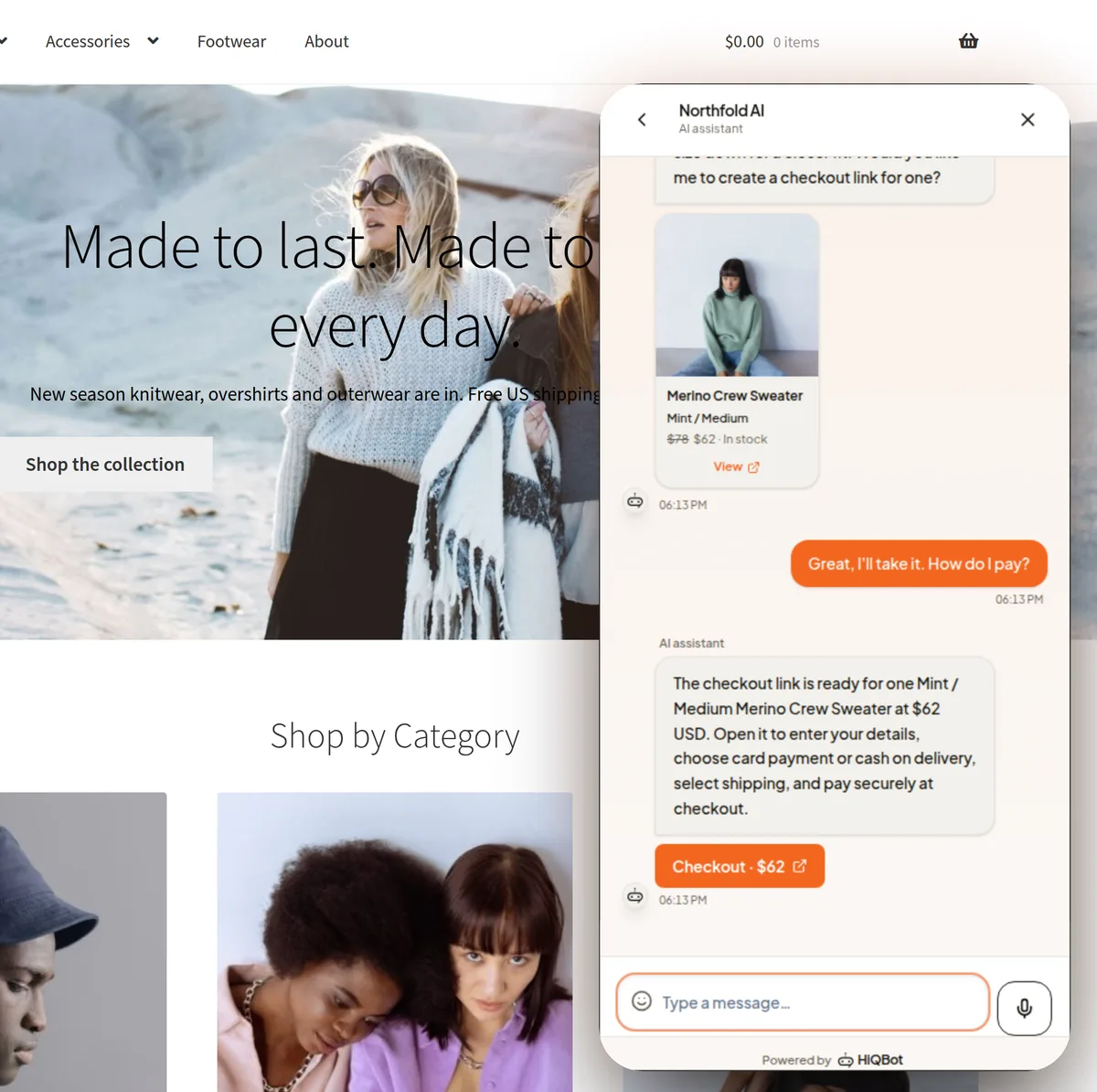
Stores without a website can connect a product list or Google Sheet instead. The AI quotes from it and takes the order in the chat, and your team confirms it.
Where is my order? (WISMO)
“Where is my order”, or WISMO, is the most common question after the sale. Two rules make the answer safe and useful:
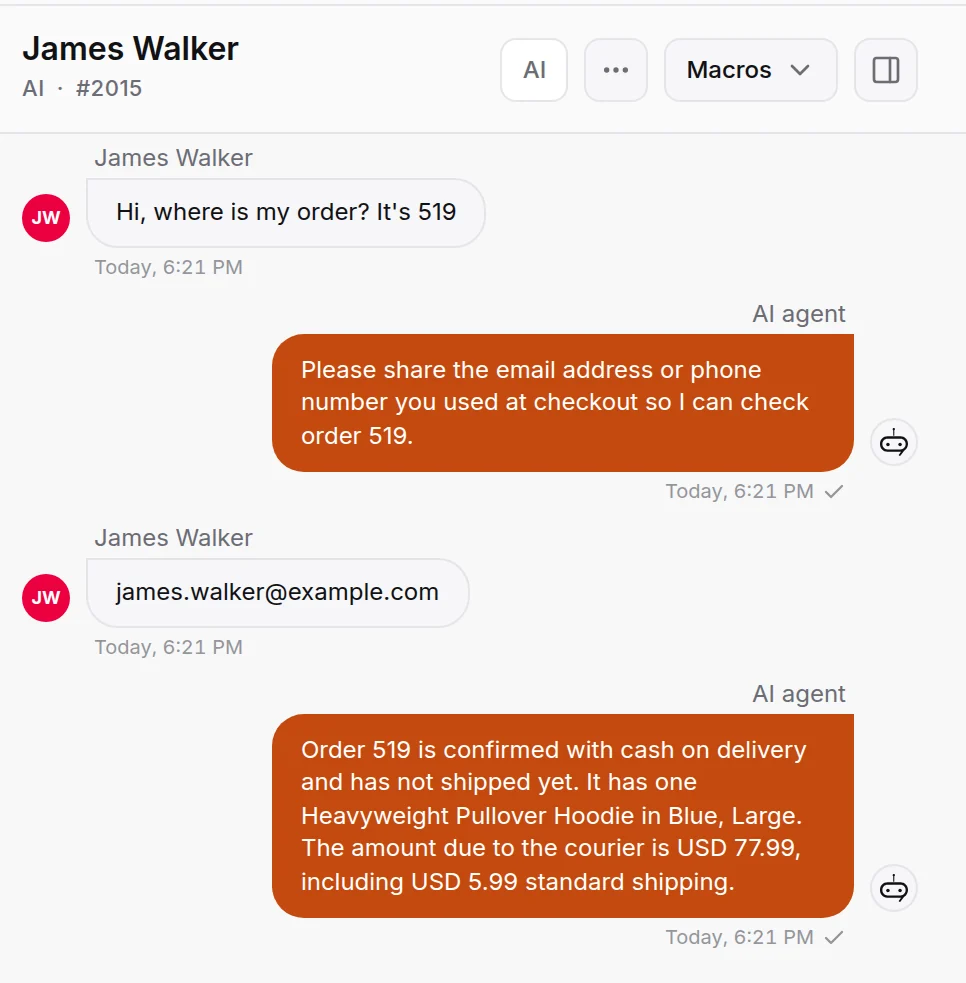
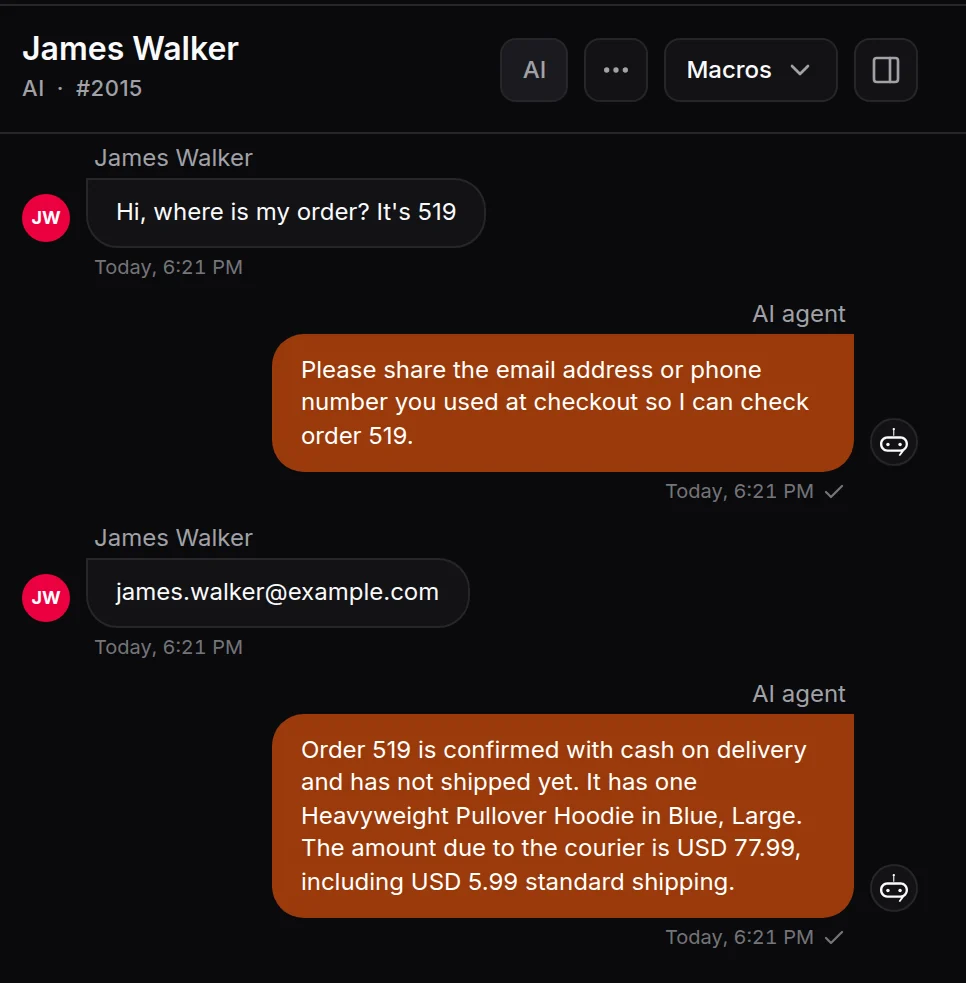
- Check the person first. Ask for the order number and the email or phone used at checkout. The number a message comes from isn’t proof: a gift buyer, a partner or a stranger can message you too.
- Read the order as it stands now: its stage, the items, the total, the payment method and the tracking details if your store records them. For cash on delivery, say how much the courier will collect.
HiQBot’s AI does both, reading the order live from your WooCommerce store. It gives the tracking details your store has; it doesn’t predict a delivery date the courier hasn’t given.
If WISMO is most of your messages, the fix also sits outside the chat: send a shipping email with a tracking link, and show the delivery estimate before checkout.
Returns, exchanges and refunds
In Baymard’s survey, 13 percent of shoppers who left a checkout did so because the returns policy wasn’t good enough (Baymard). Start with a written policy that answers four questions: how many days, in what condition, who pays postage, and how the money comes back.
Check the law where your buyers live. In the EU, shoppers can cancel most online purchases within 14 days of delivery without a reason; made-to-order and perishable goods are exceptions, and the shopper pays return postage unless the seller offers to or didn’t mention the cost before the sale (Your Europe). The UK, India and the Gulf states have their own rules.
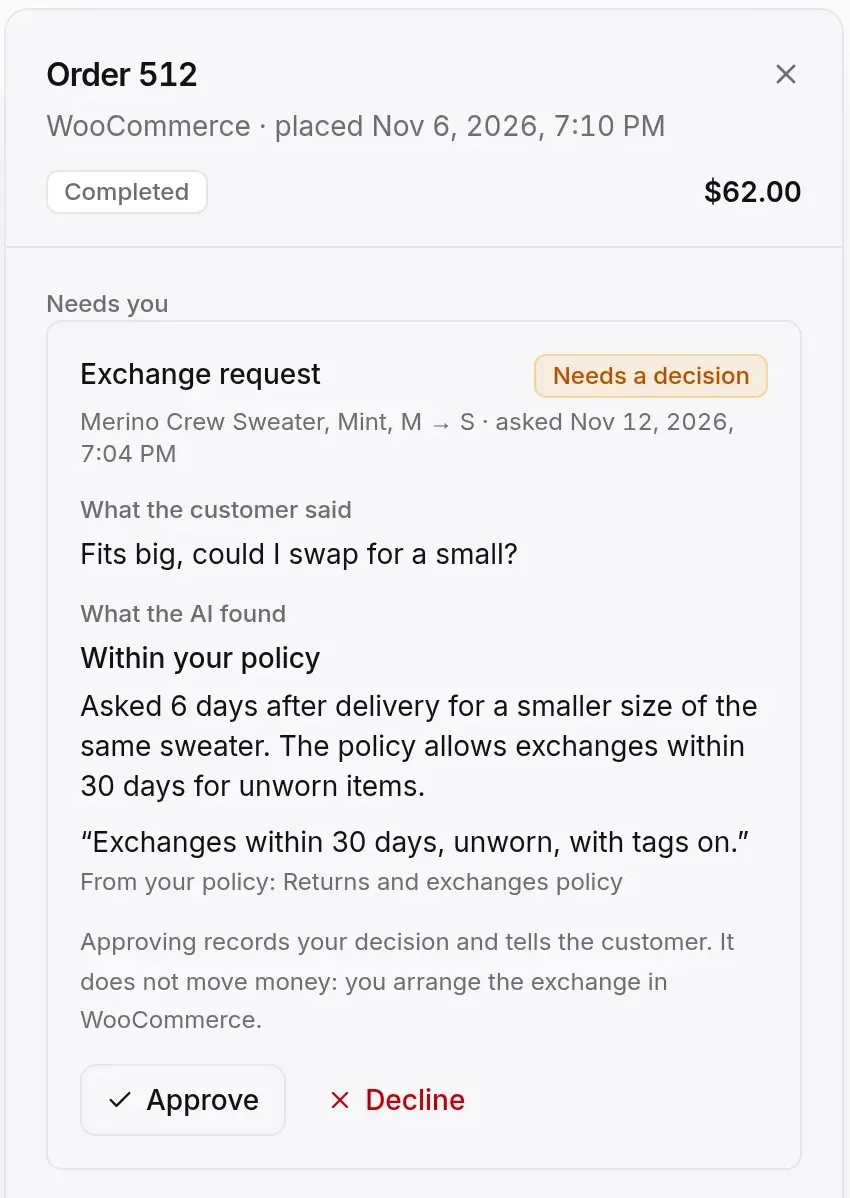
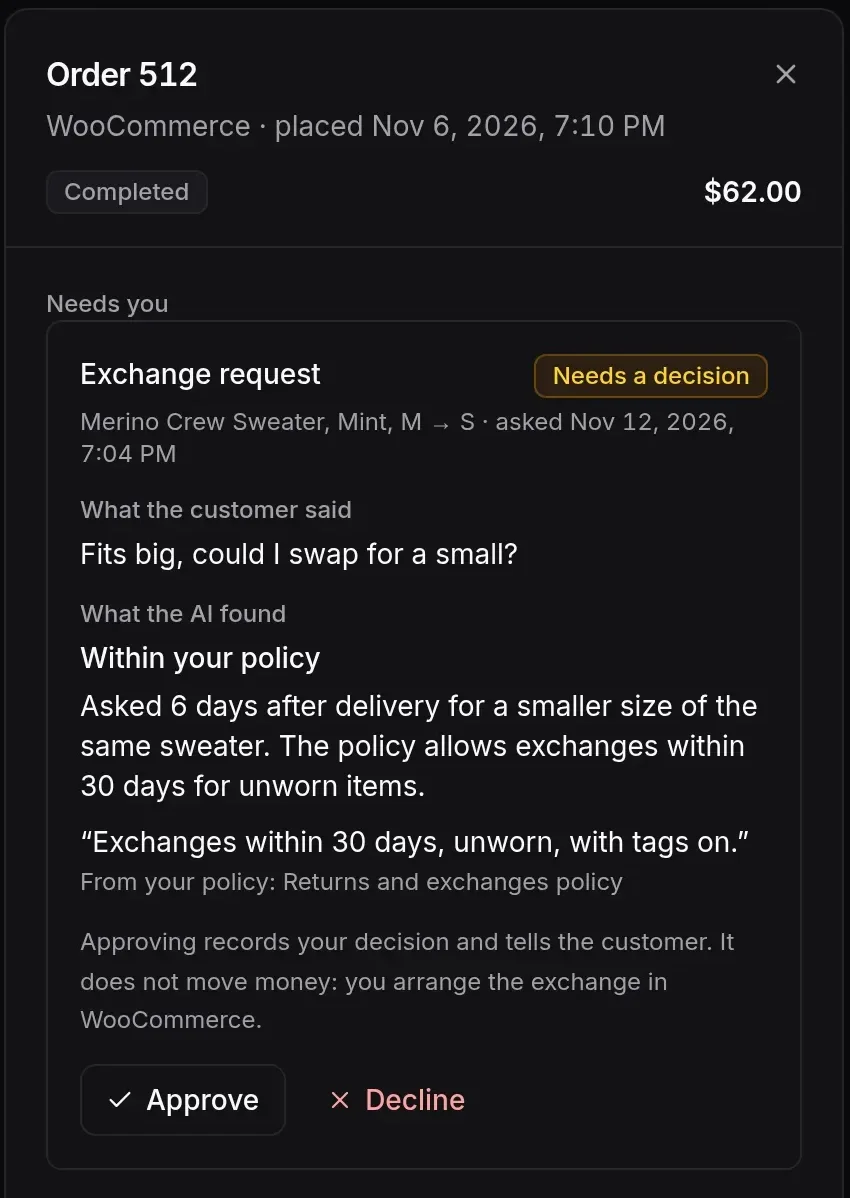
In HiQBot, your policy goes into the AI’s knowledge base, so it answers “can I return this?” in your words. When a shopper asks for a refund, exchange, cancellation or address change, the AI files the request with their reason and checks it against your policy. A person approves or declines it, and carries it out in WooCommerce. HiQBot changes nothing on the order by itself.
When a shopper wants a person
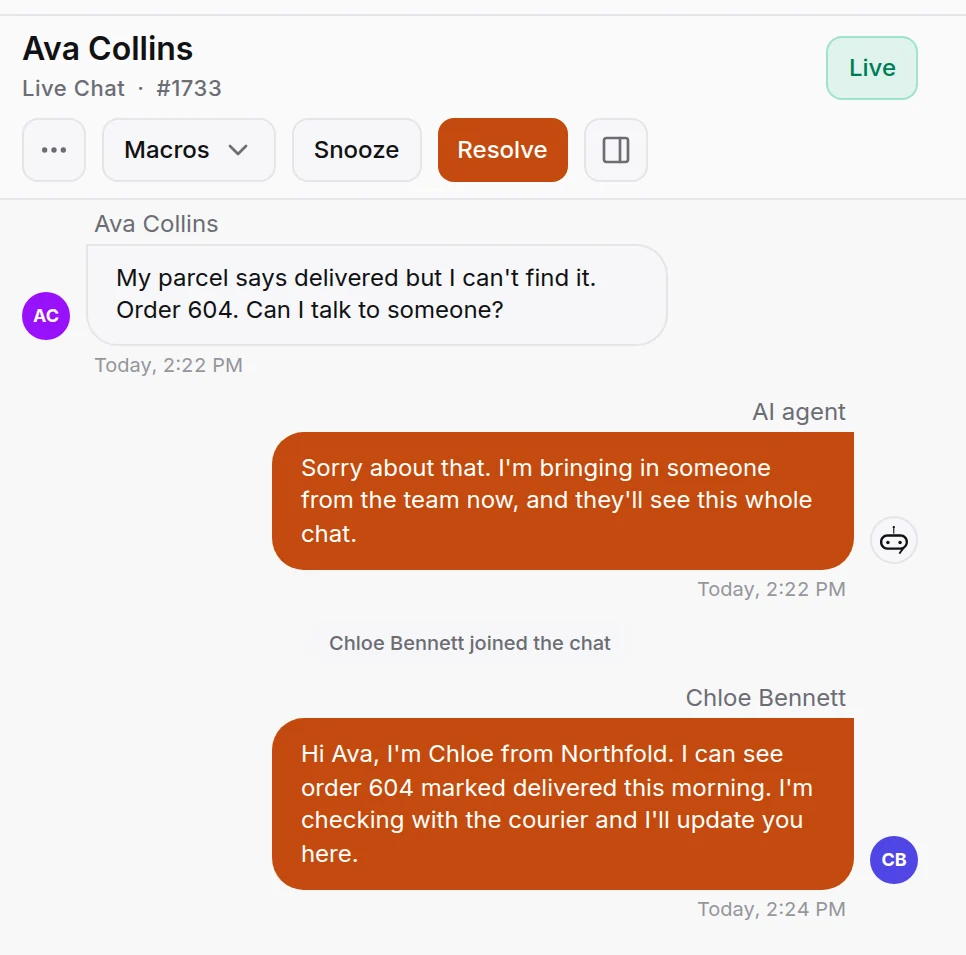
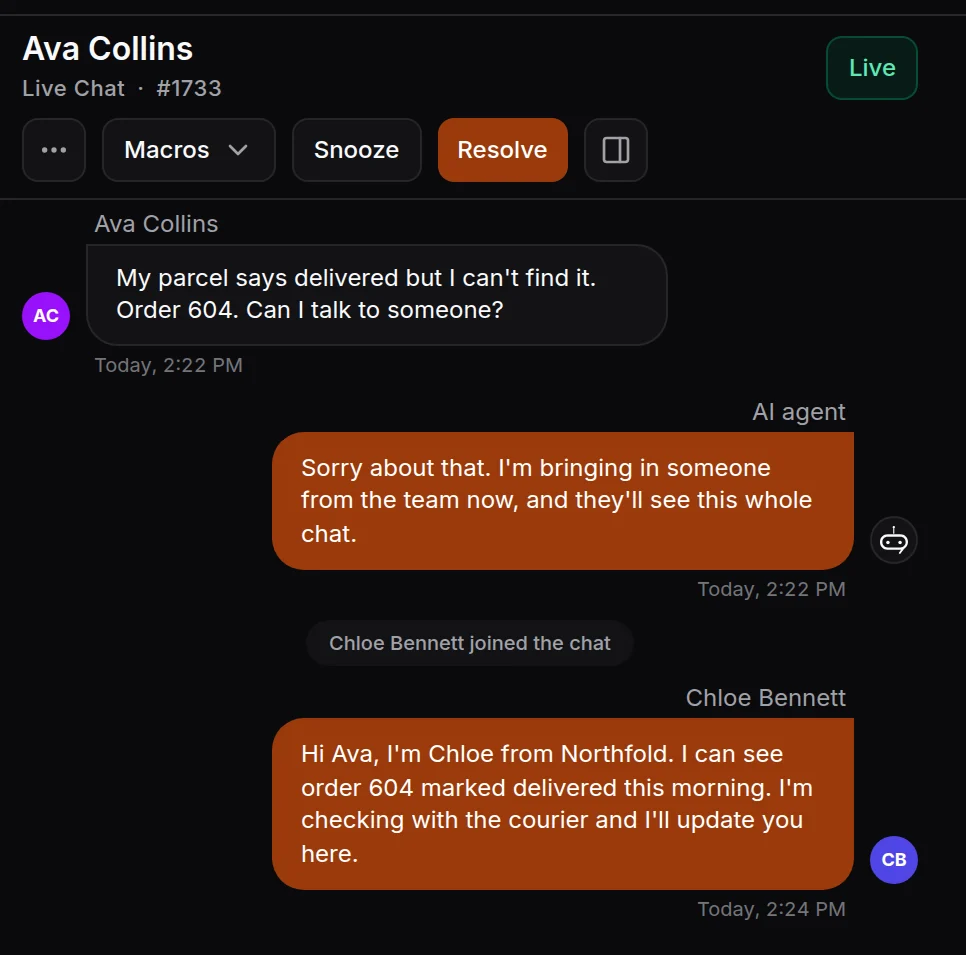
Some messages need a person: a parcel marked delivered that never came, a damaged item, an angry customer. In good ecommerce live chat, the person who joins already knows the story.
In HiQBot, the AI brings in your team when a shopper asks for a person or the question needs one. The teammate sees the whole chat, with notes, assignment and AI-drafted replies in the same live chat inbox. Customers who would rather talk can call your WhatsApp Business number, and it rings your team in the HiQBot inbox; the AI itself works in writing.
Ecommerce customer service channels
Offer the channels your shoppers already use, and answer all of them from one place.
- Website chat is the closest to the sale: it catches the shopper on a product page with one question left.
- WhatsApp is where many shoppers in India and the Gulf expect to reach a shop. You can reply to customers who message you; messages you start go out as templates Meta approves. Get each person’s agreement before you send marketing (Meta, getting opt-in), and note that Meta doesn’t deliver marketing templates to US numbers (Meta, marketing messages).
- Instagram and Messenger bring DMs from people who saw a post or an ad, often about price, size and stock.
- Email and phone are still expected for order problems. Keep them, and point people to the faster channels.
HiQBot puts website chat, WhatsApp, Instagram, Messenger, Telegram and LINE in one inbox, and the AI answers on all of them. Why one inbox matters is in our omnichannel customer service guide.
Retail customer service: in a shop as well as online
Retail store customer service now happens in the chat as much as at the till. Shoppers message a shop to ask whether an item is in stock, what the opening hours are, or what it costs. A shop with no online store can connect a product list or Google Sheet to HiQBot; the AI answers from it and takes orders for the team to confirm.
Ecommerce customer service best practices, and what to measure
| Practice | Why |
|---|---|
| Publish delivery and returns in plain words | Put costs, times and the return window on every product page, so fewer people have to ask |
| Answer the first message in minutes, at any hour | A shopper with one question left often buys from whoever answers first |
| Ask for the order number and the checkout email or phone | Never share order details with someone who only knows the order number |
| Keep saved replies for the questions you get every day | Delivery times, sizing and returns, written once and kept up to date |
| Let one person own each chat that needs a decision | Refunds and damaged parcels should not bounce between people |
| Count why people contact you | If most chats are “where is my order”, fix the shipping emails or the tracking page |
Measure four numbers each month: time to first reply, the share of chats solved without a person, the top five reasons people contact you, and how often the same order comes back. Ready-made answers for the daily questions are in our canned responses guide.
Where HiQBot fits in ecommerce customer service
- AI agent: answers product, price, stock and shipping questions from your catalogue, sends checkout links or takes orders for your team to confirm, answers where is my order, and files return and exchange requests.
- Live chat: a teammate takes over any chat, with notes, assignment and AI-drafted replies.
- Guided flows: a chat can open with buttons such as Track my order, Returns and Talk to us.
- WhatsApp calling: customers call your WhatsApp Business number and it rings your team in the inbox.
HiQBot doesn’t take payment in the chat, refund or change orders by itself, give courier delivery dates, or message shoppers who left a cart. The full setup for stores is on our AI chatbot for ecommerce page, and the store connection is on the WooCommerce chatbot page.
Common questions
What is ecommerce customer service?
Ecommerce customer service is the help an online store gives shoppers before, during and after a purchase. It covers product and delivery questions, payment, order status, and returns, exchanges and refunds, mostly in writing on chat, WhatsApp, Instagram and email.
How do I answer “where is my order” questions?
Ask for the order number and the email or phone used at checkout, then read the order as it stands: its stage, items, total, payment method and tracking details. Never give order details to someone who only has the order number.
What should an online store’s returns policy include?
A returns policy should say how many days a shopper has, what condition the item must be in, who pays return postage, and how and when the money comes back. Check the consumer law where your buyers live: in the EU it is at least 14 days from delivery for most goods.
Can AI handle ecommerce customer support?
AI can answer most ecommerce support questions: product, stock, shipping, payment methods and order status. It should hand refunds, exchanges and complaints to a person. HiQBot’s AI files those as requests for your team to approve.
Can HiQBot refund or cancel an order?
No. HiQBot’s AI files the refund or cancellation with the shopper’s reason and a check against your policy. A person on your team approves or declines it, then makes the change in WooCommerce.
What is the difference between ecommerce and retail customer service?
Retail customer service happens face to face in a shop; ecommerce customer service happens in writing, at any hour, and runs on past the sale through delivery and returns. Many shops now do both, answering stock and opening-hours questions in chat.
Sources were read on 13 November 2026, and the screens are the real HiQBot product with sample data. This guide is general information, not legal advice. How we write and check posts: editorial standards.