Restaurant marketing: ideas, advertising and promotions that turn posts and DMs into tables and orders

Muhammad Hassan, FounderLinkedIn
Published Updated
Restaurant marketing is everything a restaurant, café, takeaway or bar does to bring in new guests and bring back the ones it has: a Google profile, reviews, social media, ads, promotions, events and messages to regulars. Most of it now ends in a message, so the job is to answer during service and after closing, and turn each one into a table request or an order.
We make HiQBot, a customer service platform with AI agents, live chat, guided flows and WhatsApp calling. This guide is for owners and managers of independent restaurants, cafés, takeaways and bars. The examples come from a sample restaurant we set up in HiQBot and ran these chats through; every screen is the real product.
Start with a restaurant marketing plan
A restaurant marketing strategy for one place fits on a page. Write down five things before you spend on anything:
- Who you want more of: families at the weekend, office lunches, date nights, groups, takeaway regulars.
- The quiet slots you want to fill, such as Tuesday nights or 3 to 5 pm.
- Where those guests will see you: Google, Instagram, a delivery app, a local partner, your own regulars.
- Where they will message you, and who answers at 9 pm on a Friday when the floor is full.
- What you will count: table requests, orders, and the guests who came back.
The rest of this guide fills in that plan. Digital marketing for restaurants is mostly the first three items done online, and the fourth is where most places lose guests.
Your Google Business Profile
Someone searching “restaurants near me” sees your profile before your website. Keep the hours, holiday hours, menu, photos of real dishes and the room, and price range current. Google’s own advice is to make the profile as complete as you can, special hours included, and to reply to reviews (Google Business Profile Help). Add your booking link and your WhatsApp number, so a guest with a question can ask it.
Reviews
New guests read reviews before they book. Ask for a Google review after a good visit, and send the link in the guest’s chat. Reply to every review, the bad ones calmly and with what you changed. HiQBot’s guided flows include a review-ask starting point.
A website that answers during service
Guests check the menu, the hours and the allergens on your website, often at night or while your team is busy. A chat on the site that answers from your own menu and takes a table request keeps those guests. A phone number nobody can pick up during service sends them to the next place.
Restaurant marketing ideas and promotions that fill tables
A promotion gives a guest a reason to come this week. Each idea below starts a chat, and the table request or order is taken in that chat for your team to confirm, even when it arrives at 11 pm.
| Idea and how it starts | How it becomes a table or an order |
|---|---|
| A new dish or a seasonal menuA reel or post that ends “comment MENU” | Each commenter gets a DM with the menu and allergens, and the AI answers what they ask next and takes the table request or the order |
| A quiet-night offer, such as a Tuesday set menuA post and the offer on your Google profile | The AI quotes the offer from your menu and asks the day, time and party size for a table request |
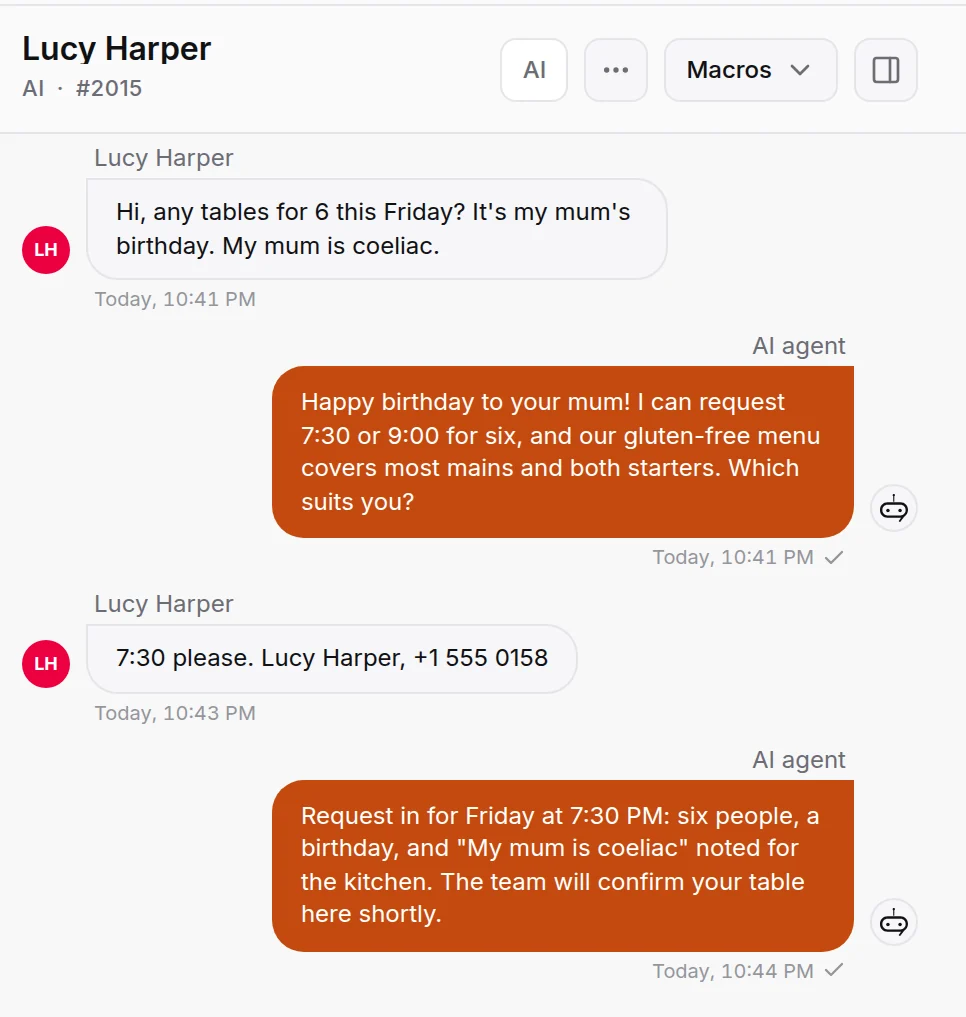
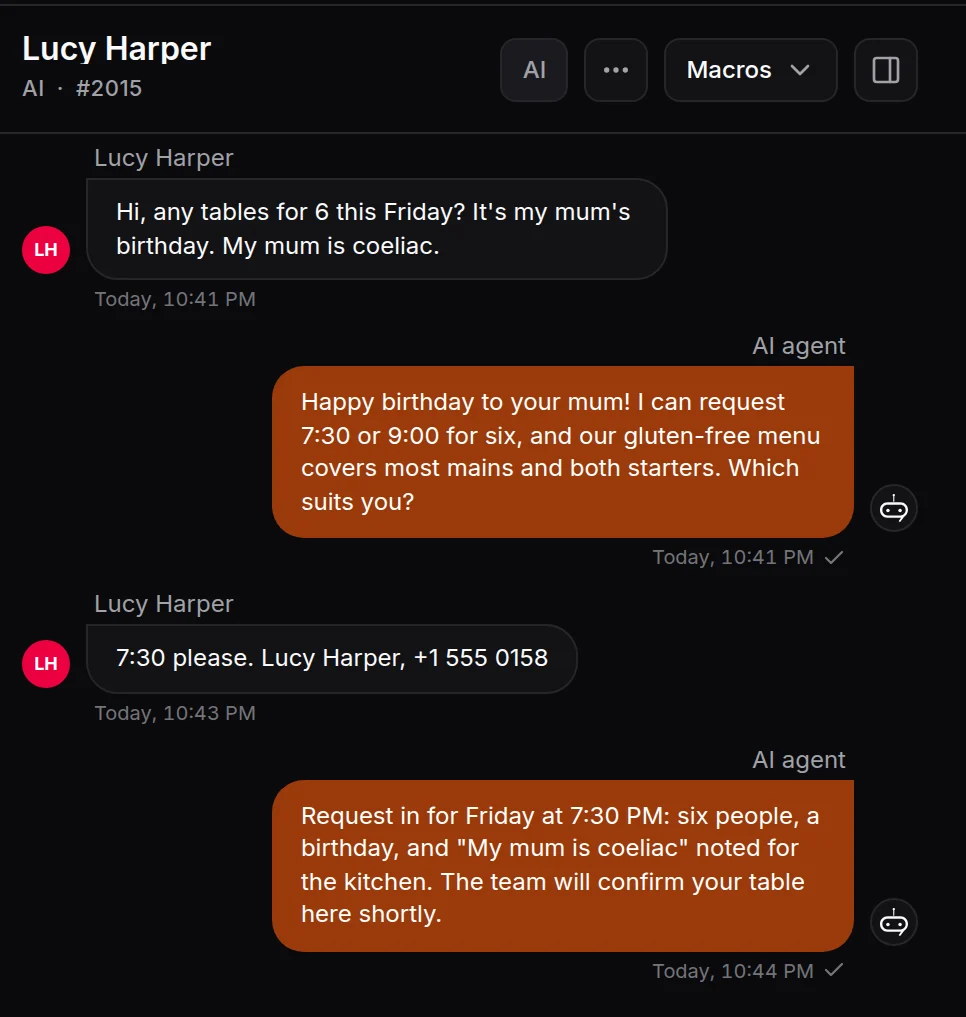
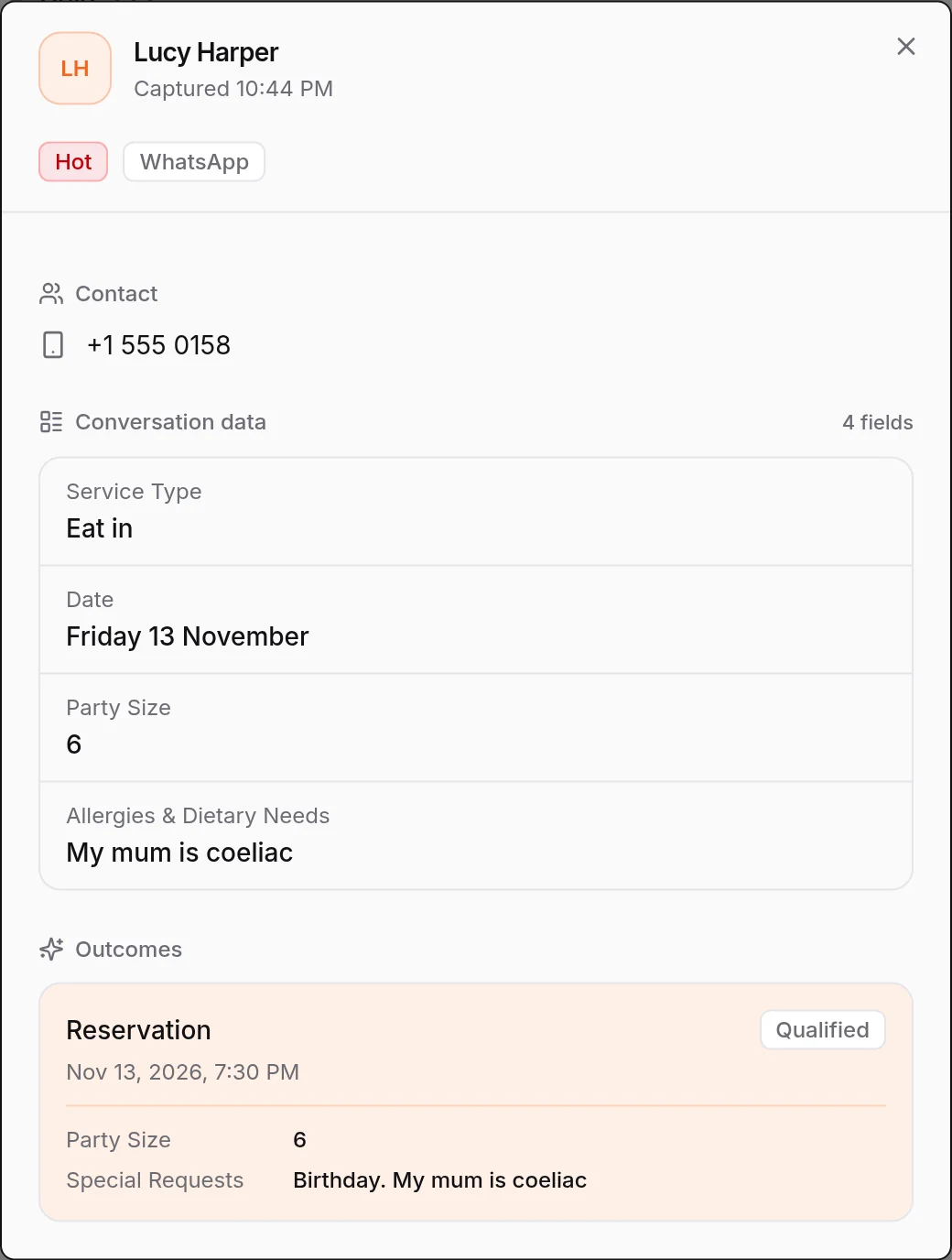
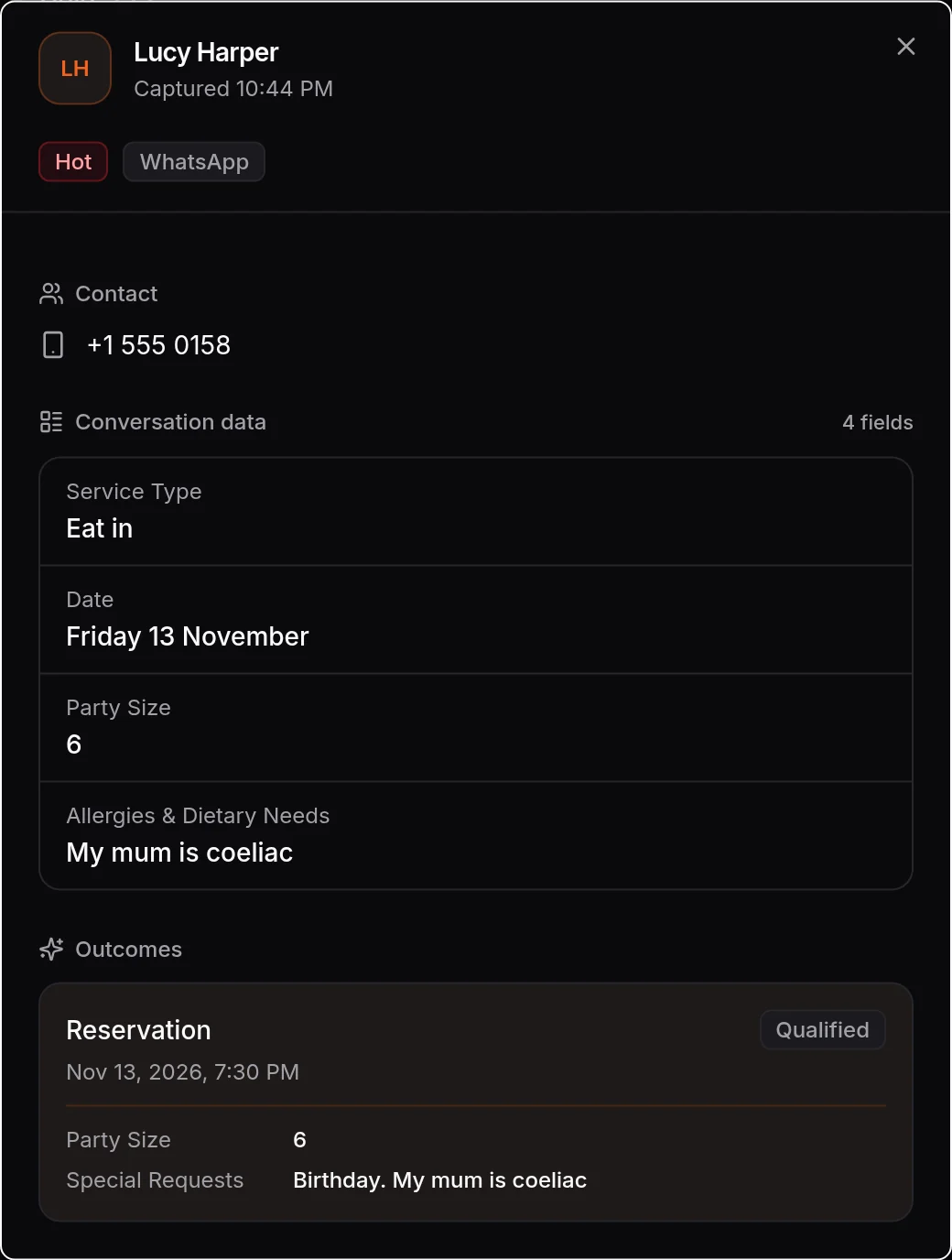
| Birthdays and celebrationsA Story: “Message us to book your birthday table” | The AI picks up the occasion and writes it onto the table request, along with any allergies |
| Christmas parties and work dinnersA post in October, and the event on your Google profile | The AI asks the date and the size of the group and files the request for your team to confirm |
| A collection deal for regularsA WhatsApp broadcast to the regulars you tagged | The AI takes the order from your menu, quotes the items total and your delivery charge, and your team confirms it in Orders |
| Live music, quiz nights and match screeningsA post with the date, and a WhatsApp broadcast to regulars | Guests message to book, and the AI files a table request with the party size |
| Mother’s Day, Valentine’s Day, Eid and Christmas menusA broadcast to guests who agreed to hear from you, three weeks ahead | Replies land in your inbox, and the AI answers menu questions and takes the table requests |
| Local partners: a hotel, an office, a cinema nearbyA card at their desk with a QR code to your WhatsApp chat | The chat opens on your number, and the AI answers and files the table request or order |
The AI quotes only the dishes, prices and offers in your menu and knowledge base, so add the promotion there before it goes live. For private parties and weddings with their own menus and deposits, see our event venue chatbot page.
From a promotion to a table request
When a guest replies to a promotion, the AI asks the day, the time and how many, one at a time, and offers a second time in the same message. It writes allergies, high chairs and the occasion onto the request in the guest’s own words, then tells the guest your team will confirm. It never tells a guest a table is held.
Restaurant advertising: ads that open a chat
The best way to advertise a restaurant is close to the guest’s decision: when they are searching nearby, scrolling at lunchtime or planning the weekend. Four kinds of restaurant advertising work for most independents:
- Local search: your Google profile first, then Google ads for “near me” searches in your area.
- Instagram and Facebook ads that open a WhatsApp, Messenger or Instagram chat instead of a web page. The chat lands in your HiQBot inbox like any other message, and the AI answers it in seconds, day or night.
- Promoted listings inside delivery apps, which bring orders inside the app at the app’s commission.
- Print and local: a flyer, a menu card or a window sticker with a QR code to your WhatsApp chat.
Fast food advertising leans on a deal with a deadline, such as a lunch combo this week only. A dining room sells the evening: the dish, the room and the reason to book. Whatever the ad, the guest’s first question needs an answer before they scroll on.
Social media marketing for restaurants
What to post
- The dish being plated, in a short video, with its name and price in the caption.
- The chef or the team, so guests know the faces before they arrive.
- This week’s specials, events and the quiet nights with space.
- Guests’ photos you were tagged in, shared with their permission.
Turn comments and DMs into tables
End a post with one word to comment, such as MENU or TABLE. HiQBot replies to each comment in public and sends a private message, and the AI answers the reply knowing which post brought the guest in. The lead records the post. Guests write in whatever language suits them and the AI answers in the same one, and it reads the photos or screenshots they send.
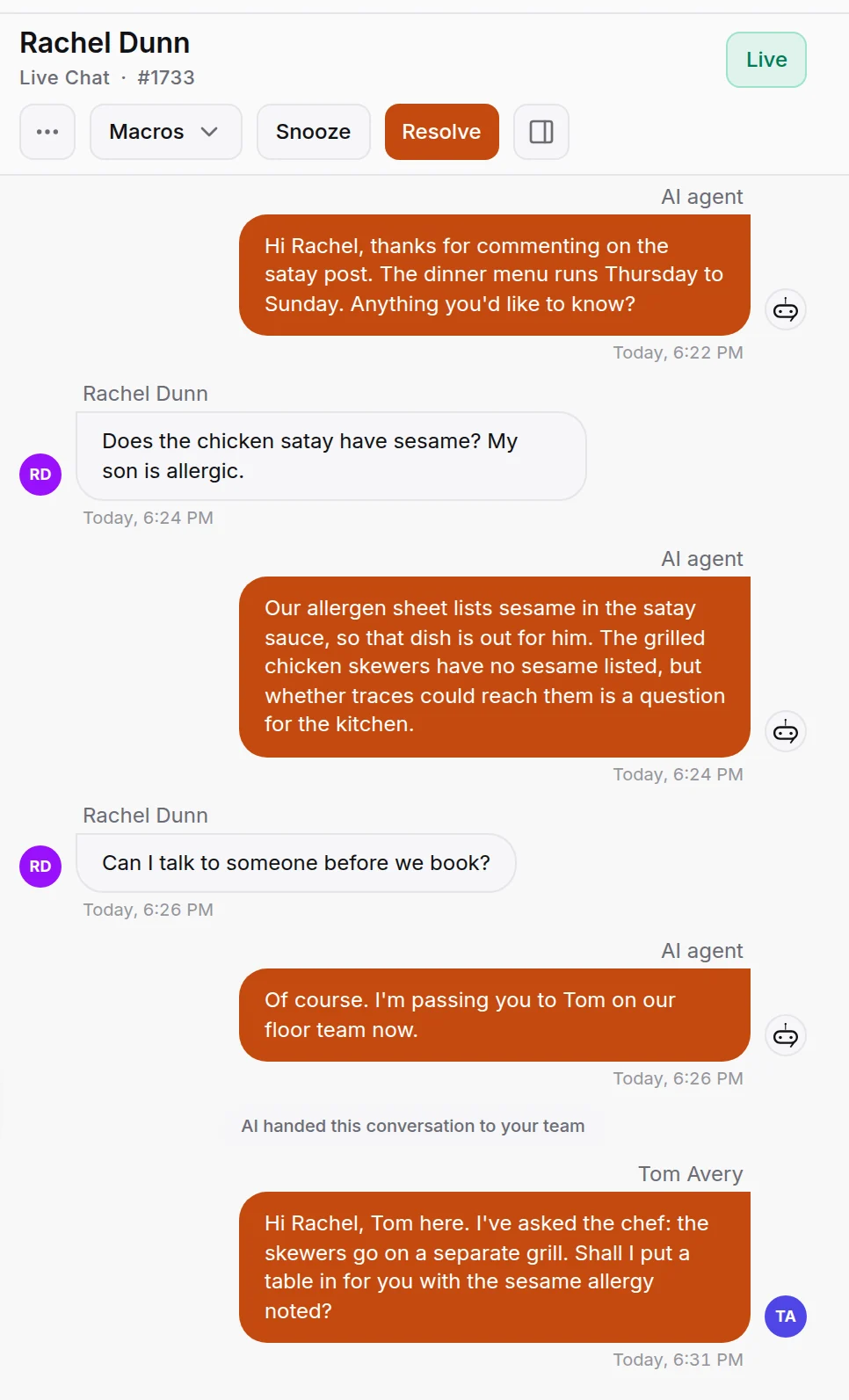
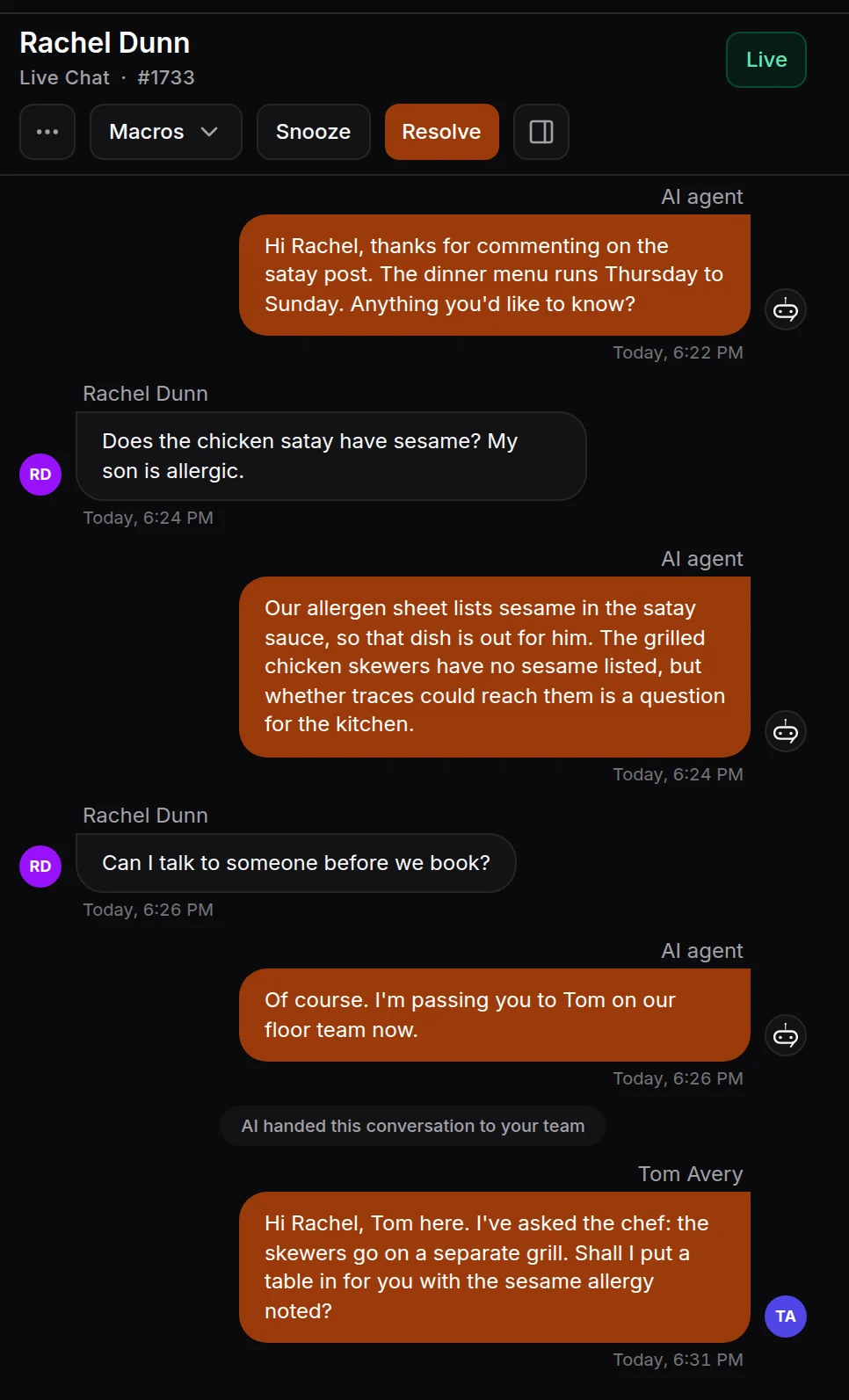
The AI gives no allergy advice of its own. It quotes your allergen sheet, writes the allergy onto the request and passes questions such as cross-contact to your staff. More on Instagram DM automation and the Instagram comment bot.
WhatsApp marketing to past guests
A WhatsApp broadcast sends one approved message to the guests you choose by tag: regulars, birthday guests, takeaway customers. Use it for a new menu, an event, holiday hours or a collection deal. Replies land in the same inbox, where the AI or your team answers.
- Outside 24 hours from the guest’s last message, WhatsApp only allows templates Meta has approved (Meta).
- Anyone who replies STOP is skipped for marketing from then on.
- You are responsible for each guest’s consent.
WhatsApp does not currently deliver marketing templates to US phone numbers (Meta’s per-user marketing limits). A US restaurant markets on Instagram, Google and its website chat, and uses WhatsApp for guests who message first. Guests can also call your WhatsApp Business number, and the call rings your team in the HiQBot inbox (WhatsApp calling).
A welcome with buttons
A guided flow can greet every new WhatsApp chat with three buttons: Book a table, Order to collect and Talk to the team. The first two go to the AI, and the third goes to a person. When a table request is filed, HiQBot can send a confirmation, then a reminder from 2 hours to 7 days before. Setup is on our WhatsApp chatbot page.
Email and SMS marketing
An email newsletter or an SMS list runs in its own tool, and the same rules apply: consent first, and an easy way out. HiQBot doesn’t send SMS. Put your WhatsApp link in the email so a guest who wants to book can ask a question and get an answer.
Regulars and restaurant loyalty programs
A regular who comes twice a month is worth more than a one-off visitor from an ad, so most restaurant marketing should bring people back.
Restaurant loyalty programs
Loyalty programs for restaurants come in three common shapes: a stamp card (the tenth coffee free), points per spend, and member perks such as a birthday dessert or first look at a new menu. Points and cards usually run in your POS or a loyalty app. Keep the reward simple enough to explain in one line, and tell guests about it in your replies and on the receipt.
Delivery apps and direct orders
Delivery apps bring guests who have never heard of you, and they charge commission on each order. Direct orders cost you less, so many places use the apps for reach and ask regulars to order direct next time: a card in the bag, a line on the menu, a post.
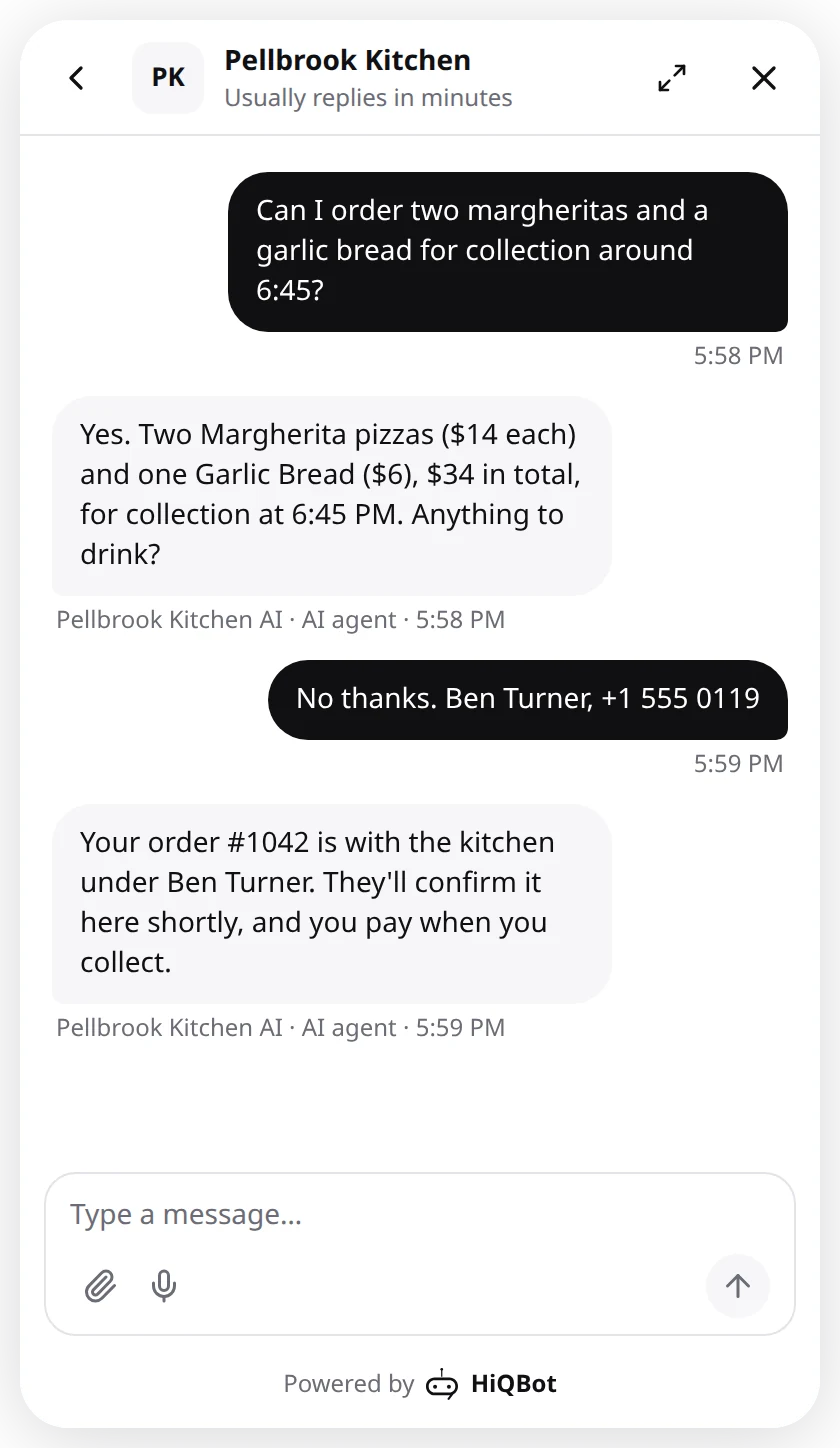
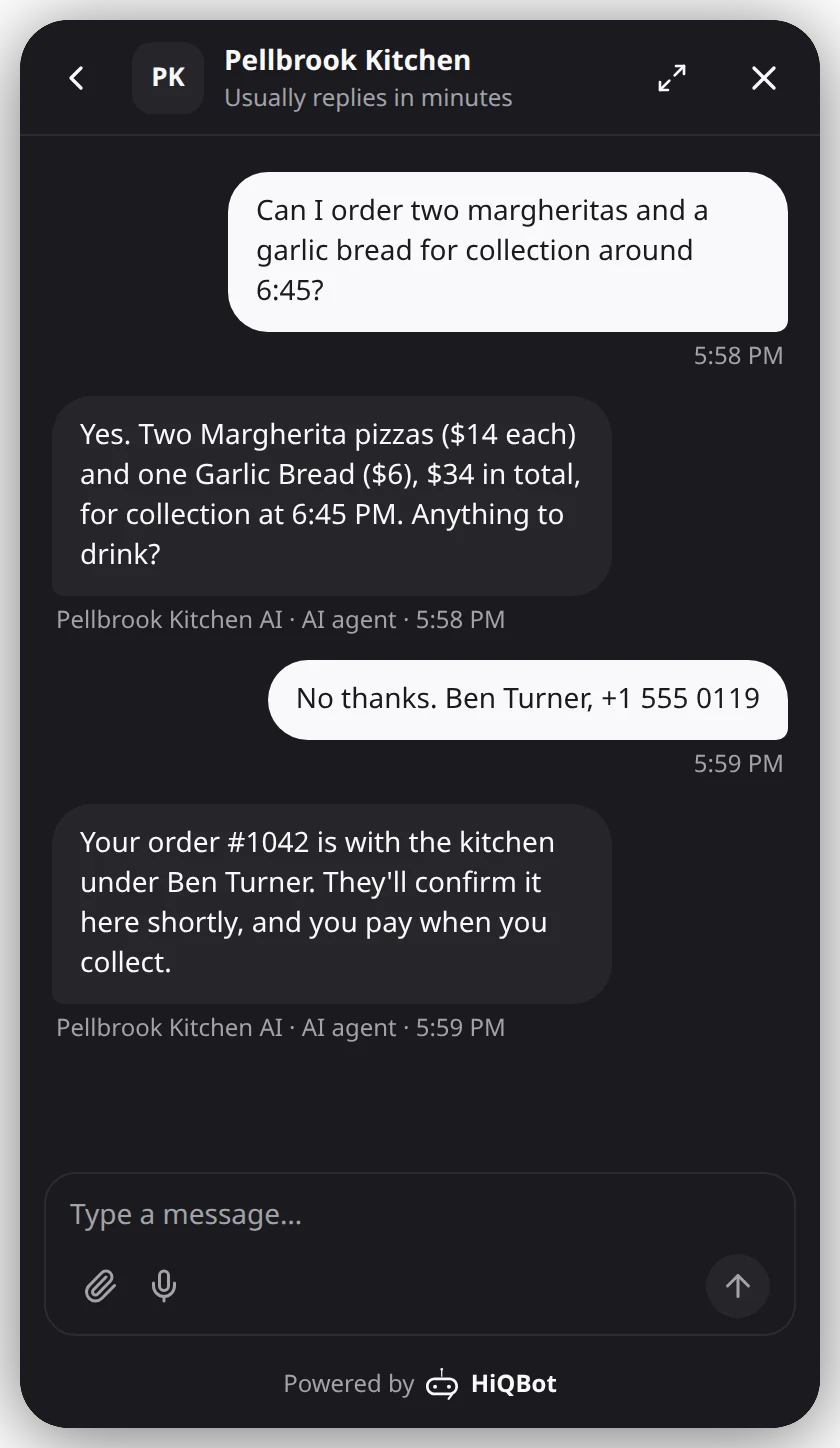
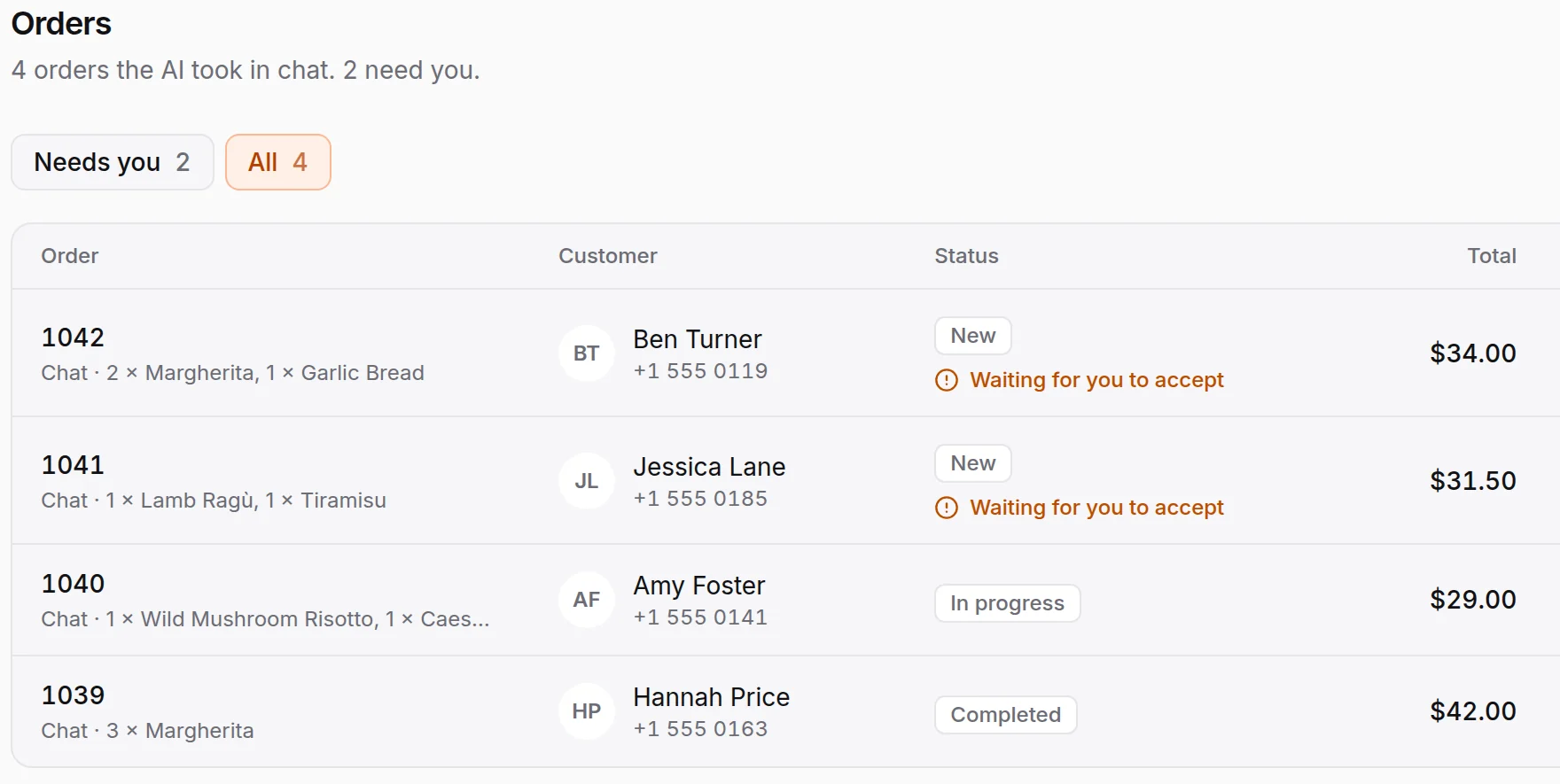
With HiQBot, a direct order can come in on WhatsApp, Instagram or your website. The AI takes dishes by the names on your menu, checks sizes and changes, and reads the order back with the items total and your delivery charge and minimum order. Collection or delivery, only what you offer. The order waits in Orders for your team to confirm, and the guest is told in the same chat. Payment is not taken in the chat.
Fast food, café and bar marketing
Fast food and takeaway marketing
Speed and the deal sell. Post the combo and its price, put your WhatsApp link on the box, and answer “are you open now?” and “do you deliver to me?” before the guest opens a delivery app.
Café and coffee shop marketing
Cafés sell on habit. A stamp card, a new seasonal drink, a quiet place to work and a cake for collection on Saturday all bring people back. Guests message about hours, oat milk and cakes to order, and the AI answers from your menu and takes the pre-order for collection.
Bar and pub marketing
Bars sell the night: quiz nights, live music, match screenings and group bookings. Post the event with its date, broadcast it to regulars who agreed to hear from you, and let guests book in the chat. The AI files each table request with the party size for your team to confirm.
How to tell what’s working
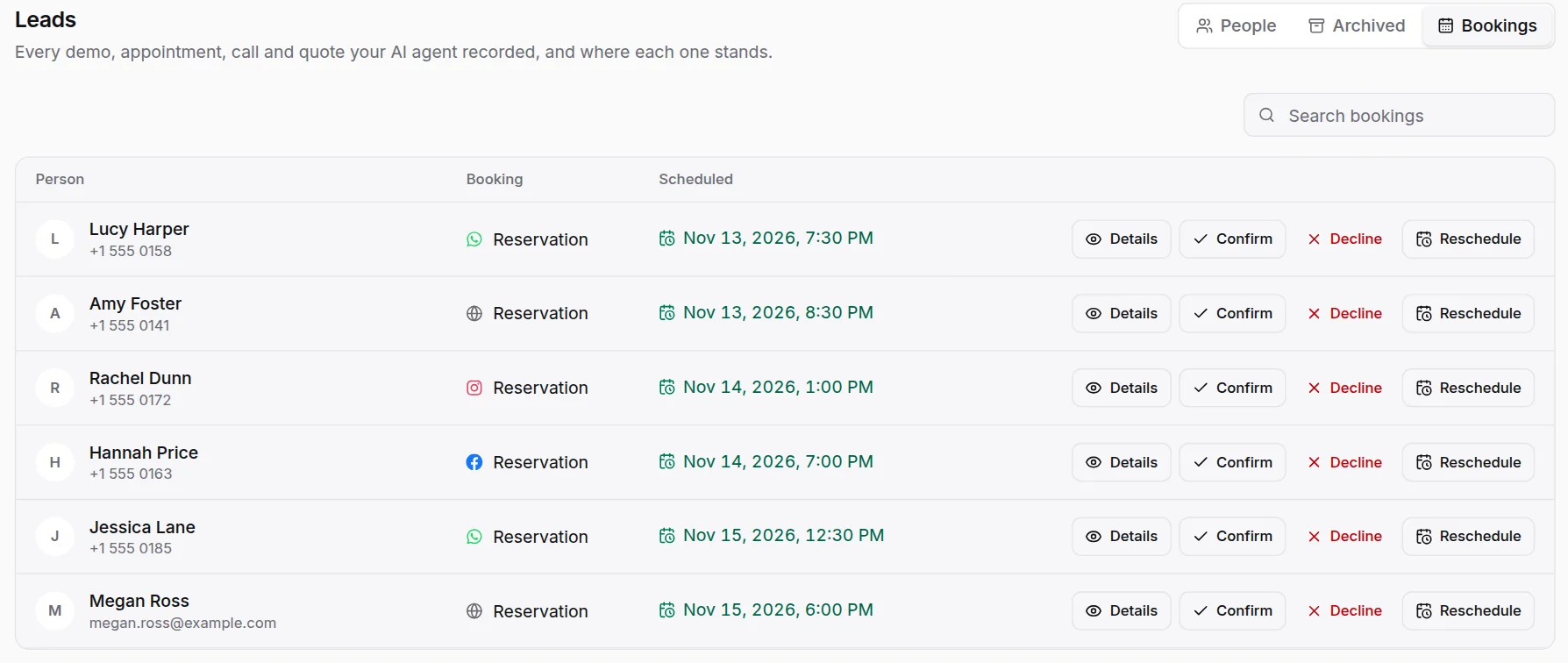
Count table requests, orders and returning guests by channel. In HiQBot, each lead shows the channel it came from, and leads from a comment rule show the post. A broadcast report shows how many people it reached, how many read it and how many replied. Reports show your busiest hours and the questions the AI couldn’t answer, which tells you what to add to your menu or FAQ.
Restaurant marketing with HiQBot
HiQBot is one inbox for website chat, WhatsApp, Instagram, Messenger, Telegram and LINE, with four parts that work alone or together:
- AI agent: answers menu, hours and dietary questions from your own documents, files table requests and takes food orders for your team to confirm.
- Live chat: your team takes over any chat with the history in view, in one inbox with notes and assignment.
- Guided flows: buttons such as Book a table, Order to collect and Talk to the team on WhatsApp, Instagram, Messenger, Telegram and LINE.
- WhatsApp calling: guests call your WhatsApp Business number and it rings your team in the inbox. The AI itself works in writing.
Table requests land in your Bookings list, and on Google Calendar if you connect it. HiQBot doesn’t connect to a POS, a delivery app or a reservation system, and it doesn’t take payments. The full setup is on our restaurant chatbot page. For what AI can and can’t do in a restaurant, read AI for restaurants, and for full chats, the restaurant chatbot examples.
Common questions
How do I market my restaurant?
Start with a one-page plan: who you want, the quiet slots to fill, where those guests will see you and who answers their messages. Then keep your Google profile current, post with a reason to come this week, answer fast and bring regulars back.
What is the best way to advertise a restaurant?
For most independents, a complete Google profile and Instagram ads that open a chat come first. Both reach guests close to the decision, and a chat lets them ask a question and book in the same place.
What are good restaurant promotion ideas?
A new dish with a “comment MENU” post, a quiet-night set menu, birthday tables, Christmas parties, a collection deal for regulars, event nights, holiday menus and local partners. Give each one a date and answer the messages it brings within minutes.
What are the 7 P’s of restaurant marketing?
Product, price, place, promotion, people, process and physical evidence. For a restaurant that means the menu, the prices, the location and how guests reach you, the marketing, the team, how booking and ordering work, and the room itself.
How much should a restaurant spend on advertising?
There is no single right amount. Set a small monthly budget per channel, give each ad or promotion its own offer, and keep the ones that bring table requests and orders you can count.
Can a restaurant send promotions on WhatsApp?
Yes, as an approved marketing template sent to guests who agreed to hear from you. Anyone who replies STOP is skipped, and WhatsApp doesn’t deliver marketing templates to US numbers.
Does a small restaurant need a loyalty program?
Not always. A stamp card or a birthday perk is enough for many small places, and remembering regulars matters more than points. Add a points program when your POS already supports it.
Is HiQBot a reservation system?
No. It answers guests and files table requests and food orders, which your team confirms. There is no table plan or live link to a reservation system, and payments stay in your own tools.
Sources were read on 13 November 2026, and the screens are the real HiQBot product with sample data. How we write and check posts: editorial standards.