AI for restaurants: what it can do for an independent restaurant, sorted by what each use needs

Muhammad Hassan, FounderLinkedIn
Published Updated
AI for restaurants covers tools that forecast sales, count stock, answer the phone or talk to guests in chat. For an independent restaurant, the one you can switch on this week is guest messaging: menu, hours and allergy questions answered from your own menu on WhatsApp, Instagram and your website, with table requests and orders passed to staff to confirm.
We make HiQBot, a customer service platform with AI agents, live chat, guided flows and WhatsApp calling. This guide is for owners of independent restaurants, cafés and small groups. It sorts the AI uses in the news by what each one needs, then follows one restaurant’s guest chats. We set up that sample restaurant in HiQBot and ran the chats ourselves; every screen is the real product.
What AI for restaurants means
AI in restaurants shows up in four places. Back of house: forecasting, stock and labour scheduling. Front of house: kiosks and voice systems that take orders or answer the phone. Marketing: social posts, emails, review replies. Guest messages: answers and requests in chat.
Operators are curious and careful. In a National Restaurant Association survey of 212 operators (June to July 2026), 38.6% used AI tools. Their top concerns were complexity (46.1%), cost (43.5%) and whether customers would accept it (41.9%).
How restaurants use AI, sorted by what it needs
Most restaurant AI tools sit inside a point-of-sale system. In Toast’s own usage data from early 2026, 47% of restaurants using its AI assistant asked about sales and revenue and 34% about menu and inventory. Customer-facing AI is still rare: the NRA’s State of the Restaurant Industry 2026 found only 6% of restaurants use AI for customer orders (Restaurant Dive).
| Use | What it needs | Fits an independent now? |
|---|---|---|
| Menu, hours and allergy questions | Your menu, allergen sheet and house rules | Yes |
| Table requests | Your sittings and someone to confirm | Yes |
| Takeaway and delivery orders in chat | Your menu as a list, and someone to confirm | Yes |
| Private dining and catering enquiries | Your packages and a person to quote | Yes |
| Social posts and review replies | A writing tool and someone to check it | Yes, separate tool |
| Sales reports, forecasting, stock | POS data and the POS vendor’s AI | With that POS |
| Labour scheduling | A scheduling app linked to sales | A separate purchase |
| Voice AI on the phone | A phone system and a voice product | A separate purchase |
HiQBot covers the first four rows, the guest conversations. It has no POS connection and does not forecast, schedule or answer the phone with AI.
Where AI helps an independent restaurant first: guest messages
Guests message while deciding where to eat, often late in the evening, on whatever app is open. HiQBot’s AI answers on website chat, WhatsApp, Instagram, Messenger, Telegram and LINE, from the menu, allergen sheet and rules you upload. The full setup is on our restaurant chatbot page.
Menu, hours and “is it dog-friendly?”
Guests ask simple questions before they book. OpenTable’s 2026 dining trends report lists the questions diners ask its own AI most: is the restaurant kid-friendly, what is the best thing on the menu, and is it dog-friendly. Put the answers in a short house-rules file, alongside prices, corkage, service charge and how far you deliver, and the AI quotes them as written.
Table requests your team confirms
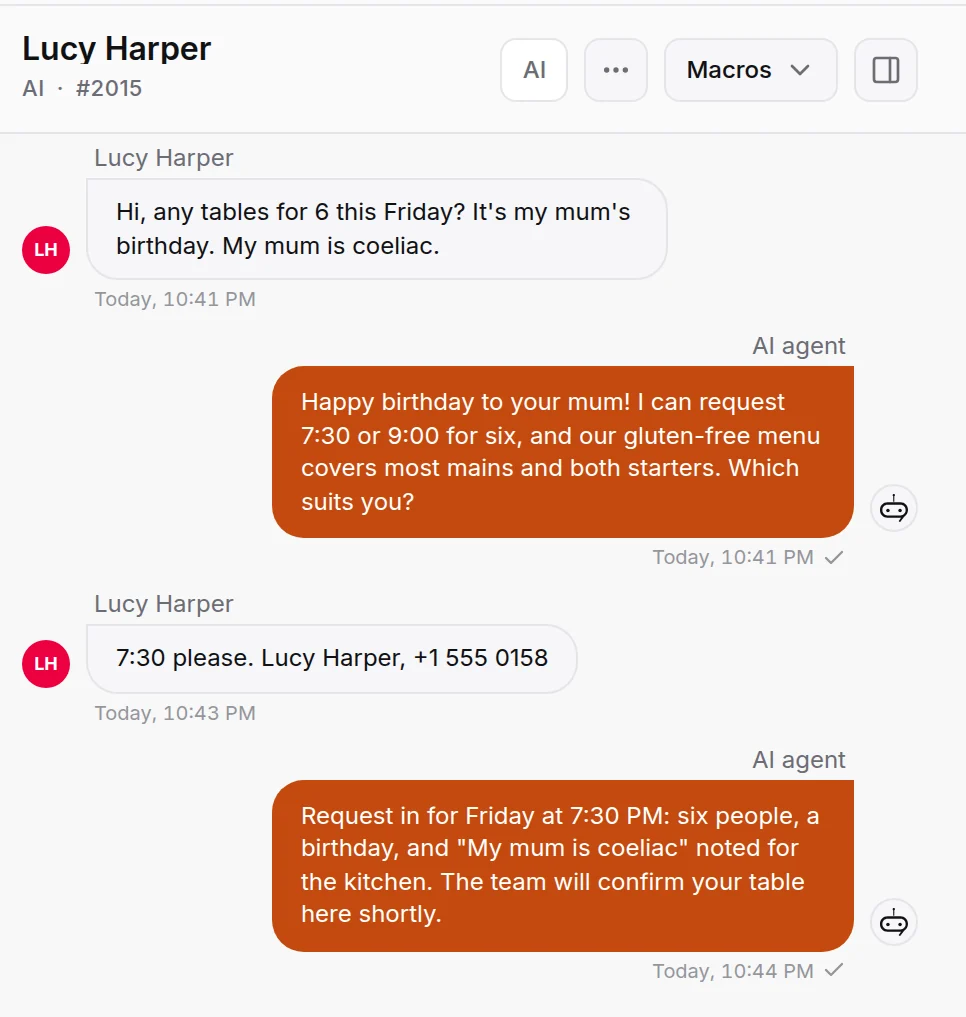
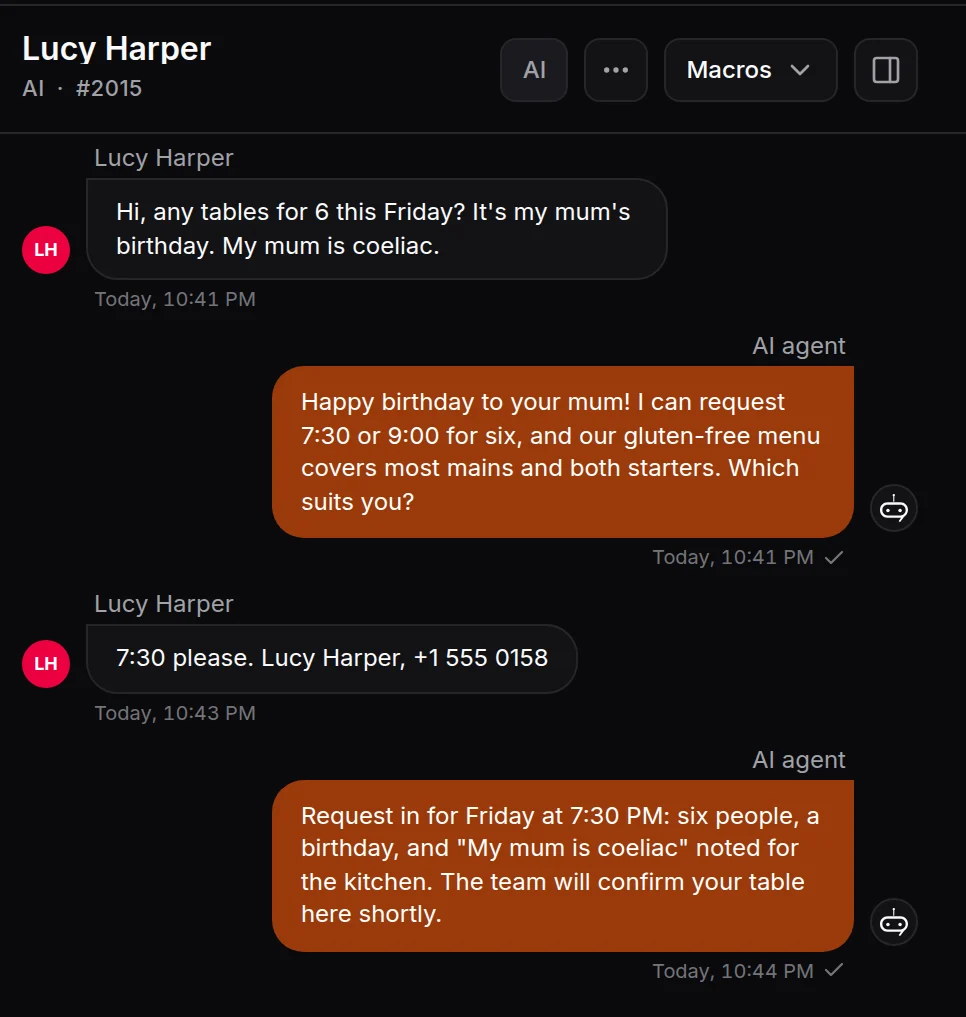
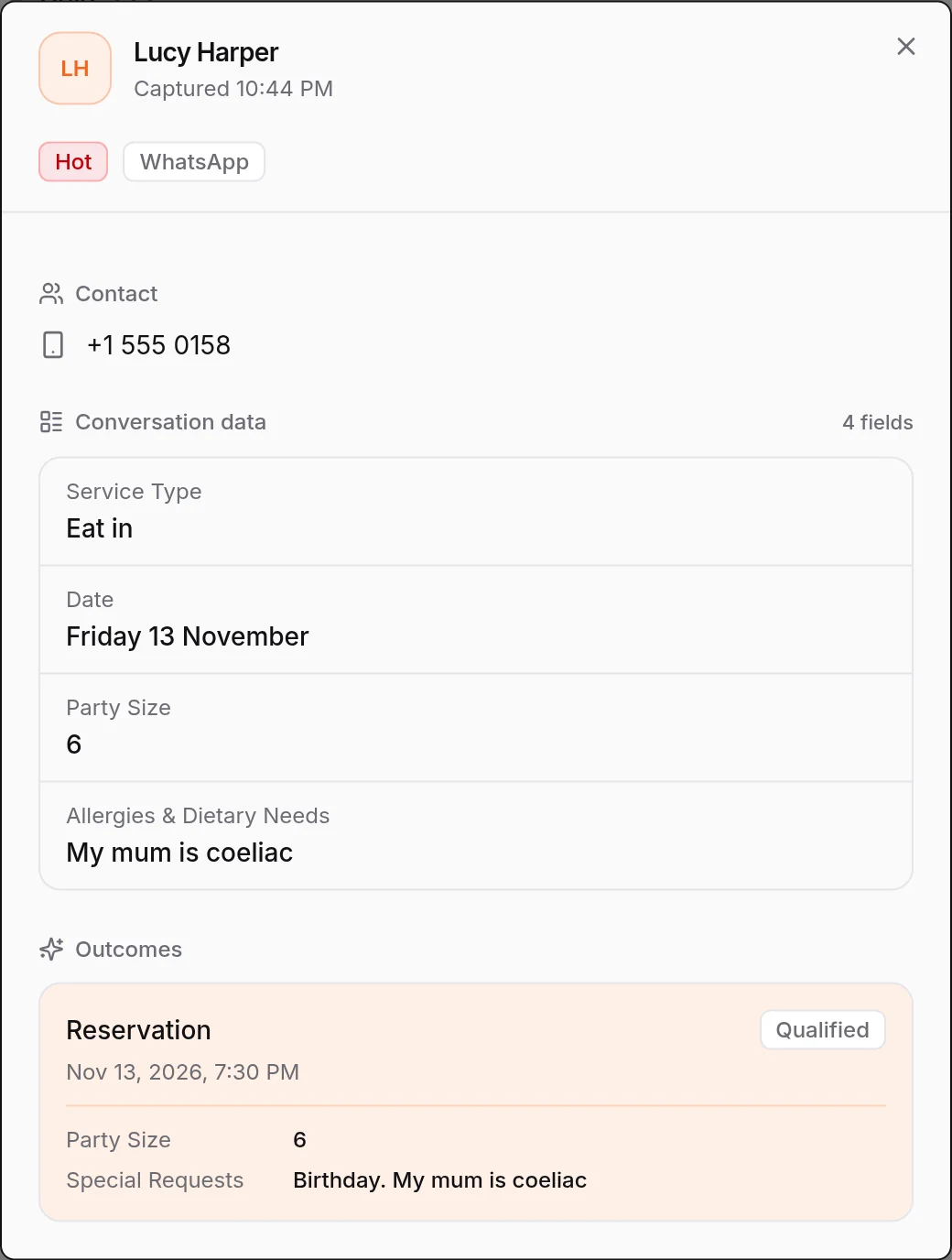
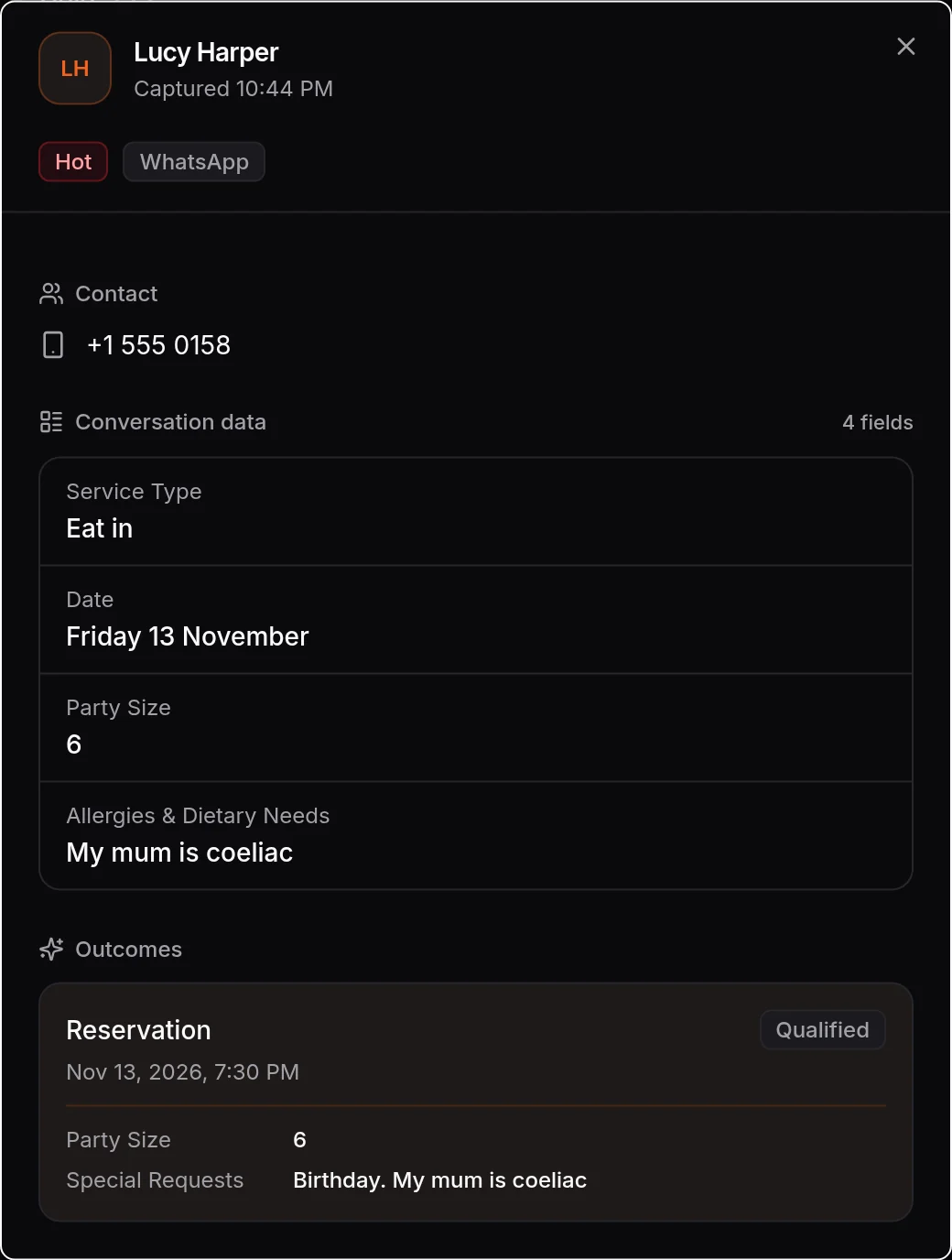
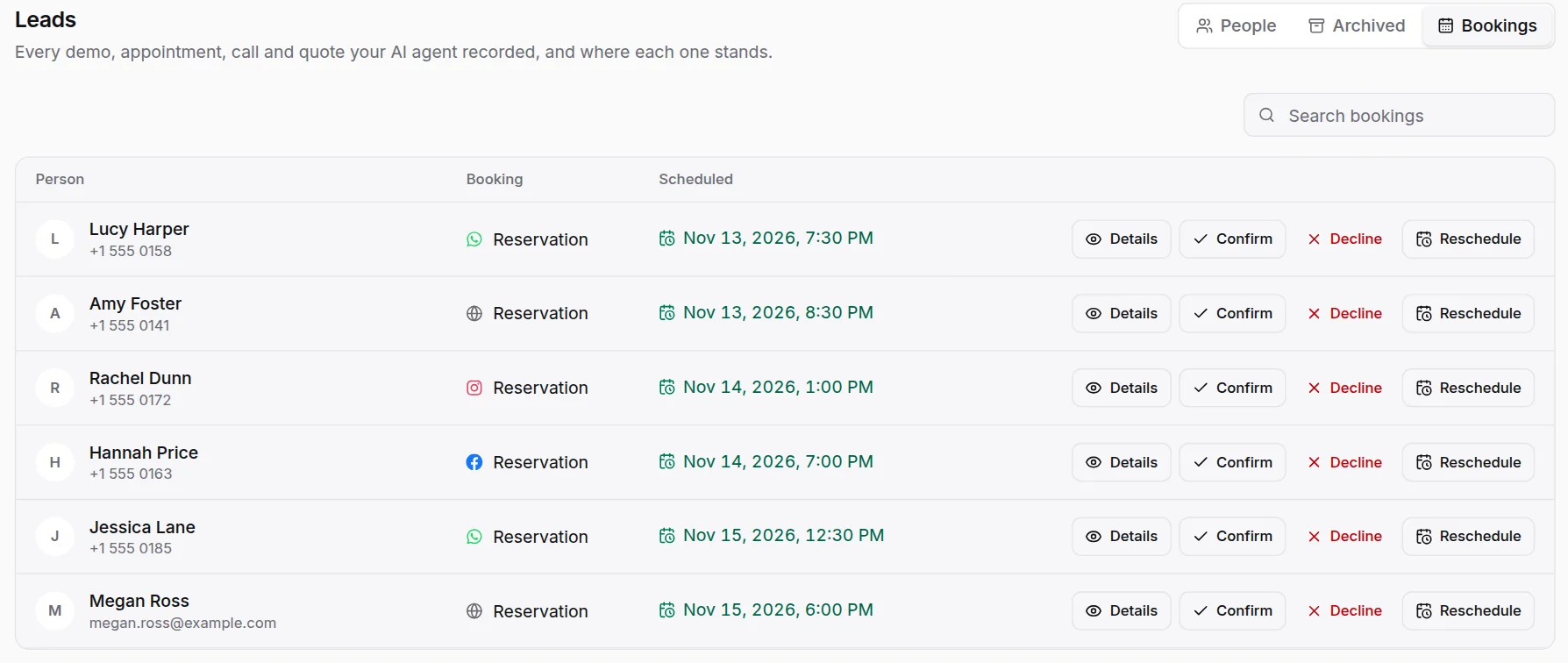
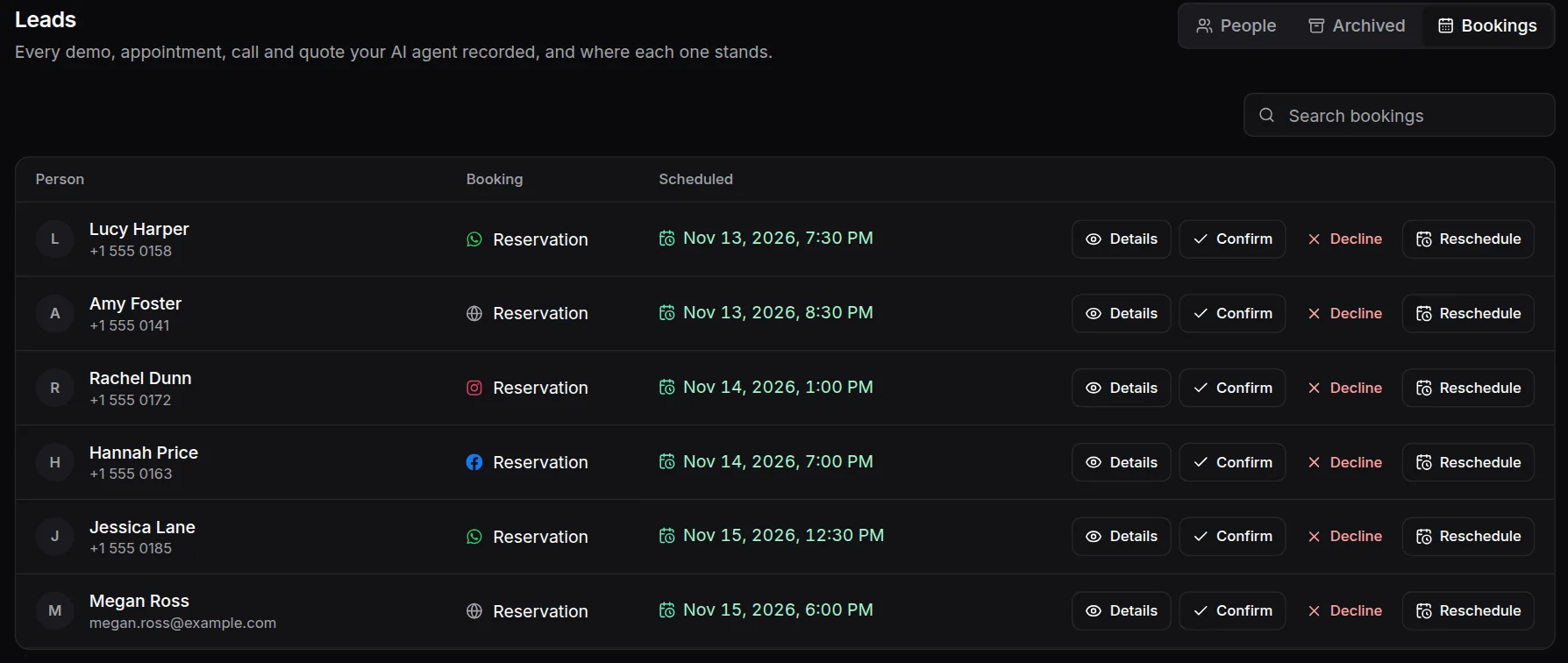
The AI asks what it needs: the day, the time and how many. It picks up the occasion and any allergy, offers two times you serve, and files a table request. It never tells a guest the table is held. Your team confirms from Bookings, and the guest hears back in the same chat.
Takeaway and delivery orders from your menu
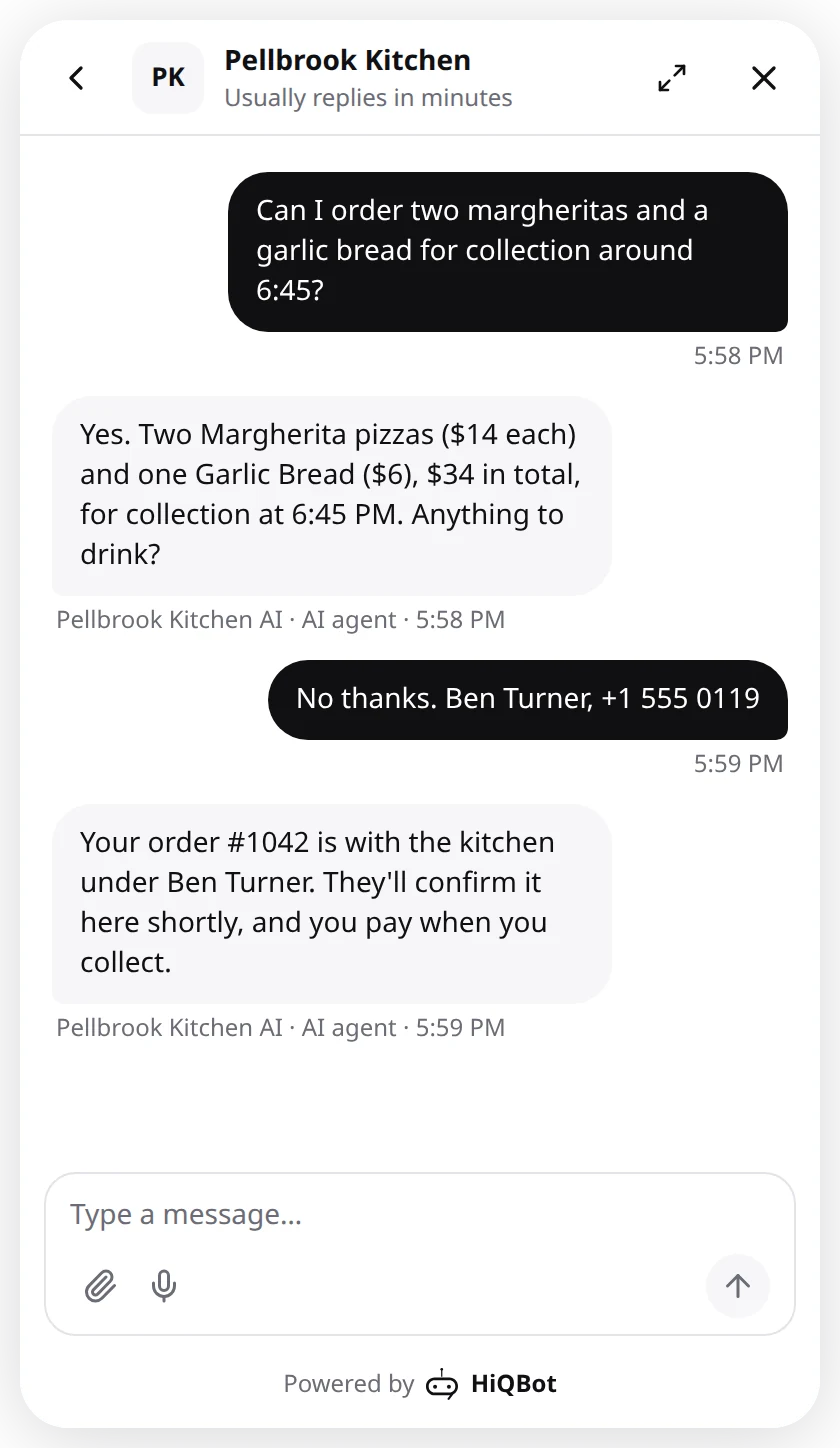
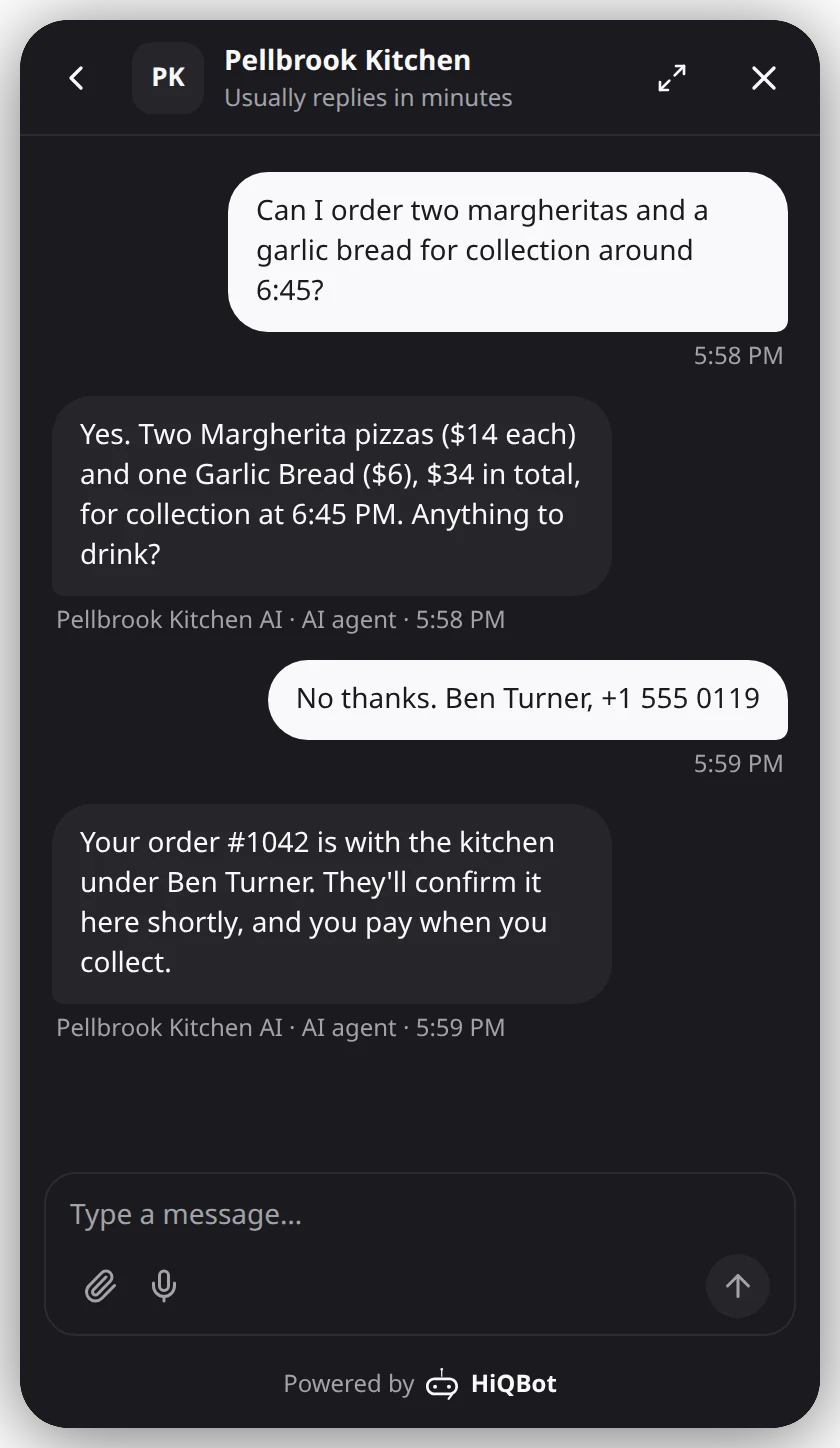
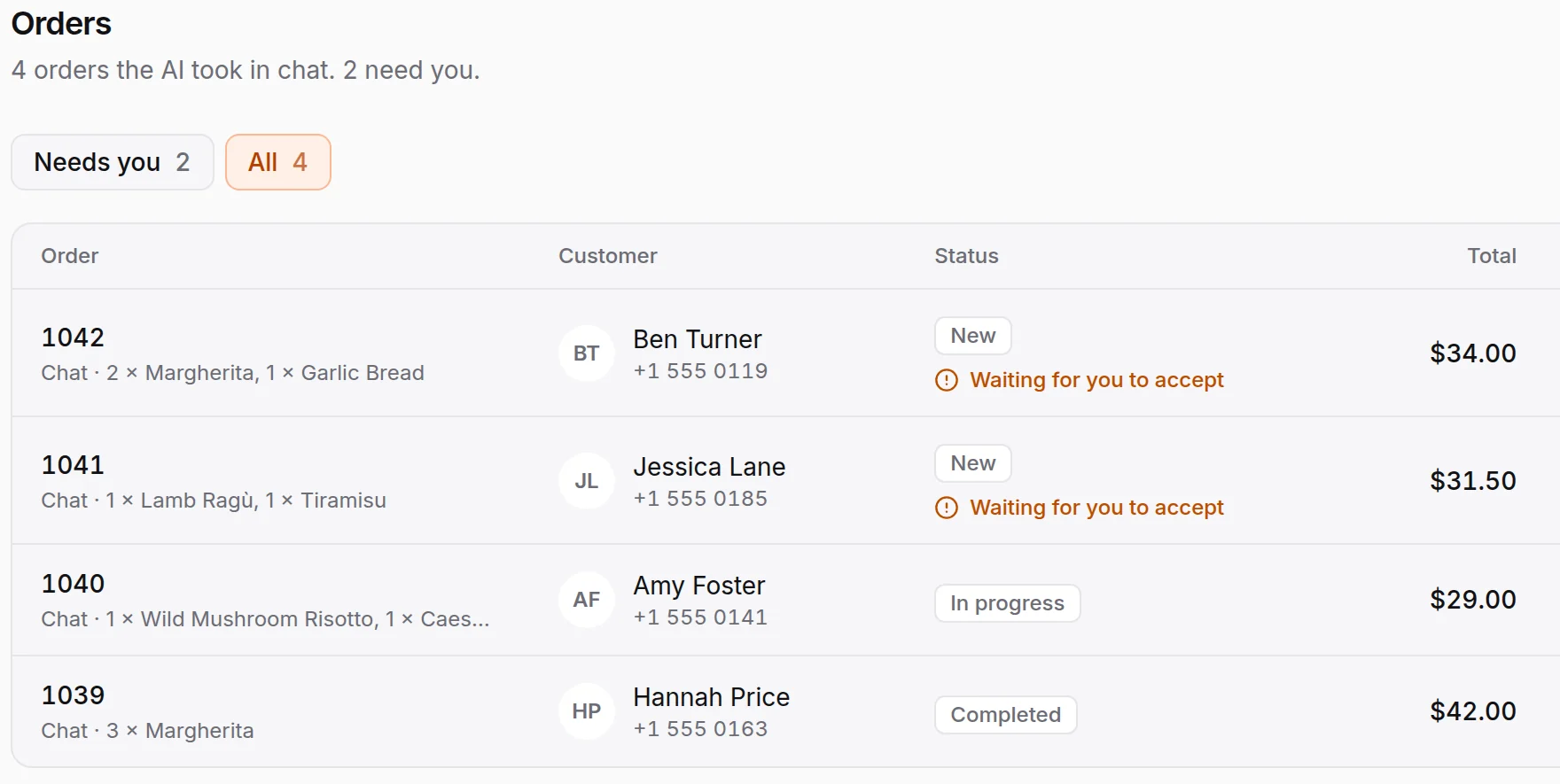
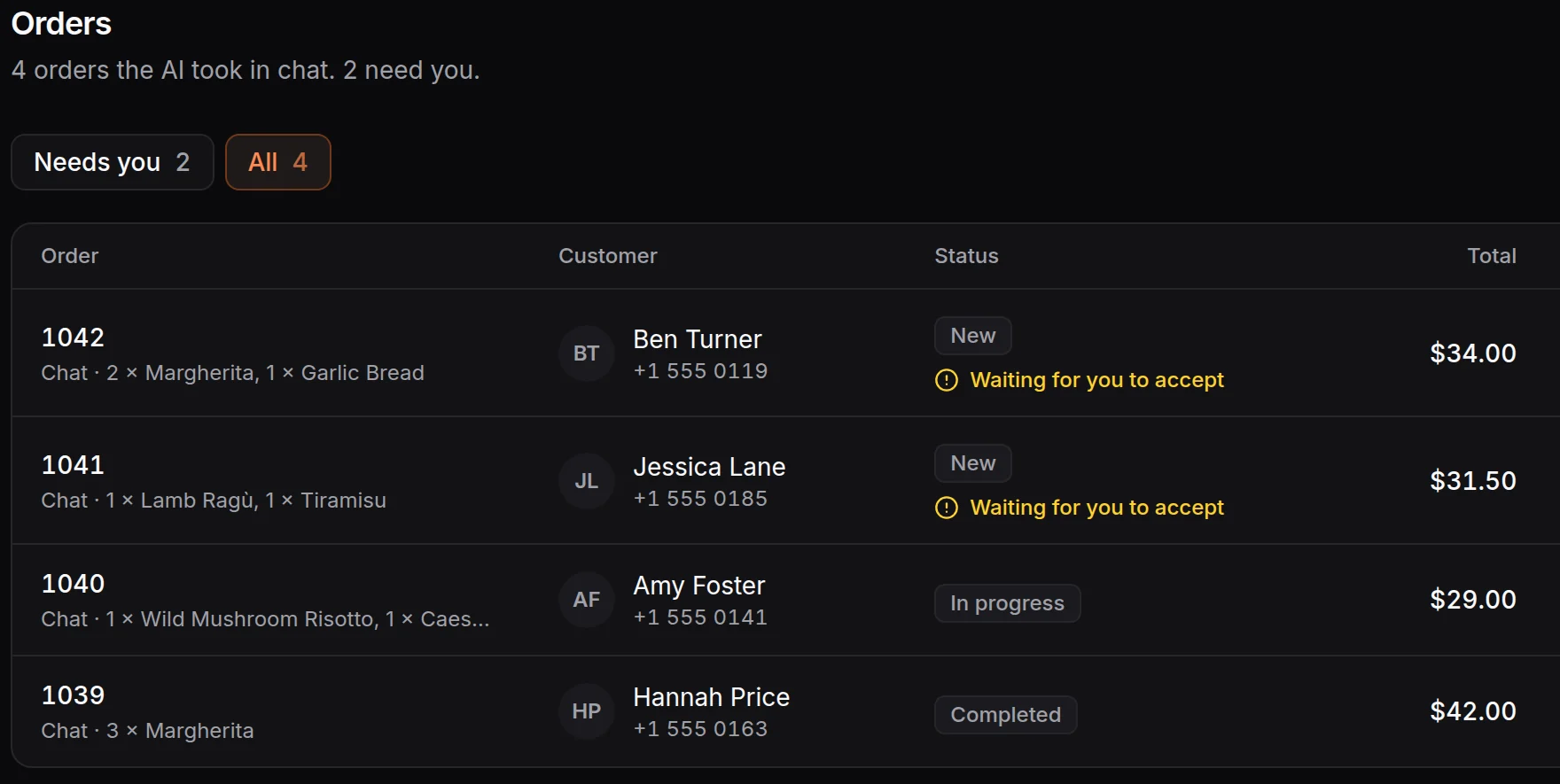
Upload your menu as a list and switch it to take orders. The AI orders only dishes on it, under their printed names, asks the size or option when one is missing, and reads the order back. For collection it asks a name, contact and time; for delivery, the address. The order lands in your Orders view, the kitchen confirms it, and payment happens the way you already take it. The AI never says an order is paid or on its way.
Allergy questions get your allergen sheet, then a person
Allergy answers decide where some families eat. In a June 2026 survey of 1,000 US diners affected by food allergies, commissioned by allergen-software maker Nutritics, 95% had decided against a restaurant at least occasionally because allergen information was unclear. Only 24% were fully confident in the answer when a server said they would check with the kitchen.
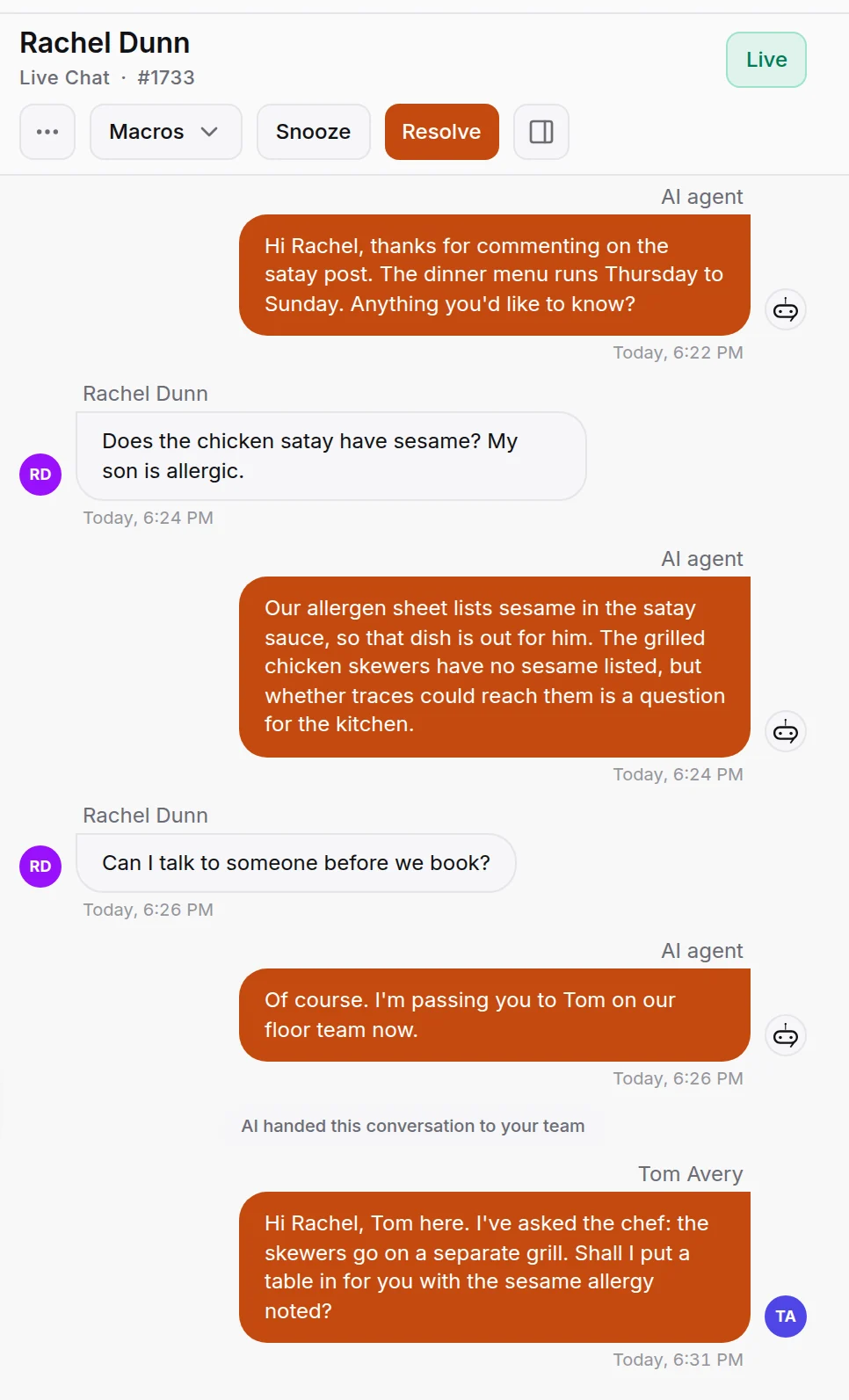
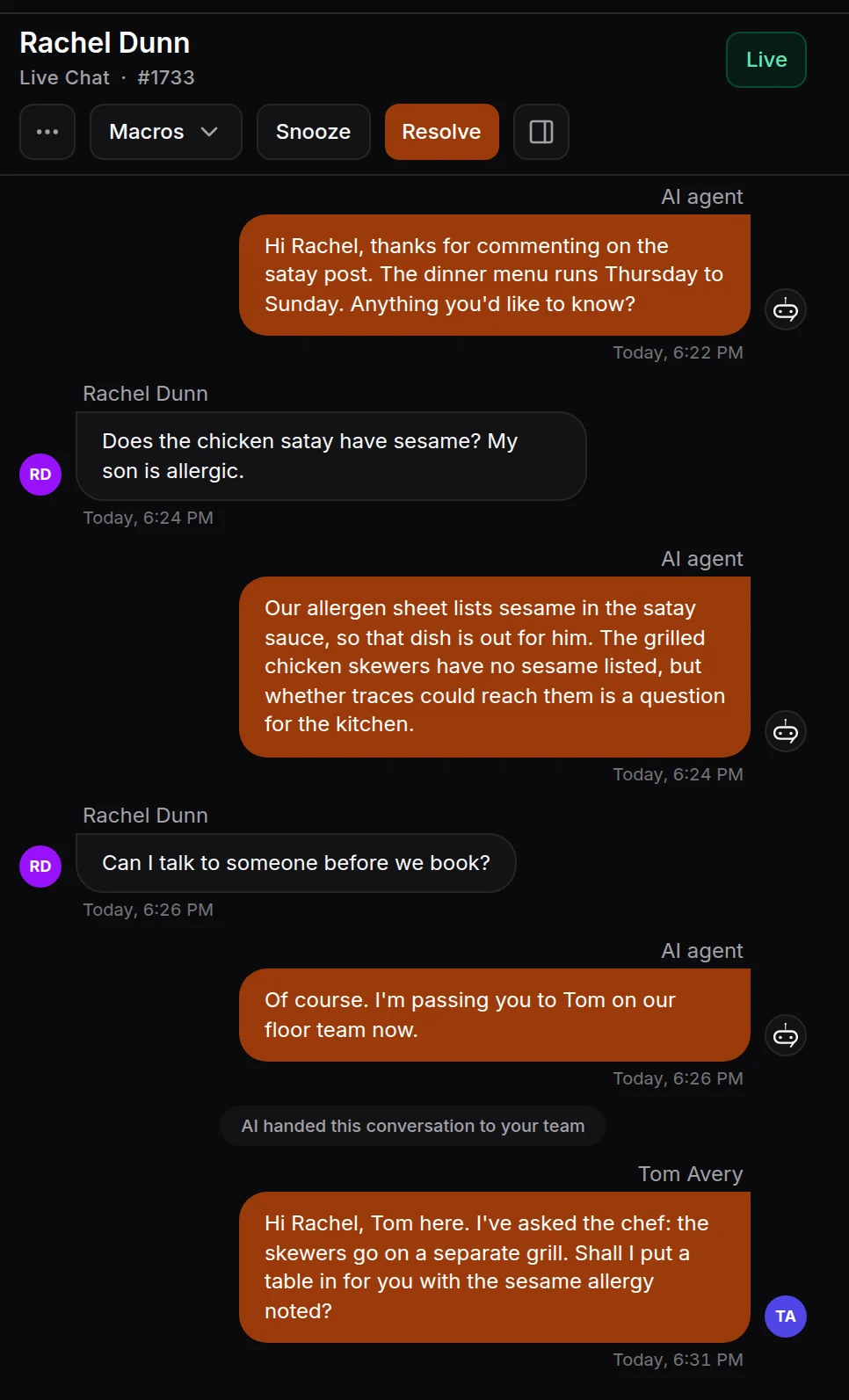
HiQBot’s AI quotes your written allergen information and never calls a dish safe. Cross-contact is a kitchen question, so it says so and hands the chat to a person when the guest wants one. Any allergy goes onto the table request or order in the guest’s own words.
Private dining, groups and catering
Group bookings are growing: OpenTable saw group dining of six or more rise 11% in 2025. A party of thirty or a catering enquiry needs a person to quote. The AI collects the date, numbers and what the guest has in mind, then hands the chat to your team or takes the details for them to follow up.
A person is always one tap away
Guests want to know someone is there. In a Toast survey of 850 US restaurant guests in July 2026, “always having a human option available” was the strongest comfort factor, at 61%, and 62% said a restaurant with no visible staff would be a dealbreaker.
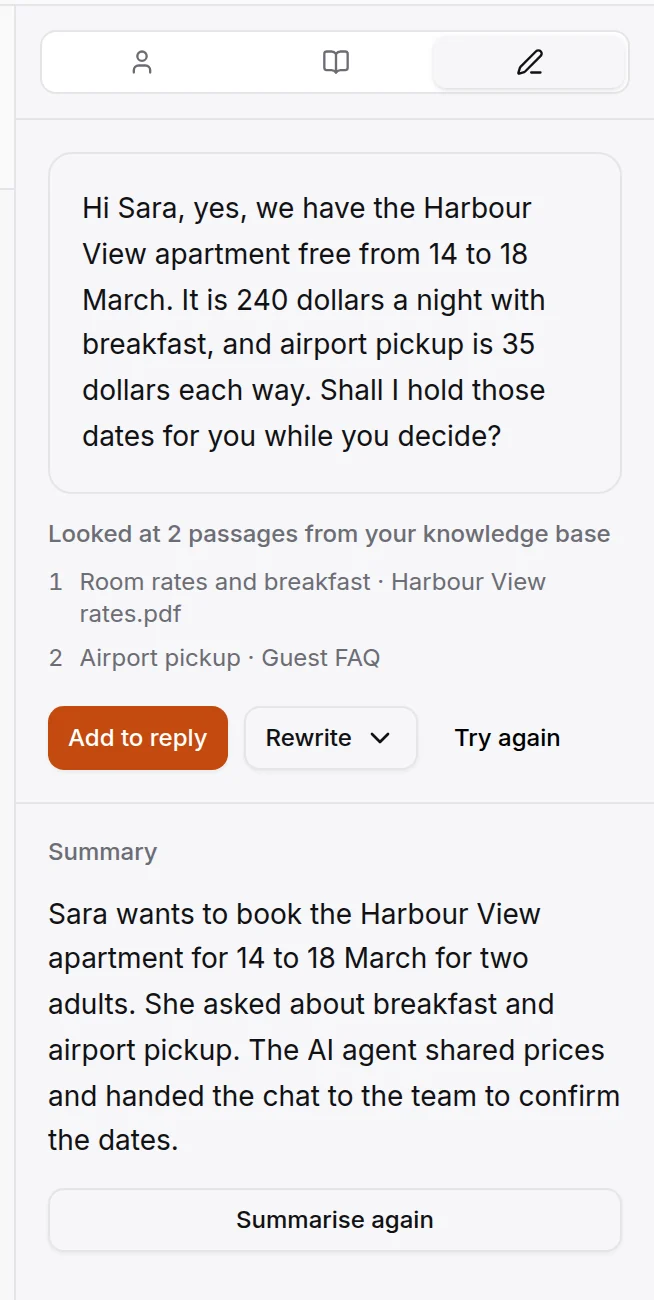
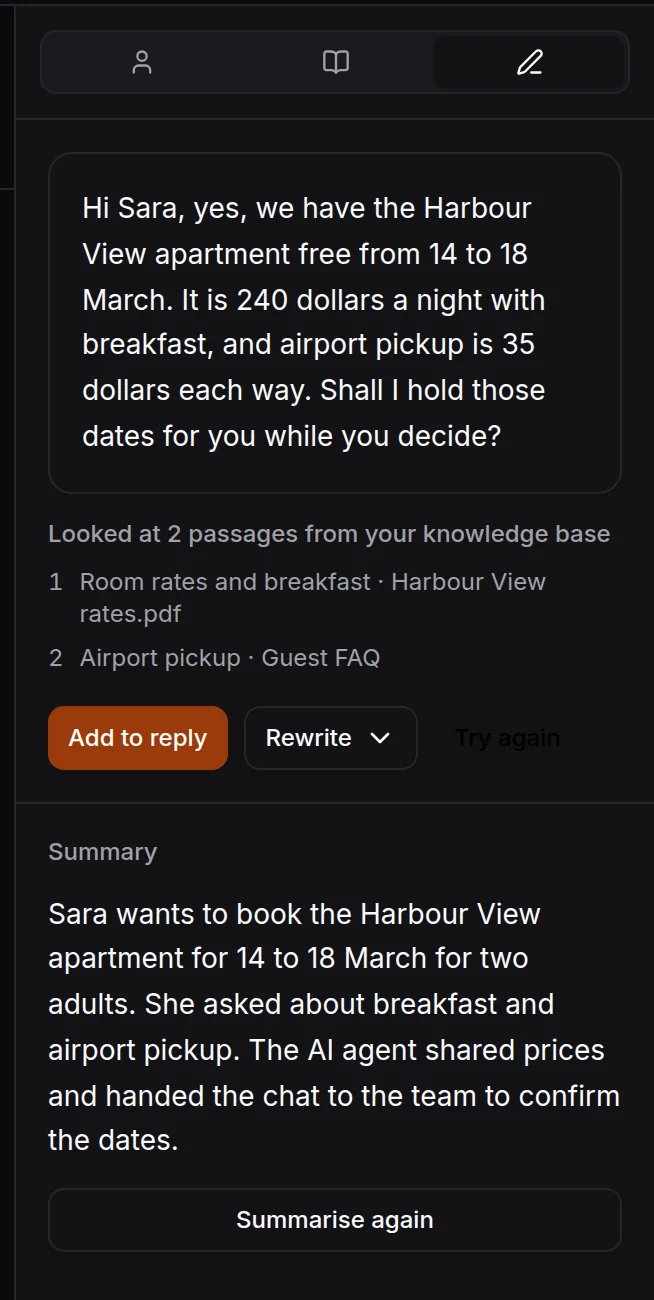
Every chat from every channel lands in one inbox. A teammate can take over any conversation and sees everything already said, and you choose per channel whether the AI answers, your team answers, or both. The team gets AI help too: a drafted reply from your menu files, a friendlier rewrite, a summary of a long thread, and guest messages shown in their own language with replies sent back in the guest’s. Nothing goes out until a teammate sends it.
Phone calls without a voice bot
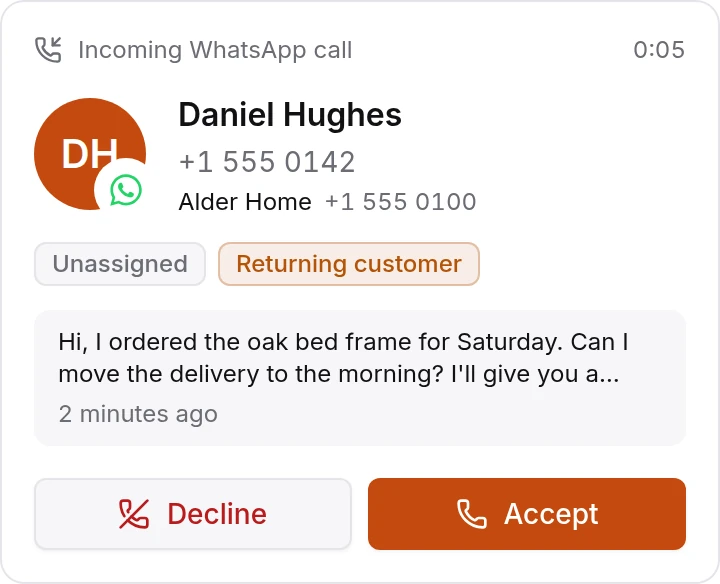
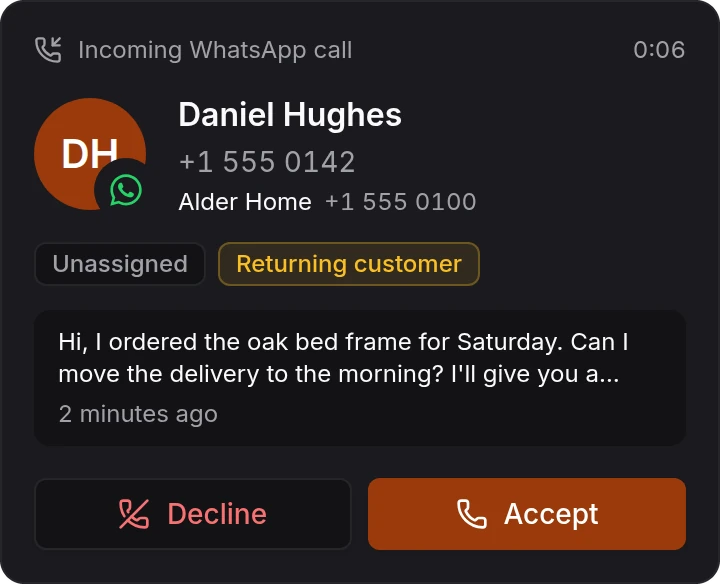
Most tools sold as AI restaurant reservations are voice systems on the phone line. HiQBot’s AI works in writing and never takes a call. Your team can: guests tap call on your WhatsApp Business number and it rings in the HiQBot inbox beside the chat, and your team can call back from there (WhatsApp calling).
Instagram, broadcasts and the languages your guests speak
A post can ask people to comment a word such as MENU. Each comment gets a short public reply and a private message with the menu, and the AI answers what comes next (Instagram comment bot). Guided flows add buttons on WhatsApp, Instagram, Messenger, Telegram and LINE, such as a private-events menu, with any answer going to the AI or your team.
On WhatsApp, a broadcast with an approved template can tell regulars about a new menu or a quiet Tuesday offer; our guide to WhatsApp marketing software covers it. In a tourist area, guests write in their own language and the AI answers in the same one, from the same menu.
What AI can’t do for your restaurant (in HiQBot)
HiQBot does not:
- Connect to your POS, delivery apps or reservation system.
- Take payments, deposits or card details.
- Hold a table or confirm an order. Your team does.
- Promise that a dish is safe for an allergy.
- Order anything that is not on your menu.
- Forecast sales, count stock or schedule staff.
- Answer the phone with AI. WhatsApp calls ring your team instead.
POS vendors sell AI for the back office. Guest messages are a separate job, and one you can start without changing your POS.
Will AI replace front-of-house staff?
Guests don’t want it to. In the same Toast survey, guests most often named serving food and drinks (63%), greeting and welcoming (60%) and handling complaints (56%) as jobs that must stay human. AI takes the repeat questions at 11 PM so your team has time for the people in the room.
How to start in four steps
- Add your menu, allergen sheet and hours, or link a Google Sheet of your menu.
- Set your sittings and booking hours, so the AI proposes only times you serve.
- Connect your channels and Google Calendar.
- Choose who confirms table requests and orders, and when a chat goes straight to a person.
If your restaurant sits inside a hotel, the same inbox handles room service and reservation requests; see AI for hotels.
Common questions
What can AI do for a restaurant?
It can answer menu, hours and allergy questions in chat, take table requests and takeaway orders for your team to confirm, and pass private-dining enquiries to you. POS-based AI adds sales reports, forecasting and stock.
Is AI worth it for a small restaurant?
Start where it needs nothing new. Guest messaging runs from your menu and house rules, so a small restaurant can try it without changing its POS or phone system.
Does restaurant AI need my POS connected?
Back-office AI does. Guest messaging doesn’t: HiQBot answers from your own files and sends requests and orders to your team in its own Bookings and Orders views.
Can AI take restaurant reservations?
HiQBot’s AI takes table requests with the day, time, party size and any allergy, and your team confirms them. It never tells a guest the table is held.
Can AI answer allergy questions safely?
Only from your written allergen information, and never by calling a dish safe. Cross-contact questions go to your kitchen, and the guest can ask for a person at any point.
Will guests mind talking to AI?
Most don’t, if a person is easy to reach. Toast’s 2026 guest survey found a human option was the top comfort factor, at 61%.
Can it take takeaway orders?
Yes, from your menu list, for collection or delivery. The kitchen confirms each order and you take payment your usual way.
Does it answer the phone?
The AI works in writing. Calls to your WhatsApp Business number ring your team in the HiQBot inbox, and your team can call back from there.
Sources were read on 12 November 2026, and the screens are the real HiQBot product with sample data. How we write and check posts: editorial standards.