Dental marketing: ideas, advertising and SEO that bring in new patients
Muhammad Hassan, FounderLinkedIn
Published Updated
Dental marketing is everything a dental practice does to bring in new patients and keep the ones it has: a Google profile and reviews, a website with fees, social media, ads, referrals and recall messages. It works when each one ends in a booked appointment.
We make HiQBot, a customer service platform with AI agents, live chat, guided flows and WhatsApp calling. This guide is for dentists and practice managers who run their own marketing, in general and family practices, orthodontics and cosmetic dentistry. It covers where patients look, ideas you can start this week, dental advertising and its rules, implants and aligners, dental SEO, and what to do when the enquiry arrives.
Dental digital marketing: where new patients find you
New patients usually look a practice up before they get in touch, even after a friend recommends it. Dental digital marketing makes sure that what they find answers their questions and gives them an easy way to ask the rest.
| Where they look and what they do | What they need from you |
|---|---|
| Google search and MapsSearch “dentist near me”, read reviews, check hours | A complete Google Business Profile and fresh reviews |
| Your websiteLook for fees, insurers, the new patient visit and a way to ask | Prices on the page and a chat that answers at night |
| Instagram and FacebookWatch whitening, aligner and smile makeover posts, then DM | Fast replies to DMs and comments |
| WhatsAppMessage the number on your profile or website | Answers in their language, and a time offered |
| ReferralsAsk a friend or family member, then look you up | The same fast answer when they get in touch |
Reputation matters more than online reviews. In a 2024 survey of 231 adults in India, over 90% agreed that reputation, word of mouth and the dentist’s expertise mattered when choosing a dentist, and 42% said the same of online reviews (Annals of African Medicine, 2024). The sample was mostly young and female, so treat it as a pointer: what friends say about you counts, and so does what a patient finds when they check.
Dental marketing ideas
These dental office marketing ideas suit a practice without an agency. Each one ends in a message or a booked visit.
- Put your new patient exam on every page. Say what it includes, how long it takes and what it costs, so a patient can ask for a time instead of asking for a price.
- Publish whitening, aligner and implant consultation fees. A starting price with what it depends on is enough; the dentist confirms the rest at the consultation.
- List the insurers you work with. “Do you take my insurance?” is one of the first questions new patients ask. Say the front desk confirms cover.
- Write a page for nervous patients. Explain what the first visit is like and that they can ask to take it slowly.
- Answer messages in the evening. Patients write after work and on Sundays, when the front desk is closed. Answer that night and offer a time.
- Ask for reviews after good visits. Google says the number of reviews and their score count toward local ranking (Google).
- Post one treatment a week on Instagram. A whitening day, an aligner check, a new hygienist. End each post with one word to comment or a reason to send a DM.
- Make family bookings easy. Let a parent book check-ups for several children in one message.
- Keep a same-day emergency slot and say so on your profile and website, so a patient in pain can book with you today.
- Send recall messages. Patients due a check-up already know you. A WhatsApp message to patients who agreed to hear from you, asking them to reply for a time, brings them back for less than an ad (marketing messages can’t go to US numbers).
Dental advertising: Google Ads and Facebook ads
Dental advertising is paid space that puts the practice in front of local people at the moment they need a dentist, or before they know they want aligners. The usual places to start are Google and Meta (Facebook and Instagram).
Dental Google Ads
Google Ads, often called PPC for dentists, shows the practice when someone searches “emergency dentist”, “dental implants near me” or “Invisalign cost”. The searcher already wants a dentist, so the ad and the page it opens should answer the search: the price, the next free time and a way to ask. Send each ad to the page for that treatment, not the homepage.
Dental Facebook and Instagram ads
Facebook and Instagram ads reach people who are not searching yet, so they suit whitening, aligners, implants and new patient offers. A click-to-message ad sends people from the ad into a WhatsApp, Messenger or Instagram Direct conversation with the practice (Meta). That is where a patient asks the question that has kept them from booking: the cost, whether it hurts, or how long aligners take.
In HiQBot, the chat an ad opens lands in the same inbox as every other message, and the AI agent answers it in seconds, day or night. HiQBot doesn’t reply to comments on Facebook posts or ads, so make the button Send message rather than asking people to comment.
Sample dental ads, and what the AI agent does in the chat each one opens:
| Ad | What happens in the chat |
|---|---|
| New patient exam“New to Harbour Street? A new patient exam is 45 minutes with x-rays and a clean. Message us for this week’s times.” | Asks if they are new, offers two free times and asks the team to confirm one |
| Whitening“In-chair whitening from $450. Ask us anything about it on WhatsApp.” | Quotes the price from your fee list and offers a consultation, with no promise of how white |
| Clear aligners“Thinking about straighter teeth? Tap Send message for prices and how aligners work.” | Answers price and how-it-works questions from your fee list, then asks for a consultation time |
| Implant consultation“Missing a tooth is common. Ask us how implants work and what a consultation costs.” | Explains the consultation from your documents and books it; the dentist plans the treatment |
| Family check-ups“Book the whole family’s check-ups in one message, evenings and Saturdays.” | Records who each appointment is for and asks for times for each child |
| Same-day emergency slot“Same-day emergency dental appointments at Harbour Street. Message us.” | Sends a knocked-out adult tooth or a swollen face to the emergency services or your urgent line; any other toothache gets your earliest same-day slot |
Dental advertising rules
Every dental ad and post has to follow your country’s rules for dentists and the ad platform’s rules for health. Checking them is the practice’s job, and this is general guidance, not legal advice. The main ones:
- United States: your state dental board’s rules bind you, and the ADA Code of Ethics, which applies to ADA members, says any dentist may advertise, but not “in a manner that is false or misleading in any material respect”, social media included. It warns against claims likely to create “an unjustified expectation about results”, limits specialist announcements, and counts paying a marketing company a percentage of patient fees, social media coupons included, as fee splitting (ADA Code of Ethics, 2026). Most states also regulate specialty ads, and many regulate testimonials (ADA).
- United Kingdom: the GDC says advertising must be accurate and not misleading, a dentist named on a website must show their qualification and GDC registration number, and a dentist who is not on a specialist list must not use a title that implies specialist status (GDC). Botox is a prescription-only medicine and can’t be advertised to the public (ASA).
- India: the Revised Dentists (Code of Ethics) Regulations, 2014 let a dentist advertise “provided that they maintain decorum”, without false promises or boasting of cases, and allow a website with factual information and fees (regulations 8.1 to 8.2.9). In October 2026 the National Dental Commission warned dentists against patient testimonials and before-and-after photos on social media (Medical Dialogues).
- Meta: ads “must not contain content that asserts or implies personal attributes”, physical health included. Meta’s own example rejects “Do you have diabetes?” and allows “New diabetes treatment available” (Meta). For a practice, that means “Clear aligners at Harbour Street Dental” rather than “Embarrassed by your teeth?”.
- Google Ads: dental services aren’t on the healthcare policy’s restricted list, but ads must still follow local laws and industry standards (Google).
Dental implant and clear aligner marketing
Implants and aligners are high-value treatments, and patients ask a lot of questions before they book. Dental implant marketing works when the patient can find out three things without phoning: roughly what it costs, what the consultation involves, and how to book it.
- Give a starting price and say the dentist confirms the plan and the price at the consultation.
- Explain the consultation: how long, what is checked, whether there is a fee.
- Say how payment works, such as payment plans or finance, if you offer them.
- Never promise a result or say a treatment is right for someone before the dentist has seen them.
Orthodontist marketing and clear aligners
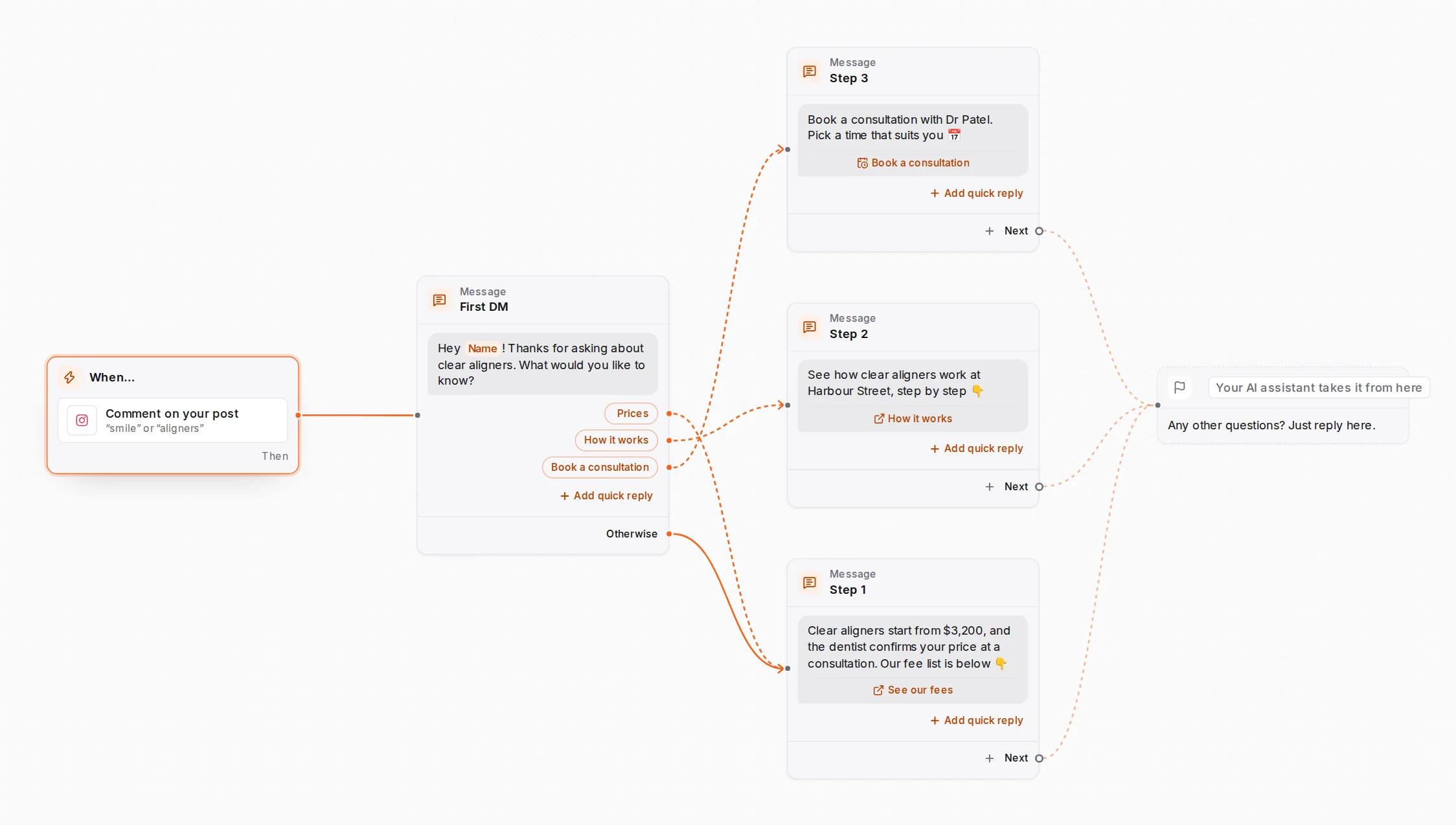
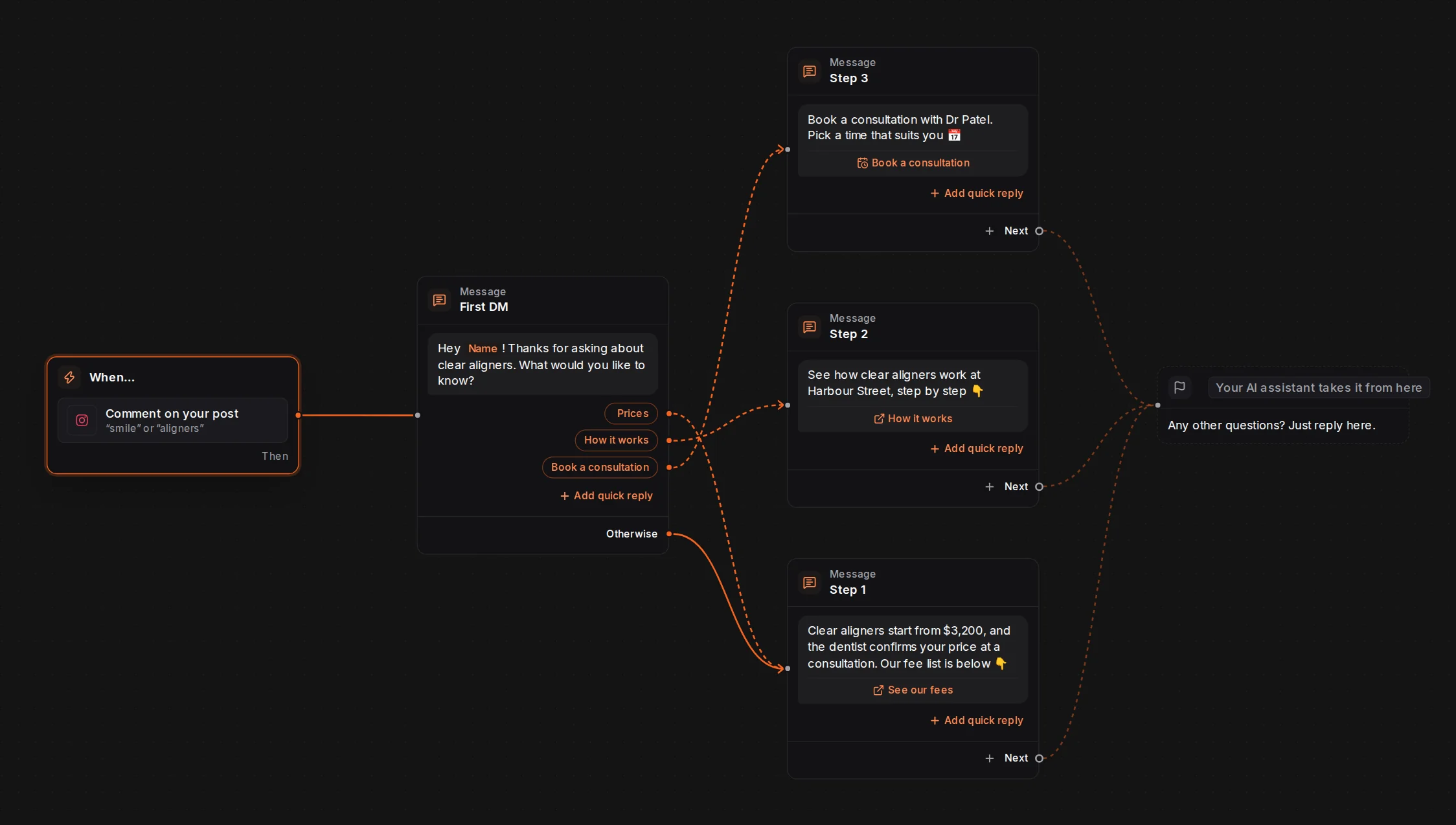
Orthodontic marketing and Invisalign marketing often run on Instagram, where short videos and treatment stories bring comments and DMs. Check the rules above before you post before-and-after photos. In HiQBot, a comment-to-DM rule on one post answers everyone who comments a word such as SMILE: a public reply, then a DM with buttons for prices, how it works and booking a consultation. The AI agent answers anything else, from your price list and FAQs.
Dental social media
Dental social media marketing is mostly Instagram and Facebook, with a team that answers. Post the people, the rooms and the treatments, answer comments the same day, and answer DMs as quickly as you would answer the phone. More on posts and DMs is on our Instagram DM automation page.
Dental SEO
Dental SEO is the work that gets a practice into Google’s local results and organic listings for searches such as “dentist near me” or “dental implants in [town]”. Local SEO for dentists starts with the Google Business Profile (categories, hours, photos and reviews), then a page for each treatment that names the town, and consistent name, address and phone everywhere the practice is listed. Google treats dentists as individual practitioners who can have their own profile; a dentist who is the only one at a branded practice should share the practice’s profile (Google).
Pick Dentist as the primary category and add secondary ones you really offer, such as Cosmetic dentist or Orthodontist. List the practice the same way on the directories patients use in your country, such as Healthgrades, Zocdoc or Yelp in the US, the NHS service search in the UK, or Practo in India. Mark up each location page with the Dentist type from schema.org, and answer the questions patients ask on the treatment pages themselves.
SEO brings people to your pages. HiQBot does nothing for rankings; it answers the chat on those pages at any hour and asks for a time.
Turning enquiries into new patients
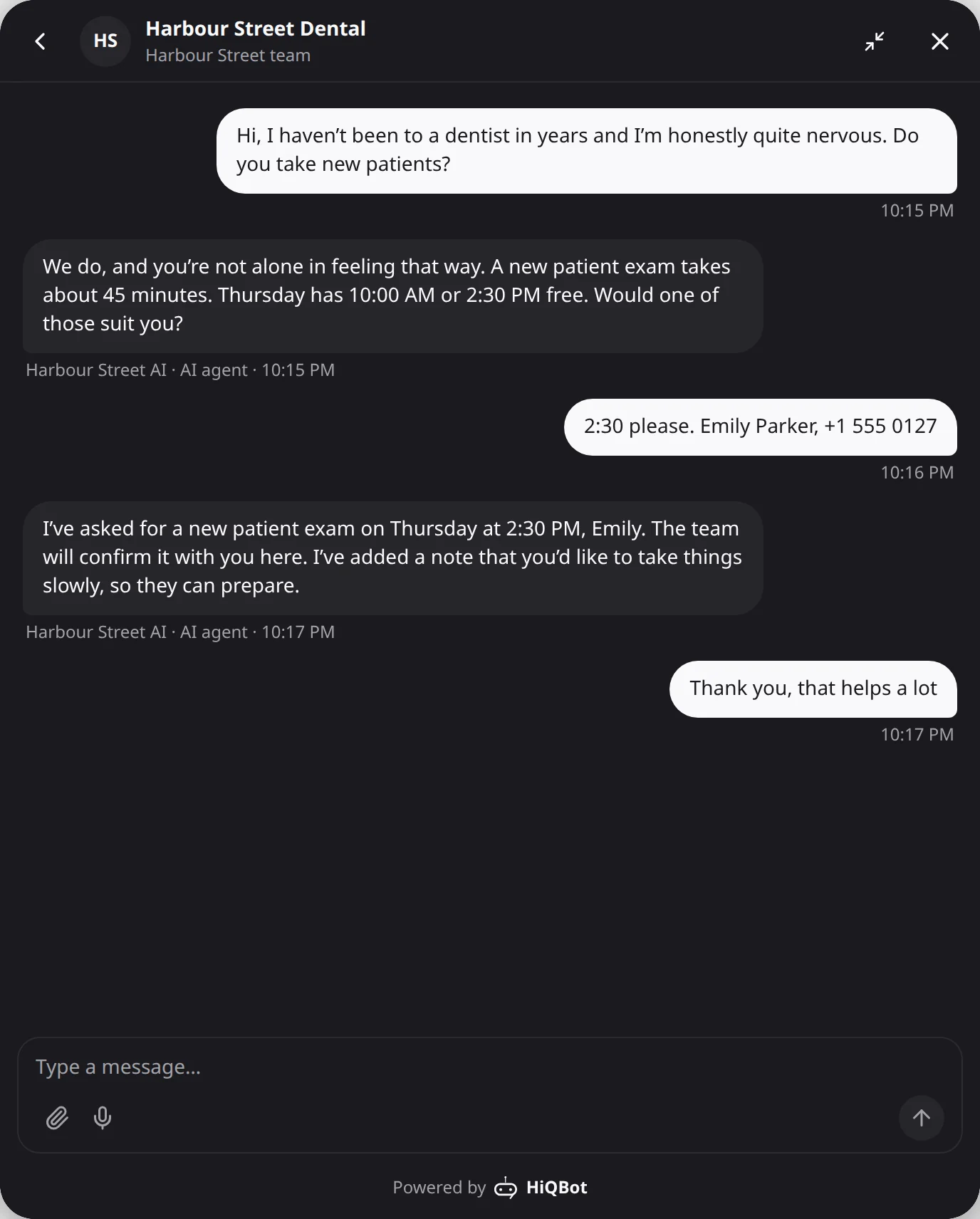
Every channel above ends in the same place: a patient asking a question, by phone or in a message. One vendor’s analysis of 4,280 calls to 26 dental practices in February 2026 found 38% went unanswered (Peerlogic, 2026; the method isn’t published, so read it as a rough guide). Your practice line stays with your front desk, so give patients a way to message too. In HiQBot, the AI agent answers messages on your website, WhatsApp, Instagram, Messenger, Telegram and LINE, from your own fees, insurers and FAQs. It asks only what a front desk asks: the kind of appointment, new or existing patient, when, which dentist, and self-pay or the insurer’s name. Then it asks for a time and says the team will confirm it.
It never gives dental advice, never says whether a problem can wait, and never asks about symptoms, history or medicines; it leaves them out of what it records. A knocked-out adult tooth or swelling of the face or throat gets “call the emergency services now” in the first sentence, or your urgent line if you add one.
Here a nervous new patient writes at 10:15 PM:
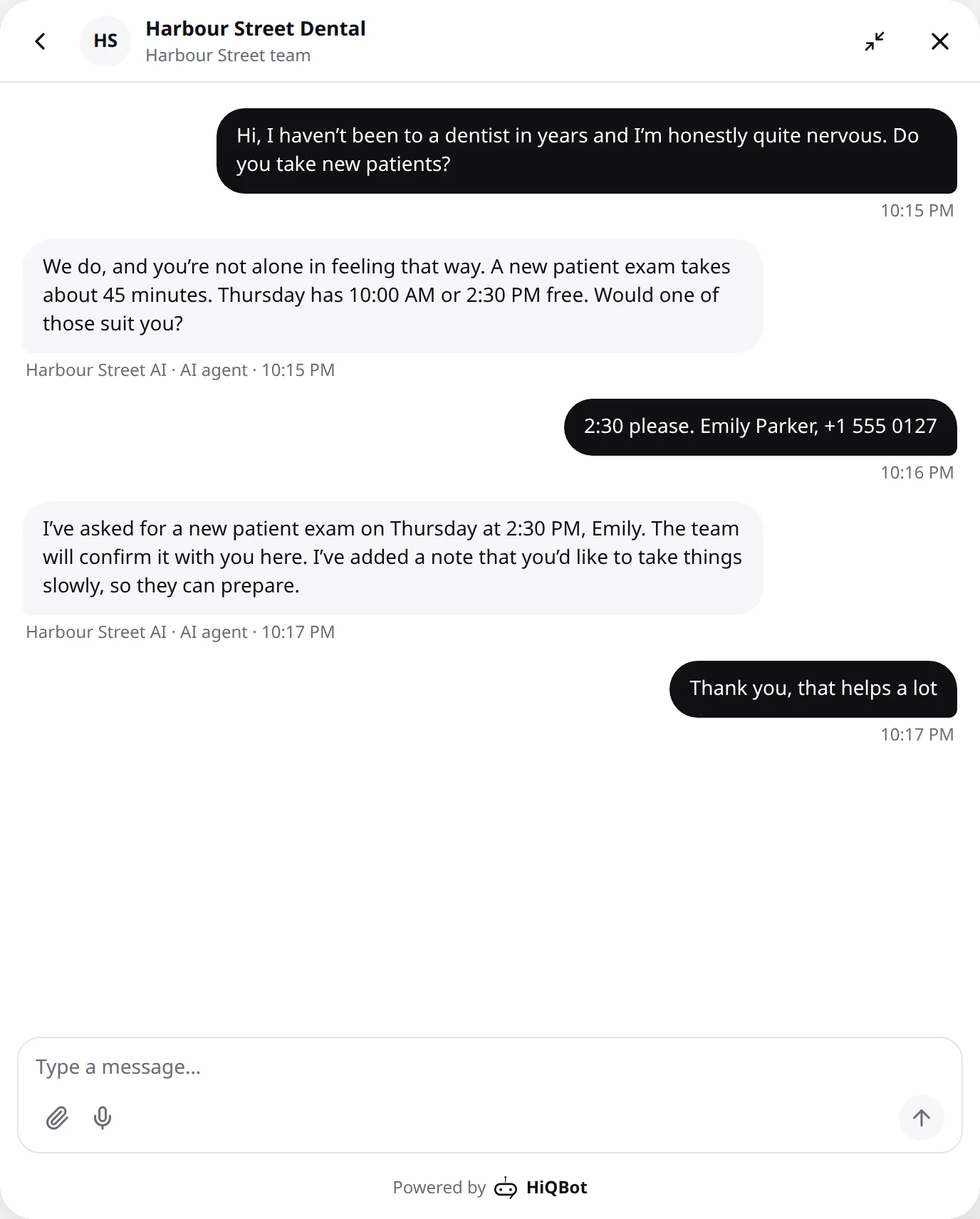
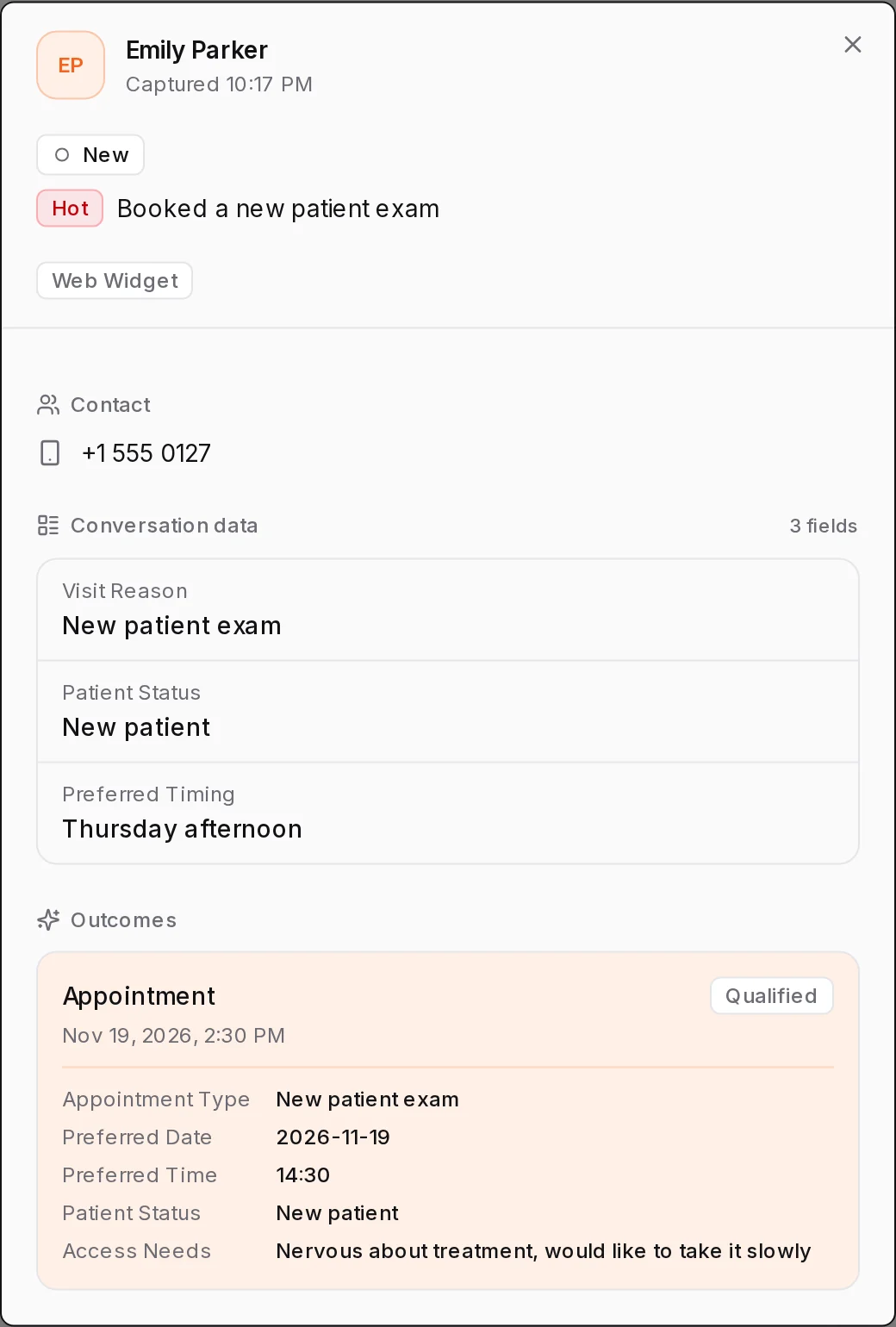
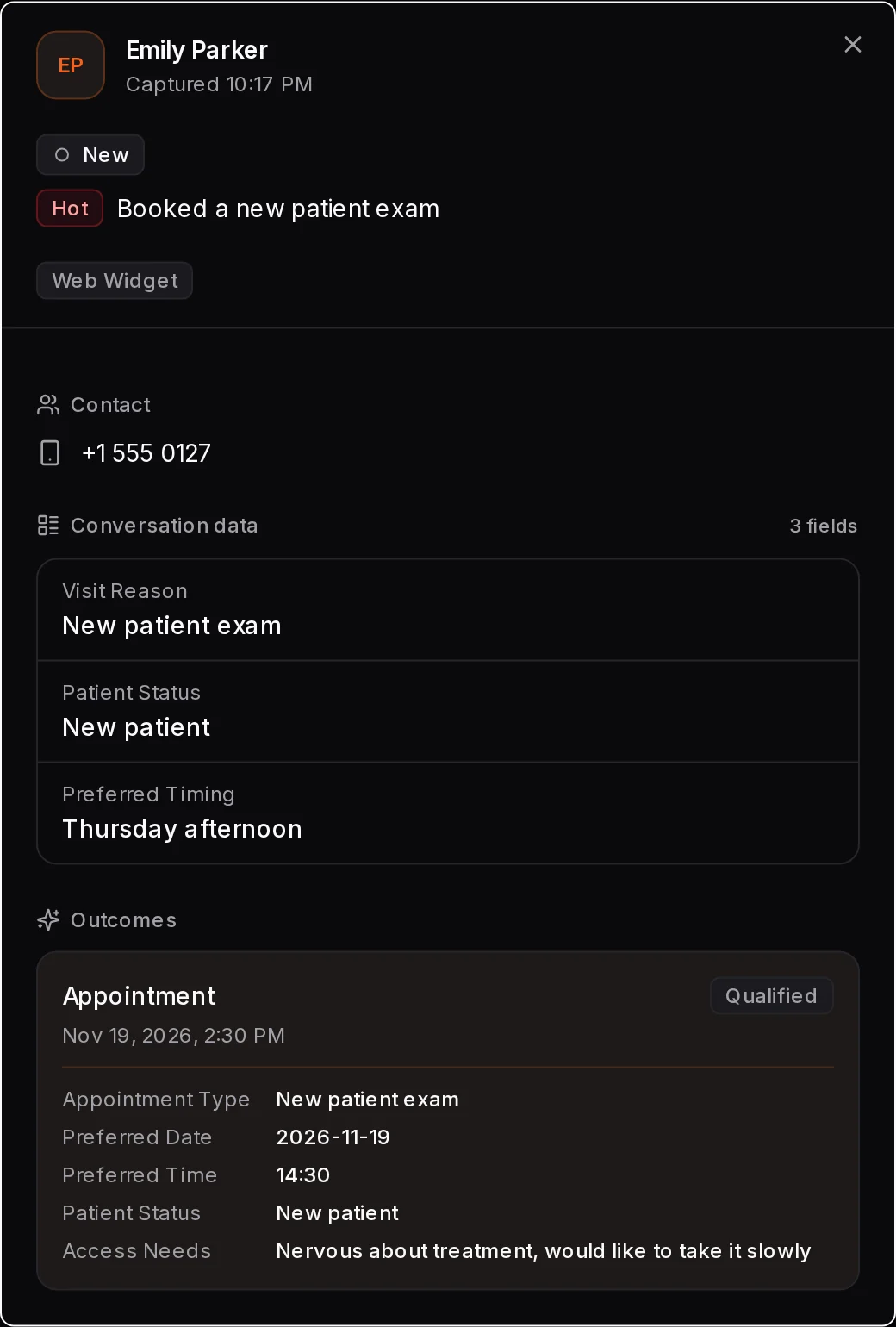
The details she gave are saved on a lead card the team sees in the morning:
Patients who would rather talk can call your WhatsApp Business number, and it rings your team in the HiQBot inbox; the AI agent itself works in writing. When a patient asks for a person, your front desk takes over the same chat.
Recall: marketing to patients you already have
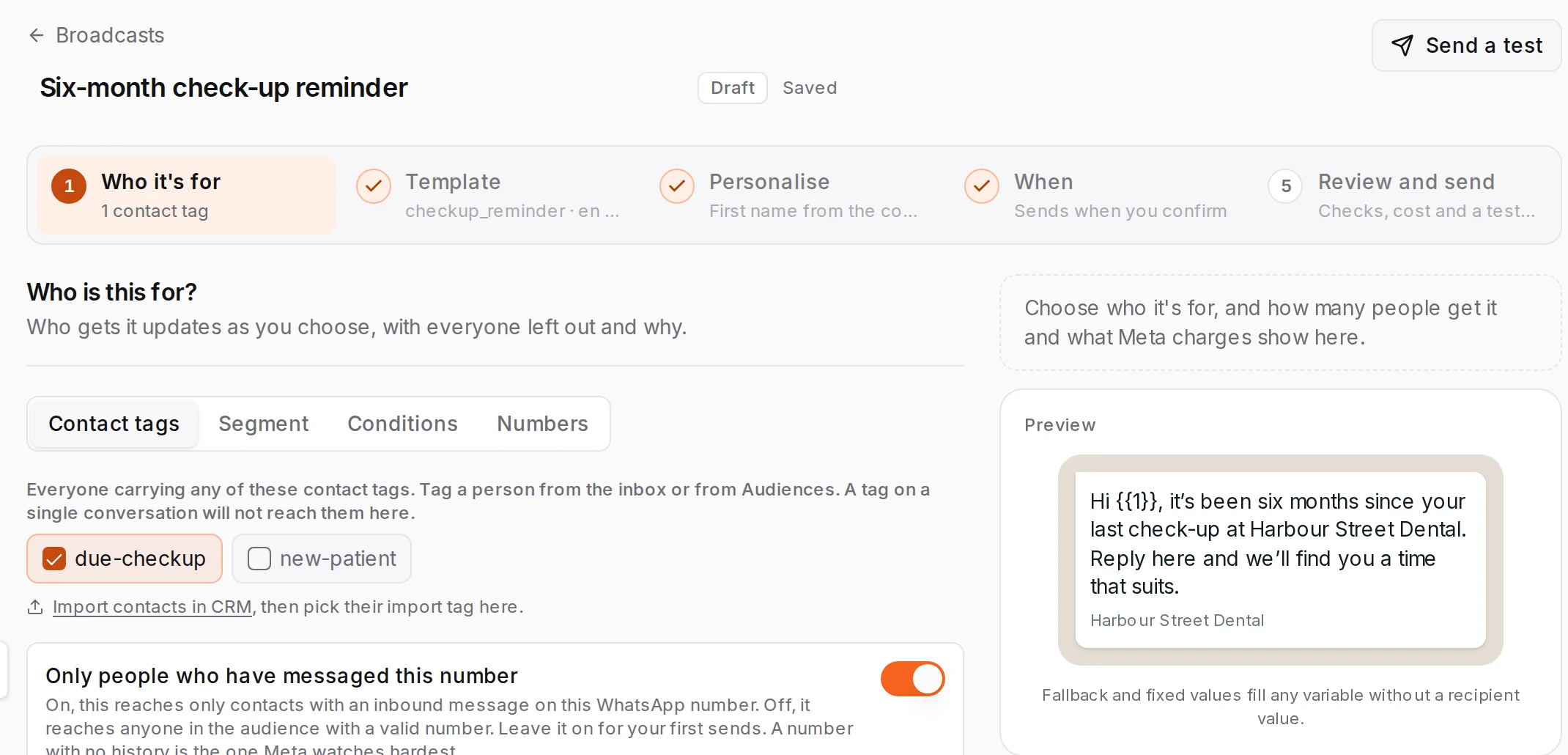
A patient due a check-up already knows you, and reaching them costs a message, not an ad. In HiQBot, import the patients due from your practice software as a CSV, tag them (only patients who agreed to hear from you), and send an approved WhatsApp template (WhatsApp marketing messages can’t go to US numbers); replies come back to the AI agent, which asks for a time, and you see who received, read and replied. Each appointment can also get a reminder from 2 hours to 7 days before it. Message wording is in our appointment reminder templates.
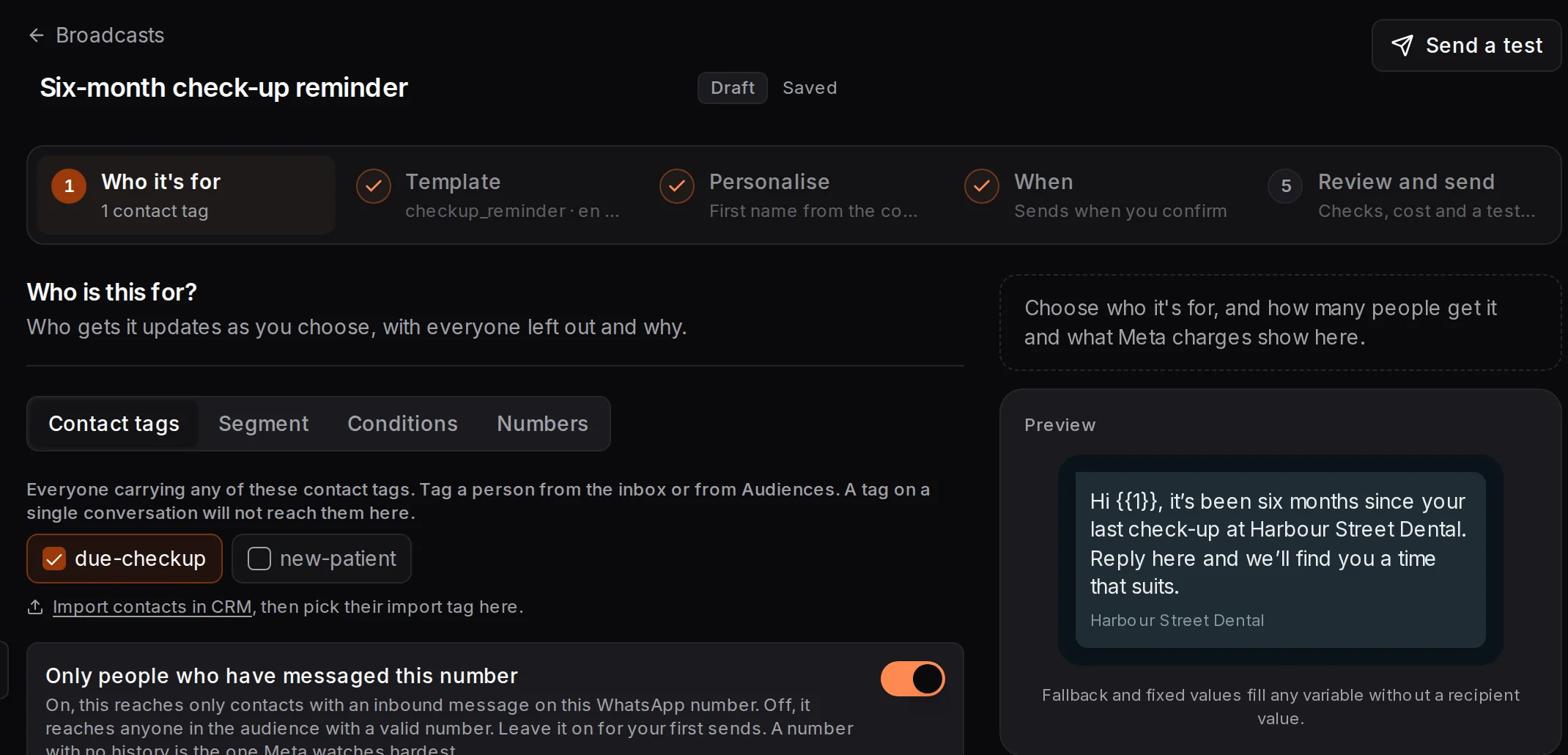
A dental marketing strategy on one page
The ADA calls deciding “how much new business you want” the most important goal, then suggests a 12-month plan that blends internal and online marketing, tracking patient enquiries and reviewing the numbers monthly. It also warns that “even the best marketing campaign can fail if your practice’s internal systems can’t support it” (ADA). A dental marketing plan fits on one page. Fill in each row before you spend on ads:
| Who you want | For example: new adult patients within 5 miles, families, and aligner patients aged 25 to 45 |
|---|---|
| The offer | The new patient exam, whitening, an aligner or implant consultation, with the price you publish |
| Where they find you | Google profile, website, Instagram, one ad campaign, and referrals |
| What happens next | Every chat answered at any hour, a time asked for, and the team confirming it |
| What you count | Enquiries, consultations requested, consultations attended, and treatment started |
Cost per new patient is the figure to compare between channels. Clicks and spend stay in Google Ads and Meta. In HiQBot each lead shows the channel it came from but not the ad, so give each ad its own offer or opening line. Every appointment and callback lands in one Bookings list for the team to confirm:
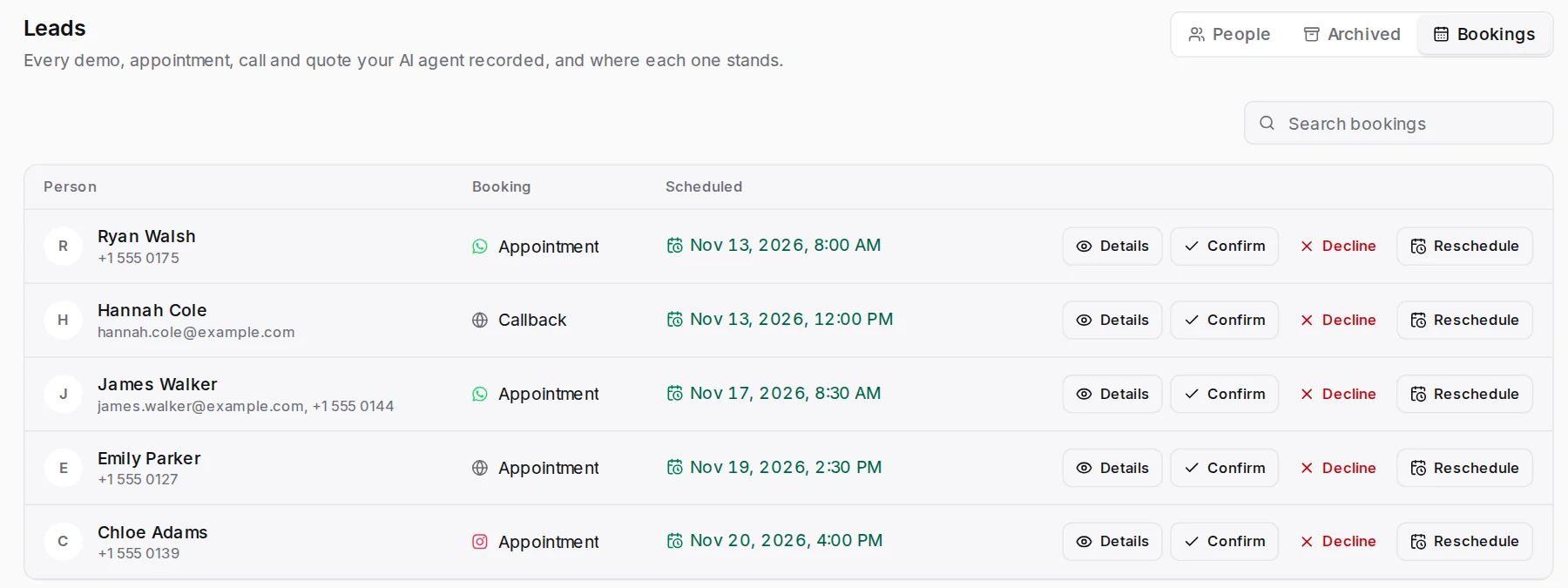
Where HiQBot fits in your dental marketing
HiQBot doesn’t run ads or do SEO. It publishes and schedules your Instagram posts, and it answers the patients your marketing brings, in one inbox for website chat, WhatsApp, Instagram DMs and comments, Messenger, Telegram and LINE:
- AI agent: answers from your fees and FAQs, asks the kind of appointment and when, and books the check-up, exam or consultation for your team to confirm.
- Live chat: your front desk takes over any chat, with notes, assignment and AI-drafted replies.
- Guided flows: buttons such as Book a check-up, New patient or Talk to the front desk at the start of a WhatsApp, Instagram, Messenger, Telegram or LINE chat, and comment-to-DM rules on Instagram posts.
- WhatsApp calling: patients call your WhatsApp Business number and it rings your team in the inbox.
Appointments land in HiQBot and on Google Calendar if you connect it. HiQBot doesn’t connect to practice management software, so your team adds new patients to your own system. Setup is on our dental chatbot page, and other clinics are on the clinic chatbot page.
Common questions
How do you do dental marketing?
Dental marketing starts with a complete Google profile, a website that shows your fees and new patient visit, and reviews from happy patients. Add one social channel and one ad campaign, answer every message the same day, and send recall messages to patients due a check-up.
How much does dental marketing cost?
Dental marketing has no fixed cost: it depends on your ad budget and whether an agency or your own team does the work. Compare channels by cost per new patient, which is spend divided by the new patients each one brought.
How do dentists advertise?
Dentists advertise mostly with Google Ads for people searching for a dentist, and Facebook and Instagram ads for whitening, aligners, implants and new patient offers. Each ad should open a page or a chat that answers the patient’s question and offers a time.
What are the best dental ads?
The best dental ads name one treatment and its price, speak to local people, and ask for one message. A new patient exam with a time this week, or an aligner consultation with a starting price, is more specific than a general “we’re accepting new patients”.
Does SEO work for dentists?
SEO works for dentists when the Google Business Profile is complete, reviews keep coming and each treatment has its own page. It takes months, so many practices run ads alongside it.
Can dentists advertise in India?
Dentists in India may advertise if they keep to the decorum the Revised Dentists (Code of Ethics) Regulations, 2014 require: no false promises, no boasting of cases, and specialist titles only with a recognised qualification. A website with factual information and fees is allowed. In October 2026 the National Dental Commission warned dentists against testimonials and before-and-after photos on social media.
Can HiQBot tell which ad a patient came from?
HiQBot shows the channel each patient came from, such as WhatsApp or Instagram, but not the ad. Give each ad its own offer or opening line so the first message shows which one they answered.
Sources were read on 13 November 2026, and the screens are the real HiQBot product with sample data. How we write and check posts: editorial standards.